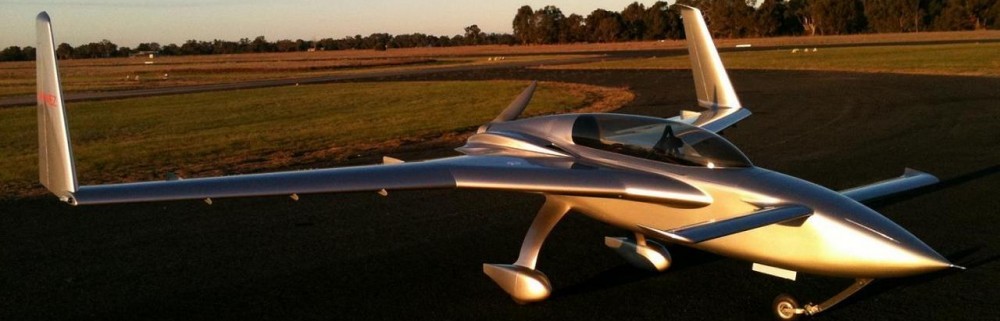
This post covers a smidgen of my efforts over the last couple of days. My overall goal at this point is to get the Tri-Paragon as prepped and pre-wired as possible before it gets mounted into the plane.
Besides cleaning it and blowing out all the nooks and crannies with compressed air, I realized that I was a bit premature in mounting the relay deck plate onto the top shelf, given that I just didn’t have the access to get in to wire up the AG6s, etc. so off with the top shelf and associated components.
I’m pretty much going through every component, connector and wire to again ensure that the Tri-Paragon is as prepped, clean and optimized as possible to get mounted into the bird. Lord knows there’s an insane amount of wires hanging off this thing, and then add that to the insane amount of wires currently inside the bird?! I need to be focused on connecting everything up, not fixing or redoing something that I could have caught on the bench.
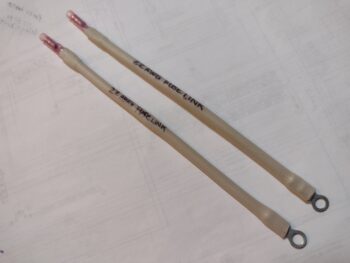
One thing I did was I went through all the wiring diagrams and inventoried the total amount and types of Fuse Links I needed. The final tally was two 22 AWG fuse links: one off the Master Bus connecting stud for the ALT FLD (B&C voltage regulator) circuit breaker lead and the other off the E-Bus connecting stud for the P-Mag circuit breaker.
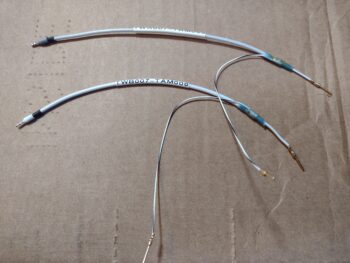
 With my alarm inputs paired down to 5 per AG6 to allow me an audio alarm out to the audio mixer, I worked up those two single-wire shielded cables and finalized those connections.
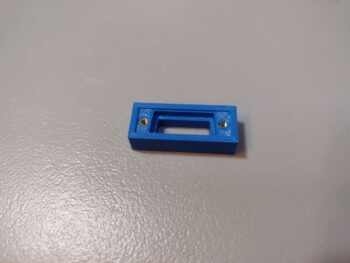
 I also took a few moments here and there to work on my new G7 ground bus, where I did a quick measuring of the screw holes in the 15-pin D-Sub connector and transferred those over to the mounting bracket CAD model. I then 3D printed out this test top section of the mounting bracket and used a special-tipped soldering iron to heat sink some 4-40 brass threaded inserts into the plastic (common practice in the 3D printing world).
 I then test fit the male and female DB15 connectors into the bracket top test piece and secured them with screws into the brass inserts. Yes, these are 3/4″ long screws, so I’ll need to pick up some 1/2″ long to finalize the assembly of this.
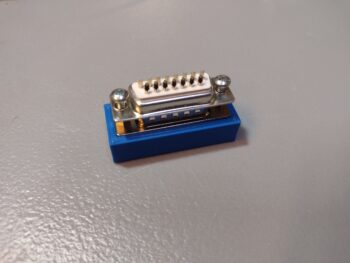
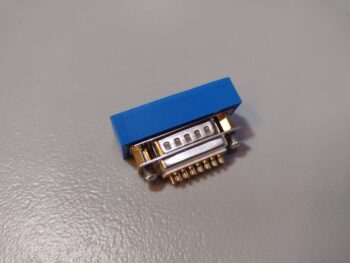
Here’s the front/top view after the screws were threaded in place.
 After my G7 ground bus mounting bracket shenanigans, I got back to work on the seemingly endless amount of wires, connectors and components on the Tri-Paragon. I have both AG6s wired for power, ground, dimmer and audio, with 3 of the 5 inputs wired up on the right side AG6-B. The other input wires are physically in the aircraft.
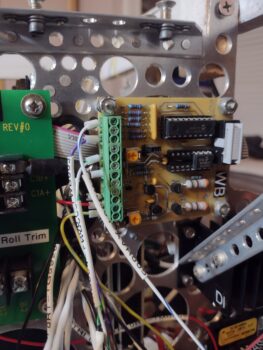 I only have 1 of the 5 inputs on the left side AG6-A wired up, so I didn’t feel inspired to grab a pic of that (note the Roll Trim relay board on the left side of pic above: that will get wired up once the Tri-Paragon is mounted in the plane).
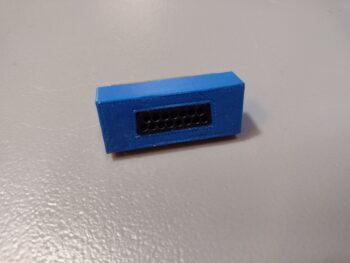
After a few more hours working on the Tri-Paragon, including at least 15 new wire labels applied, I spent about 5 minutes in CAD to increase the height of the G7 ground bus mounting bracket body, and then kicked off the 45 minute print.
Here is the result of that…
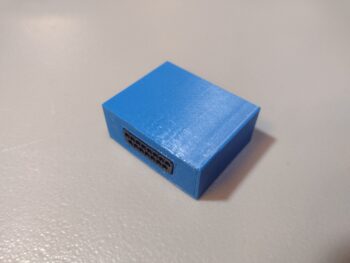 And shots with the DB15 D-Sub connectors in place:
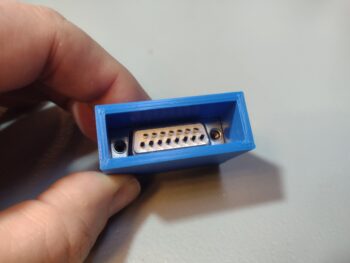
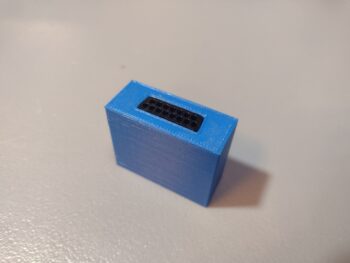
A good bit of what I am doing is simply verifying that the current configuration is, in fact, current so that the physical component installs, wiring and labeling all match… after all these years and countless modifications, changes and updates. I’ll provide two quick examples to emphasize what I’m discussing:
Case #1: On the wires exiting relay #9 —which controls the switching of PTT, headphones, etc. between COM1 and COM2— I had two wires labeled with masking tape: one “COM 2 PTT Pin 7” and the other “COM 2 Pin 14.” There is only one glaring issue with these labels, neither of those pins are required on the Trig TY-91 com radio.
Perhaps I got them confused with the GNS-480? Which I had originally designated as COM2… but it has multiple connectors (aka “plugs”) on it that are all preceded by “P” as in P1, P5, etc. So it wasn’t that. I then looked up my old wiring diagrams on my computer… nothing.
Clearly these wires didn’t match my current wiring diagram. After pondering for a bit, I remembered I had considered using the MicroAir M760-REM as my COM2 radio. After finding the manual on the GRT website under “Legacy Docs” I found the culprits. I was then able to finalize the conversion (8-10 years later?) from the way old COM2 radio connections to the “new” Trig COM2 radio.
Case #2: I also focused on wiring up the dimmer (1 of 2) connector that is used by the AG6s, TruTrak ADI, etc. While working in the rats nest of wires on the right side of the Tri-Paragon, where the dimmer connector is located, I happened across a gray wire with a red stripe. The label denoted it was from the HXr to be wired to the dimmer I was working on.
Excellent! Another wire terminated and off the to-do list I thought. So I trimmed the wire to length, stripped it and was just getting ready to crimp a D-Sub pin onto it when I thought, “I better double check the connector pin-out diagram for this.”
Sure enough, no HXr dimmer connection existed on any diagram, nor on my connector pin-out page. But it WAS clearly labeled. So I did another 10 minutes of investigating to find that I did have this HXr dimmer connection at one point, but nixed it since I had no space and needed a pin to hook up the avionics panel ammeter located in the nose. So out that wire came to make room for the Ammeter #2 wire to get inserted (that wire is also currently in the bird patiently awaiting to be connected!).
I am really beginning to wonder if it would have been better to simply wire everything up all at the end of the build!
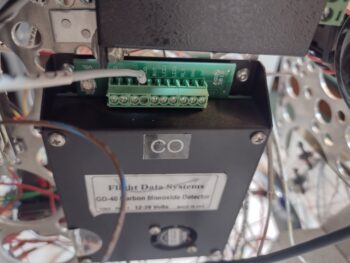
Speaking of wiring! Another target for finalizing its wire connections before the Tri-Paragon is installed into the bird is the Carbon Monoxide warning sensor (Flight Data Systems GD-40). I must say that verifying the wiring in the manual completely reinforced my decision to pull this input off the AG6. The audio warnings out on this unit is actually quite impressive with a caution message first, then a warning message and also an all clear notification.
All the capabilities are fine and dandy, but we of course need to connect this CO Detector to the audio mixer, so yet another single-conduit shielded wire to gin up for that specific purpose.
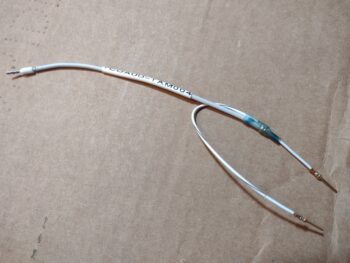 And here is that audio wire terminated in the GD-40 CO detector.
 Tomorrow I plan to finish off terminating the remaining wires as well for the GD-40 CO Detector. I’m hoping that by the end of the day tomorrow I will be ready to no-kidding haul the Tri-Paragon out to the shop and install it into the bird.
Pressing forward… albeit slowly!