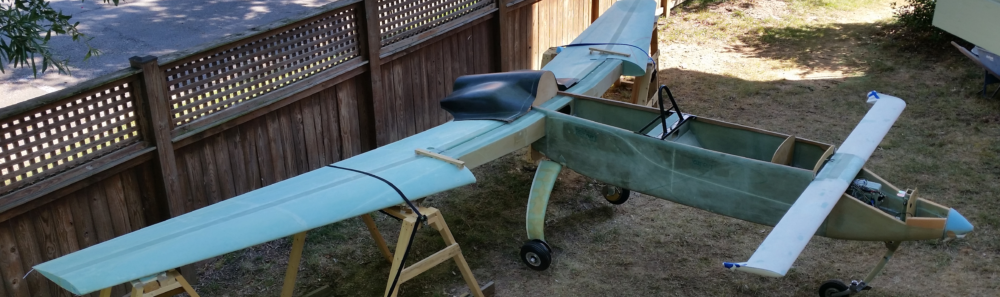
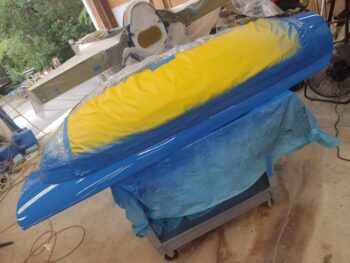
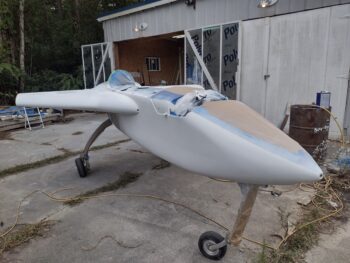
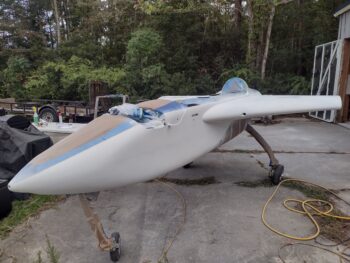
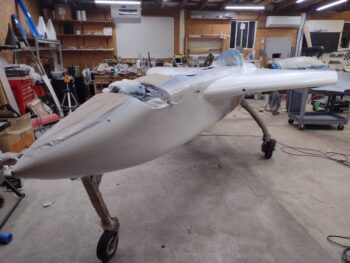
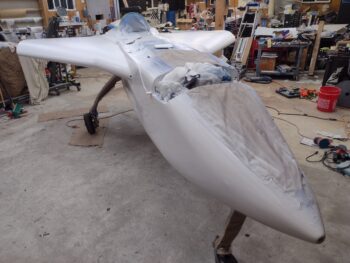
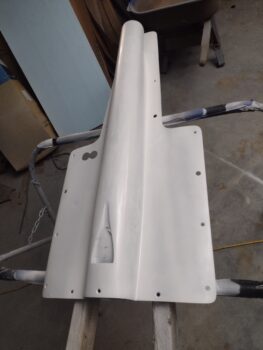
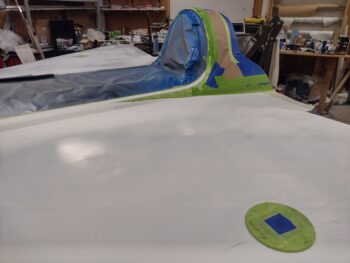
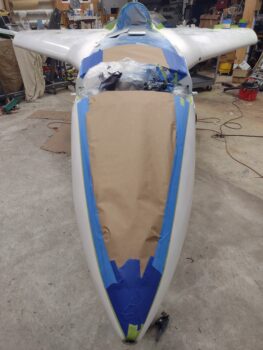
Chapter 21/25 – Eye on canard…

This post covers the past few days…

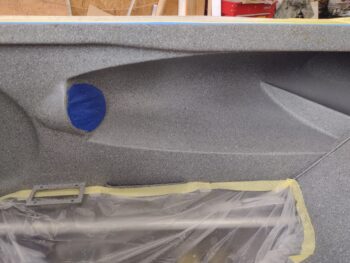
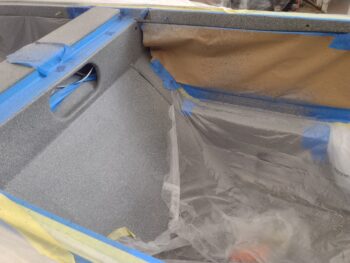
I was able to get the inside of the strake storage compartments painted with the gray granite/rock paint.  Here’s the right side.

And here is the left side.  I should note that painting also includes 2-3 coats of matte clear coat.

And as a further note (in case I need to research this years from now): I actually taped up the 3 forward & inboard vertical corners and the 2 intersecting lower horizontal corners with green painters tape to allow me to remove that tape in the future if I have any evidence of fuel leaks that I need to investigate.  Again, only the corners that are fuel tank adjacent were taped.

I let the paint and clear coat cure for over 36 hours before I sanded the overspray and excess micro from the flanges and perimeter edges on both right and left strake hatches.

I then drilled the countersinks and riveted the right double-button Hartwell latch to the right strake hatch door.  Yes, I did use aluminum rivets, but I A) hit them all with a coat of primer (cured for multiple days), and B) slathered them up with very wet flox when I installed them.

I also countersunk the 3 screws (replacing the bolts) and temp installed those.  I then spent nearly 1.5 hours getting the angle and elevation of the internal ~0.4″ hinge spacer dialed in so that the door would sit as optimized on the hatch perimeter flanges as flush as possible.  This of course means that the door is as flush as possible with the surrounding surface of the right strake as well.

I have NOT yet permanently installed the Hartwell latch on the left strake hatch door, as the deeper countersunk cherry pop rivets are currently on order from Aircraft Spruce.  I did mount the door back into place and spent about 45 minutes sanding both the door edges and the internal perimeter edges just above the flanges, just to get the darn thing to close.

More work is required to obtain better edge clearance.

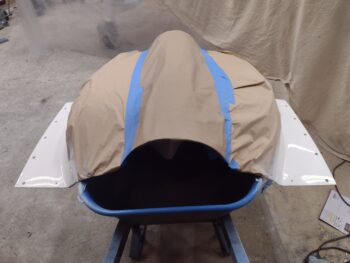
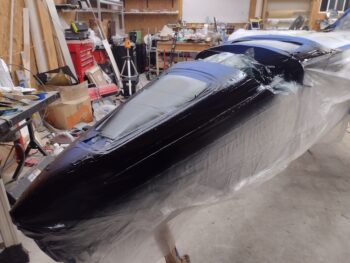
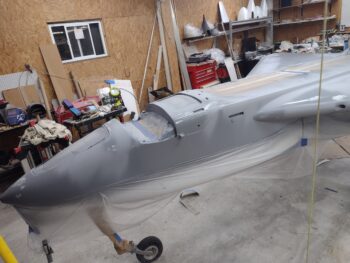
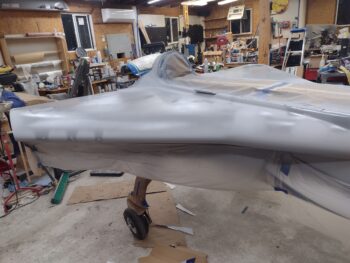
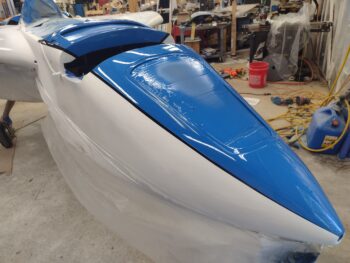
Now… to get the no-kidding finalized aft nose/avionics cover configuration complete and ready for primer/paint, I have to get the canard completely finished and ready for paint as well.

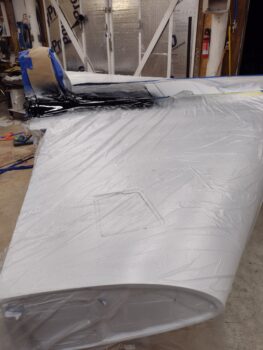
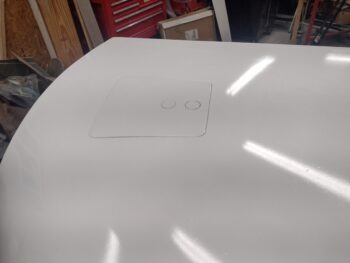
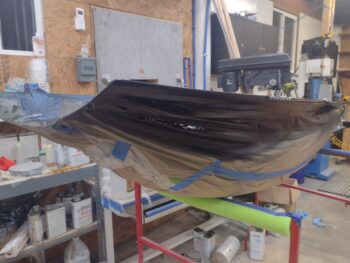
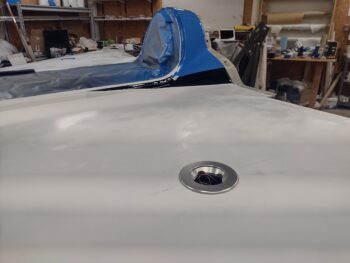
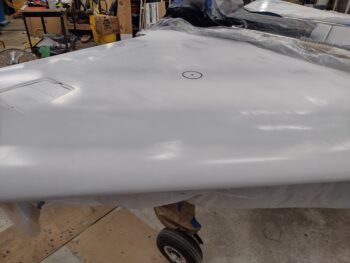
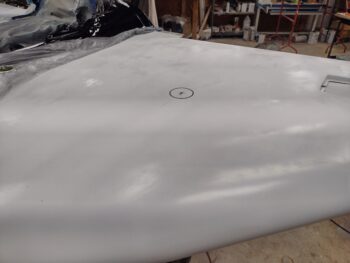
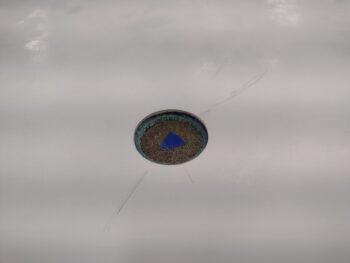
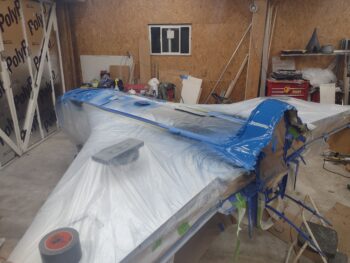
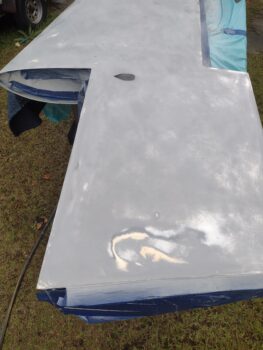
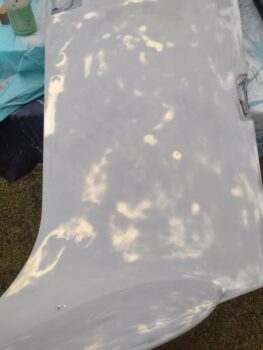
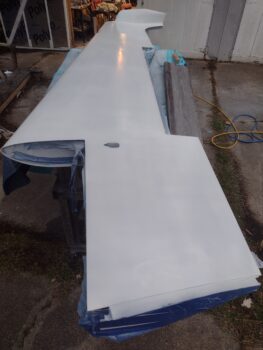
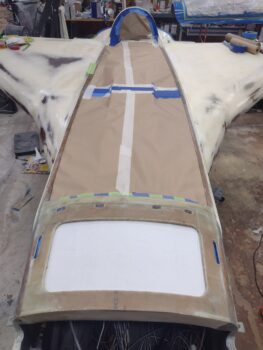
I used the Eureka-CNC templates to mark any low spots on both the top (shown here) and bottom of the canard, then filled those low spots with micro.

I figure I’ll have at least one more round of micro refills, but plan on working the canard until it’s near perfect in regards to the Eureka-CNC profile templates… since it’s arguably the most critical flight surface on this bird.


Chapter 21/25 – Finish fiddlings

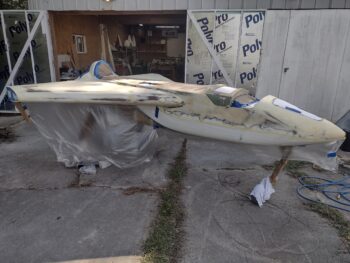
I’ll reiterate that although my primary task currently is finishing up the strake storage compartments, I’ve also been doing a number of other tasks to get the various aircraft surfaces ready for primer and paint.

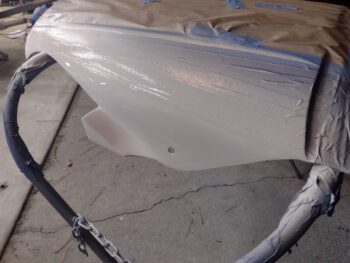
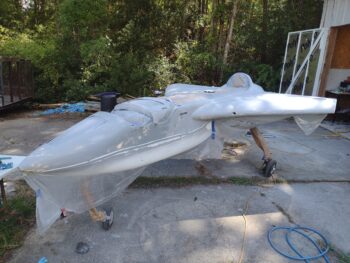
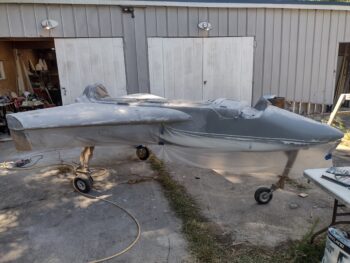
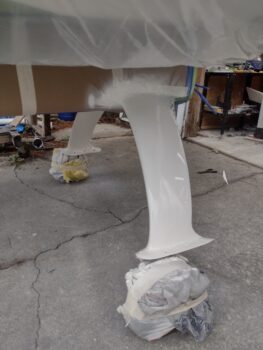
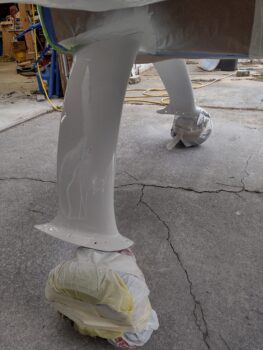
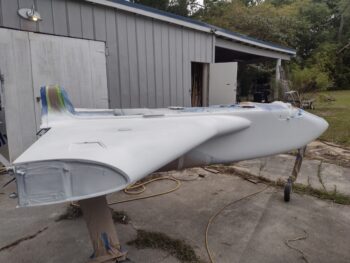
Here are a couple of examples on the right wing.  There was a distinct low spot at the junction of the bottom right winglet and wing, so that required a micro refill. Tomorrow I’ll sand it smooth and re-epoxy wipe it.

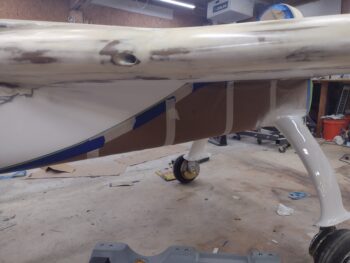
Speaking of epoxy wipes… I had a couple of small divots that I filled with micro and after sanding decided I needed to epoxy wipe a decent swath around those holes to help even out the surface of the lower right wing.  I’ll sand this down then wet sand with 150 grit in the next day or so.

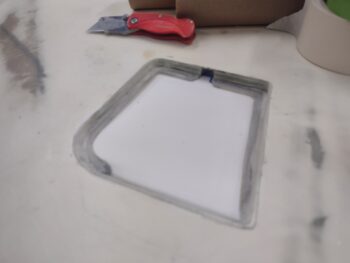
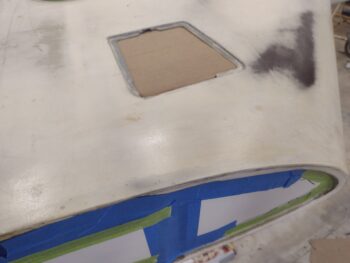
On the strake storage hatch flanges I did a final fill on all the perimeter edges, both right and left sides, which I’ll sand down tomorrow.

On the left strake hatch door, since I used the original skin piece that I cut out for the door, I removed about 0.1″ of foam on both the forward (pic 1) and aft (pic 2) edges of the door and filled those with micro.  Tomorrow I plan on sanding and epoxy wiping those edges.

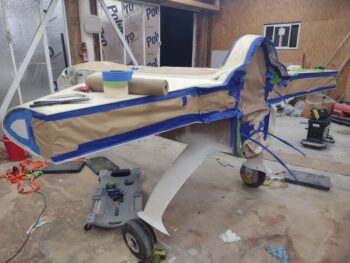
I then spent a good little bit of time prepping and taping up both the right and left strake storage compartments in prep for primer and paint.

I had planned on painting these tonight as well, but the Rust-oleum gray granite paint needs at least 2 good coats, with 15 minutes in between each coat.  It was getting late, so I decided to do the actual painting tomorrow.

Here is the right strake storage compartment shot in primer.

And the left strake storage compartment primed for paint.

As I mentioned in the last post or two, as I finish up the final tasks for these strake storage compartments and hatch doors I’ll have more time to focus on other important pre-primer/paint finishing tasks in my attempt to get this bird done.

Chapter 21/25 – Strake hatch latches

Over the past few days I’ve primarily been focused on getting the strake hatch doors, latches and flanges finished up.  This involves a number of iterations of micro, flocro and flox fills, with the requisite cure times, sanding, refills and dialing in the edge seams and height/elevations to get the door tops as even with the surrounding strake surfaces as possible.  Of course, some contour-leveling sanding no doubt will be required.

In addition, I’ve been working a myriad of small divot and low spot micro fills, sanding, wet sanding, subsequent epoxy wipes, etc. on areas all over the bird: wings, winglets, flanges, fairings, D-deck, strake, nose cover, etc.

On the right strake hatch flange I filled the slight “trench” around the outer perimeter edge of the flange with flocro before then covering that with peel ply.

I did the same a bit later with the left side strake hatch flange, but no pic of it.

Here is the 1-ply carbon fiber layup on the inside of the left strake hatch door, after I razor trimmed it and pulled the peel ply.  Obviously it’s installed in place, and you can see the forward flange (right side of pic) has been trimmed as well.

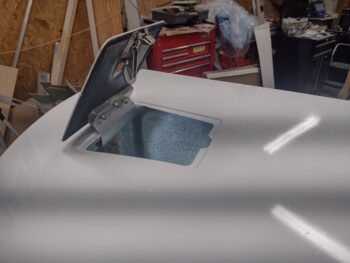
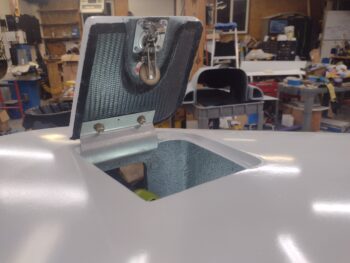
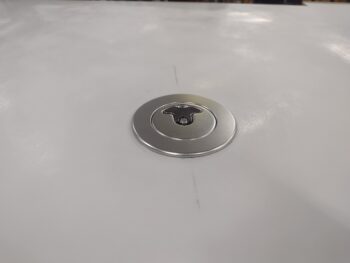
I then spent a good hour+ drilling the holes in the left strake hatch door to install the double-button Hartwell latch.  Here we have an external shot of the latch (pic 1) and an internal one as well (pic 2).

And a couple requisite shots of the left strake hatch door latch from different angles.

As for how the hatch doors sit within the strakes’ top proper, the seams around the doors needs some filling.

Thus, to be able to get the door open, off and out of the edge flocro that I applied to the taped edge of the door, I only did about half the perimeter edge for each application.  I started with the aft side on the right strake door hatch.

And after the aft side cured I then flocro’d the forward side edge seam.

Here is a shot of the same thing on the left strake hatch, although I started on the forward (top of pic) side —which is complete in this pic— and am working the flocro application on the aft side half of the edge seam here.

Slowly the strake hatches, doors, latches, fit and finish work is getting completed and I’ll pick back up more on the aft nose/avionics cover and canopy final fit and finish.

Again, all in the effort to get this bird in primer and paint.

Pressing onward!

Chapter 21 – Guy’s EZ + my strakes

I started out the first half of the day today helping Guy William’s do a final fill on his left brake line.  Thankfully we had some knowledgeable EAA’ers working in the hangar next door to lend their expertise.  After another few rounds of filling the master cylinder and line, Guy then made a couple of high-speed taxis down the runway to get the brakes back to good… while I played airport bum visiting yet another EAA member as he worked on his Grumman Tiger.

This should be the last major help session required (hopefully) for a while now that Guy’s EZ seems to be back on its feet, so to speak.

I got back to my house early evening… out in my shop the first task I did was to trim the forward flange on the right strake storage hatch.  As I mentioned before, this forward side was quite a difficult flange layup —having to go in through the outboard strake rib— and with some difficulty getting the glass in place I had to scrap the outboard corner portion of the layup.

I’m jumping ahead here, as this is later in the evening after my corner gap fill layup cured (I used fast hardener with MGS-335 epoxy).

And here is the cured forward flange layup on the left side strake hatch.

After trimming the left strake hatch forward flange, I then spent some time figuring out exactly where I would be mounting the double-button latch.

Once I determined the latch position it allowed me to mark and trim out the hatch door’s center inside glass and foam to the underside of the top skin glass.  Clearly this will allow glass-to-“glass” (carbon fiber) strength when I layup the ply of carbon fiber over then entire inside surface of the hatch door.

Not shown are the 3 plies of BID I laid up in the hatch door’s latch depression first to get the thickness dialed in to 1/8″ (0.125″), again the depth of the buttons on the left side strake door latch.  I then laid up the single ply of carbon fiber over the inside of the left strake hatch door, minus the cutout for the hinge plate.  And of course I peel plied the inside of the latch install depression.

I then left the left strake hatch door layup to cure overnight.  Tomorrow, I plan on getting a good chunk of these of these strake storage hatch doors knocked out.  Again, all in the effort to get the bird prepped for primer and paint.

Chapter 21/25 – Strake pocket flanges

This post covers the past 2 days.

First I shaped one side of the right strake hatch door hinge spacer for a better contour flow of the top side of the door in relation to the strake surface.

I then taped up the aft side of the inside right strake hatch door (pic 1), wetted out peel ply along the edge of the inside door and then installed the door and weighed it down (pic 2).

With the taped and peel plied door (aft side) in place, I then laid up a 4-ply BID tape that will be the aft side flange when it cures.

After cleaning up the inboard glassed edge of the left strake door (pic 1), I then did pretty much the same thing with taping the edge, pre-wetting out strips of peel ply along the door in prep of the aft side flange layup (pic 2).

Which I did next (sorry, no internal pic).  Here’s the the left strake hatch door the following day when I removed the weight that secured it in place.

Here we have the left strake hatch door removed, and the cured, pre-trimmed aft side flange layup (peel ply pulled).

And a shot of it after it was trimmed and cleaned up.

Here we have the same thing on the right side, pre-trimmed cured aft flange layup (pic 1) and then a shot of the cured front side flange layup later in the day (pic 2)… this forward side was by far the most difficult flange layup I did on these strake hatches.

Since I kept the original strake skin piece on the left side as my door, I made a decision last night to keep the perimeter edge of the door the same stock thickness as the skin.  This made laying up the forward side flange significantly easier since it was simply laid up on the bottom side of the pre-existing perimeter strake-side skin.

I made a cardboard template of the forward strake-side overhang to create what I would need for a flange, then used the template to cut 4 plies of BID.  I then prepregged the BID (pic 1), and wet it out.  As well as again taping up the forward edge of the inside door and adding wetted out peel ply (pic 2).

This time however I was completely able to layup the flange from the hatch opening vs. having to snake my arm inside via the outboard rib.

Once the left strake forward flange BID was laid up, I then mounted the strake hatch door…

Closed it up and then added peel ply to the underside of the flange layup.

I’ll also note that my double-button Hartwell latch (left side of pic) that I ordered off of eBay arrived this afternoon.  While the button diameters are the same, the thickness of the buttons are different: the new buttons on the latch for the left hatch door are 1/8″ thick while the buttons for the right side strake hatch are 0.08″ thick (right side of pic).

I’ll continue to work what I can tomorrow to get this bird ready for primer and paint.

Pressing forward!

Chapter 21 – Mounting strake hatches

I started out today mixing up some micro, with West 410 added, to do a few small micro touchups/fills.  First off was the top middle underside edge of the left sidewall opening for the canopy latch handle.  When I recently reinstalled the handle it was really tight, so in sanding the perimeter of the opening I sanded a hair to much in the top middle, which was visible when the handle was installed.

Thus the micro to clean that back up.

Also on the right wheel pant I have a depression on the aft side of the seam with the front wheel pant.  So I added a bit of micro there to even the seam up.

And some micro on the aft end of the right winglet intersection fairing… after it cures I’ll sand it and epoxy wipe it (and the other micro’d spots).

Over the last day and into today I really racked my brain in figuring out how I was going to attach the strake hatch doors to the spring loaded hinges.

On the left side I made the decision to go with two 10-32 Clickbonds, that are a bit wider and thicker than my normal Cozy-Girl/Infinity Aerospace Clickbonds.

I placed the Clickbonds into the drilled 3/16″ holes and marked their edges (pic 1) before then removing the top glass and internal foam to reveal the interior glass skin (pic 2).  I also then ground off an edge of the aft Clickbond and drilled flox-grip holes into the Clickbond flanges.

And quickly ensured the Clickbonds fit into the openings I had just made.

After cleaning up the interfacing glass, I then added a couple of plies into the bottom of the holes before slathering the Clickbonds up with flox and inserting them into the holes. I then added 3 more plies of glass over top of the Clickbonds and under the edges of the holes.  I then used up all the flox in my cup by putting it around the perimeter of each hole (pic 1).  After that, I mixed up some micro to fill the remainder of the holes just slightly proud of the hatch door top surface (pic 2).

I then spent another good hour carefully spacing, placing and drilling out the holes for the right strake hatch door’s double button latch.  Here we have it initially in the closed position (pic 1) and the open position (pic 2).

I’ll note that I added a 3rd mounting screw in the center offset a bit higher to better secure the position of the door on the hinge spacer.

And a close up of the right strake hatch door’s double button latch:

I had to wait awhile before I could close the right strake hatch door since I had added 3 stepped plies of BID on the inboard edge of the right strake compartment.  Note the flush latch buttons on the surface of the strake hatch door.

A bit later I pulled the right strake hatch layup’s peel ply and trimmed the glass, at which point I was then able to test the strake hatch door by latching it in the closed position… a couple of shots here:

I also did some edge layups on both the left strake’s door and compartment inboard edges.

And tested the fit of the left strake hatch door after the layups had cured and were cleaned up.

Tomorrow I’ll press forward with these strake hatches and as much on the rest of the bird as possible.

Chapter 21/25 – Strake storage doors

I started out today trimming the cured carbon fiber 2-ply layup on the interior side of the right strake hatch door.  Clearly I pulled the bits of peel ply off as well.

I then pulled peel ply, razor trimmed and sanded the edges of the edge ply of BID I laid up on the left strake storage compartment opening.

And did the same thing on the right side as well.

Using my painters tape and super glue trick, I reattached the left strake storage hatch door to the hinge, and after ensuring the placement and geometry was correct, I drilled out two (2) 3/16″ holes through the hatch door and the underlying hinge flange.

On the right side I verified the size and shape of the hatch door, and also glued the hinge to the door.

I was pleased that my geometry, and thus clearance, held on the right strake hatch door.

After one final bit of gently coercing it into its final position . . .

I then drilled my hinge mounting bolt holes on the right strake hatch door.

Here are the bolts attaching the doors in place on each side.

I then wrote out some thoughts on tape for each side for how to finalizing the fit and install of each door on each side.

This was another long day of figuring things out on these doors, dialing stuff and trying not to miss of the important minutia details.  It was late and I was very ready when I called it a night.

Pressing forward!

Chapter 21/25 – More strake storage

Today I started by first cleaning up the outboard edge of the right strake hatch where I added back in the 1/4″ piece I removed to create the original hinge notch.  I then recut the outside edge at an angle on the cut line I had made.

In addition I made a notch midpoint on the inboard edge for the latch striker in prep for when I get my double-button latch installed.  I also cut narrow channels along the top and bottom of the edge foam for “flox” corners.

I then laid up a single ply of BID around the majority of the right strake hatch opening on the exposed foam.  I then peel plied the layup (sorry for the slightly fuzzy pic).

I then did the same thing over on the left strake hatch foam edges.

With my West epoxy wipes fully cured on the center bottom aft area of the right wing, I finished sanding that down with 120 grit dry paper, followed by wet sanding it with 150 grit.  That finishes off my shenanigans on the bottom of the right wing.

By early evening my right strake hatch perimeter foam edge layup had cured to the point where I could pull the peel ply and razor trim the edges.

I then turned my focus onto the right strake hatch door inside layups.  After measuring the double-button Hartwell latch buttons I determined that the 2 plies of carbon fiber that I had planned on using as the overall cover on the interior side of the hatch door would be about perfect for the two buttons to be even with the external surface.

I determined first where the hinge spacer (to mimic the original thickness of the top strake skin) would get mounted, and added 4 plies of carbon at that position to just about be even with the added reinforcement ply of Lantor Soric material (white with hex pattern).

I then wet out the Lantor Soric reinforcement material and the 4 plies of carbon fiber for the hinge spacer, before then laying up the 2 overlaying plies of carbon fiber that make up the interior surface of the right strake hatch door.  With these 2 plies that means that anywhere on the door (mainly the perimeter edge) there is, at a minimum, 5 plies of carbon fiber (approximately 0.075″ thick).

I got a little cheeky with this hatch door and decided to leave the exposed areas of the carbon fiber “raw” and only peel plied the hinge spacer and Hartwell latch base areas.

There was a lot of configuring, scheming, designing and planning for me today on exactly how I was going to get these strake hatch doors —both sides— installed and operational.  It was a long day, and fairly late, and I was very ready to call it a night.
Pressing forward!

Chapter 21/25 – Strake storage hatches

I started out today pulling the peel ply and razor trimming the BID layup on the aft end of right winglet intersection fairing.  Apparently the 2nd time was a charm since all looks good with this layup.

I then did a quick trim of my 3-ply carbon fiber hatch door layup for the right strake storage compartment.  I set it in place to check it’s shape and dimensions.
My thought was that with the added material along the outboard edge of the new carbon fiber hatch door I could then simply add a 1/4″ notch to the outboard opening to allow the hinge to more fully open.  So I marked that up just for the hinge area at first (pic 1) and then cut that notch out (pic 2).

I then cleaned up and refined the edges of my carbon fiber hatch door and set it in place (which I had done in the pic above as well).

Using a scrap of foam I cut to the footprint of the hinge interface plate, and reaching in from the outboard end of the strake, I then marked where the hinge would meet the bottom surface of the door.  I was then able to temporarily mount the door with a clamp to see both how far it would open, and if the door had clearance with the strake top surface.

As you can see below, it had neither.

I then trimmed the outboard edge of the door a bit and got a little bit better opening and clearance BEFORE the door edge hit the top surface of the strake.  Clearly a bit more trimming required.

After another couple rounds of judicious trimming I finally got the clearance that I wanted, with the outboard opening of the hatch now blocking the hinge from opening any farther vs. the outboard edge of the door.

The bad news was that I had to trim off a good amount of door edge to get the clearance that I needed.  This exposed a good bit of that 1/4″ notch that I made. That being said, this was exactly why I was working this entire process to dial all this in (although I guess I could have started with only an 1/8″ notch?? … ha).

After getting a good idea of what I was facing on the right side, I decided to take a break from it and get the left side strake storage compartment hatch cut out.  Using my tiny drill bit method of confirming the perimeter edges, and then confirming my painters tape “map” position detailing where the hidden treasure that is the hatch door . . .

I got the outline marked up on the left strake top (pic 1) and then carefully proceeded to cut out the left strake storage compartment hatch door (pic 2).

Here’s an idea of how the left strake storage compartment will look once installed and operational.

I wanted to compare the two sides by placing the right hatch door onto the left strake hatch opening… and although the shapes are just slightly different due to the front outboard corner (bottom right of pic), they are very close to the same shape and size.

Here’s a wider angle shot of the right strake hatch door open . . .

And the same with the left side.

My last build task of the evening was to micro the 1/4″ notch piece back into place on the outboard edge of the opening on the right strake storage hatch opening.

But before that, I shot a short little video covering my strake storage compartments and doors.  It’s a bit raw and hastily done, but it gives my take on these strake hatches and details in constructing them.

And with that, I called it a night!

Chapter 21/25 – Another task redo

I started off today checking my right strake bottom video camera mount where I floxed 2 platenut assemblies inside the outboard strake.  The cure was good and I removed the tape and remounted the mounting plate.  To reiterate, I used MGS 335 for the flox on this job.  Task complete.

I then checked the aft end of the right winglet intersection fairing where I had laid up a ply of BID using West epoxy and slow (206) hardener.  I looked at this layup as more of finishing layup vs structural, so West should have done fine.  But it didn’t.

I don’t know if it’s the very high humidity that we currently have, but the layup just didn’t cure at all (see end of post).  I also experienced not completely cured West epoxy on the underside right wing epoxy wipes, where it kept gumming up my sandpaper.  I stopped my sanding to reattack tomorrow with another full day of cure under my belt.

Ok, not related to the West issue, but not wanting to waste any epoxy I did use some of the MGS 335 flox from the right strake video camera mount platenut attach, mixed with some micro to cut it a little, to then fill the corner on the left side aft nose/avionics cover; where it mates with the corner of the canopy.

Over on the left wing, I marked the extended bottom flange for trimming (pic 1) to give it 1/8″ more to the flange to cover the gap caused by adding a thick washer at the wing bolts.

I then used my Fein saw to trim the added glass and micro before sanding it down smooth (pic 2).

I want to get as much glasswork and layups out of the way as possible on this build, and knew that I had a few more to do on each outboard strake storage compartment… one of the few big sub-projects left on this bird.

I grabbed my painters tape “map” diagram for the right strake that outlines where I need cut to get the storage hatch open.  I of course just needed to verify that it itself was in the correct location and orientation… note the very small diameter drill poking up from the aft inboard corner.

Once I nailed down the map’s “coordinates” I was cleared hot to start cutting out the right strake storage hatch door.

Here is the inside view of above, with the blade peeking through right at the front face of the CS spar (left top of pic).

It took a little bit to get the curved corners cut out since I couldn’t use the Fein saw there, but after drilling a line of small holes with the tiny drill bit, I then used my razor knife to cut the corner glass (pic 1).

I then set the hatch door back in place to check it’s fit (pic 2).

And removed the tape to get a general idea of how it will look once the install is complete.

And another shot looking straight aft from the front.

And a look at the storage compartment from inside with the hatch door off.

You may remember I mounted and then buried a spring loaded hinge —the same used for my cowling oil check door— which I then wired into the closed/down position as I floxed the top strake skin in place (pic 1).

I quickly discovered that by following my cutting diagram on the blue painters tape, that I hadn’t allowed for the thickness of the top strake skin, which is just under 0.5″.  The thickness of the top skin is blocking the hinge from fully opening (pic 2).

Moreover, after testing the hatch door in place on the hinge, I realized it would not have the hinge-side edge clearance to allow it to freely open or close.

Although not 100% on my plan going forward, I wanted to get a thinner hatch door “in the oven” and started.  I made a cardboard template of the original hatch door, and then added about 3/8″ on the hinge side when I cut out 3 plies of carbon fiber.

I set the original hatch door back into the strake cutout and taped it over with painters tape and clear packing tape.

I wet out peel ply first on the tape, then wet out the 3 plies of carbon fiber (pic 1).  I then finished the carbon fiber layup with peel ply (pic 2).  This got an alternate, correctly contoured hatch door curing overnight that I can use tomorrow in my figuring out this issue.

Back to my West epoxy failure for my initial right winglet intersection fairing aft face layup.  Below you can see the uncured and pliable BID that I ripped off.  In addition,  over 8 hours from this morning the micro was still rubbery and easily broken in parts as shown here.

For the carbon fiber layup I did above I used Pro-Set epoxy, and with some left over in the cup I mixed up some micro, applied it to the foam and inside edges (pic 1).  I then laid up a ply of BID and peel plied it (pic 2).

Hopefully this one will take!

I’ll continue to charge forward on this build tomorrow.