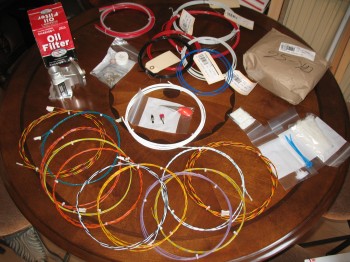
Moving time!

Well, moving day is finally here.  A couple of weeks ago, just before my 2-week jaunt back to the States, I had a rep from the shipping company come out and measure all my stuff, including all the airplane components, to figure out what kind of crates would need to be constructed.

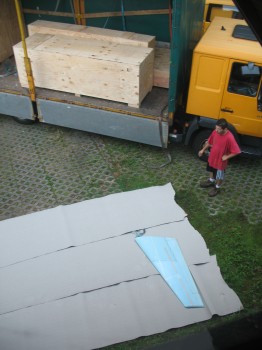
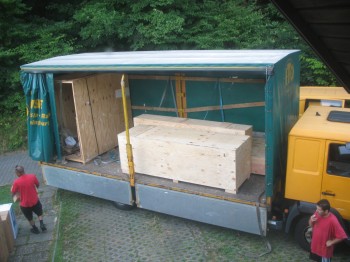
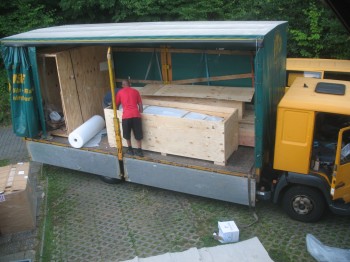
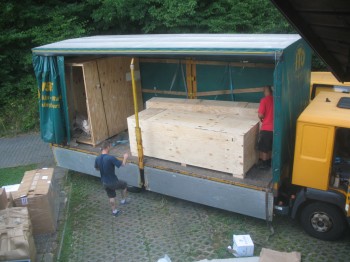
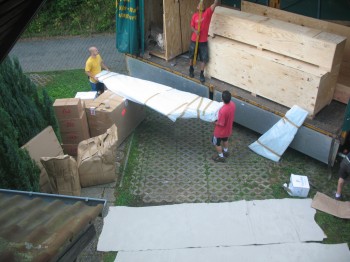
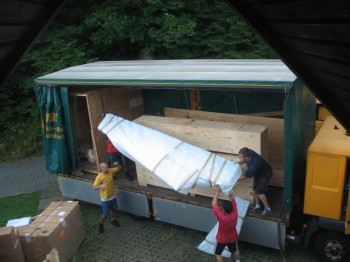
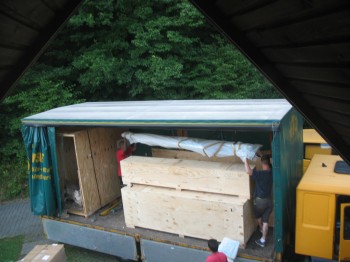
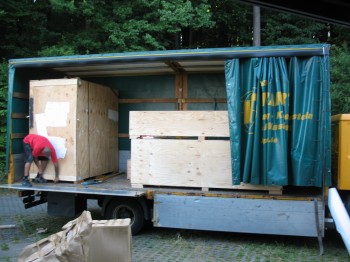
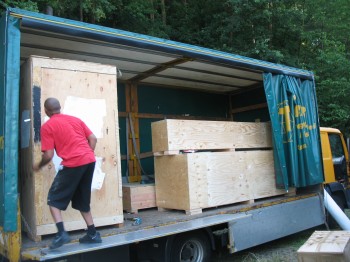
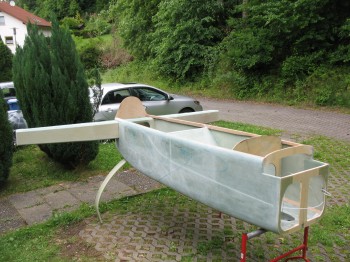
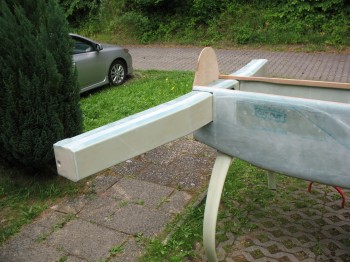
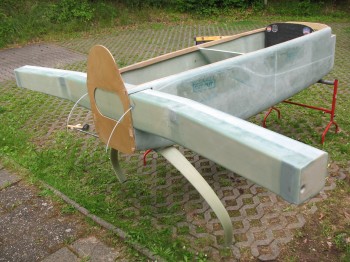
I was fairly impressed when the moving truck showed up today with 3 large crates specifically for the major Long-EZ components.  I have to tell you I was a bit concerned that the military was going have a conniption over my aircraft project.  Of course that’s one reason why I built all my components to the minimum length I could, and didn’t mount the winglets to the wings, etc.  The first large crate was for the fuselage, which much to my pleasure was large enough so that I could keep the firewall mounted onto the longerons (ensuring that the back end of the fuselage didn’t endure any undue stress).

The second crate was a smaller, longer crate for both the Canard & CS spar.  This too had plenty of room to allow for lots of overpacking to keep these guys from rubbing holes in each on the boat ride back to the US.

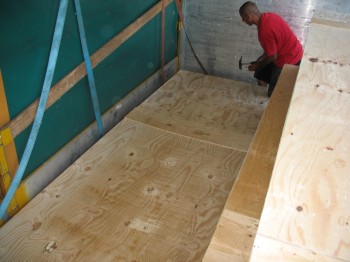
The last crate was the mo-jamma!  Although I had specifically requested that this guy be constructed so the wings would be crated vertically & leading edge (LE) down, it was constructed so the wings would be horizontal, but plenty big enough to allow for a lot of extra padding between the wings.  Also, although the wings would be shipped and stored horizontally, I figured since they were built last summer that they’ve had nearly an entire year to cure in the correct position/LE down to lock in their shape, so I’m not too concerned about them warping. In fact, I was thinking about this in regards of flying Long-EZs: I don’t hear stories about EZ drivers removing their wings and storing them LE down when not using the airplane!  Nope, the wings pretty much stay attached to the CS spar and seam to do just fine without any major warpage!

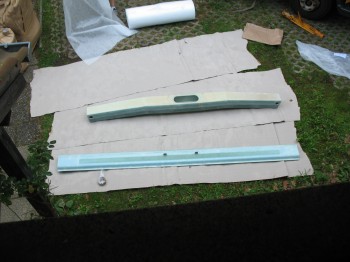
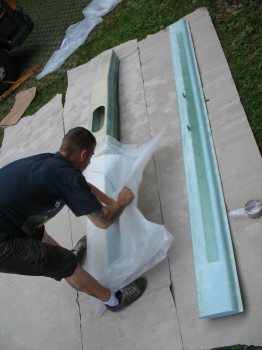
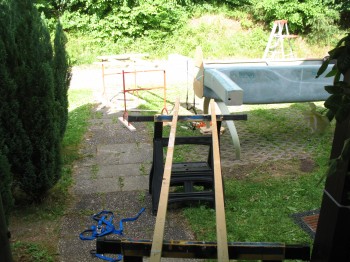
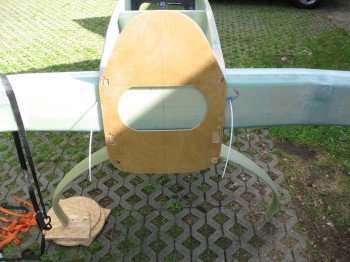
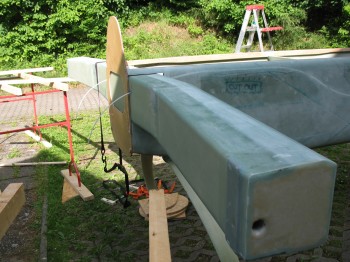
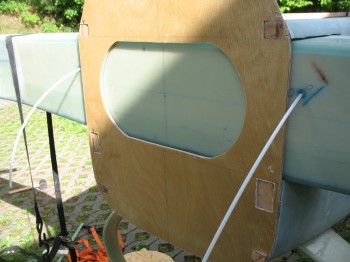
So, here are the pics of the wrapping, packing, crating & shipping of Long-EZ 916WP:
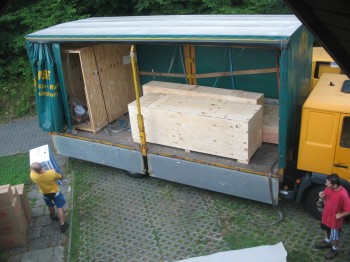
Fuselage, canard/cs spar & wing cratesFuselage, canard/cs spar & wing cratesFuselage, canard/cs spar & wing cratesCrating fuselageFuselage & canard/cs spar cratesCrating wingsCrating wingsCrating wingsOne thing I want to point out is that I was with these these guys the whole time that they were packing up my LEZ components, then when we finished prepping each part for crating I would sprint up 3 flights of stairs to take a picture or two, then run back down to work the next piece, sprinting back up the stairs in an attempt to get good shots of all these parts getting packed up & crated as part of documenting my build.
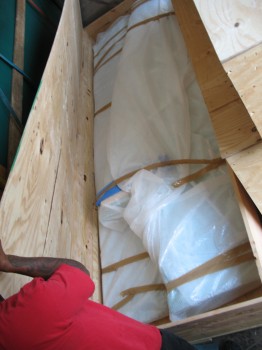
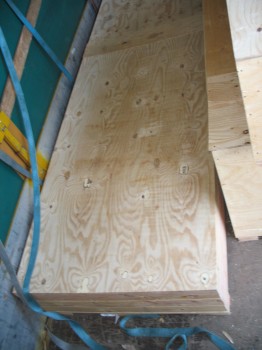
Crating wingsFuselage, canard/cs spar & wing cratesFuselage, canard/cs spar & wing cratesCrating Canard & CS SparCrating Canard & CS SparFuselage & canard/cs spar cratesFuselage, canard/cs spar & wing crates


A fond, bittersweet farewell!

I’m back in Germany for the final push before I head off to the land of heat, sun & sand.

Well, unfortunately my moving mimics the plane build in many ways in that the name of the game for shipping my stuff back to the US to spend a year in storage is: lightweight. At least, as lightweight as possible (thus, how the move parallels my build).

I came over to Germany with a lot of wood & building materials that I wasn’t sure would be available here. Some of it was, but a lot of it wasn’t.  The bottom line for my return trip however is–just like in building my Long-EZ–if I don’t absolutely need it, then it’s getting sold or chucked.  Of course this was in my plan all along since I new as I built the various components of the Long-EZ over here that my aircraft project would be significantly heavier on the return trip.  Thus, a good majority of my shop either ended up getting sold, dumped or burned in my chimenea.

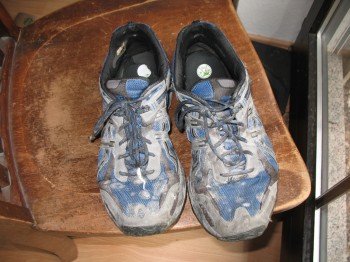
Which leads me to my Long-EZ glassing & building shoes.  These faithful troopers have been in the game since day one.  But since they’re at the end of their life cycle, and they add weight, they have to go!

Farewell faithful build shoes!  I hope your replacements do as fine a job of catching errant epoxy drops as you did!

A Bittersweet Farewell!


Chapter 23 – Engine

I’m back in the States for a couple of weeks before I head over to the Sandbox.

Today I pulled the trigger on my Lycoming O-320 engine case along with an ECi IOX-340S strokered crankshaft, balanced connecting rods, and camshaft from Tom Schwietz at Aero Engines in Winchester, VA at Winchester Regional Airport (OKV).  I met Tom at his shop and talked with him at length on various engine options, the build, etc. and toured his shop.  Tom was incredibly knowledgeable and the facility was quite impressive.

However, since I apparently had a huge brain fart and failed to get a picture of my new engine components, I tried to find a good representative picture online but couldn’t find anything fitting.

Yesterday, I got to spend all afternoon/evening with my buddy Marco down in Virginia Beach and tour his build facilities as well (impressive garage my friend! ha!).  He showed me his Long-EZ project and of course we talked Ad nauseam.  I also dropped off my TIG Welder for him to try out, evaluate & use while I’m gone this next year.  If he likes it he’ll most likely use it build his rollover assembly.  It was great to visit with him and get some good Long-EZ shop talk in with my fellow Canardian.  Build on my friend!


The Whole Tamale!!!

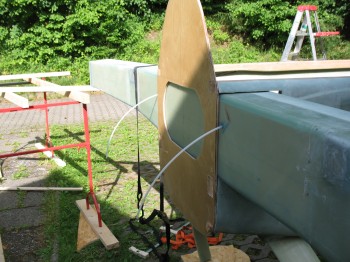
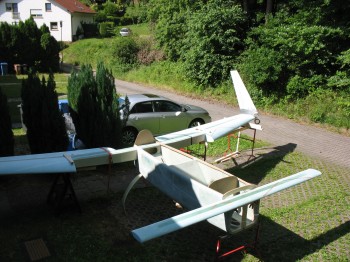
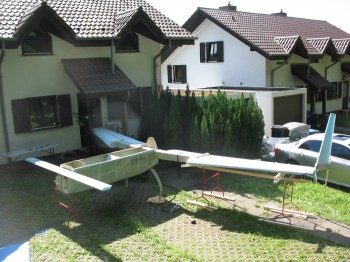
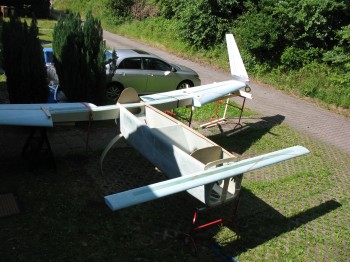
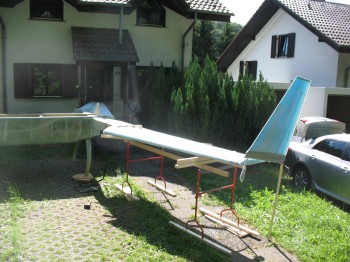
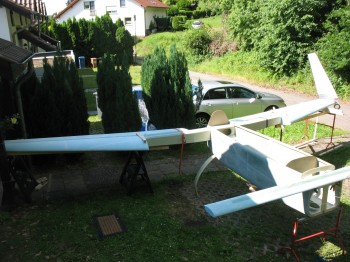
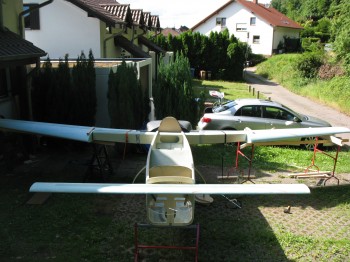
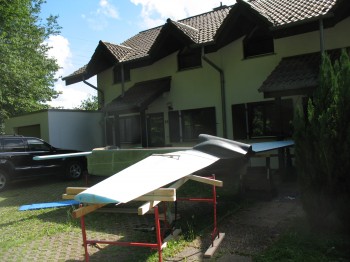
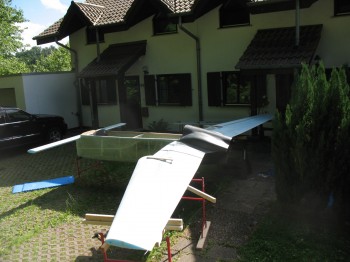
Today I pulled out all the stops . . . or should I say I pulled out all the pieces of the build so far.  Before I am separated from my project while I spend a year in the Middle East for Uncle Sam, I wanted to get an idea of what this thing looks like put all together.

So I pulled the fuselage out into the front yard, and kept it covered while I collected the other components.  Next up was the Centersection Spar which I placed into the fuselage for the first time since I completed it about 8 months ago.

Chap 14/15 - CS spar & firewall mockupChap 14/15 - CS spar & firewall mockup

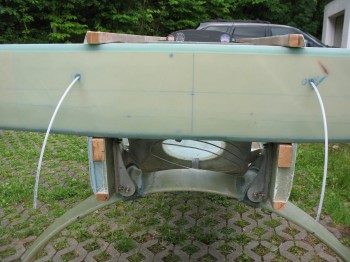
You can see in the pic below that I got the measurements correct for running the rudder cable conduit through the fuselage sidewall, then through the CS Spar and positioned just off the edge of firewall (the curved metal conduit bracket that the Nylaflo will run through will get mounted to the firewall).

Chap 14/15 - CS spar & firewall mockup

I’m jumping ahead with the following pics below since they were at the tail end of the this grand mock-up as I was tearing it all apart, but I wanted to keep like pics together.

Chap 14/15 - CS spar & FirewallChap 14/15 - CS spar & FirewallChap 14/15 - CS spar & FirewallChap 14/15 - CS spar & FirewallChap 14/15 - CS spar & FirewallChap 9/14 - Main Gear & CS spar

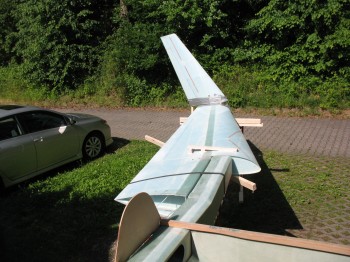
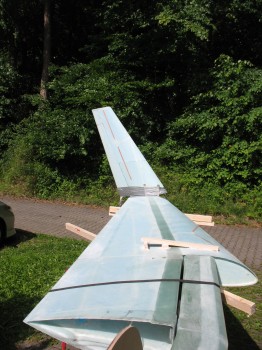
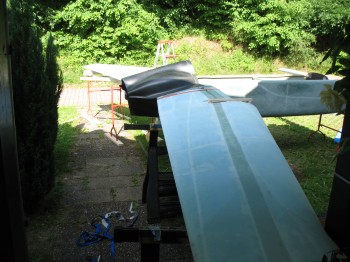
After I got the CS spar & firewall in place, I added both of the wings next.  Again, besides the measurements provided to me in the plans, and of course a couple dozen confirmation measurements, I had not lined up either wing with the CS Spar to confirm that the hard points (aluminum extrusions) lined up with each other.  Obviously, I was very relieved to confirm I hadn’t jacked any of my measurements up!  Also, as you can see I had to throw on at least one winglet just to get an idea of how it would look.  Although it was a little awkward to get it on the end of the wing so it looked half-way normal, I think I got in the ballpark.  Well, and of course we can’t forget the canard… yes, it’s on there too!

Long-EZ Project Mock-upChap 14/15/19/20 - CS spar-firewall-wings-wingletLong-EZ Project Mock-upLong-EZ Project Mock-upChap 14/19/20 - CS spar-wings-wingletChap 19/20 - Wings & Winglet mockupLong-EZ Project Mock-up

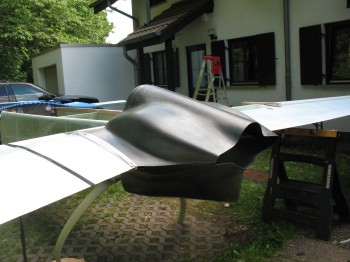
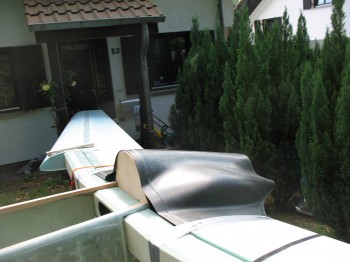
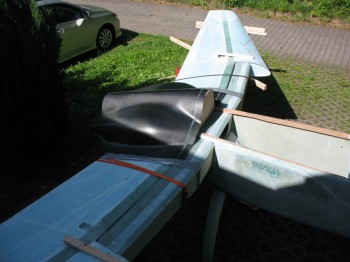
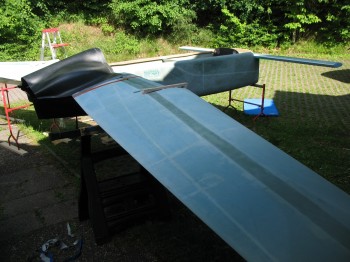
Once I got the pics above taken, now it was time to fill in what gaps I could to make it look at least a little like it had some mass to it.  Next came the engine cowlings.

Chap 19/23 - Wings & Cowling trial fittingChap 19/23 - Wing/spar & Cowling fit

The wind had picked up a little bit and I didn’t want to damage anything just to get some pictures, so I removed the Left winglet & put it inside the garage.  “What about the Canard?!”  You may ask.  Well, no worries of the wind playing havoc with the canard dear readers, for I clamped the mounting tabs to the front fuselage bulkhead, F22.

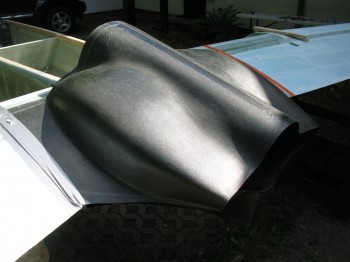
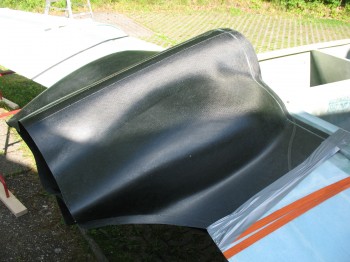
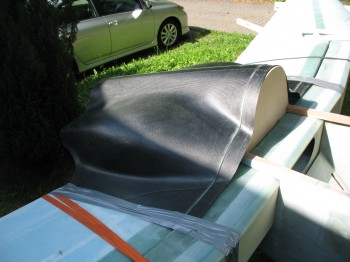
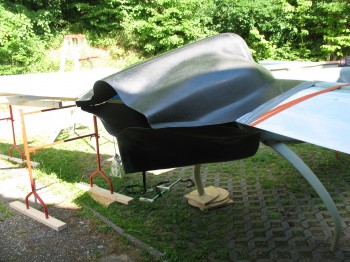
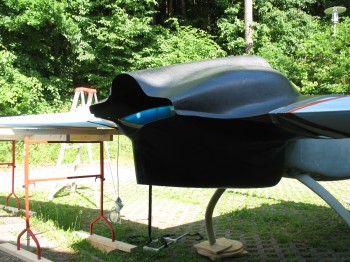
Chap 19/23 - Wing/spar & Cowling fitLong-EZ Project Mock-upChap 10/19/23 - Canard-Wing/spar-CowlingChap 10/19/23 - Canard-Wing/spar-CowlingChap 19/23 - Wing/spar & Cowling fitChap 10/19/23 - Canard-Wing/spar-CowlingIn the next couple of shots you can see how the lower cowling hangs down 4 inches below the stock/plans firewall.  Again, since Mike Melvill had built a NACA inlet for his engine air intake the back end of his fuselage–and subsequently the firewall–was 4 inches lower than plans [in essence making the bottom line of the fuselage continue straight until aft of the firewall].

Chap 23 - Cowling Trial FittingChap 23 - Cowling Trial Fitting

And then the following pics are more close-up shots of the upper cowling.

Chap 23 - Cowling Trial FittingChap 23 - Cowling Trial FittingChap 19/23 - Wing/spar & Cowling fit

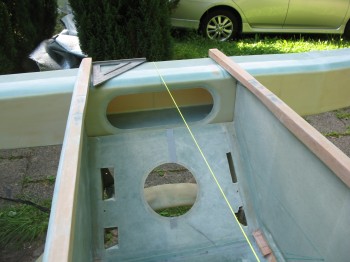
Finally, after I broke everything down and got the wings, canard, cowling & firewall back inside out of the sun, I spent some time looking at the CS spar, taking some measurements and looking at how square it was to the fuselage (this was a quick mock up to keep all the parts in the sun as little as possible–about an hour total time . . . and if you actually look at the shadow of the house on the mock-up from start to finish, there’s not that much movement).  At this point the CS spar and the fuselage were in the shade provided by the sun going down on the other side of the house.

Chap 14 - CS spar trial fitChap 14 - CS spar trial fit


Chap 21 – Fuel Tank Vent Manifold

I didn’t get a whole lot done actual build wise today.  I researched more on the Davenport Pitch Trim system, and also figured out components needing ordered from Aircraft Spruce.  Also tended to some paperwork duties as far as filing invoices, etc.  All that and working & planning on my upcoming move.

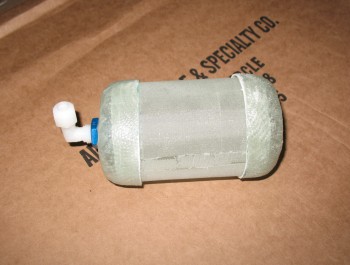
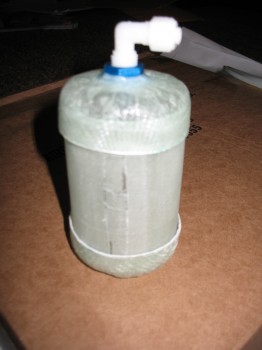
As for build actions, I pulled the fuel tank vent manifold end cap from its form, cut off the excess material & then sanded it.  Below are the pics showing the manifold in its first ever appearance as one component.

Chap 21 - Fuel Tank Vent ManifoldChap 21 - Fuel Tank Vent Manifold


Chapter 13 – Initial Nose Plans

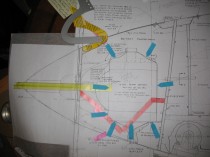
Well, today I decided to act on yesterday’s vow to figure out my build plan for the Davenport extended nose.  I broke out the Davenport extended nose plans, figured out a myriad of details and made a template for my NG-30s.

One thing in specific I was looking at was the battery position & its installation configuration in relation to the heated pitot tube, and how it effected the capability of retracting the pitot tube.

Now, let me backtrack to February 2013.  I may have been a little remiss in the reporting of my project progress since I overlooked an extremely important component: my retractable heated pitot tube made for me by good friend Marco, a fellow Canardian and Long-EZ builder . . .

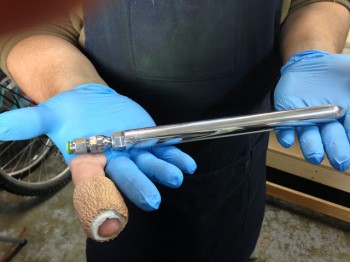
My Retractable Heated Pitot Tube

Yes, Marco–being the excellent & talented machinist that he is–machined me this beautiful retractable heated pitot tube.  Of course this wasn’t just a simple ‘throw some metal on the lathe and here it is’ endeavor, it took literally a couple months of research and discussion, and quite a bit of engineering and design.  And countless hours of machining work by Marco.  Marco describes the first part of the process here on his Blog What have I gotten myself into!

In addition, Marco covers the features of my Pitot Tube in this awesome video he made:


Chapter 13 – Planning over coffee

Today I had to do a bunch of running around getting ready to move.  I did stop by a local Starbucks to finish some planning and get an Aircraft Spruce order together.  One thing I was trying to figure out before I finalized the order is if I would need more 1/4″ H250 High Density foam for the nose build.
I determined I most likely wouldn’t and submitted the order, but made it a priority to finish getting THE plan finished for my nose.


Chapter 11 – Elevators & more

I was busy working move stuff much of the day, so I left the elevators bondo’d to the table to cure even more.

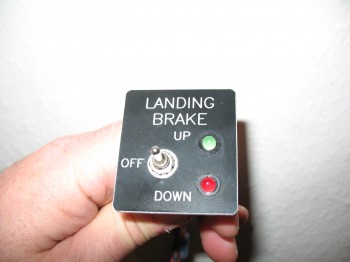
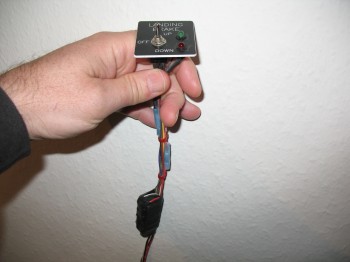
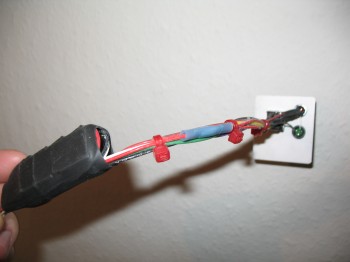
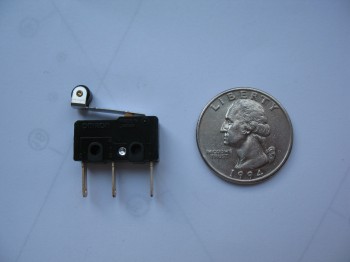
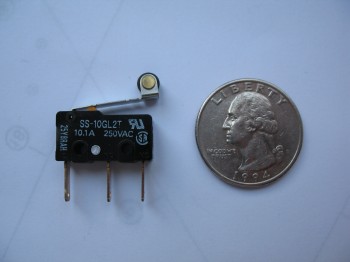
My buddy Marco asked me to take some pics of my Landing Brake Switch that came with the landing brake setup I got from Jack Wilhelmson at eznoselift.com.

I took a pic of the switch & its wiring, and the microswitch that is used in the system as well.

Section VI - Landing BrakeSection VI - Landing BrakeSection VI - Landing BrakeSection VI - Landing BrakeSection VI - Landing Brake

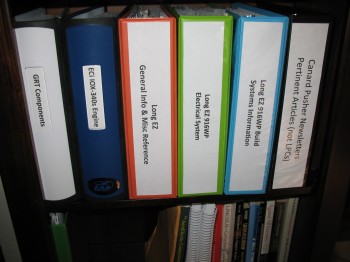
And since we had been discussing the process of researching Long-EZ construction, I shared a picture of my project documentation binders & research.

My Long-EZ Docs & Reference Material


Sortin’ Glass . . .

I started off today by going to Praktiker, Hornbach & Toom (Remember, German DIY stores), to find parts & materials for the canard build.
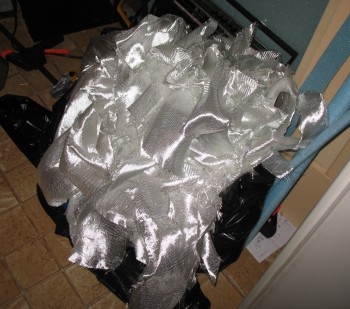
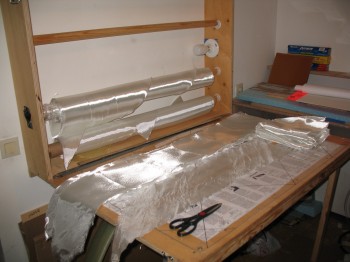
I also sorted through all the tons of spare glass that I’ve accumulated from the build so far. Lots of BID and UNI that didn’t pass the go/no-go test.  The pic just below shows glass that is all getting thrown out!  The second pic is all glass that I’ll reuse.
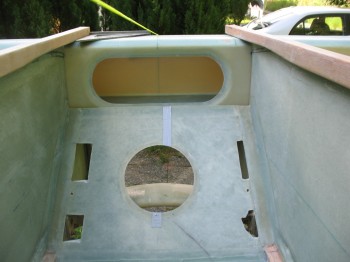
Getting tossedSaving usable glass!

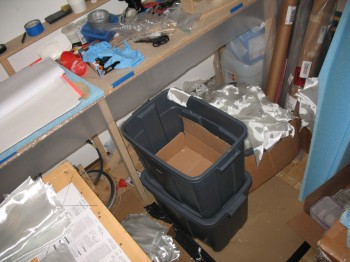
Below are the bins that I had been storing (laid in, not just tossed) the extra glass bits ‘n pieces.  Once I got all the glass sorted, I re-stowed it in the bins.

Sorting glass

So now that my mandatory housecleaning endeavor is complete, tomorrow we’ll do some building!