Chapter 25 – Paint winding down

While I’m undecided on painting the wings just yet, the remaining paint efforts are now starting to dwindle down from being the main project push to simple sideline ancillary tasks now… to be done in between other non-painting tasks.

That being said, today was one of the last big painting push days, where I got a lot of the smaller, low hanging fruit tasks done.

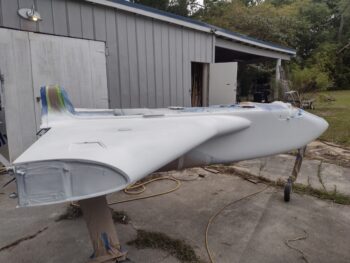
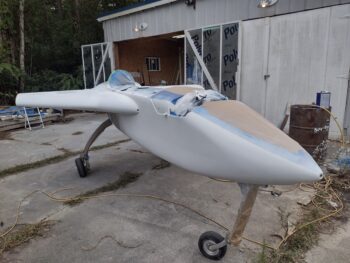
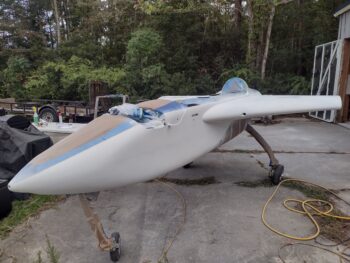
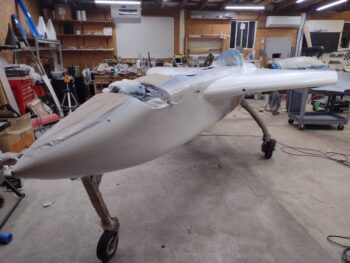
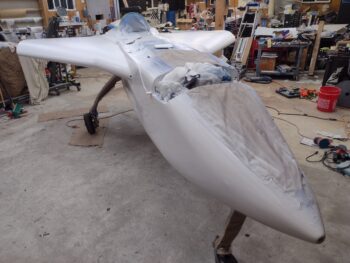
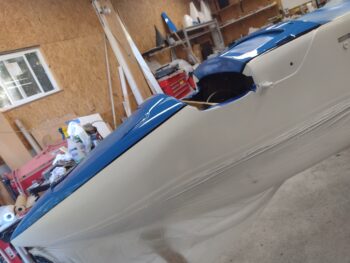
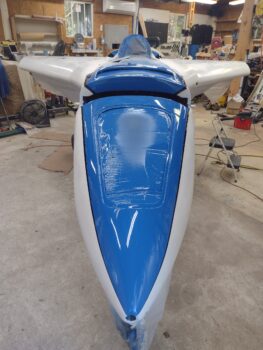
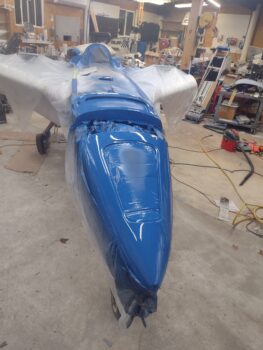
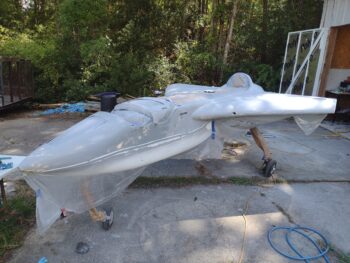
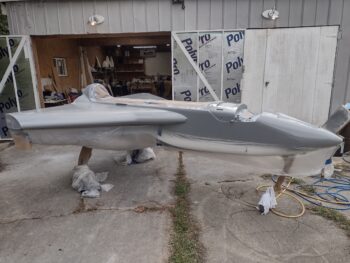
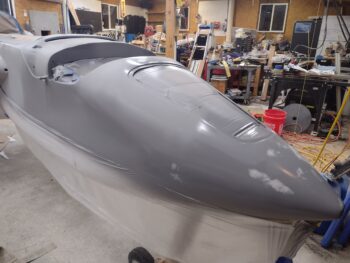
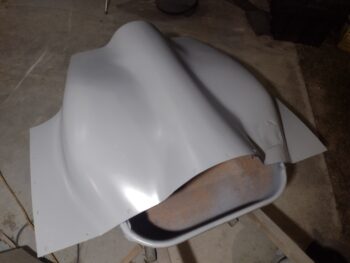
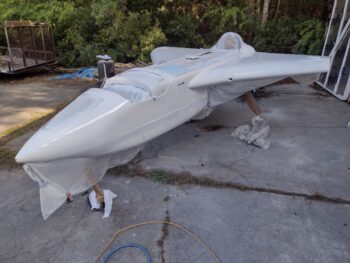
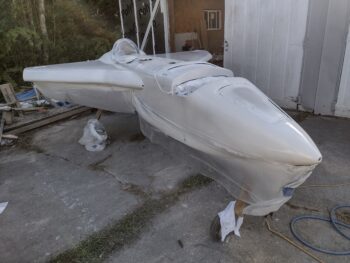
Case in point: here we have the aft nose/avionics installed on the bird, looking pretty spiffy if I do say so myself.

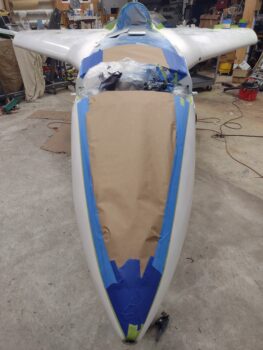
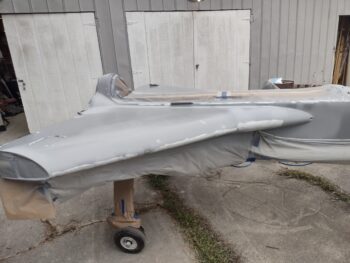
However, notice the gray primer lower side “wing” on each side that is still in gray primer.  This of course needed to be remedied.

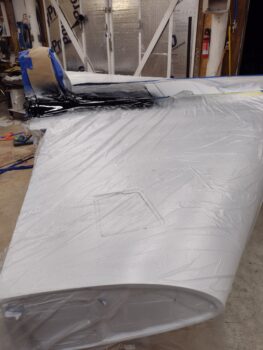
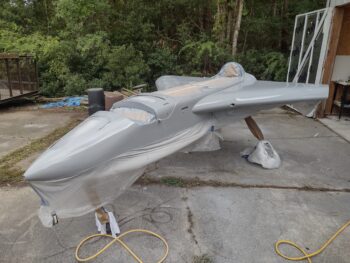
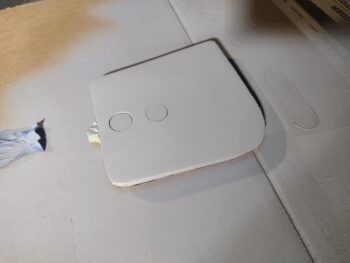
Last night I installed the right strake hatch door permanently with A/C grade hardware.  I then filled the 3 exterior Phillip screw heads (“poor man’s clickbonds”) with Icing filler.  Today I sanded down the filler and door surface in the last prep for a coat of sealer before painting it white.  Note the plastic covering the entire bird (I also painted the aft bottom hinge black, but forgot to get a pic).

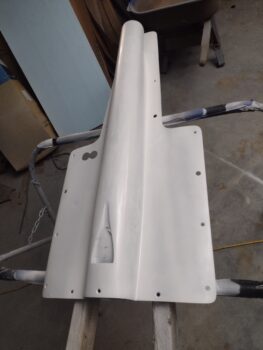
Since the left strake hatch door’s exterior surface is already good without it being installed, I prepped it, shot it with a coat of sealer and then painted it white as well.

Here I’m painting the right outboard strip on the upper cowling white . . .

and here is both outboard sides of the upper cowling painted white.  Obviously this carries my color scheme all the way from nose to tail on this bird.
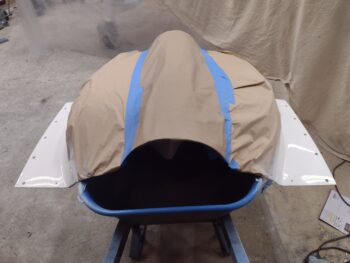
Finally, I also shot the lower side “wings” (that I pointed out were gray above) on the aft nose/avionics cover white as well.
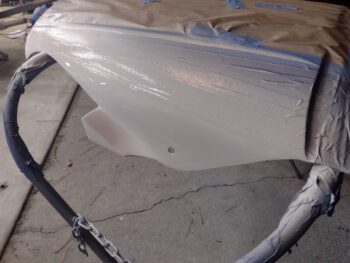
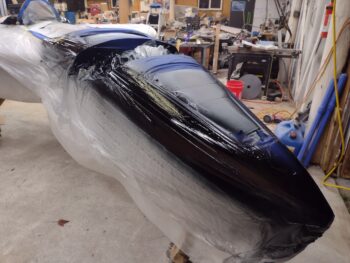
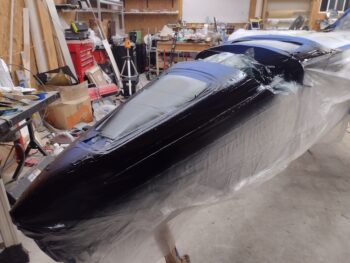
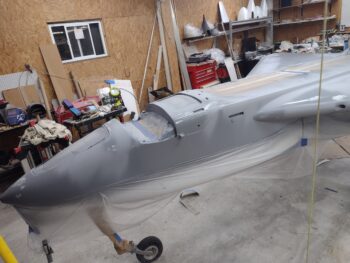
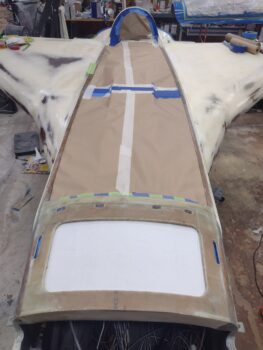
I’ll note that I also spent a good couple of hours this morning with the canopy in place on the bird taping up what will be the black stripes on each side edge of the canopy frame.  I then spent nearly an hour taping up the canopy to ensure no errant paint got anywhere it wasn’t supposed to.  I then shot the black stripes outside, but it was so dark I couldn’t get a good pic of them.

I finished well after midnight, and packed it in as soon as I was sure the paint was curing well.  No issues!

Pressing forward.
Chapter 25 – Fuselage painted

Today was the day to finally get the fuselage, strakes and nose in white paint. As par usual my target mid-morning paint shoot ended up occurring late afternoon.

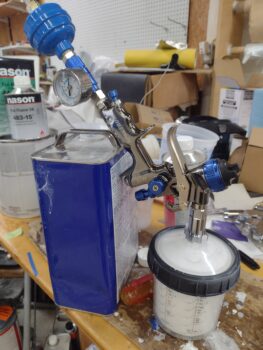
One major difference in shooting this round of paint was that I used the Spectrum paint cup system, which allows for shooting upside down/inverted without spilling paint everywhere.  I shot both a sealer coat on the sanded yet remaining boat paint primer on the bottom of the strakes before then shooting the white paint.

I also shot a seal coat wherever I had done filler work or previous 2K primer, and of course along the lower nose strip of previous white boat paint primer.

Although it doesn’t look much different in these pics due to the gray cloud cover we had today (but no rain thankfully), the fuselage, strakes and nose are painted white.

But . . . there’s rarely a free lunch, and for some reason the left sidewall seam between new primer and old primer, although I sanded it smooth both visually and by feel (or so I thought), was showing through the paint.  I contemplated leaving it since the paint was all on nicely, but then having to fix it got the better of me.

AND… things would have been fine, but I shot just a hair too much on wanting to ensure a wet glossy reshoot on this forward sidewall/nose area, and I got two ~5″ long sags just under the seam I was trying to “fill” with a good extra couple coats of paint.  My fault and stupid mistake, I should have been more controlled and patient in my painting.  Now I have 2 runs to contend with…

And the seam is still very slightly visible, but significantly less so. Clearly the added slathering of paint worked, but at a cost.  I’ll revert back to my “combat painting” moniker of this phase, which to be clear isn’t my desire, but just the reality of getting it all done ASAP.

Another shot of the painted fuselage.  You may note the dew on the strakes after just putting the bird in the shop, since now at mid-evening (7’ish) all outside composite components (e.g. wings) start dewing up quite significantly, while my vehicles, boat, etc. are all bone dry.  Very odd.

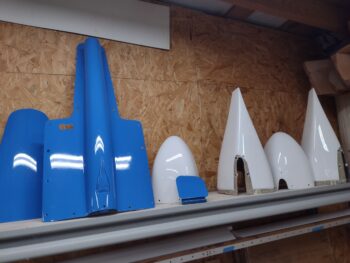
Here we have the RAM air scoop painted blue.  Not perfect since I have some required touchup spots since I taped off the inside opening and the NACA scoop.  But passable and flyable (probably for years… we’ll see!).

I also taped off and shot the center of the top cowling blue . . .

As well as the same for the aft nose/avionics cover… (this may get sanded and reshot due to the insane amount of bug Kamikaze attacks for some reason on this part).

Still pressing forward.
Chapter 25 – Black & blue in harmony

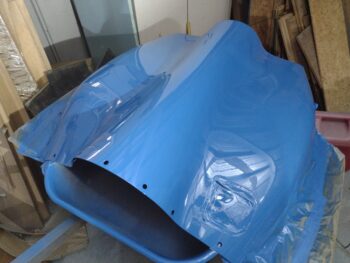
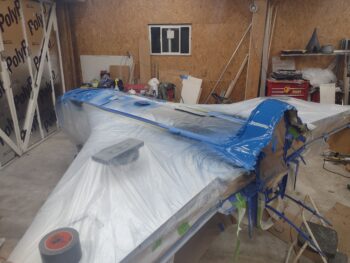
Today I started off by removing the plastic sheeting that covered the entire bird while I shot the blue paint on the turtledeck, which you can see here turned out pretty darn good.

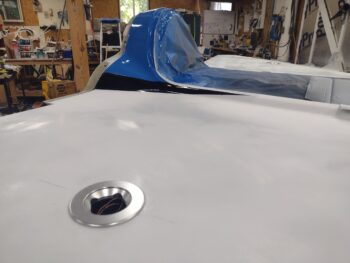
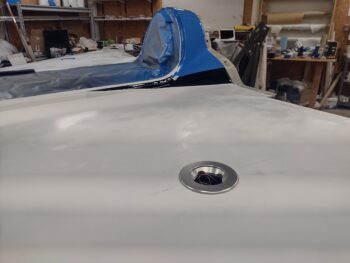
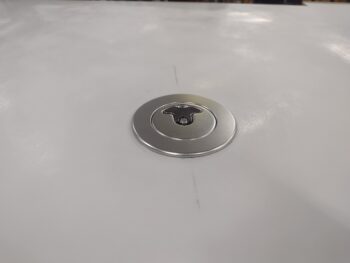
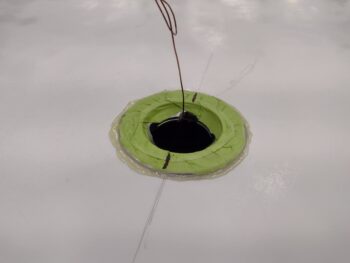
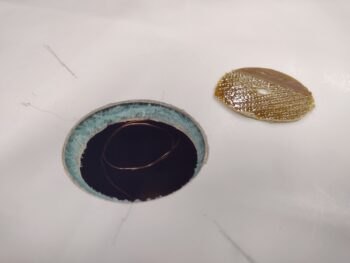
I then removed the weights and the tape from each of the floxed-in-place “gas-hole” rings.  Which are looking nice and spiffy as well.

I’ll be honest when I look at the pic above and below, it’s hard to tell initially whether the white is primer or paint, obviously fairly close in appearance… with the white being just a bit more bright.

Here I popped in the gas cap to test out the install.  I’m very pleased with how these turned out.

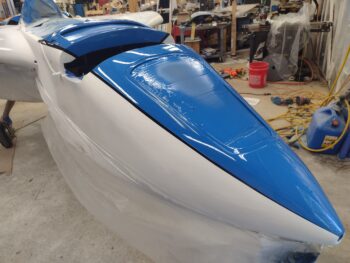
And here’s the nose and aft nose sub-structure blue paint.  Again, looking pretty darn spiffy, as far as combat painting goes (yes, there are a few bugs and dust in the paint… moving on!).

And a shot of the blue nose, with black stripes on each side.  I am digging how the color scheme is coming along.

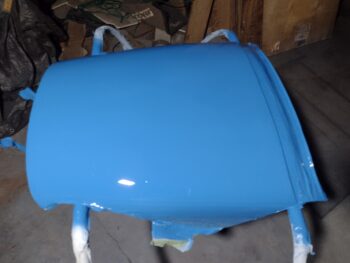
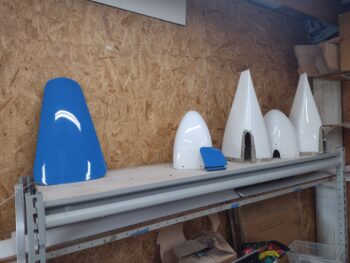
Here’s a shot of both the nose hatch door and the top cowl oil check door painted blue. I painted the nose hatch door under my carport, which I’m noticing has a lot more dust and bugs than just outside the front of the shop.  Thus, I won’t be painting anything under the carport anymore.

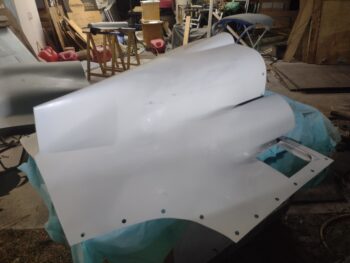
Here is the RAM air scoop that I spent ANOTHER good hour sanding after another round of Icing filler to get the surface uniform and smooth.  I then hit it with a coat of sealer before painting it blue (blue paint pic coming tomorrow).

I then spent another couple of hours taping up the gas-holes and every bit of black and blue paint on the fuselage in prep for white paint.  Here we have the turtledeck and shoulder stripes taped up.

And the nose and substructure blue and black paint taped up for the final white paint to be shot tomorrow.

It was quite late, so I called it a night.

Chapter 25 – Feeling blue! (paint)

Today was first about getting the Newton fuel filler caps installed into the strakes.

And of course what I thought would be an hour or two job turned into about a 4 hour job, with the first hour or so simply measuring everything out to make sure my gas caps were in the correct spot on each strake… and symmetrical to each other.

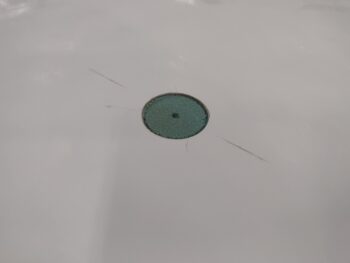
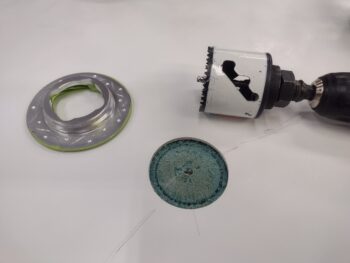
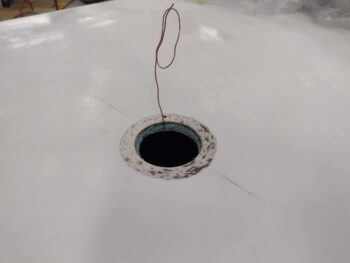
The inner steps on the mating side of the gas cap ring is 2.5″ on the top ring, then 2.25″ on the bottom ring.  So obviously I used a 2.5″ hole saw for my initial cut, just to get through the top skin into the underlying foam.

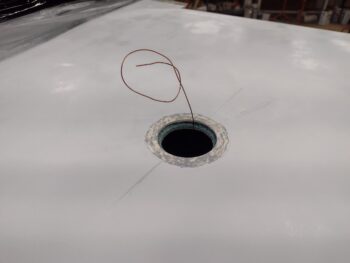
After popping off the skin piece to expose foam, I then used the 2.25″ hole saw to drill the inner hole.  This is show on the right (pic 1) and left (pic 2) strake.

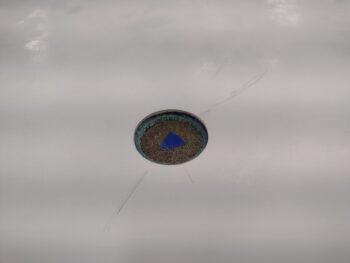
Here we have the inner hole cut all the way through the inside fuel tank skin on the right strake (pic 1).  Of course I had the shop vac sucking up the debris during this op.  Note that you can see the grounding wire just inside the hole (I didn’t stage this. It’s exactly as I found it!).

I stopped short of drilling the inner skin out on the left side to allow me to prep the perimeter strake top for mating the gas cap ring when I flox it in place… see below.

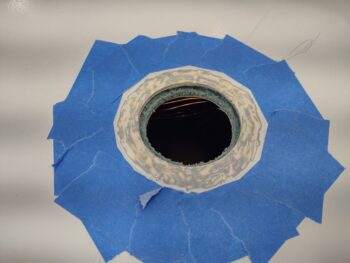
Here is the left side, where I carefully cut the inner hole after use the Dremel drum sander bit to remove most of the top strake paint.

Here we have both right and left “gas holes” prepped for the gas cap rings to be floxed in place.

Ahhh, speak of the devil!  Here we have the right and left gas cap rings and “gas holes” floxed up, ready for mating.

Here is the left side gas cap ring initially floxed in place.  Of course I cleaned up all the excess flox both around the perimeter and inside the tank around the mating edges.

I weighed down the floxed in place gas cap rings and spent another few hours prepping the bird for its blue paint down the center: the nose, nose sub-structure and turtledeck.

Another shot of the blue centerline paint on the fuselage.

Pressing forward!

Chapter 25 – So much filler!

This post covers the past couple of days.

First off, I spent many, many hours refining and cleaning up the surface of the fuselage, strake, nose, etc. It’s amazing what all is hidden from view (or even feel) once you lay down a solid color of primer or paint.  Yikes!  So many surface imperfections that needed fixing.

So what I had planned for as an early morning shooting of white epoxy primer, due to all the above machinations of filling and repairing, not to mention a full wet sanding of all the gray primer areas —along with repositioning all the tape down/aft a good 1/4″ to eliminate a hard edge buildup— had turned into a late afternoon white epoxy primer shoot.

Here we have (FINALLY) the bird ready for epoxy primer coat #2.

Which I shot in 2 medium coats.

It’s amazing (to me at least) how much different, even refined, the bird looks in white primer… although I love me some tactical gray!

Way later in the evening I had tried to see if the primer was ‘tape ready’ and all my initial tests were good, until actual no-kidding application.  When I went to reposition the Fine-Line tape for my black stripes, it pulled a tiny patch of white primer up with it… creating a couple 1/4″ diameter divots.  Ugh!

With only a bit more minor damage, I did get both the aft nose cover and top cowling mounted in place, and taped the black stripe features up on those… but again, NOT on any white primered areas.

The next morning, after a full night’s cure, I then got to work taping up the white primer areas for the black accent stripes.

Wow!  Again what I thought would be 1-2 hours of work turned into over 4 hours of work once all was said and done.  I had really had to get this right since the black stripes, the separating border between the blue and white paint, really is the linchpin for the whole design… it took a good extra hour or two to get them nailed down.

So early evening I finally got to shooting black paint.  Here we have the left shoulder swoosh painted black.

And the same on the right side.

And the nose stripes both on the right (pic 1) and the left (pic 2).  Those of you with an eye for detail may note that I’m carrying the blue center field and black accent stripes to the nose SUB-structure (under the aft nose/avionics cover) for some hidden bling… yes, took an extra 20 minutes to tape up those stripes (worth it!).

When loading my pics I realized that I had forgotten to grab shots of the top cowling and aft nose cover black stripes.  Probably because I shot those out under the carport, so out of sight, out of mind.  But those are done as well.

Tomorrow I plan on knocking out the gas cap installs into the strakes.  Jess had me busting out laughing when she asked how my “gas-holes” were coming along.

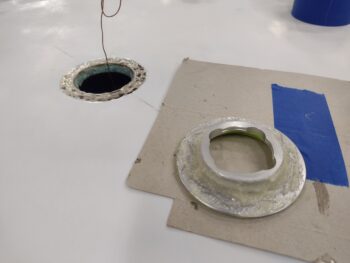
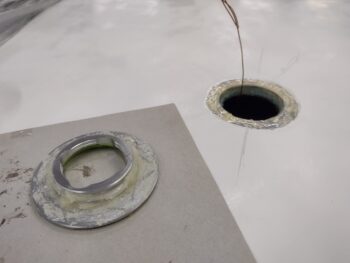
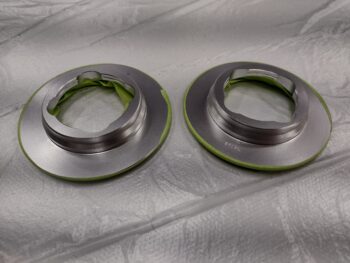
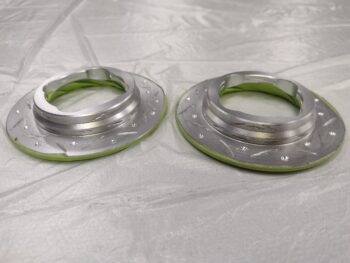
Here is the underside of the gas cap collars/retaining rings, with the original clean undersides (pic 1), and then after I Frankensteined them with Dremel grooves and drilled divots for extra flox grippage (pic 2).

Again, another very late night, so with the “gas-hole” collars ready for install, I called it a night.

Chapter 25 – Fuselage in primer

I was able to get the fuselage mostly prepped for primer last night, so this morning I wheeled it outside and did final degreaser wipe down and prep for primer.

I then shot 2 medium coats for the first round of epoxy primer (gray) for the fuselage (strakes, nose, etc.).

Another shot of the fuselage in gray epoxy primer.  Obviously the bottom half of the nose and fuselage, already in white boat paint primer, is taped off.  That will get a sealer and then topcoat along with this primer later on.

Much later in the evening, I hit pinholes, scratches and divots with Icing filler, and some of the rough/low spots with gray 2K high build primer.

More shots of nose and fuselage surface cleanups with Icing filler and high build 2K primer.

One last shot of Icing filler and 2K primer on the epoxy primered fuselage/strakes.

It was quite late by this point, so I called it a night.

Chapter 25 – Gear legs painted

I started off today wet sanding the gray epoxy primer on the bottom of the left wing.  You can see on the inboard side (pic 1) the swirl that resulted from repairing yet another delam a while back.  On the outboard side (pic 2) there is a fair bit of micro showing through, which means as thin as the epoxy primer coat is, there is a good bit of leveling and smoothing occurring with each epoxy coat (1 gray/2 white) and each round of sanding.

With the first epoxy coat (gray) sanded, I prepped and shot the second coat of epoxy primer (white) on the bottom of the left wing.

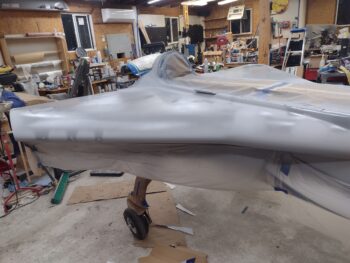
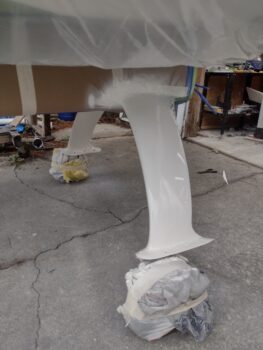
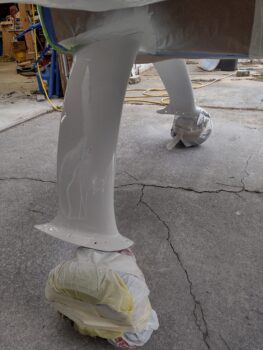
Last night I had spent a good bit of time taping up around the main gear’s top intersection fairing on each side.  Today I finished the prep and then rolled the fuselage outside to shoot the gear legs with white paint.

They say that a nice glossy paint job is when it is right on the verge of running, and my gear legs looked pretty darn good … ahem! But I did have a few distinct runs that I had to fix at this point before it dried (what a royal PITA!).

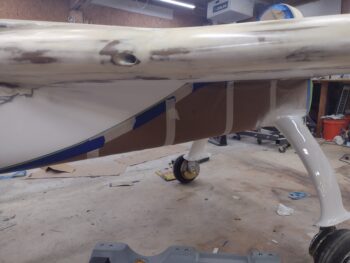
Another shot of the painted gear legs and the taped up blue and black paint on the bottom of the fuselage.

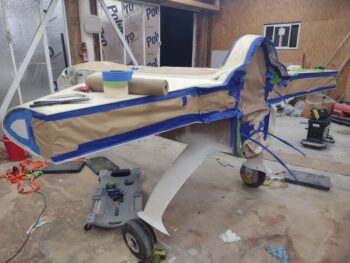
I then finished taping up the top of the fuselage and nose, getting the cockpit bits buttoned up for the ensuing primer and paint.

Here we have the strake ends, CS spar and firewall taped up for primer and paint.

And also the left (pic 1) and right (pic 2) strake storage compartments buttoned up, so that just the door flanges will get primer and paint.

I know I said that I was done shooting actual paint.  However, with the amount of work and time it took to tape everything up on the fuselage, strakes, nose, etc. I decided to PRESS FORWARD on the fuselage and strakes and finish it to paint.  I DO NOT want to go through this goat rope again, especially on a flying airplane!!

Get ‘er done!

Chapter 21 – Finalizing wing primer

Again, this post covers the past couple of days…

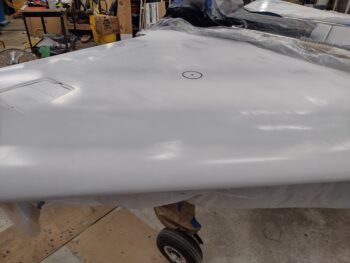
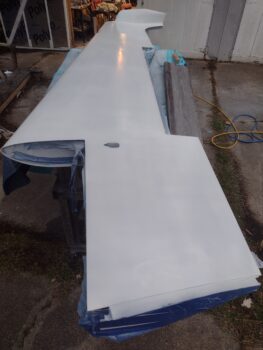
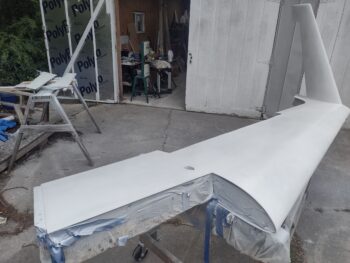
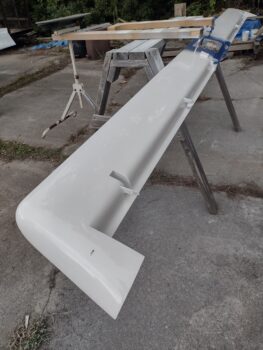
Here’s the right wing top with its first round of white epoxy primer.

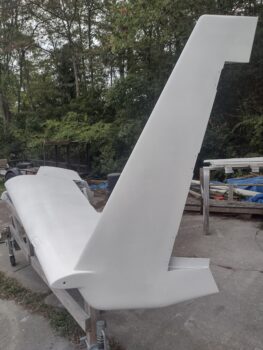
And another shot from the finished (primer wise) winglet side.

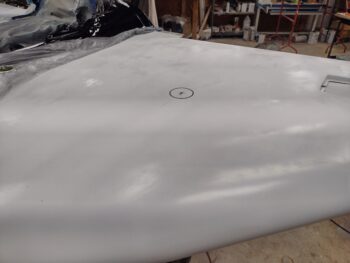
On the left wing I hit it too with a coat of white epoxy primer.

Also a shot from the winglet end of the left wing.

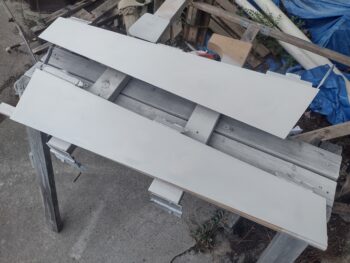
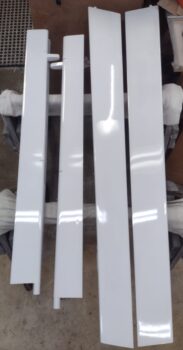
I also shot the outboard sides of the rudder and the left strake hatch door with white primer as well.

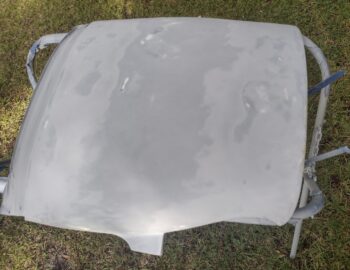
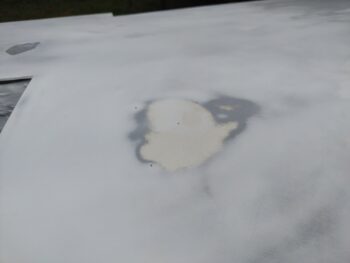
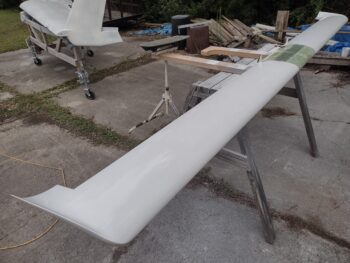
After a good while (maybe even the next day?) I filled the depression on the top of the left wing where I repaired the delam.  I’ll do a final coat on that when I flip the wing back upright… see below.

I also gave the aft nose/avionics cover a thorough sanding as well.

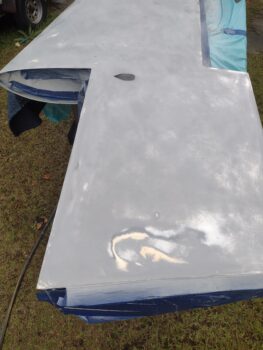
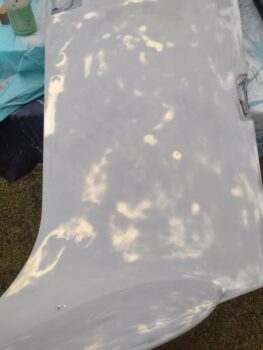
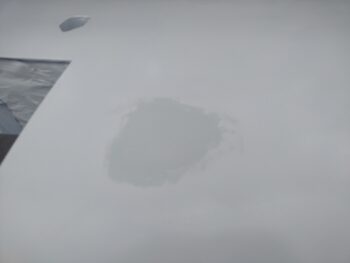
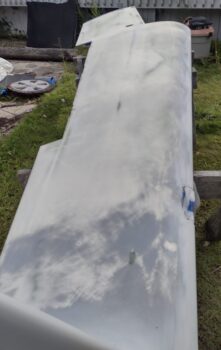
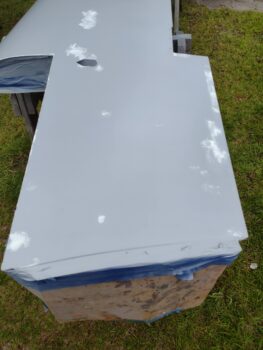
Jess helped me flip left wing inverted onto the elevated wing dolly (that’s on it’s last leg).  I then shot the bottom of the left wing with gray epoxy primer, and at some point during the day we got a quick rain shower before the sun came back out… thus all the gray water spots.

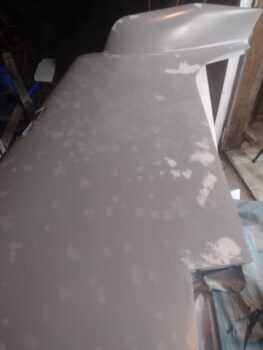
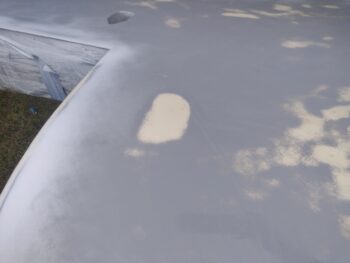
Before I sanded down the gray epoxy primer I filled all the pin holes, low spots and scratches with Icing filler.

Tomorrow I’ll sand the bottom of the left wing and hit it with its first coat of white epoxy primer.

Nugging through this primer/painting!

Chapter 22 – Fun with primer

Again this post covers the last couple of days.

I started off with sanding down the white epoxy primer on the bottom of the right wing.

Next I had to deal with a delam on the left wing that I had grabbed a photo of last week when I suspected I had a bit of a high point on the wing top.  After leaving the wing out in the sun for the primer to cure, I definitely saw the delam grow a good bit, only to shrink when the wing was cooled down.

After quarter-tapping the wing top I confirmed that I did have a delam (better now of course than after final paint).  Since I wanted to do a final white epoxy primer coat on the topside of the left wing before flipping it inverted, I went ahead and drilled and injected the delam.

My buddy Guy Williams was just arriving to help me out during this process, and he assisted me running a tie-down strap over the delam and a couple pieces of wood, with weights on both sides.  I then added a lot more weight on top to ensure the delam’d glass was fully compressed onto the underlying wing foam.

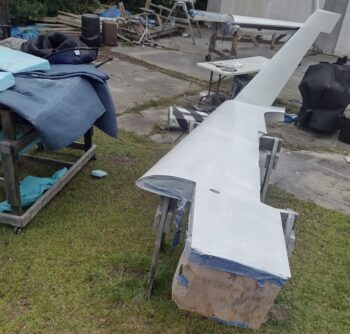
I grabbed this shot late in the evening after I pulled the weights off the delam repair, but it shows the right wing (foreground) off of the elevated dolly and sitting upright on sawhorses.  Guy had helped me do the final wet sanding of the bottom primer on the right wing before flipping it over and off the dolly.

Throughout the day I had been filling divots and pinholes on all the components I shot with gray epoxy primer yesterday.  I then sanded down the Icing filler before shooting some areas that needed a little build up with 2K high build primer.

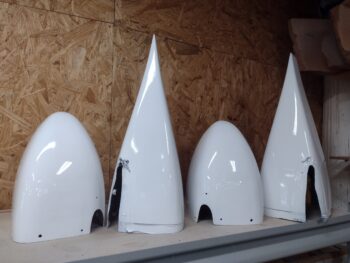
Here we have the top cowling, ready for another round of sanding tomorrow before I final coat of epoxy primer.

And the same thing with the bottom cowling.

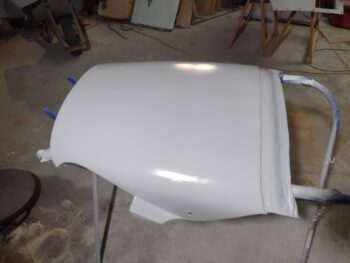
The aft nose/avionics cover shot in 2K primer after pin holes and divots were filled with Icing filling and sanded.

I also did a good bit of filling and sanding on the RAM air scoop/hell hole cover before shooting it with 2K primer as well.

I then lightly wet sanded the top of the right wing (pic 1) to prep it for its first coat of gray epoxy primer (pic 2).

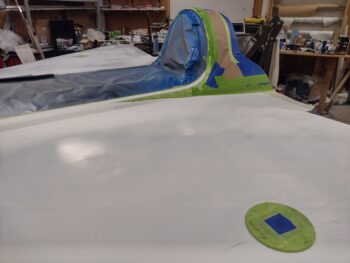
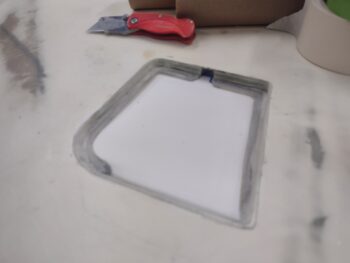
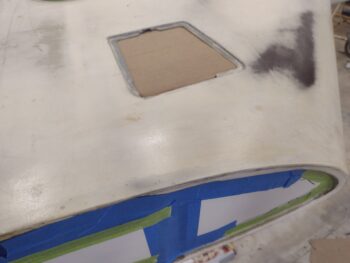
I also popped the taped wood circle off the top of the left wing delam repair (pic 1) and then cleaned up the wing surface (pic 2).

After the right wing top epoxy primer cured, I used the Icing filling to fill in pinholes and fill small divots.

And then wet sanded it in prep for its next coat of epoxy primer (white this time).

I shot the white epoxy primer on the right wing top, but didn’t get a pic of it since it was dark outside when I finished.  I’ll grab a shot of it tomorrow in the daylight.


Chapter 25 – Shooting paint!

This post covers the last couple days.  And while much better, my man cold continues to linger slightly.

That being said, the combat painting continues!

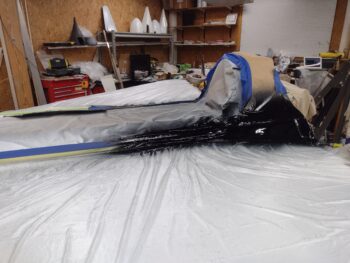
I started off by popping the new-edged aft nose cover off the taped-up canard.  Here you can see the rough, cured flocro’d edges of the cover that meet up with the canard top.
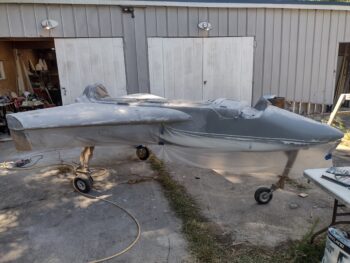
I then dove in and painted the canard with the Nason white paint that I have on hand.  It’s a really good quality paint, I’m just not a good quality painter! ha.

The bottom of the canard (of course) came out better than the top, with significantly less orange peel across the board.  The right side canard isn’t too bad, but the left top is by far the worst regarding orange peel (yes, I choose to dwell on the negatives!).
One last shot at the canard in white paint.  Not perfect, but as far as combat painting, this dog will hunt!

I also knocked out both sides of the elevators and the ailerons in white paint, one side per day.

And of course we have the “test subjects,” which I actually shot first with white paint.  Not bad, but also replete with a good bit of the dreaded orange peel here and there.

At the end of day 2 I was ready to finally get the aft nose/avionics cover slathered up in gray primer… a big milestone, if not at least in my mind.
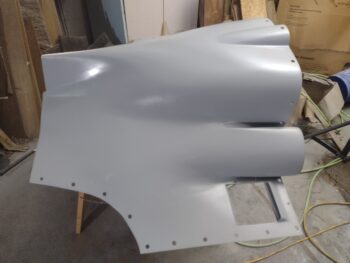
I also got the top cowling in gray primer as well.  I had epoxy wiped the exposed micro to ensure no (extra) pin holes appeared.  That seemed to do the trick as far as the micro’d areas, but the carbon fiber itself doesn’t seal perfectly when epoxy wiped so I have a good number of pin holes to fill with the Icing.
I also hit the left side strake hatch door with gray primer to begin its journey of someday getting painted as well.

I had some extra gray paint in the gun so I quickly finished sanding down and cleaning up the bottom cowling, then hit it with a solid coat of gray epoxy primer.

I’ll note that I’ll spend a day or two cleaning up all the above gray epoxy primered components, but I’ve decided that for time’s sake I’m going to press forward towards first flight with the cowlings in gray primer and the wings, fuselage and strakes in white primer.  Painting is taking too much time for the quality I’m getting not having a paint booth… I need to figure that one out.

So I guess when I say “combat painting” from here on out, I actually mean “combat priming!” . . .  still, pressing forward.