Chapter 22 – Testing stuff out

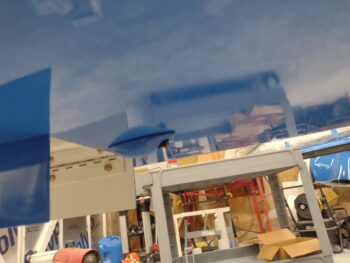
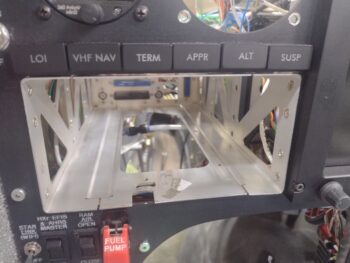
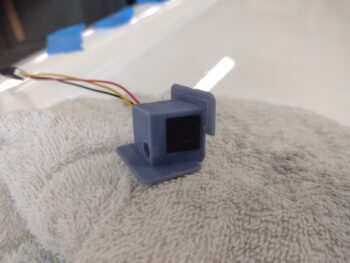
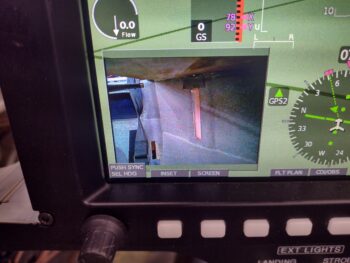
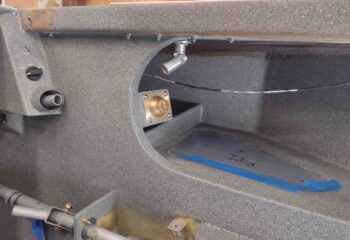
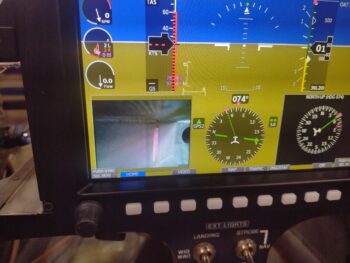
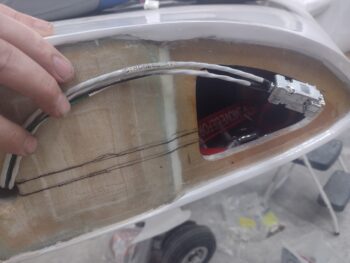
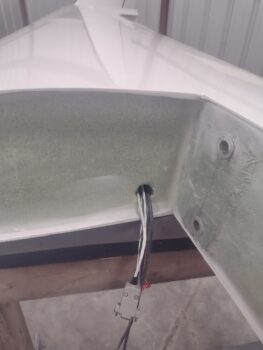
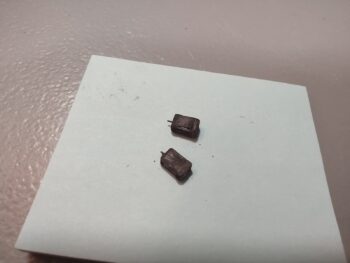
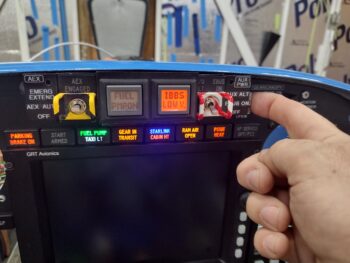
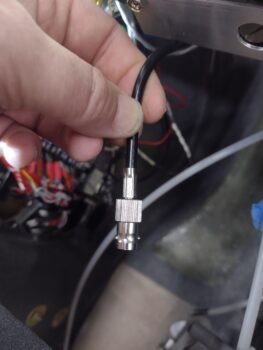
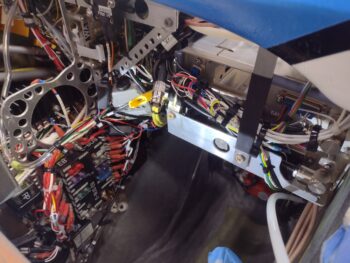
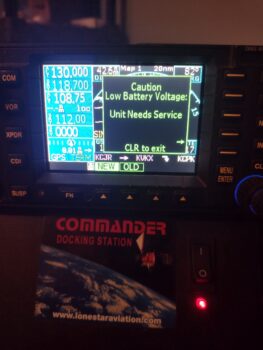
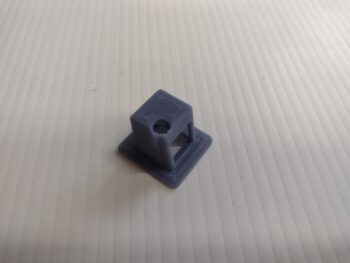
I started off today testing another component in my IBBS-powered suite of stuff: the Radenna SkyRadar ADS-B IN receiver, that I plan on mounting on the top centerline of the canard (pic 1).  As you can see, the green power light shows that it is getting juice (pic 2).  Initial power-up test good.

I also received more 1/4″ tubing push-to-connect fittings today which allowed me to finish configuring the Mini-X EFIS for its pitot & static connections.  The incoming pitot & static feeds from the GRT AHRS will connect to the center/sides of the “T” connectors, while the open (forward) end of the pitot “T” connector connects to the TruTrak ADI.  The ADI requires no static feed, so the end of the static “T” connector is plugged for future use.

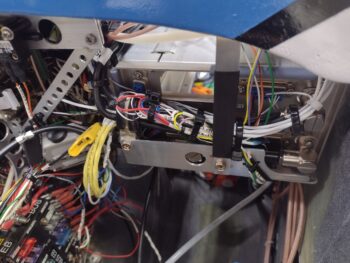
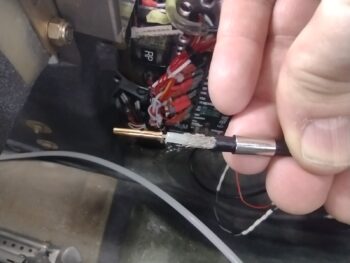
I then did the final official install of the Mini-X, 4 screws and all, and connected up the ADI’s pitot input (pic 1) as well as Mini-X’s pitot & static feeds to/from the AHRS (pic 2) [note the GPS pucks cable loops and initial positioning of those… assessing mounting]

And here is my updated pitot/static diagram… besides the right side static port connection, the right side of the panel is complete.  I’ll note that my configuration is a bit like a triangle, with the right side pretty much done, the left side (base) still needs plumbing, as does the forward (top) side with the 5 airspeed switches (AEX has 2) in and around the F22 and F28 bulkheads.

I’ll further note (if you read my annotations on the diagram) that I’m following Joe Gore’s lead (he’s helped me considerably on electrical stuff via the Aeroelectric Connection forum) in NOT plumbing the Airspeed Switches’ static ports since a good number of them have a tendency to leak (remember, Jack Wilhelmson didn’t utilize the static port on his original AEX unit).  Thus, I’m “going ugly early” on this implementation.

In the nose I terminated all but a few ground wires onto the G0 Ground Bus.  The 3 ground wires that I didn’t finish yet is because I want to ensure/confirm their length and routing around the battery to allow me to secure them in a nice tidy bundle along with the other ground wires.  That will come the next time I remove the battery.  In addition, I purchased some hardware for the battery post connections that I’ll add into the mix the next battery removal/install.

I threw a fuse into the Battery Bus fuse panel to allow me to test the circuitry on the Landing Brake.  Now, although it lowered and retracted as per the labels on my throttle handle switch, the AG6 annunciation was backwards and the WOT=Landing Brake retraction feature didn’t work… after some thought I’m pretty sure I know exactly what’s going on with that and will fix it tomorrow.

Not shown is the nose gear test.  I have an issue there too with the gear retracting up fine, but the when I flip the switch for the gear to deploy (down) it’s currently dead… a no-go.  I have zero thoughts on what is causing this issue, but the one positive and unexpected discovery that I made out of this is that tiny little nose gear back-up battery is not only strong enough to put the gear down, but that little sucker can lift the entire nose off the ground (and that’s without the counter-balancing engine installed).  Impressive!

Yet another small but notable discovery I made was when I powered up the bird with the Master Switch.  I initially thought I might have an issue with the pair of AG6 Warning Annunciators since they were colorless.

It turns out (duh!) that when they are connected to the dimmer, and the dimmer is turned off, then it stands to reason they have no color (good to know… I’ll assess further).

You may not be able to tell in the pics, but pic 1 is with the dimmer as low as it will go with the dimmer on.  Pic 2 is with the dimmer turned all the way bright (again, the red looks washed out on camera, but the lettering is actually a very visible black).

Issue #3 deals with the top row indicator lights, where I ran through a few different blown fuses before I realized there is an issue with the Indicator Push-to-Test circuit where it’s shorting out somehow.  Another troubleshooting task on my list to work tomorrow.

That being said, one of my parameter checks was to avoid using the PTT button to see if individual component indicators were working.  Here I tested the parking brake  handle indicator light, which clearly is working.  That again points more to the PTT circuit as being the antagonist.

It also probably goes without saying, but note that in every shot of the panel the left AG6 screen is constantly red with a “CANOPY OPEN” warning.  This starts off flashing until I push to acknowledge that yes, the canopy is open.  The red canopy warning will continue to flash (if I don’t acknowledge) and permanently stays red until the canopy is closed and the handle locking lever flipped back.

Finally, as you can see here I’m clearly working my way from the right side of the panel with the avionics mounted on that side.  I’m working through powering up and testing every component I am able to (e.g. landing brake, nose gear, indicator lights) to work through every electrical and configuration issue while I still have free and open access to the wiring to troubleshoot what I need to.

Pressing forward!

Chapter 13/22 – Pitot-static start

Starting off, here is a pic of the pitot-static “T” fittings on the GRT AHARS (middle of pic) and the 90° right angle fitting on the TruTrak ADI (bottom center) that I installed yesterday.

Again, here is the 90° fitting on the TruTrak ADI.  My first task today was installing the one straight fitting I have on hand into the pitot port on the MIni-X, immediately followed by a “T” fitting that will connect to the ADI on the forward-facing side, and to the AHRS on the inboard facing side (pic 1).  All this after testing out other physical configurations.

Meanwhile, over on the left side I connected a 3-outlet manifold to the Alt-static valve (switch) that sits on the panel (pic 2).

After testing out a few different physical configurations, I finally settled on the double-fitting setup on the Mini-X to connect it from the pitot and static lines coming from the AHRS and then connecting those via the “T” fittings to terminate at the TruTrak ADI (pitot only).

Through my testing shenanigans and pitot-static machinations I literally updated my pitot-static diagram significantly 3 times by mid-day today.  Although not a beauty of a diagram, it works for what I need to document my pitot-static plan.  Again, I have parts on order to allow me to finish installing the pitot-static system fairly soon.

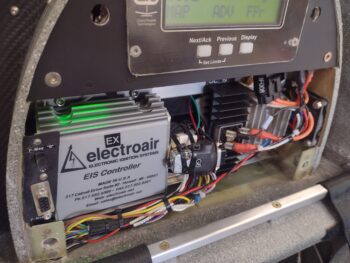
Back on the electrical system, I re-installed the glass 3-amp fuse into the IBBS power feed for the GRT EIS.  I then flipped on the IBBS power switch to see if the EIS was getting power, and as you can see it fired up.   Initial test complete.

The only other components connected to the X-Bus/IBBS is the GRT HXr and AHRS, and since the HXr is not installed I’m not testing that circuit yet.

So I tested out some components powered by the Master Bus, starting off with the Dynon Intercom… with only the green LED being the only indicator of power at this point, but that is clearly a great starting point.

I also installed a fuse into the Wig-Wag/Landing light position on the Master Bus and tested the 2-position switch with the middle position firing up the wig-wag and the top position powering a solid light beam.  Test good (I’ll test the wing wig-wag/landing lights controlled by the same switch when they are installed).

Here’s what that looks like on the actual bird.  Please ignore the dust inside the landing light lens, I’ll get around to cleaning that at some point!

My last test was on one of my 2 dimmers, this one controls the panel lights.  This dimmer also controls dimming the AG6 Warning Annunciators and the Trio autopilot (not yet installed), which will get tested when I’m ready to fire those up.   I turned the shop lights off so you can see the max lighting on the TruTrak ADI and the Vertical Card Compass. Another successful test.

What is not successful are 2 issues with the Mini-X.  The first being my OAT value is not showing on the screen, although the probe wires are physically connected to the Mini-X connector and ground.  Issue #2 is that when I flip the Master Switch on I almost immediately get a Low Bus Voltage warning message.  Thus, when I pull the Mini-X to install the Static fittings, I’ll be doing some circuit testing to check these things out.

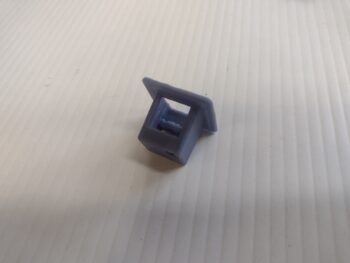
I also have a couple of development projects going that are in their initial stages: one for a mounting ring to allow me to install the fuel vapor warning sensor (for the first few months of flight ops to ensure no fuel leaks in the cockpit) and the other for a GPS puck plate that I will test installing on the right side of the avionics bay top opening.  As those get further along and are viable I’ll post pics and discuss.

My last official act of the evening was to widen the lower mounting holes on the bottom back side of the nose tool box that allows it to slide down onto the reverse mounted Clickbonds.  With the battery strap slightly pressing against the tool box it made it a bit harder to get the bottom holes aligned with those bottom securing nubs, so widening them just a tad did the trick.  Toolbox installed! (until the battery gets removed again…)

Pressing forward!

Chapter 22 – Power up!

Another day full of research, reading, assessment and multiple pitot/static plumbing system reorganizing based on paper design vs the physical space in the bird.  I picked up a length of high-end 1/4″ fuel hose to use in the nose to connect the pitot tube to the sidewall pitot tubing… initial tests were good as it didn’t collapse, but still more fine-tuning required.

And although not pictured, I installed “T” fittings on the GRT AHRS box and swapped out a straight fitting on the TruTrak ADI pitot port for a 90° right angle fitting.

I then got busy cutting, trimming and crimping the terminal connectors onto the  battery cables.  Sorry, no intermittent step pics on those since I was in get ‘er done mode since this whole process is taking way longer than I planned for.

All told the ground cable (right side of battery) that is only visible through its attaching bolt, the left side positive cable on the front side of the battery and the Tri-Paragon ground cable (top battery, right side) were all completed (note the blue fuel-line tubing being tested/configured for the pitot tube).

I still need to terminate the G0 ground bus’s respective nose component ground wires… and clearly for a visual I threw in the Tool Box for a good look at how this area will appear during normal ops; just a bit more tidy.  Note the left-side (upper right side of pic) located TCW Technologies Integrated Backup Battery System (IBBS), which will be the subject of my panel components test below.

With the battery in place and cables firmly attached (I will need a more specific bolt, washers, etc. that I plan to acquire tomorrow), I then tested the IBBS back-up battery function by flipping on the IBBS switch (located lower center strut, pic below).  This switch flip should have resulted in the GRT Mini-X EFIS, the TruTrak ADI, and the MiniUni2 mini backup EFIS all powering up… as you can see, unfortunately, the ADI did not power up.

But the Mini-X did nicely…

As did the MiniUni2.

Again, here, these are powered via the TCW Tech IBBS (in the nose), NOT the Master Switch (yellow pointer) which remained off during these power-up tests.

As a reminder, the IBBS power switch is the bottom right switch on the center strut of the panel.  I forgot to grab a pic, so I reused this one.

Clearly I had an issue with the TruTrak ADI not powering up, but after a good 30 minutes of troubleshooting I fount the culprit: the ADI power wire FastOn at the X-Bus fuse panel.  After a lopped off the bad FastOn and crimped a new one on, Viola… issue fixed.

Which resulted in my initial test goal: all 3 panel units powered up via the IBBS powered X-Bus.

Today’s mission complete!

Tomorrow I’ll add the GRT Engine Information System (EIS) unit to the IBBS power-up test list, and then get back to finishing up the electrical system install.

Chapter 22 – Nose Ground Bus

Another 2-day update here.  Wow, time flies when you’re building an airplane!

Lots of research and purchase orders going in to figure out and acquire all components for the pitot/static plumbing.  That’s taken up a good few hours each of the last couple of days.

I also got around to knocking out one of two remaining (that I’m aware of) machining jobs I have on the books: the brass G0 Ground Bus that hangs off the battery’s negative post in the nose (job #2 is the right angle bracket for the GNS-480 mounting tube).

I started by cutting a brass plate to length and prepping it for milling.

I then proceeded to mill the brass plate (pic 1), which thankfully didn’t take too long… here’s the end result of the G0 Ground Bus tab that will get mounted directly to the battery (yep… cheating!).

After cleaning it up and deburring the edges, I checked the hole fit around the raised center brass ring on the negative battery post (pic 1).  It fit near perfect.  I then secured the battery cable attach bracket into place (pic 2).  Note how dirty the L-bracket is… destined for a white vinegar bath in the morning.

Day 2 morning: I carefully bent the G0 Ground Bus tab over in the vise and then remounted it onto the battery (note the CLEAN L-bracket!).

I then secured the double-row FastOn connector tabs first with a rivet, and then by soldering around the perimeter and in the center rivet holes.  I had used my left over vinegar and 3M Scotchbrite pad to clean the mating surfaces, but for some reason my solder was being finicky about wetting out and flowing between the components.  That being said I couldn’t pry the tabs off with my bare hands after soldering, so they’re on there pretty darn good (I had expected some possible shenanigans with the solder, thus the rivet!).

Note the 3D printed mock-up that I tested out a month or so back when I designed this G0 ground tab in CAD.

And here we have the final pic before it gets installed into the nose… which is coming up within the next day or two.

In prep for the battery going in, I did a good bit of work on the heated pitot tube… primarily assessing how to plumb it up to the sidewall pitot tubing.

I also terminated FastOn connectors to the white (power) and green (ground) wires that connect the small back-up battery to the nose Auto Gear Extension system (pic 1).  After installing the angled bracket battery securing tab, I then also wrangled a good bit of the local wires into the right side Adel clamp.  After I wire up the Taxi Light actuator relay coming up soon (lower right corner), I’ll install the left side Adel clamp (pic 2).

And with that, I’m calling it a night.  Much more to do in the nose tomorrow.

Chapter 22 – TruTrak ADI installed

Although I got a good bit of stuff knocked out today, I spent a good portion of the morning reacquainting myself with terminating coax cable connectors and installing the pitot/static system.  As Abraham Lincoln reportedly said: if he had 7 hours to chop down a tree, he would spend 6 hours sharpening his axe.  Thus, my day started out with some mental “axe-sharpening.”

Let’s start off with the low hanging fruit… a question I’ve had for a while was where to put the Dual BlueTooth GPS puck that my iPad requires for GPS when using my FlyQ EFB app. I decided to simply slap it on top of the NG30 cover: making the turning on and off of it a simple opening of the nose hatch and pushing the on/off button, then closing the hatch.  EZ-PZ.  Task complete.

In addition, I stopped by the Aviation Parts Store (True Value Hardware) to pick up a 1/4-amp glass fuse for the GIB Bose LEMO jack’s power feed that ties into the Dynon Intercom’s power wire.  Both pilot and GIB Bose LEMO jacks tie to the main power wire via inline fuses.

So I installed the fuse and then finalized wrangling all the added Intercom wires, which including swapping out the Adel clamp for a larger size, midpoint between the intercom unit and the pilot headset/headphone jack block (as I did with the Adel clamp between the control stick and panel yesterday).  I then secured the bundle of wires as can be seen with the black zip ties.

Although not very easy to see, I also terminated and routed the ELT antenna cable onto the antenna base (midway vertically between seatbelt clasp and aft armrest mounting tab).

Speaking of seatbelt, clearly it’s visible in the pic above as it is now installed.

The reason for all these final right side pilot seat area tasks is that once I trim the aft upper edge of the armrest and it fits in place, the armrest will be screwed into place with no immediate plan to remove it.

Here’s another shot of the ELT antenna cable routed and secured under the pilot thigh support, where it terminates into the ELT on the left side.

After a few iterations of notching, trimming, and sanding the aft top edge of the right pilot armrest to fit around the pilot headset/headphone jack block, I then installed and secured the armrest with a couple screws on the aft end… out of the half dozen screws that will get installed later.

Here’s a closer shot of the pilot’s aft right armrest with the headphone & headset jack block mounted in place.

Back to my “axe-sharpening,” where I found my PowerPoint notes regarding the pitot/static system, with pertinent links to VAF forum posts from Paul Dye’s system that he redid under the guidance and tutelage of Stein.  Part of my evaluation was to go ahead and install the TruTrak ADI on the upper right side of the panel . . . and

part of that install was to assess the placement and real estate required for both the Mini-X and ADI respective GPS pucks, that always come with the requisite bundle of wires that MUST NOT BE TRIMMED to a workable length… the ultimate prank that instrument manufacturers play on us peasants!

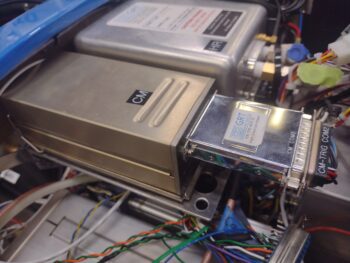
Pitot/static tube line and GPS puck placement assessments aside, the more pressing reason for installing the ADI at this point was to ensure clearance between it and the Trig transponder unit, given that when I designed the panel I FAILED to take into account the length/depth of the Trig transponder’s D-Sub adapter that allows it to be controlled via the HXr EFIS.

My Frankenstein plan is to create a D-Sub pigtail between the adapter and the Trig transponder to provide the clearance required between these two components.  I’ll be calling GRT tomorrow to grovel for authorization to engage in such heretical shenanigans.

And with that folks… pressing forward!

Chapter 22 – Intercom installed

Alright sports fans, a busy past few days… including a number of social engagements that knocked me a bit off my schedule.  But I did get a good bit done.

I mentioned my chicken-scratched diagram to keep me organized on my wiring reconnects on the Dynon Intercom.  However, toward the final wiring steps I found a wire that was not fitting into the matrix (green tape ID’d for pin 7).  It was clearly part of the previous Intercom wiring (split for years between with wires coming from the front, from the GIB/aft and those on the panel mock-up), with ground pigtails coming off the shielding and a D-Sub socket crimped on the end of it.  Clearly it was destined for the Intercom… I mean, what else in this specific area would it would be for?

Well, first off, I had misread the small numbers on the face of Intercom wiring harness D-Sub connector and thought socket 7 position was open, but it wasn’t after a second look.  I then accounted for every wire in the D-Sub connector, and determined I had NO open spots for a single wire.  I guess I should point out that my mystery wire had no visible labels since it was encapsulated in the wire bundle.

I then connected Relay #9 to power to test it out and allow me to do a continuity check on the wires connected through it to both the COM1 (Garmin GNS-480) and COM2 (Trig TY-91) radios.  I also toned out all the headphone, mic jacks and PTT wiring both front and back seats.  These checks included all the shield grounds.  All wires checked out and all socket connections were accounted for… the deduction in my investigation was clear: I had an extra wire in the mix!

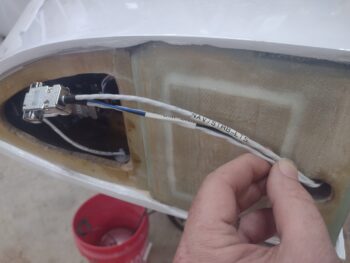
Begrudgingly, I removed zip-ties and pulled the big bundle of wires apart enough for me to find a buried wire in the mix that was labeled for “TCM001″ (pic 1).  CM is the electrical component ID for the COM2 radio and 001 is the pin number.  Just one big problem with this label: my COM2 radio has no required wire pinned on its connector at pin 1.  I again deduced that this wire was yet another holdover from when I had wired up the panel for the Microair M760-REM remote radio, which I had planned on using for my COM2 radio but was forced to change my plans after they stopped selling them.

I decided that instead of pulling the wire out of the bundle to simply remove the labels and ID it as a spare wire (pic 2).  Mystery solved and I pressed forward.

In related news . . .

After some research I pulled the trigger on a BlueTooth module that connects via a 3.5mm jack to the 3.5mm socket assembly that I wired up to the Dynon Intercom.  Here you can see both of those modules installed on the lower right sidewall, just forward of the right pilot armrest.

It took a little bit to figure out where I was going to mount these guys, as I originally had planned on all this being in the GIB area on the sidewall.  I then figured if I was flying alone and wanted to use this Intercom function, I clearly couldn’t reach in the back seat to turn it on.  Plus, the angle of the pilot’s seatback would make both installation and control manipulation a bigger pain than if I just ran it forward… EZ-PZ.

Finally, here is the recharge cord connected between the BlueTooth module and the USB charger (just forward of the pilot seat pad at the base of the center panel strut).

In addition, over the past few days I’ve been dialing in the initial configuration test plate for the top GIB headrest mount for yet another video camera (speaking of video cameras, I have not yet addressed nor repaired the dead video camera wire in the left strake).

So, after 2 days of constant machinations and concluding that whole extra wire investigation, and an hour-plus ordeal of getting that damn D-Sub connector secured to the Intercom bottom plate (I told you it was NOT going to be easy…what a PITA!), I’m officially complete with the Dynon Intercom wiring and installation (pic 1).

To be clear, I do need to install an inline fuse for the GIB Bose LEMO jack and then finish securing a few stray wires when I secure that fuse.  Also, I need to finalize trimming and fitting the aft top edge of the right armrest to fit around the headphone jack bracket (pic 2).

Here we have the right armrest set in place to give you an idea how the intercom will look after all bits and pieces are finally in place in this bird.

After wrapping up the Intercom install on the morning of Day 3, I then got to work installing the Trio autopilot pitch servo on the right sidewall of the avionics bay.  This install wasn’t too bad, but again it took well over an hour longer all told than what I had expected it to take.

In the background, just over the pitch servo, is the P3 CPC connector for the pitch servo.  This was the biggest pain and most time consuming to install due to the tight space required, and I still need to finish installing all the screws to secure it.

Again, a top down look at the just installed Trio autopilot pitch servo with the P3 plug connected (pic 1).

I then did the initial install of the GRT Mini-X EFIS into the panel… note that I still need to connect up its GPS antenna along with the pitot and static connections (pic 2).

Thus, to allow me to pull it out of the panel for the pitot/static port connections I only secured it to the panel with one screw at this point.

Yes, that Dynon Intercom wiring and install —as I suspected— was quite the ordeal.  But given that I tested every connection, as well as the relay-driven COM1⇔COM2 swap via the top inboard switch on the control stick, I’m very happy with the install
—whew!

Pressing forward!

Chapter 22 – ELT wrap-up tasks

Another 2-day update here . . .

First off, what is not shown is the good bit of work I did on reassembling the wiring harness for the Dynon Intercom.  I have a chickenscratched diagram that I made up that helps me figure out what goes where and keep track of my progress.

Also, I’ve been brainstorming how to fix the dead video camera wire in the left strake.  I’ve done a few recon missions trying to get multiple cameras up in there to get some good pics… but to no avail.  All have come out too fuzzy to get a good idea of what the actual problem is.  I’ll continue working that issue, but dropped it for today as I focused on other tasks.

First off, after reading some feedback online from homebuilders in regards to the ACK E-04 ELT picking up unwanted noise and/or firing off false positives, I added a braided shield over the “telephone” cable that runs betwixt the audio alert unit and the panel mounted remote switch…  this after a conversation with the ACK ELT bubbas since my configuration is NOT as they depict in their installation manual.  A good conversation with them on this and my other install configurations to ensure all is good.  Thankfully, my install passed muster with them.

Why else call ACK?  Because I’m lopping off the majority of the cable between the audio alert unit and the panel remote switch.  Again, the manual shows a 6″ pigtail between remote switch to the audio alert unit, then this long cable to the actual ELT unit.  My configuration is a bit opposite as it has the audio alert unit attached to the pigtail off the actual ELT unit, all on the left side of the bird, then the longer cable portion between audio alert unit to the right side mounted panel remote switch.

That entailed crimping a new RJ11 connector onto the cut 4-conductor “telephone” wire (the RJ11 visible in the pic above was a test termination).  To be clear, online, people have reported their units not functioning as designed when they happen to use actual telephone cabling vs maintaining the original wiring and schema (ie no crossovers).

Thankfully I had the required crimpers on hand for CAT6 RJ45 connectors, which also handles RJ11 connectors (pic 1).  Here is the end result of terminating the RJ11 connector onto the wire (pic 2).

Then, before installing the Audio Alert Unit, I went ahead and installed a battery into it (as I did in the remote switch unit a while back).

And set it loosely in place at it’s approximate mounting spot.  It will simply get zip-tied (maybe some Velcro too) to the wire bundle exiting the throttle handle wiring P4 connector (which is completely installed btw).

Here is the other end of that roll-my-own shielded cable, terminated into the right side located panel remote switch.

So why am I working the ELT install now?  Two reasons:
1.  I wanted to get this shielded cable run across the bottom of the panel to have it ready to bundle with the other wires as I start cleaning up and securing up all the wiring.
2.  Although last I checked one does NOT need an ELT during the initial 40 hour fly-off, I do want the ELT at least in place when I do the weight & balance on the bird.

More on the ELT…

The ACK E-04 can connect to a GPS navigator to beam out the GPS position if/when the ELT alarms.  To utilize this function there is a little bit of soldering required along with some arts ‘n craft time involved.  The aircraft side 4-pin connector must be disassembled and a wire soldered to each of the 4 SMALL connector pins: 3 from a shielded cable and one lone standard 22 AWG wire that serves as a test lead.

Here we have the 4 wires soldered to the connector pins.

Here the now-wired connector is seated into one half of the internal clamshell halves (pic1), before then having the internal area filled with silicone RTV (as per instructions/pic 2).

I then placed the other internal clamshell in place, which caused the excess RTV to ooze out.

After quickly wiping off the excess RTV (with some remaining) I slid the external plastic connector barrel into place.  After a 24-hour cure this will complete the required construction on the ELT side.  Once the GNS-480 mounting tube is installed, I’ll finish the other cable end with power, ground and ELT source leads to complete this cable install.

Another prerequisite task that I worked on throughout the day was a 3.5mm jack to connect up to the Dynon Intercom.  This will then get a BlueTooth transmitter terminated into this jack to allow my beloved GIB (typically my wife, Jess) to pipe music into the intercom via her cell phone/iPad.

There is an oblong raised step encircling the threaded jack ring.  This step is about 0.025″ high so I designed that inset into the front face of a little mounting block that I’m making up to both protect the jack’s wiring and provide a bit more real estate to Velcro/zip tie this sucker into place (where exactly I’m not sure yet).

Here we have the 3x 24AWG shielded wires soldered onto the 3.5mm jack tabs.  Note the 3D printed mounting housing below the shielded cable.

After soldering the 3 wires onto the jack tabs, I then installed the 3.5mm jack into the 3D printed mounting housing and secured it with the knurled nut.

I then slathered on a decent dollop of RTV onto each wire to secure them to the housing to help protect/secure the wiring.

You may be asking why work on this non-critical audio jack now?  Well, because it was a very close repeat task of what I did with the ELT connector, as well as the fact that I’m not kidding myself that getting the wired intercom D-Sub connector attached to the actual intercom unit is going to be a simple EZ-PZ task (it won’t be), so once that’s done I don’t want to have to undo anything for future mods.  Thus, I’m wiring this up now and terminating the wires into the Intercom’s D-Sub connector.  AKA: One shot, one kill.

Pressing forward!

Chapter 22 – Intercom focus

This blog post covers the past few days…. of course I have a myriad of things going on to get this wiring finished.

Not pictured is the completed wiring for all the top row indicator lights over the GRT HXr EFIS, including both the dimmer and the Push-to-Test circuits.

Another notable task that I completed was the installation of the green and red LED lights that make up the warningall-is-well output of the JB Wilco canopy/gear warning system.  Looks pretty easy by simply installing 2 LEDs into the instrument panel with preexisting holes, eh?

Yeah, think again buster!  Untangling the LED light leads out of the quagmire of wires led to my breaking a lead off each one… which then of course required reinstalling and soldering in new LEDs.  Yep, another 15 minute task that ended up taking 2 hours! (sigh).

Over on the left side of the Tri-Paragon, or just adjacent to it to be specific, I drilled out the 2 remaining holes in the nose wheel cover and mounted the GRT Mini-X and the MiniUni2 EFIS OAT probes near the already mounted GRT HXr OAT probe.  After these probes were physically inserted into their respective holes, I then applied silicone RTV to secure them in place.

I also no-kidding finalized the top P5A connector install by tightening up the cable clamp backshell and installing the cable clamp with screws.  I then finalized the control stick cable side (P5B) by threading and locking it into place.  Note also the cable management that I started in earnest to get the wiring wrangled and ran as neatly as possible.

In prep for cleaning up and securing the wires in the center area of the panel, before installing the Mini-X EFIS, I thought it a good idea to do the final and routing and termination of the center post dimmers.  Thus, I trimmed the 5-wire cable on the left side to allow me to test the left side fuel site gage lights and the video cameras leads.

The strake baggage and fuel site gage lights are working fine for both left and right sides, however, I found an issue with one of the 3 video camera wires not having continuity when I checked them.  I am currently in the data collection and planning process on just how to fix that one video camera wire on the left side (I haven’t checked the right fuel site gage video camera leads yet).

Moreover, not shown in the pic above of the wire management on the upper right side of the panel was the lower right side where I did the final routing and securing of the aft-heading intercom wires.  To be clear, these wires are secured forward of the instrument panel bulkhead, but not yet on the aft side.

I then started the initial prep, organization and mapping out of all the wires on the Dynon intercom (anodized gold box in middle).

Here we are a number of hours later, with a good half of the intercom’s shielded wires’ ground pigtails reconnected/solder spliced back together.  I also had to add in wire segments for 2 of the BOSE LEMO connector wires for them to be long enough to allow the headset jack bracket (black, upper right corner) to be installed soon.

There are some wiring connection questions I have on the intercom as I reconstruct the splitting of the D-Sub wiring to allow physically removing the unit during right armrest/sidewall final construction, cockpit paint, etc…. so I grabbed the installation manual and will do some final assessments tonight before pressing forward on the intercom wiring tomorrow.

Chapter 22 – Knocking ’em off!

Jess and I went out of town for the night last night and got back into town late this afternoon.  I was greeted by my order from Stein Air and sorted through that for a bit.  Of course I’m happy to report that I should be 100% on the components I need to install the GNS-480 GPS unit.

On the bird I depinned the aft D-Sub connector on the X-Bus to then re-terminate all the pins into a new 9-pin D-Sub with screw lugs on it.  I also sorted through my stock and found a black plastic backshell that would work nicely with the new connector.  After I assembled all of that and labeled the new backshell, and secured the two sides of the D-Sub connector together, I then cut and shortened the X-Bus power feed cables, by a good 8-10″, coming from the IBBS unit (in the nose)… so that they weren’t bunched up in the wire bundle that transits down the center of the nose (no pic).  I used butt splice connectors for that job.

I also routed all the wires headed up “top side” for both the X-Bus and the autopilot pitch servo auto-trim wires (white) securing them into an Adel Clamp on the right Y-support arm of the Tri-Paragon’s top shelf.   Between hardware, Adel clamp sizing, wire wrangling, etc. that was a good 30-minute job in and of itself.

The next task on my list was to do a final sorting and securing of the wires down the right sidewall just forward of the instrument panel bulkhead’s right leg hole.  However, I had 4 loose wires from both Relay #9 (COM1↔COM2 selector) and the Intercom that needed to be terminated into the Trig COM2 radio and decided to get these situated first.

Three of these 4 wires are shielded (one single and one double conduit) so I soldered a ground pigtail between the two (the shields go to ground on the intercom side).  The fourth wire in the pic below is the white/blue PTT wire already terminated into the D-Sub connector, visible just below the two shielded wires.

And here we have all those wires terminated into the Trig COM2 radio, which finished off the wiring connections for all the components installed on the Tri-Paragon’s top shelf: Trig TY-91 COM2 radio, GRT AHRS, and Trig TT-22 transponder…. ok, and the relays too!

Not a huge feat for the day, but still got a good little bite knocked out.

Pressing forward!

Chapter 22 – X-Bus wired up

This blog post covers the past 2 days.

Well, as has been the usual modus operandi for the wiring up of this bird, the X-Bus took significantly more time than I expected.  Mainly due to the fact that I added in the 4-position fuse panel into the mix to ensure a number of my critical panel components (including every EFIS) power inputs were fused.

The addition of this fuse panel meant depinning a number of component power wires from the X-Bus D-Sub connector and then splicing wires to lengthen them for their new journey to the X-Bus fuse panel.

But it all turned out well in the end, and here we have the X-Bus fuse panel with power from the X-Bus D-Sub connector, and with all the fused component wires terminated to it.  I’ll note that I’ll finish wrangling the wires to make them look tidy after I install the autopilot pitch servo and run the wires (white cable in left/center of pic) to it in this bundle of X-Bus wires.

I will also note that the vast majority of the overall aircraft wiring is done, with a few holdout pockets that need to be undertaken as a task of their own: mainly the video camera wiring and the intercom wiring.  And some mop-up tasks on a few things like the indicator lights, just to finish those connections.  With that being said, I seriously see the wiring getting exponentially less over the next week as I transition into installing the panel displays and instruments.

For example, here we have the E-Bus fuse panel, with all component wires terminated except for one: the ELT (ok, maybe add that to a separate wiring sub-task… ha!).  The Master Bus panel is pretty much the same, with only a couple of terminations remaining.  I’ll say the same thing for the ground busses, with only a handful of terminations left on those as well.

For those of you that know…. you know, but I’ll be taking the next couple days off.

But when I return, I’ll get back to the big push!