Chapter 22 – Wig wag/Taxi Lights

Well, ’tis the season, eh?  I guess I couldn’t leave well enough on a such a good sale that Wicks was having.  After doing a bunch more reading, blog surfing and research, I decided to pull the trigger on a pair of AeroLEDs MicroSun wig wag/taxi/landing lights.  Although highly unorthodox in a Long-EZ, I plan on mounting these guys on the wingtips primarily as wig wag lights, then taxi/landing assist lights (I still plan on having one good lightweight nose mounted light for landing).
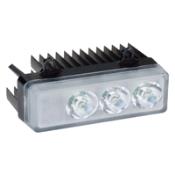
Chap 22 - AeroLEDs MicroSun Wigwag/Taxi Lights

I’ll offer up a few justifications of my purchase here!  First, currently when I home in the states I normally fly in the Washington, DC area.  Of course DC has some very busy airspace, as does most of the Eastern Seaboard/Mid-Atlantic region.  The Long-EZ is of course a small plane with a significantly narrow profile compared to most other GA aircraft.  Quite simply, I want wig wag lights because I WANT TO BE SEEN!  And as one person noted on a blog (probably VAF), LEDs often tend to be better at getting noticed (seeing the LEDs) then projecting light to actually see what’s in front of them (LED illumination). The AeroLEDs MicroSuns are small, very lightweight, and draw very little power.  And they should give off enough light to really help during night landings and taxi ops.  Which leads me to point #2:

I like to fly at night.  I have ever since I was a kid and flew often at night with my Dad. To me it’s just very peaceful, calm and serene… and I truly enjoy it.  I think Dale Martin (another night flying lover) said it best when he noted, “Amazingly enough, airplanes don’t know if they’re flying during the day or at night . . .”  (Yes, we all know pilots are the ones that make the mistakes that cause nighttime aviation boo-boos, but I think you understand his point … and mine).  Regardless, these will assist both in flight safety at all times and during night flying missions.

My last point of justification is simply this: They were 20% off!!! 
 

Chapter 23 – The Big Kahuna

Well, today’s purchase wasn’t the most expensive component I’ve bought for this airplane, but it’s up there.

But before I get into today’s bank account hemorrhaging, let me recount my engine saga: The original engine that I had decided on was a Mattituck TMX IO-320.  I had worked fairly extensively with Mike Yousik from Mattituck to figure out the configuration of my future engine.  In the late summer of 2012, I made a phone call to Mattituck to get some info on the TMX IO-320.  It was then that I had learned that Mattituck Engines had gone out of business.  So why I am recounting such a seemingly sad tale? (Which it isn’t by the way… I’m very happy to have gone the ECi builder’s assist route!)

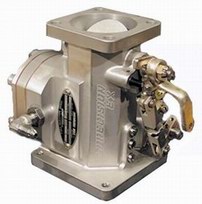
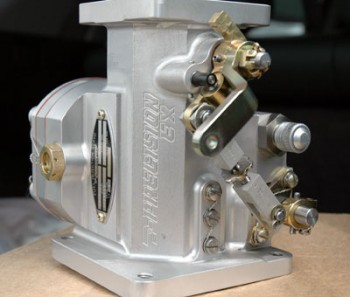
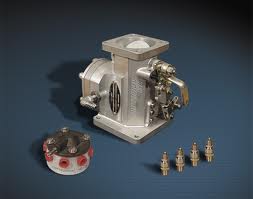
Well, the significance of my Mattituck TMX IO-320 “no more” story is that I had already extensively researched the fuel injection servo that Mattituck used on their TMX series engines: The Silver Hawk EX.

Chap 23 - SilverHawk Fuel Injection ServoChap 23 - SilverHawk Fuel Injection Servo


One key feature that the Silver Hawk EX fuel injection system has is that it does not require a fuel return line.  Now, I know a lot of folks will balk at such a crazy notion that a fuel injection system does not require a return line to the tank.  The Airflow Performance (AFP) system uses it!  I know, and I accept the fact that I am flirting with near certain death due to my return-less fuel injection system.

Chap 23 - SilverHawk Fuel Injection Servo

Ok, all snarkiness aside, as I mentioned before, I did A LOT of research on this long before I pulled the trigger on this system.  [BTW, Aircraft Spruce hornswoggled me as well by offering a pretty good holiday sale!  Also bastards!]

I had talked with engine manufacturers, engine shops, builders (read: Vance Atkinson) and of course the makers of the Silver Hawk system, Precision Airmotive, at Sun ‘n Fun.  And of course I can’t forget the myriad of feedback I read on this system on the Van’s forums…. overwhelmingly positive.

So essentially every bit of my research and all the planning I had done up to the point of learning that Mattituck Engines had gone out of business was predicated on the constant that a Silver Hawk fuel injection servo would be used on my engine.  Since I liked the features of the this fuel injection system, I uncharacteristically just picked it so that I could move on to other important decision points I need to made for this project.

Another BTW: I am in no way slamming AFP–I think they have a fantastic product and I might have just as easily have gone with them if I wasn’t already sold on the features of the Silver Hawk system.


Chapter 22 – Nav/Strobe/Position Lights

Well, this past week I was hornswoggled by Wicks Aircraft . . . damn them!  They have a really nice sale going on for all their AeroLEDs and Aveo lighting products up until 31 December… 20% off to be exact.  Which is a lot of money for expensive lights.  Thus, I threw myself headlong into the assessment & evaluation phase of the available nav lights so I could spend money to save money.  That’s my logic here & I’m sticking to it!

Ok, I’ve had my mind set on Aveo Engineering’s Andromeda Aurora for well over a year now. However, two things made my buying them from Wicks a no-go . . . the first issue being rather insurmountable: Wicks simply didn’t carry them.  So no money to be saved there.

Then there was the other issue.  As absolutely beautiful as these Andromeda lights are, I’m getting really tired of the incessant trash talk campaign that Aveo has going on against AeroLEDs.  This dynamic was highlighted even further in my research–much of it on the Van’s forum–where the AeroLEDs guy would come on the forum boards, state his points, letting the customer make up his mind, and not relying on trash talking Aveo to make his case.  Plus, the RV guys gave consistent resounding thumbs up on the AeroLEDs and the company’s customer service.

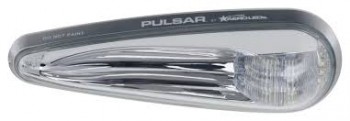
Moreover, Wicks had AeroLEDs in stock… money to be saved!  After some more research, and talking with the guys at AeroLEDs, I decided to save almost $200 and nab a pair of Pulsar LED Nav/Strobe/Position lights.  Although admittedly these lights aren’t TSO’d right now, they are up for it the near future.  And after having seen the statements by the bubbas at AeroLED on the forums, I’m more than comfortable that it will happen before I have this bird finished.

And besides all that, I think they are just really nice looking lights! (oh yeah, lightweight and fairly low current draw as well).

Chap 22 - AeroLEDs Pulsar Nav/Strobe Light


Chapter 22 – Flight Data Instrument

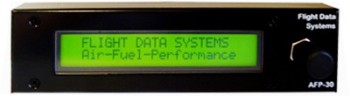
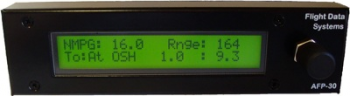
Well, since I’ve been researching out my avionics & instruments alongside my engine components, I’ve started scheduling out some purchases for some of the panel avionics that I know I’ll for sure be installing.  One such item I serendipitously stumbled across in my research is the Flight Data Systems AFP-30 Air-Data Fuel Computer.  This guy was developed by an RV driver to add some more data points that he wanted to see in his cockpit.  After researching this out and cross-referencing it in a matrix I have to compare all the functions of all possible avionics and instruments, I decided that this was definitely going on my instrument panel to provide me both unique & back-up instrument capabilities.

Chap 22 - Air-Data Fuel Computer

The AFP-30 performs functions in 3 main areas:

Air Data Computer

  • Altitude
  • Density Altitude
  • Indicated Airspeed
  • True Airspeed
  • Mach Number
  • Total Air Temperature
  • Saturated Air Temperature
  • Winds Aloft
  • Crosswind Component
  • Headwind Component

Fuel Flow Computer

  • Fuel Flow (Gallons/hour or Liters/Hour)
  • Fuel Used
  • Fuel Remaining
  • Fuel to GPS Waypoint
  • Fuel At GPS Waypoint
  • Range
  • Endurance
  • Fuel Efficiency (NMPG, MPG, MPL)

Performance Computer

  • Manifold Pressure
  • RPM
  • Percent Horsepower
  • Mach

Chap 22 - AFP-30 Air-Data Fuel Computer


Chapter 23 – Exhaust

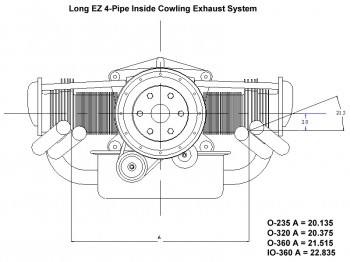
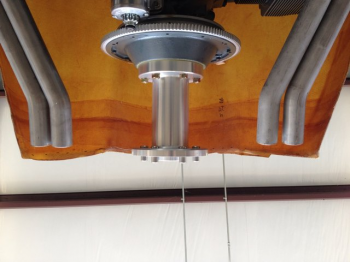
Today I pulled the trigger on my exhaust system.  The exhaust had been a huge question mark on my list of things to do for a very long time.  Luckily, a quick email to Long-EZ Buildmaster Mike Beasley quickly cleared up any questions I had on Long-EZ exhaust systems.  He quickly referred me to a Long-EZ exhaust system guru, Clinton Anderson, from Custom Aircraft Parts in El Cajon, California.

Clinton and I discussed the exact type of exhaust I needed for my IOX-340S.  It came out to be fairly simple, since it’s the same exact exhaust system used on an I/O-320.  Below is the initial technical drawing he sent me.

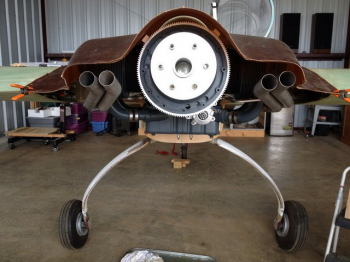
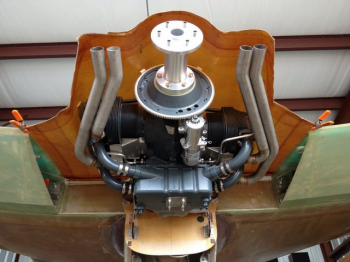
Long-EZ ExhaustAnd here are some pics of these exhaust pipes on Mike Beasley’s fantastic Long-EZ build:

BizMan ExhaustBizMan-ExhaustBeasley Exhaust


Chapter 22 & 23 – Alternator

Well, an alternator is difficult to classify as belonging to ONLY the Electrical System (Chap 22) or the Engine (Chap 23), so I labeled it here as belonging to both categories.

I’ve  held off for quite some time in buying my alternator, which is B&C as well, simply because I didn’t feel I had identified the avionics and electrical components within the electrical system to the degree necessary to know what size alternator I would need.  B&C offers both a 40 Amp and a 60 Amp externally regulated alternator.  Of course an ever-present concern of mine is weight, and at the very aft end of the engine, the 2.4 pound difference (6.1 vs 8.5) between these two alternators clearly has a decent affect on the aircraft’s weight & balance at such a rearward arm.  With technology allowing me to have a lighter battery up front (15 pounds vs the traditional ‘old school’ 25 pounds), even with an extended nose I’m trying to keep the hind end of my bird light.  Especially considering I’ve dumped an O-320-sized engine back there when the Long-EZ was pretty much (Read: “specifically”) designed for the lighter O-235 engine.

Have I made my case?  Quite a bit of yammering over just 2-1/2 pounds, eh?!  Sure, weight is evil!  (I wonder if Burt would be proud of me right now .  .  . )

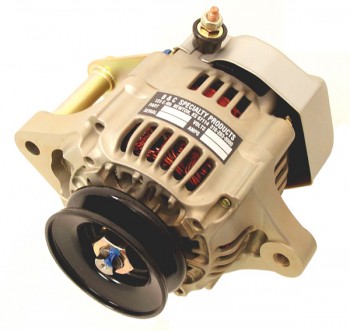
And so it is mis amigos, that I was comfortable enough in my electrical system load analysis at this point in time that I pulled the trigger on the B&C L40 40 Amp alternator below.  Also, as a data point, my main bus with all the components I have listed in my electrical system will have a steady current draw somewhere around 22 amps.  Not bad for a full up IFR glass panel with autopilot.

As per usual, here is a representative picture from the B&C website.

Chap 22/23 - B&C 40-Amp Alternator

Chapter 23 – Engine Electronic Ignition

Well, I understand that I’ve pretty much gotten into the same mode that I was in Tampa, in that I’m merely laundry listing out all the components that I’m allocating for the build.  But trust me, I’d much rather be reporting on progress being made on the actual build.  Here in the near future, as I get closer to finalizing my electrical system, I will try to find a way to transfer it from CAD into maybe a PDF format to post on the site.

Being deployed for a year has given me quite a bit of time to hash & re-hash my component choices ad nauseum.  I’ve been able cross check my decisions, talk to some real gurus and hear & read arguments both for & against various parts & components.

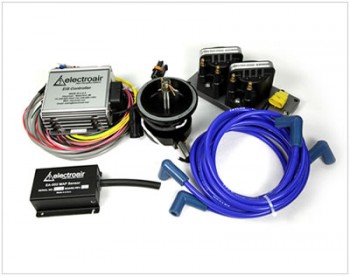
My latest final decision was what electronic ignition system I was going to go with.  I’ve had reports from a number of friends & builders, and scoured the forums to finally come to my decision.  I also spent hours at each booth during SNF13 to figure this out.  In fact, before they closed their doors, I had spent a fair amount of time on the phone with the guys at Mattituck Engines discussing electronic ignition systems for experimental engines.  My final decision for my ignition system is an Electroair on one side paired with a Slick magneto on the other.

Chap 23 - Electroair Electronic Ignition

And although it may sound silly or incompatible to some, after a discussion with a few engine gurus I’m holding out the option (and will research) in the future to replace the Slick mag with a PMag.


Chapter 23 – Engine Ram Air System

In early September I went with a one-off type component: Rod Bower’s Ram Air System. Normally Rod works with the RV gang, but I spoke with him at length about using this on a Long-EZ, and I think this is the polished, albeit more sexy version of what James Redmon built (himself!) for his Berkut.  And since James’ Berkut is literally one of the nicest canards in the world, I gotta have something nicer than him!  Ha!

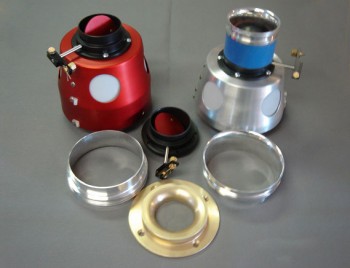
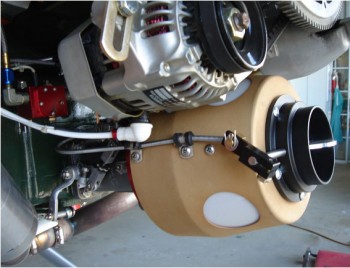
If I haven’t explained it previously, a Ram Air system is fairly straightforward in operation and does what it’s named: It simply takes an external, isolated source of air and rams it into the intake manifold via the fuel injector servo WITHOUT being filtered.  Yes, I did say it’s UNFILTERED AIR being RAMMED into the engine intake.

“Ok, is that smart?” you ask.  Of course not!  At least not on the ground!  Ahhh, so the beauty of Rod’s system is that you throw a lever (or a servo switch) and a butterfly valve closes off the outside air source.  The air, then, is brought in through the 4 reed valves on the side of the aluminum coffee-can sized housing that just so happens to have a K&N filter therewith inside.  Thus, on the ground, or close to it, the air is in fact filtered.  Bit once airborne, the valve is opened to let the ram air do its magic, ala Red Bull Racers, thereby providing anywhere from about 1–1.5 inch gain in manifold pressure.  Brilliant!

And here’s what it looks like:

Chap 23 - Rod Bower Ram Air SystemAnd installed on a tractor setup:

Chap 23 - Rod Bower Ram Air System


Chapter 23 – Engine

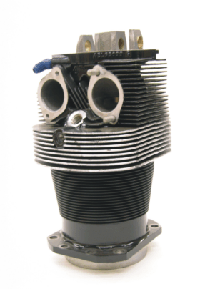
Today I ordered a set of 4 ECi Tapered-finned Nickel+Carbide Cylinder Assemblies for my IOX-340S engine.  The set also includes 9.5:1 compression pistons.  Since I picked up the engine case, the crankshaft & camshaft a few weeks ago, I’ll start purchasing the accessories over the next year so that when I get back I can put this thing together with Tom Schwietz.

A nice thing about buying the cylinder assemblies as a set is that ECi ensures that all the cylinders are flow matched, making for a much smoother and efficient engine.

Here’s a representative pic for context.

ECi IOX-340S Cylinder Assembly


Chapter 23 – Engine/Starter

Besides starting to pick up the main parts of the engine, in July I also started down that long road of picking up all the engine accessories as well.  There were a few components that I still wanted to do a fair amount more research on, to be sure I was getting what I felt was the best fit for my engine and airplane.  Of course I read a ton & made quite a few phone calls to some really smart folks.

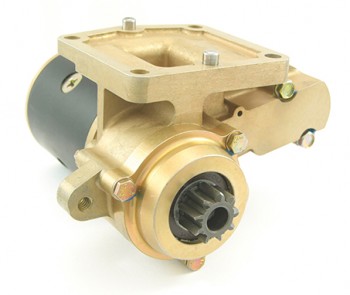
One thing that I new for certain was that I was going with a B&C starter.  While B&C starters ARE NOT the lightest starter you can get out there (by a few pounds), from every bit of feedback I could garner these guys are bulletproof.  Thus, a B&C starter was the first engine accessory that I pulled the trigger on (example pic here).

Chap 23 - B&C Starter