Chapter 22/24 – Ribs are done!

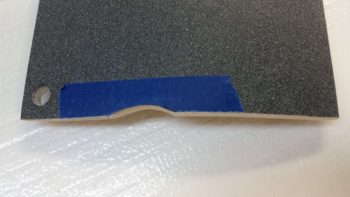
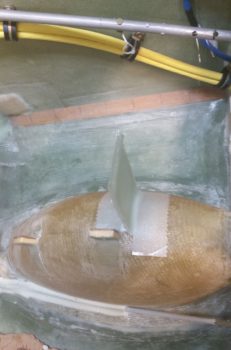
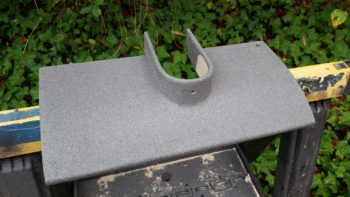
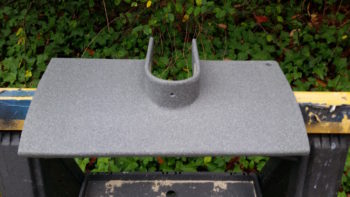
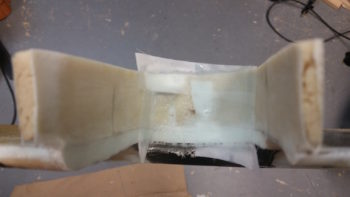
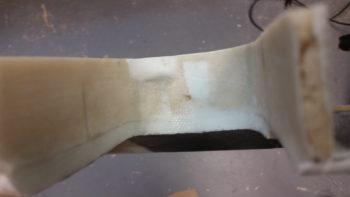
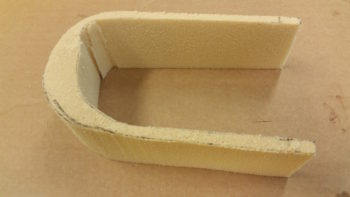
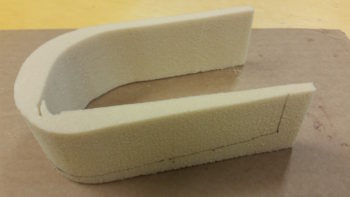
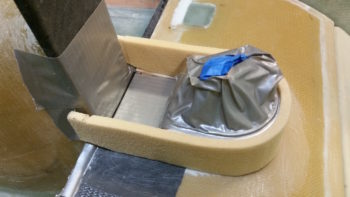
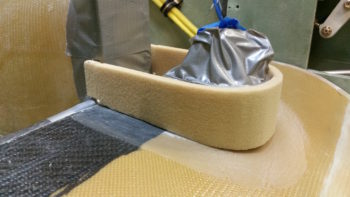
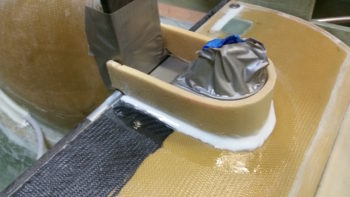
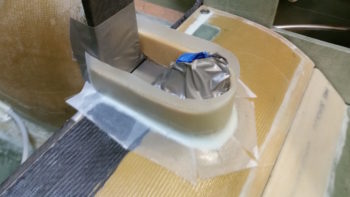
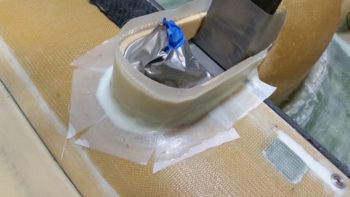
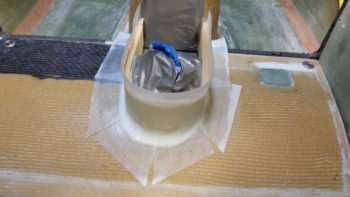
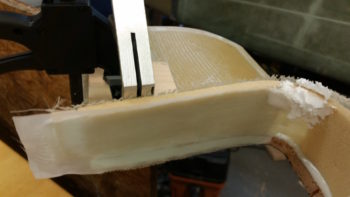
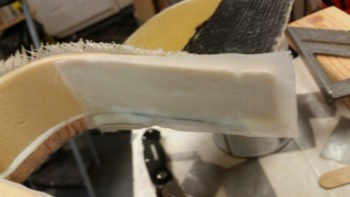
Today I started by . . . yep, adding the last bit of dry micro to the last 2-3″ middle area of each micro cap on the pilot thigh support ribs.  These things looked like twins with their shiny micro midsection glaring away, untouched and unspoiled by the thigh support top plate.  So, after sanding the middle micro areas on each each rib top dull, I then whipped up another round of dry micro and applied it.  All in all, I seriously only needed 1/8″ to 3/16″ more micro here, but man this is one of those things in the build that wants to be stubborn!

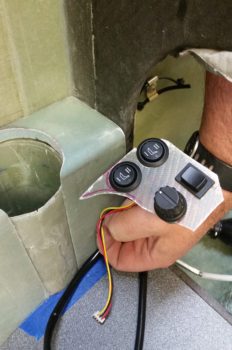
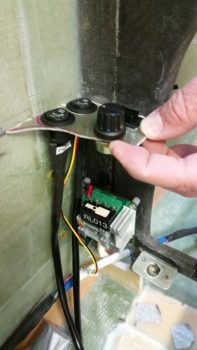
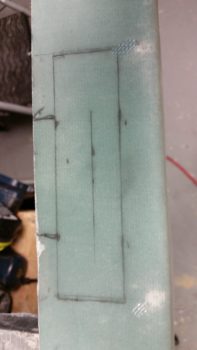
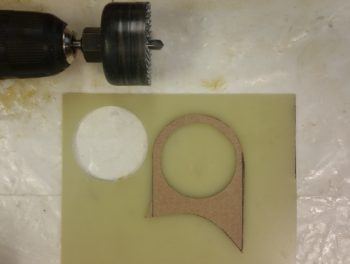
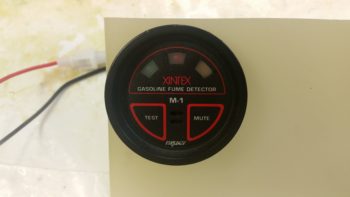
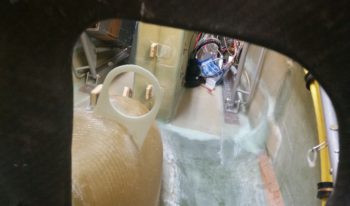
As the dry micro cured atop my ribs, I got to work finalizing the instrument cutouts for the mockup instrument panel that I’m constructing.  This panel will not only allow me to test instrument, avionic & component placement –and FIT!– but also put them all in their near-final position to allow me to wire them up.

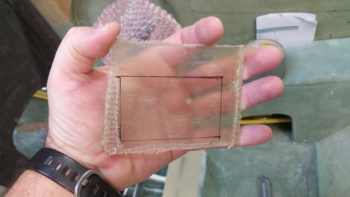
After a few hours I finally saw what I’ve been looking for the last couple of days: no flat or untouched micro atop both my thigh support ribs… yeah!  I started cleaning them up by literally shaving the sides of the overhanging micro like you would a big block of cheese.

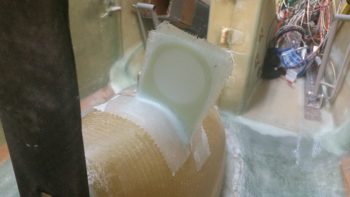
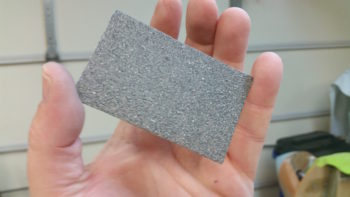
Once I got the sides close, I then switched to a sanding block to finalize the sanding of the added micro top.  I may add one more ply of BID just in the center areas for strength, but primarily to keep these from getting chipped away over the years.  Regardless, this part is DONE!

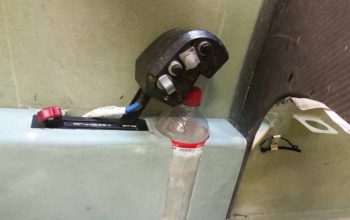
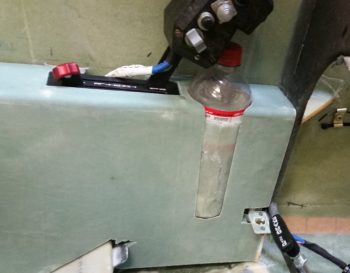
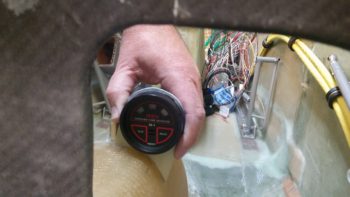
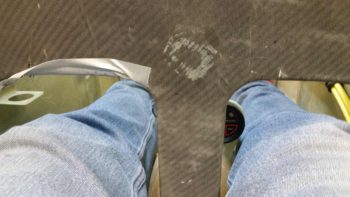
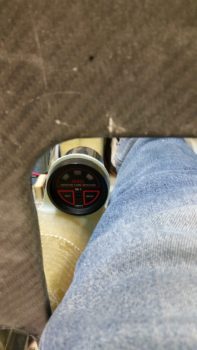
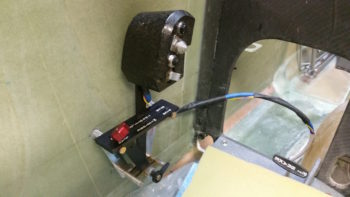
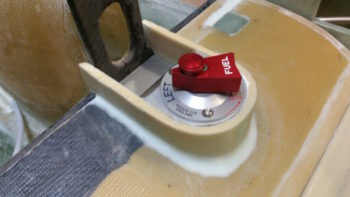
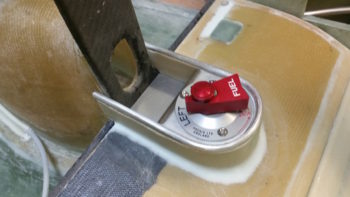
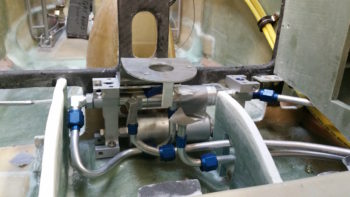
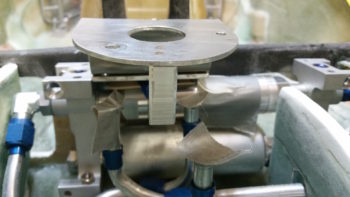
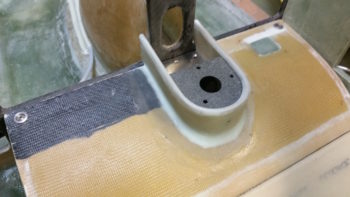
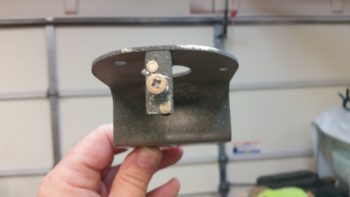
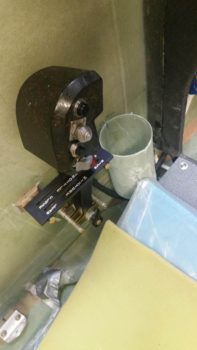
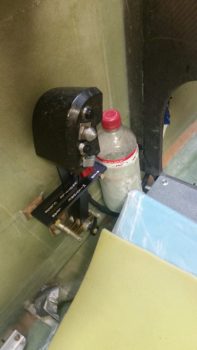
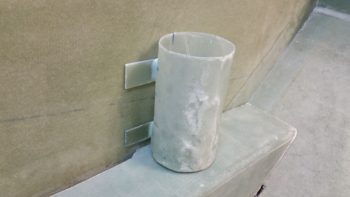
I then tested out the ELT location using the mounting bracket that was included in the ACK E-04 Retrofit kit (read: “starter” kit, IMO) that I just received today [perfect timing!]. The kit also included the panel mounted control head, so I’ll be mounting that in the mockup panel as well.

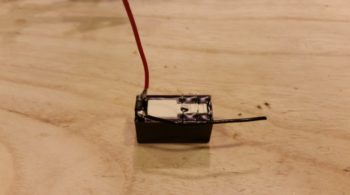
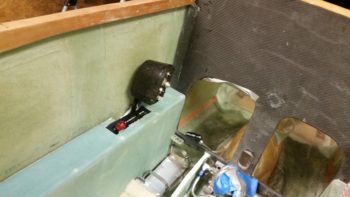
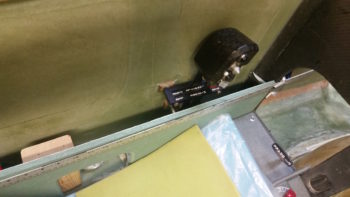
I also received the Eberhard latch that I’ll be using for the nose hatch.  This is close to the one I saw on Rick Hall’s Cozy IV at Rough River.  I added the wire clamp nut assembly making it pretty much ready for install [Note: I might take the drill to it and drill a few lightening holes since this thing is a bit heavy for its size].  Below the latch is in the hatch closed & locked position.

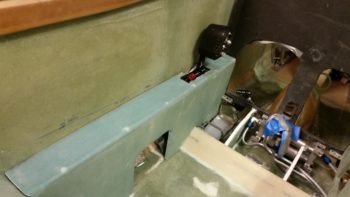
Here’s the Eberhard nose hatch latch in the hatch open position.

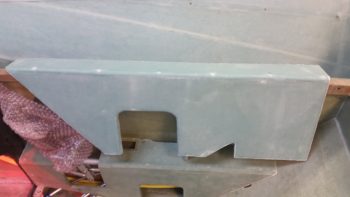
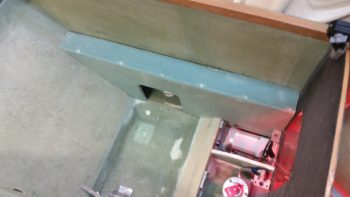
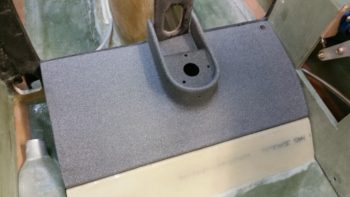
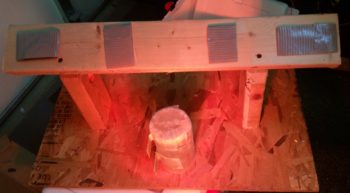
I also cut some uprights for the base of the mockup instrument panel.  I’m making this panel mounting stand a bit taller than just the main instrument panel area to allow for mounting the Triparagon behind the panel, since it plays such a key role in the panel instruments’ wire cross connections.  I went to dinner with my buddy Rob tonight, so before I left I spent about 15 min. painting this base with some white primer to hide all the unsightly water marks and wear on these “trash” pieces of wood that I used.

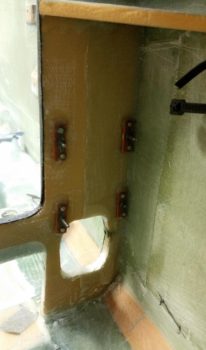
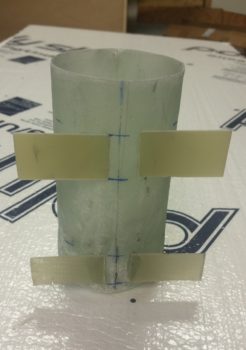
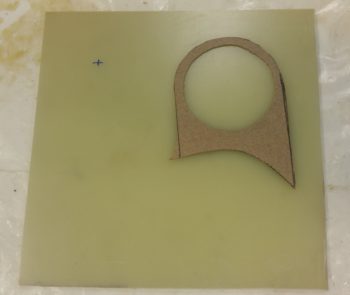
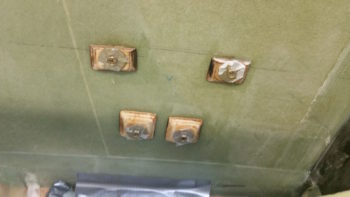
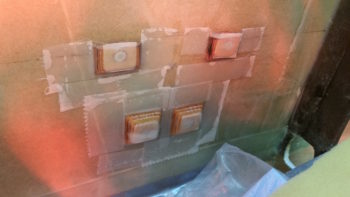
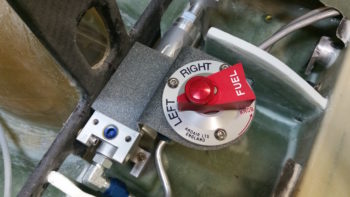
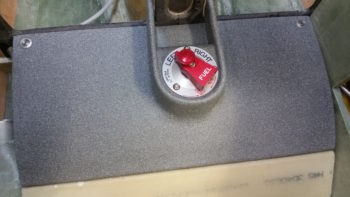
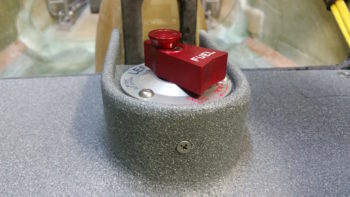
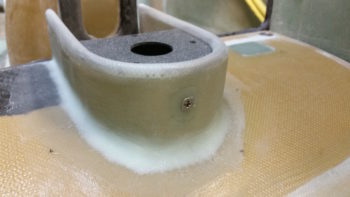
Tomorrow I plan on continuing with the seemingly unending saga of getting the pilot thigh support top plate installed.  My main task is to get some tabs glassed onto the lower aft side of the instrument panel to allow mounting 2 CAMLOC fasteners that will secure the front side of the seat support plate in place.  I’ll be working on the base for the ELT mounting bracket as well, shaping the fuselage floor to permanently install nutplates to secure the ELT bracket.


Chapter 22/24 – Pile the weight on!

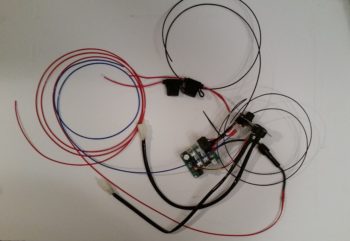
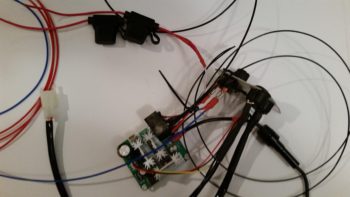
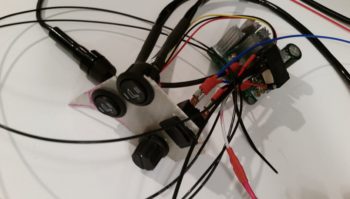
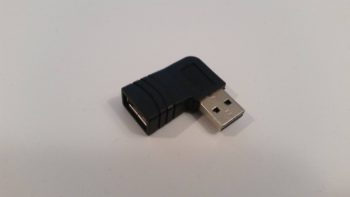
I started out today spending well over an hour doing some research, answering questions, and providing info to Bob Nuckolls, et al. in response to a question I asked on the Aeroelectric Connection forum.  The question I asked was on how to create or modify a 4-into-1 video splitter to channel the micro cameras I’ll have on ship for viewing the back seat left & right fuel site gages, top side looking aft (at engine/prop), and bottom side looking aft (at engine/prop).  This device will then feed a GRT-integrated USB video module that will allow me view the video feeds in a small sub-window on my EFIS either auto- cycling through (that was one of my questions how) or by manual select.

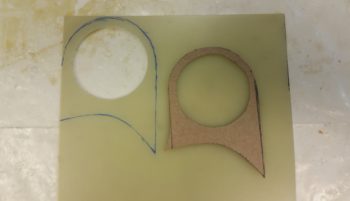
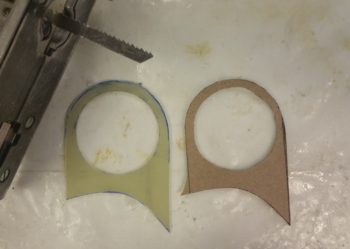
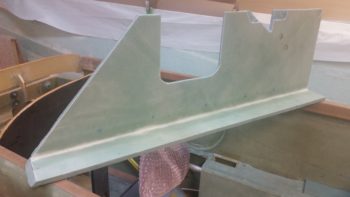
I then got to work on round 2 of the pilot seat thigh support rib tops.  I took the profile of the bottom of the thigh support cover’s underside contour and then cut a cardboard template out so I had a good 1″ wide rib top edge profile to then cut the 1-ply prepregged BID tapes for each side of each rib.

Below you can see I’ve got the 1-ply layups + peel ply on the left rib (bottom) and on the side of the right rib, with the plastic still yet to be pulled.  I know I’ll have to add around 3/16″ -1/4″ more dry micro on top of the existing micro, so I laid up these edge plies of BID so they stuck up above the existing micro a bit.

Once the layups cured for about an hour, I then trimmed them a bit, cleaned them up and then added another round of micro.  I then of course had to add massive amounts of weight to the thigh support cover plate . . . Why?  Because I could …. (grin)

During my shop shenanigans I heard a delivery truck stop by.  A little while later I did in fact find a couple packages on my doorstep.  The first one was from Airflow Performance and had the 90° and 85° air intake elbows that I ordered, with the associated gaskets.

These elbows make up the physical mount and air intake for the air coming out the of Silver Hawk fuel injection servo into the Superior cold air plenum.  In the pic below, the nose of the aircraft would be to the left, prop to the right.  Since all the cold air induction plenums are built for forward facing engines, to incorporate one I had to get my air turned around.

To be clear, this isn’t something I did willy-nilly, although I know a number of Cozy builder/ drivers have done it with reportedly good success.  I conferred with Kevin Murray at Sky Dynamics, my IOX-340S engine builder, Tom Schweitz, and just within the last week I had a good discussion regarding getting this air turned around with Pete at Precision Airmotive, the maker of the Silver Hawk fuel injection system.

I’ve also been discussing this quite a bit with Chris Seats, a fellow Long-EZ builder.  While Chris is not using the Silver Hawk FI (he’s using the EFII system) he is using the Superior cold air induction plenum, so he has to turn the air around as well.  Chris is constructing his own air intake duct out of Carbon Fiber, but was curious about the weight of these combined elbows… which is 1.7 lbs. total.

The other package contained the 2″ high “EXPERIMENTAL” vinyl label that will eventually go on the inside bottom frame of the canopy rail.  It’s kind of hard to tell, but the lettering is simple black letters with a white shadow.  If you’re wondering why I bought this now, remember I had 2 weeks to do nothing but research and figure some of the smaller issues out… so while I had the opportunity I played around with my vinyl decal styles and pulled the trigger on a couple orders.

While my second round of micro on the thigh support ribs cured, I then spent a good amount of time determining the exact location of my GRT HXr EFIS on my panel mock-up blank.  I then cut the PFD mounting hole in the panel and test fit the HXr.

After a gazillion tweaks on the dimensions, trying to ensure every component gets a spot at the (panel) table, I then cut out the mounting hole for the Garmin GNS480 GPS unit that you see “installed” here.

Here’s a shot of the GRT HXr EFIS and GNS480 mounting tube behind the panel.

And another shot of the GNS480 mounting tube.  I’ll have to play around with getting the tube mounted in this panel mock-up blank, since it is a different configuration than how it will actually get mounted in the real panel.

I then spent another couple of hours dialing in the remaining panel avionics, instruments and components.  Since it was too late to do another inevitable round of micro, I left the weights in place on the thigh support cover and hit the rack.  Tomorrow I’ll continue with my primary push to get the pilot’s seat and fuel valve cover completed so I can move on to the left armrest (which, in turn, when finished will allow me to do a final mount of the GIB heating & air ducts).
 

Chapter 22/24 – Heat & Seat

Today I started out by doing a fair amount of research on my ELT placement, which was why I didn’t want to glass in the outboard thigh support tabs last night.  I’ve planned out my ELT location under the left side of the thigh support, but of course that can change if it doesn’t go in as planned.  I’m installing an ACK E-04 ELT, so I called them today and confirmed the mounting parameters.  I also learned that ACS sells a retrofit kit for this ELT, which is also a “starter” kit with just about everything but the actual ELT module.  I went ahead and ordered the retrofit kit so that I could get my hands on the mounting bracket to install that as early on as possible.

With my ELT info in hand, I then prepregged out another 2 setups of 4 plies of BID + a ply of CF.  I then glassed in the outboard thigh support tabs, placed the cover back on and weighed it down.

Here’s the results a few hours later.

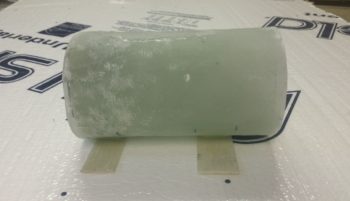
While the outboard thigh support tab layups were curing, I grabbed my 1.25″ thin walled (0.035″) 6061 tubing and cut it in order to make a “T” duct for my heating system.  This “T” duct piece will sit upside down just in front of the left side instrument panel.  The air will flow straight to get to my left foot, and up to get to my upper body (via a vent).

I then entered my data on the online metal calculator, printed off a template, and then taped it to the shorter piece of tubing.

I then used my Dremel Tool to shape the end of the tube.

I then used the shaped tube to mark the longer tube.

I then Dremelled a hole in the longer tube.

My “T” duct fitting is ready to be joined.

With some excess micro, I joined the two pieces of tubing together.  I didn’t glass or rivet it, because these are such light pieces I think micro will do fine to hold them together. Plus, this is also not a critical flight component so I’m more concerned with weight than I am if it happens to break at some point in the future (again, which I highly doubt it will).

I then prepped the tops of both the left & right pilot thigh support ribs.  The task here will be to pile up dry micro and then press it down to the correct height using the thigh support top as a form.  I dug out the foam edges and then vacuumed them, plus all the foam bits scattered all about.

Here’s the whole shebang ready for some micro!

I whipped up a bunch of dry micro –after micro-slurrying the foam edges– and piled it on the top of each thigh support rib.  I then placed the top back on (see a trend here?!) and weighed it down.

A couple of hours later I pulled the pilot seat thigh support top/floor off and was quite surprised at what I found.  The micro was barely touched!  That means A) my ribs are WAY too short! and B) my thigh support top/floor plate is way sturdier than I ever imagined!

So I cleaned up the sides of the micro piles, made them even with the rib sides, and knocked off some rough spots.

I also noted that the epoxy that I had applied to the protective duct tape on the lid wasn’t even touched… I’m still surprised at how low & off these ribs are!

I was wondering a bit on just how to glass the rib sides over the new micro, but now that I have a sense of just how high the ribs need to be (there were a scant few spots of micro that were flattened), I’ll prep the micro first, then glass the sides, then add more micro… tomorrow!  From there, I’ll call it a day on the ribs because I think they’ll be in actual contact and nice and strong.

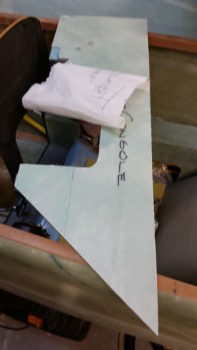
Another task I did tonight was to cut out an instrument panel blank from a piece of 1/4″ plywood.  I’ll use this as my initial test base for panel instrument placement and wiring.

I also spent a good 45 min working on the placement of my panel components.  Here you can see where I placed the instruments on the back side of the panel.  Also note that I quickly mounted the Triparagon back into place to verify how the instrument panel instruments align with it.
With the Triparagon mounted, I did a quick test fit on the GRT HXr EFIS GADAHRS.  It looks like it will fit in its planned spot nicely.

I then double checked the elevation of the GADARHS unit… also good.

Tomorrow will be more of the same!


Chapter 24 – I’m back! :)

After I got home yesterday from my running around the mid-Atlantic region for the past 2 weeks, I of course had a number of chores to take care of.  I then decided to update some of the build pages on this site, and got prepared for today.  I also caught up with some other builders, read the latest CSA, and did a quick bit of research.

Tonight I wanted to get a quick layup in as a foundation for tomorrow’s build endeavors.  I had originally planned to glass in 3 tabs along the top edge of the front side of the thigh support wedge duct.  However, I decided to wait on the onboard tabs and focus on the middle one.

Why am I putting tabs along the front edge of the wedge duct?  Well, if you think about the original plans pilot thigh support, first of all it’s actually glassed into place. Next, the most common configuration is to either have the thigh support floor/plate/top hinged on the aft side so that it swings up & aft, or at a minimum at least removable and not glassed in . . . so what do these all have in common?  The aft edge of the thigh support floor/plate/top is supported along its entire length.

Mine is not.

So I just want to give a little extra support to the top plate so that it doesn’t balk at me or my pax stepping on it during ingress/egress ops!

Thus, I prepregged two sets of 2 plies of BID and decided to throw another “trash” piece of carbon fiber in the middle for added rigidity, making 5 plies total.  I then wet out the glass, combined my sets into one set with the plies as follows: 2 BID/1 CF/2 BID.  I set it in place, making sure it was high enough on the wedge duct, and then added a little flocro in the corner where it bent back (actually forward) away from the wedge duct.

I then placed the pilot thigh support floor/plate/top in place (with tape on the bottom where it interfaced with the glassed tab). I then weighed down the thigh support floor.

Since I used fast hardener, after a few hours it was cured.  I pulled the weights and then the thigh support floor off the layup and it looked great.  I had peel plied both the face and the front of the support tab, so I pulled the peel ply.

Here’s the center thigh support center support tab in it’s raw form.  I should note that when I laid up the tab in place, the 5-ply glass pad measured 2″ x 2″.

I then did a quick trim on the support tab while the glass was still in its “green” state.

Tomorrow I’ll continue to finalize the installation of the pilot thigh support to then allow me to get on with installing the left pilot armrest & components.


Rough River 2017!

As I mentioned in my last post prior to Rough River, I’ve been on the road ever since.  I’m still hanging out with friends in North Carolina and will be for about another week. Nonetheless, I wanted to get some RR 2017 pics posted.  Unlike the usual plethora of airplane pics however, these are a bit more personal (read: people pics).

The first pic was one Marco shot while we were waiting for the fuel dude at Central Kentucky Regional airport.  We were chatting in front of the fuel pump when Marco noticed the reflection of his bird in my glasses, so he quickly took this pic.  As I’ve noted to a number of people that have been saying they don’t recognize me due to my full beard, the fullness of it is merely a result of me trying to pour as much energy as I can into the plane build… and not worry about “needless” things that waste time…. like shaving!  haha!

This was the first night’s dinner at a local pizza joint where Marco grabbed an opportunistic selfie of all of us…. note Marco in the lower left corner, Steve Beert upper left corner, then Mike Beasley, Bruce Sinclair and me (with my hand over my mouth, in shock over something “Potty Mouth Bruce” had just said! ha!).

A bit later we had a few libations in our cabin… this pic was taken right before Nick Ugolini and Buly Alevant showed up.

Here’s a shot of the next day, when Mike, Bruce and I were checking out Bill James’ Vari-Eze.  John Lambert was walking around snapping pics, and shot the next few pics of us hanging around Bill’s Vari.

A shot of the gang with Bill James.
Understandably, Marco spent a fair amount of time fielding questions regarding his new instrument panel upgrade, which left me, Mike Beasley and Bruce Sinclair to fend for ourselves!

Here’s Marco’s new panel that he upgraded from traditional steam gauges.  He installed two GRT Mini-APs as his PFD & MFD, and a Garmin GNS480 WAAS GPS unit. His Mini-APs have the capability to drive GRT AP servos, which he’ll be installing next.  He did a great job on this panel, and just in time for Rough River too!  (You can follow his panel upgrade adventures here).
When Marco took a breather from extolling the virtues of his GRT-based panel, we checked out Nate Mullins’ Long-EZ  (cracks me up whenever I think about it, since for years Marco continuously stated that GRT would be his LAST choice . . . until he saw my Mini-X come to life on the bench! ha!)

All good things must come to an end, so Sunday morning found us on our 3+ hour trek back to home base (Chesapeake, VA).

Ah, mission complete!

I’m so grateful to have such an awesome friend like Marco, and to have great adventures as his GIB.  But I have to say this RR really reinforced my passion for finishing my Long-EZ so next year I can relinquish Marco’s back seat to its rightful owner: his wife Gina!

Good times!

Cheers.


Chapter 24 – Pilot seat floor glassed!

This will be my last build post prior to Rough River!  And since I’ll be on the road visiting folks in North Carolina and Virginia, I won’t be home for another 2 weeks…. so quite the break in build action.

Today I pulled off the boards that I had clamped in place to help straighten out a rather wavy looking foam piece that I shaped into a curve for the pilot seat floor piece, which also happens to make up the majority of the pilot thigh support.

I then cleaned up the initial Kevlar layup and test fitted the floor seat piece without the boards in place.  It looks good, but still needs just a bit more persuasion to be close to spot on.

I also rounded the aft edge into a radius that I assessed as a “pleasing shape” since I plan on doing all glass to glass edges on this seat floor piece.

I then did the round #2 top seat floor layups on both the front and aft side of the piece, overlapping onto the initial Kevlar layup.  The duct tape squares you see in these pics that you might be curious about are 2 pieces of 1.1″ x 1.1″ duct tape plies covered by another 2 plies of just slightly wider duct tape.  These duct tape pads are to provide clearance on the underside of the seat floor piece for the 2 ends of the EFII fuel pump frame that juts aft. The foam over these 2 tape pads, and of course the tape itself, will be removed before I layup the underside of the seat floor.

So, at the outset of the round 2 layups, I set a square of peel ply over each of the duct tape pads and then laid up a 2″ x 2″ ply of reinforcement BID over each of the pads.  I then laid up the separate front side single plies of glass (1 BID & 1 CF) to reach aft enough to cover the tape pads.

Once I got the layups completed and peel plied, I then set the seat floor back in place and clamped it again to try and knock out some of the waviness incurred by heating it up in the curve-shaping process.

You may note that I used some carbon fiber over on the left side.  This is due to the fact that I had some scraps of carbon fiber hanging around, and I also wanted to really lock in that corner and tame an indention over on that side.

A few hours later, when the glass was about 90% cured, I removed the clamps and checked out the layups . . . all good!  Moreover, the slight indention on the left side was in fact tamed and is no longer an issue.

I then pulled the peel ply and cleaned up the layups.  Here’s a test fit of the pilot seat floor after round 2 of the top side layups.

Then it was on to round 3.  I micro slurried what little bare foam was left, and made some transitions (as I had on round 2) with thicker micro between the edges of the Kevlar and the foam.  I also filled in the divot created in the upper right hand corner where the clamp piece of wood made a distinct edge.  I actually liked the depression, but glassing it could have been a bit difficult, so I simply filled it in with dry micro.

I then glassed the second and final ply of BID on the seat floor top.  For some reason I felt like going rogue again and did NOT peel ply the entire layup, just the inside edge that will have a mini wall glassed in around the fuel selector valve.

A few hours later, after the final BID layup on the top of the seat floor cured, I then razor trimmed and cleaned up the edges, and set it back in place for a test fit.  So far I’m really happy with how this is turning out.  To be clear, it’s not perfect, but definitely good enough for this combat builder!

With the top done I got on with the task of shaping the front edges and sides of the underside of the foam seat floor.  Just like the top aft edge, these 3 sides will have a radius that will allow the glass to curve around the edge in one continuous piece to make up the edges of the plate.  Thus, every side of this seat floor plate will have micro’d corners for strength.  This obviously mandated that I had to spend a bit of time making the angled trenches along literally every exterior edge (minus the center U-shaped notch) of the seat floor plate.

I then spent a bit of time as well pulling the tape & peel ply out of the divots I created for the fuel pump frame jut-outs that I needed clearance for.  Once all the remnants of the last bit of “clinging-for-dear-life” peel ply was extracted (with much difficulty at times I might add!) I then used my ever trusty and ever awesome Perm-A-Grit tools to shape the foam edges of the 2 divots.

I should note that although the top was glassed with 2 plies, relatively there is so little mass in the U-shaped notched area that wraps around the fuel selector valve & bracket, that it was surprisingly “flimsy” for lack of a better word.  I decided to reinforce the center narrow area with a patch of BID on the bottom side, but alas I didn’t have any scrap pieces big enough . . . but then again, I did have one last piece of scrap CF hanging around.  I figured CF would provide even greater stiffness here so I threw it on there . . .  at the beginning of the 1-ply BID layup on the underside of the seat floor.  I know it may look a little unorthodox (read: nasty) but in my defense it’s the MGS epoxy’s fault, since if I had used EZ-Poxy you would have never known what it looked like!  hahaha!

Also, before I laid up the final large piece of BID on the underside seat floor, I also again laid up a scrap patch of approximately 2″ x 2″ BID over each divot & overlapping onto the foam to add reinforcement to these glass-to-glass only areas (5 plies of glass total when all is done).

It took a bit of time just to micro slurry the foam face, and then stuff thicker micro all along the mini trenches I had created along all 4 sides.  After the micro went on, to be honest, glassing up the large ply of BID was the EZ part.  However, getting the glass around the corners and sticking to the edges was a bit trickier, but in the end I got it all in place.
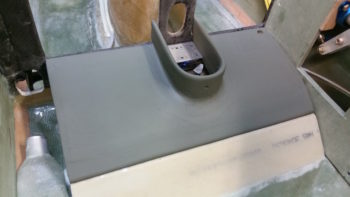
A number of hours later, after it all cured, I then razor trimmed the glass, sanded and cleaned up all the edges.

I have to say that I’m ecstatic with how the pilot seat floor plate layups came out!  I didn’t want bare foam on the edges that I would simply have to fill in with micro anyways, since if you’ve seen older plastic airplanes with bare foam edges on parts… well, they look really old, dry and unattractive (I guess that’s what folks say about us ‘ol dog pilots too, eh?!).

Anyway, here’s 3 pics showing the front, aft and side edges of the pilot seat floor plate:

I then of course mocked up the finished seat floor.  Ah, it fits great!

Here’s a closeup shot of the right underside divot where you can actually see the fuel pump frame jut-out (bottom pic) through the glass.  As you can tell, there’s plenty of clearance between the fuel pump frame and the seat floor plate.

Well, nothing left to do on this thing at this point other than try ‘er out!  So I set the seat floor in place, threw a towel and some padding on the pilot seat, grabbed my throttle handle quadrant and climbed in.

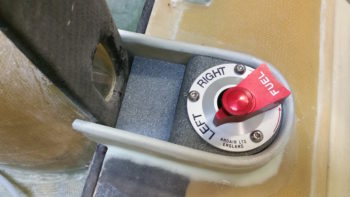
This first shot is exactly what I was aiming for!  The fuel selector valve is aft enough and high enough that I can actually easily see it and manipulate it during flight!  Hoo-ah!  Also, I should point out that my fuel selector valve bracket is only about 1/2″ max total farther aft than the stock plans fuel valve plate.  The difference: my valve is located at the very aft end of the plate, obviously about an inch higher, and not located center of mass on the valve plate as the plans valve is.

I then mocked up the throttle location to test it out.  I messed about with the throttle for a bit and determined that for me I had in fact picked the optimum location for this throttle quadrant setup.

Here’s a shot of the throttle handle/quadrant, fuel selector valve and control stick. Again, I’m extremely satisfied with the location, ergonomics and functionality of all these controls!

And here’s my parting shot of this post.  The throttle handle and quadrant in its planned left armrest location.

Again, this will be the last build post for the next couple weeks.  When I get back –renewed, refreshed and re-motivated– I will continue my quest to finish up the internal fuselage component configuration and install before starting on the nose & canopy!


Chapter 24 – Airplane baker man!

I started out today by pulling the peel ply and cleaning up the pilot thigh support ribs. I also cut out the glass from the mouse hole on the aft side of the right rib along with the overhanging glass from the layups.

I then trimmed the bottom of the right armrest to provide clearance and eliminate any rubbing on the fuel lines.

I also notched the bottom center of the left pilot armrest with a triangular opening to allow the armrest wall to fit over the pilot thigh support wedge duct when installed.  I also had to narrow the thickness of the wall on the outboard side of it that was adjacent to the air vent plenum duct in order for it to fit in its planned location.

I then got to work on shaping the pilot thigh support seat floor.  First, I copied the thigh support rib profile onto a template.  Then I used the template to mark up a scrap piece of OSB chipboard to cut out 4 thigh support rib jigs.

I then cut out the pilot seat thigh support floor piece from 3/8″ foam, and then clamped the 4 thigh support rib jigs to the bottom of the floor piece.

I then baked the jigged & clamped pilot seat thigh support floor piece in the oven for an hour at 280°.  In hindsight, it may have a been a bit too long to bake it, but in my defense there was no bake time listed in the plans!

I had to run out for a while after I turned the oven off and the floor piece started cooling down.

When I returned, I noted that there was a bit of waviness in the front & aft edges of the floor piece since the heating of the foam apparently produced some sagging in between the clamped rib jigs.  Moreover, these “scalloped” edges were significant enough that I thought about scrapping this floor piece and remaking another one.  But I don’t like wasting foam and to be honest, I kind of like the challenge of fixing a piece that’s less than perfect and make it work.

I pressed forward with the floor piece install and started working it until it proved to be unworkable, to see if it would . . . but it didn’t.

I wanted to lock in the CORRECT floor piece profile, so I decided to do a multi-part layup starting on the top of the floor piece surface (plans has you layup the bottom surface first). Since I needed to clamp both the front and aft edge to lock in the correct shape, I further decided to start with a large central ply of Kevlar –specifically to add puncture strength to a piece that gets stepped on every ingress & egress of the plane– and then add a strip of BID on both the front and aft edges after the center area floor piece profile was better locked into shape.  After these first pieces are laid up, I’ll of course lay up a ply of BID over the entire top surface of the floor piece.

As for the Kevlar layup, I started out by microing the surface of the floor piece top where the Kevlar ply will get laid up.

I then set the ply of Kevlar in place on the top of the pilot seat floor piece.

I then wet out the Kevlar.

And then peel plied the Kevlar layup.

Tomorrow I’ll continue to glass the pilot seat seat floor piece in my attempt to both get it installed, but also to straighten out some of the front and aft edge waviness that was introduced during my heating of the floor piece foam plate.  Still, I think it should be fine.


Chapter 24 – Thigh support ribs installed

Today was a very busy day, primarily in a non-build way.  Still, first thing this morning I got up and pulled the peel ply, knife trimmed, sanded and cleaned up the 1-ply BID layup on each side of the 2 pilot seat thigh support ribs that previously was bare foam.

I then made a shallow channel in the foam on the front edge of each rib. I quickly whipped up some micro paste and filled these shallow foam channels. I then covered the micro on the front edge of the ribs with a piece of peel ply, respectively.

I then left for a good 6 hours to help some friends with some heavy lifting at their community yard sale.

In the few-hour break between returning home from the yard sale and a planned outing for dinner and a movie with some friends, I quickly prepped, micro’d and then glassed the left side thigh support rib in place.  In a rare occurrence, since I was going to be late, I thought I’d get gritty and earthy and throw caution to the wind by NOT peel plying the left rib BID tapes.  (Note the Adel clamp mounted into the face of the pilot seat thigh support wedge duct)

A few hours later, I then prepped, micro’d in place and then glassed the right pilot thigh support rib.  Since I’ll eventual reinsert and glass the lower rib notch piece –and since time was not a factor– I decided to peel ply the right side rib install layup.

Here’s a wider view of the entire pilot seat thigh support rib affair.

Tomorrow will also be a bit lighter than usual on the build since I have to prep for going to Marco’s in order to help him as much as possible prep his plane for flying to RR.  I will say that my main goal for tomorrow is the thigh support cover plate that makes up a good portion of the bottom of the pilot’s seat.


Chapter 24 – Not much, thank you.

After doing some chores around the house, I had to run out rather unexpectedly mid-afternoon to help some friends that required some of my assistance.  I was out for about 6 hours and by the time I got home it was getting pretty late.

I wanted to get at least some glass “cookin’ in the oven” so I prepped & glassed the 2 pilot seat thigh support ribs on the one side of bare foam that each rib had.

Since I had cut out a small trough in the foam for the beginning of an elongated hole on the left rib, I had to decide whether to fill it back in or leave it.  I decided since I’ll be using wrenches during the installation and removal of the fuel selector valve to fuel pump main fuel feed line, I could use a bit of space between the rib and the line getting installed . . . so I left the trough.  I then angled the sides of the trough sloping inwards, and pressed on with glassing the ribs.

The glassing was uneventful with 1 ply of BID going onto the right rib, and 1 ply of BID on the left.  However, I did use an extra oval shaped ply of BID inside the trough and overlapping up over the edges.

Also, I didn’t micro the insert piece –that I cut out of the right rib– into the rib since I merely wanted to get a ply of glass laid up on it.  The hole that you see above the insert piece is where the right and left fuel sump tank feed lines travers the rib to connect to the fuel selector valve.  Once all is set and I’ve locked in the the fuel system configuration, I’ll micro the fuel lines into the rib and glass the insert piece back into place (unless I choose to glass it in from the get go).

I then peel plied the entire right rib glassed face and the edges on the left rib.  After assessing the layups the right rib looked fine, but the left rib glass was having a bit of an issue staying attached inside the trough.  I have to say, this is when I miss having my vacuum pump set up for vacuum bagging because this is a perfect scenario for using it. Especially since after messing around with it for a bit, I realized it wasn’t going to play nice.

So I pulled out the big gun.  I covered the trough half of the layup with Saran (plastic cellophane) wrap and gently wiggled a small 4-pound sandbag into the trough, which of course overlapped onto the majority of the trough side of the rib.  Sometimes taking this type of action is tricky since there may be an unknown issue that can’t be seen, but I figured keeping all the glass compacted and in place nicely with minimal delams or air bubbles would be worth the minor risk of something going awry.

Tomorrow will also be a light build day, but I do intend to at least get these ribs glassed into the fuselage.


Chapter 21/24 – 3rd times a charm!

Yes, 3 attempts it took bending aluminum tubes to make the fuel selector valve to fuel pump crossover line!!! . . . more on that below.

Today I started out doing some research on how to revive some old Chartpak dry transfer lettering sheet that I have.  Apparently, over long periods of time they lose their transfer ability and they simply don’t work. Well, I tried a few of the home brew remedies of the Web and was able to get the letters off at least, but I just wasn’t overly happy with them.

I wanted to use black characters on my red T-handle that I had designated as the Nose Hatch release handle, but it really didn’t look as good as I had envisioned.  So I punted and simply went with the fresh set of white dry transfer lettering that I have on hand.

As you can possibly imagine, it’s difficult enough to get these letters to line up on a flat smooth surface, and another thing entirely to do it on a curved contoured surface.  This is my excuse for the letter spacing not being perfect, but again –in my world– it’s darn close enough!

After getting the lettering transferred onto the red Nose Hatch handle, I took it down to the shop, taped it up and then shot it with about 6-7 coats total of matte clear.

In between the clear coats I started working on the fuel lines that connect to the Andair fuel selector valve.  Since I swapped out the valve fittings with the ones that I bought from Andair, which stick straight down vertically vs straight out horizontally, I hadn’t touched the fuel line connections since I was waiting until the fuel valve was mounted in it’s final position.

I was praying that I had enough length on each line to get to the fuel valve, since I had to lop off a decent amount of the curly-cue terminations of each fuel line in the craziness that I had undertaken to get them into the stock valve fittings while taking up as little space as possible.

In my new present tubing configuration I needed a decent amount of straight tubing just prior to the termination point to allow me to get the coupling sleeve on the line and still have room to flare it.  Yet just another reason I wanted to go with these new vertical fittings vs the curly-cue terminations… which made it really difficult to get a good flare with the coupling sleeve in place.

Well, apparently I had JUST enough tubing left to get to the new Andair fuel valve fittings. Still, it is all TIGHT and I will need to notch the lower right armrest a tad and contour the right underside edge of the thigh support top to allow for clearance with the right and left fuel feeds coming from the thigh support sump tanks to the Andair fuel selector valve.

I then cut and shaped the left thigh support rib to get it ready for glassing into place. Part of that prep involved pulling peel ply that I had applied when I laid up this piece back in mid-2012 … amazing!

Then, through the requisite trial and error fitting and sanding repeat cycle, I finalized the shape and got it into place.  My original location for this rib was very close to the stock location called for in the plans.

I then removed the fuel selector valve and its bracket to mount the fuel pump in place.  I then remounted the fuel selector valve and bracket.  I taped up the fuel selector valve because it’s a nice looking piece, and as I was mounting and removing it I noted that it was laying in a pile of tools, files, sanding blocks, etc. and for a minute thought that I had scratched it pretty good… I clearly needed to better protect the nice finish during the build process.

The fit of the left side of the fuel selector valve bracket and the inside of the left fuel pump frame is about as exact as could be.  Too close actually and I’ll need to trim the left side of the fuel valve bracket by at least 0.050″ to allow for clearance.  The clearance on both the instrument panel bulkhead attach bolts and the upper bracket attach screws is all good.

I then started the multi-hour process of shaping and terminating the 3/8″ aluminum tubing that makes up the fuel selector valve to fuel pump crossover line.  Amazing how many distinct requirements I had on such a short cross-connect tube.  First, I discovered I needed a distinct dogleg in the lower horizontal section of the tube to curve around the left tank feed line coming into the left side of the fuel valve.  Then there was the curve back, at about a 45° angle, to intersect the fuel pump fitting, which is a distinct angle change in comparison to the other side attached to the fuel selector valve.

Piece of cake, right?!  Yeah, after a couple of hours and definitely getting my tube cutting, bending and flaring practice in for the year!  Obviously I finally got it, and it’s the last bit of fuel line tubing bending I have to do on this plane! (I still have the brake cross-connect lines to do…)

Here are the previous 2 failed attempts  . . .

Another shot of the fuel selector valve to fuel pump crossover line, along with the other fuel valve connections.  Note the heater air SCAT tubing I set in place on the pilot thigh support wedge duct outlet.

I then spent a good hour getting the thigh support ribs configured and set in place.  As I stated previously, I had originally planned on having the left thigh support rib set in place at the plans location.  I even started notching the foam out to allow for the fuel pump’s left side fitting and the cross-connect fuel line to the fuel valve.  After pondering it for a bit I realized that it would just take too much work both in configuring, constructing and glassing the left rib simply to keep it in place at the plan’s location.  By kicking it outboard an inch to the left I eliminated all these issues & headaches…. so, that’s the spot!

On the right side there is simply no way that the rib can connect all the way from the aft side thigh support wedge duct to the bottom of the instrument panel bulkhead.  Not unless I never planned on removing the fuel pump.

Now, obviously hind sight is 20/20, but had I NOT used Clickbonds on the lower fuel pump mounting tabs and instead used embedded nutplates, I could have eliminated a LOT of my fuel pump mounting issues.  First, I could take the right side rib all the way to the bottom of the instrument panel bulkhead since I would have been able to slide the fuel pump in vs drop it in straight down. Even more helpful would be the fact that I wouldn’t have to remove the fuel valve bracket to get the fuel pump in or out…. the saving grace being that I don’t foresee having to be installing and/or removing the fuel pump a lot once the airplane is flying.

Here’s a wider angle shot showing all the fuel line runs in the pilot seat area, pretty much close to the original style as per plans, with some obvious distinct configuration tweaks I made on the fuel pump and fuel valve mounting locations.

I should note that the lonely Clickbond on the fuselage floor just aft of the fuel pump was originally for the 90 micron fuel filter supplied (and required) with the EFII fuel boost pump. I mounted this filter, and thus the Clickbond, prior to making my decision to go with the Holley Hydramat fuel pickups in the thigh support sump tanks.  Since the Hydramats filter to 15 microns, and I have one final 32 micron filter [as required by the Silver Hawk fuel injection system] at the firewall, there is simply no need for this 90 micron filter.  So…. out it went!

Between now and next week I do plan on continuing to knock out these build tasks, but admittedly it will start to slow the closer I get in heading down to Marco’s for our flying out to Rough River.  Hopefully I’ll see a bunch of you there!