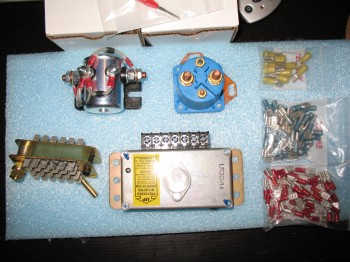
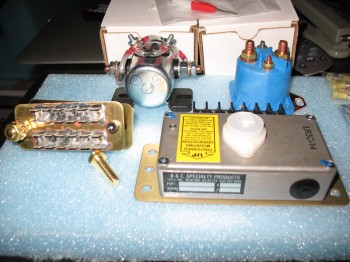
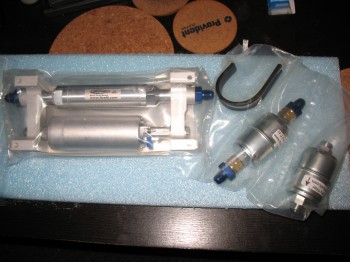
I went ahead and just lumped all my acquired bounty into one post for the month of January. Obviously, while I’m here in Tampa and my project is back in Germany, there’s not much building going on. There is however, a whole lot of time to design my electrical system and other major end items, and actually think a bit on each component, have some lengthy discussions on them, and then make some purchases.
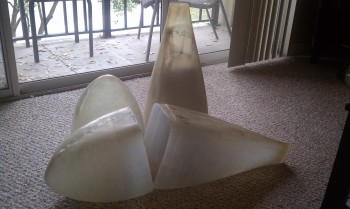
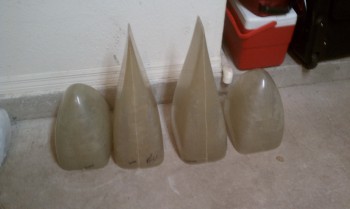
One such item was my wheel pants. I was told by a few of the Old Guard that Sam James makes some great wheel pants. So I caught up with him at an EAA breakfast in Ft. Meyers a few weeks after I ordered them and picked them up. The wheel pants are sized for a 500×4 Lamb tire. Again, trying to keep things light!
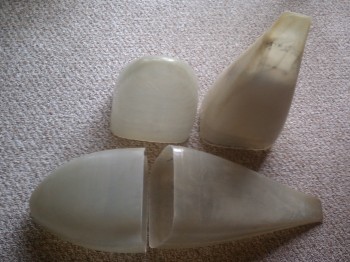
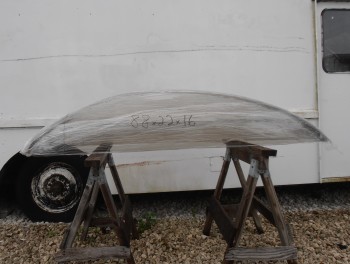
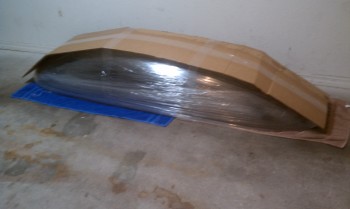
I also took the opportunity while in Florida to pick up my canopy from Todd Silver in Ft. Lauderdale (there’s a lot of forts in Florida, eh?). Another nice guy!
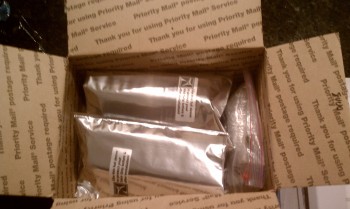
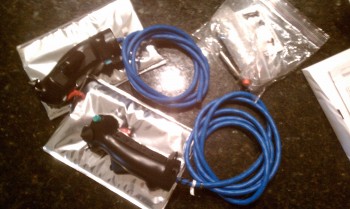
After a few discussions with JD Newman, I figured out all my buttons & switches (I think!) and then ordered my Infinity stick grips. Very nice grips! And pre-wired too!
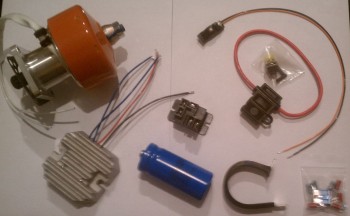
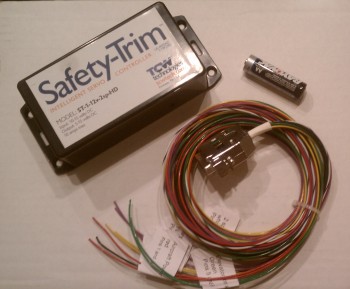
 I ordered a fairly new-to-the-market 2-speed trim controller from TCW which was made specifically for heavier duty trim actuator motors (read: NOT Ray Allen servos!). Also nicely packaged and looks to be good quality. I had a few long discussions with the TCW bubbas about their different products, and these are some pretty smart guys!
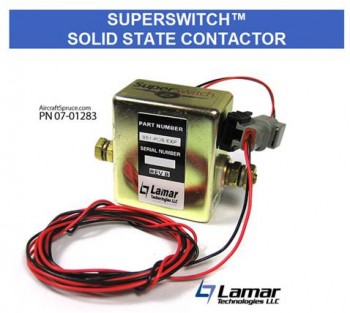
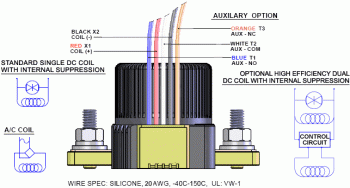
Along with a new Starter Contactor, I also picked up a new Master Battery Contactor: the Gigavac GX-11SA. Why? Well again, in my discussions with the electrical gurus, I realized that to keep as light as possible in my build that I want to utilize B&C’s L40 40 Amp alternator, which is about as light as you can get in alternators (vs the vacuum pad designs). Thus, I need to conserve amperage anywhere and everywhere I can. The standard battery contactor takes about 1 Amp to keep the contactor closed and electrons flowing. The Gigavac GX-11SA has a special internal circuit that once the contactor closes and the circuit is completed, it keeps the contactor closed for less than 1/10 of an amp (0.090 to be exact). So, for the same contactor weight, I gain 0.9 of an amp. Doesn’t seem like much, but when you only have 40 amps to play with, and a decent amount of “electro-whizzies” (as Bob Nuckolls calls them) that you’re using in the cockpit, you want (I want) as much spare power as possible. (The pic below is not my actual Battery Contactor, but a representative one… just as I did for my starter contactor).
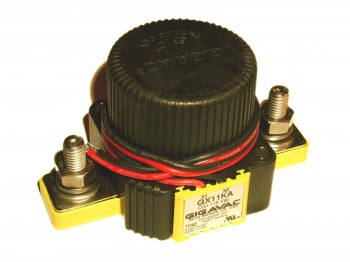
Is there a down side? Yes, there is a slight bit more electrical noise, but according to Bob Nuckolls & Eric Jones, it’s negligible. (The high efficient internal coil is shown at lower right in the diagram below).
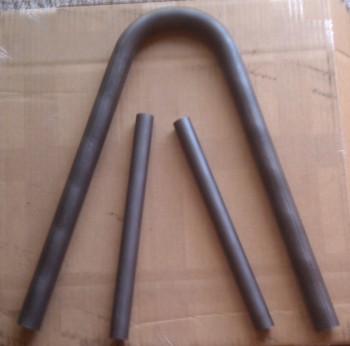
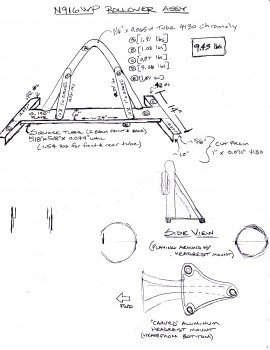
Finally, below is a shot of my roll bar and my support down-tubes that will tie in the roll bar to the base assembly. I was originally going with a 0.1″ thick steel plate for the base that would travel from one longeron to the other, but that’s too heavy, especially if you add any cross support tubes to the mix (see my diagram with a couple square tubes under the steel plate). So right now I’m looking at having one rectangular-tubed cross support and taking my vertical support down-tubes from the back of the roll bar straight to the rollover assembly side supports on the longerons to eliminate a second/rear cross tube (which is the way many people build it). This will further eliminate some weight.