Chapter 16/22 – Storage cover installed

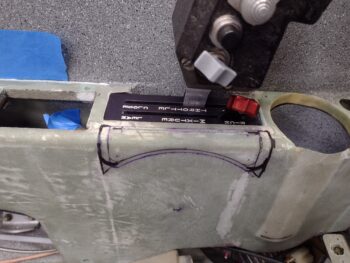
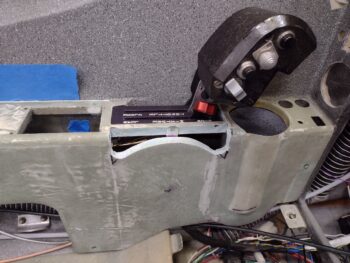
Today was all about getting the front left pilot’s armrest hinged storage bin cover installed.

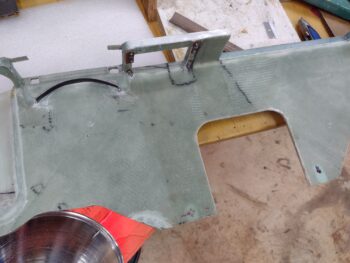
I started off by assessing the gap between the inboard edge of the storage bin and the edge of the long opening in the armrest.  With the curve of the sidewall, the gap was much more pronounced towards the front of the opening than the aft side… just under 1/8″ at the widest gap point.

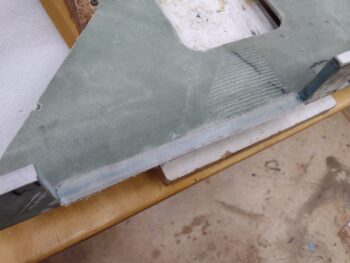
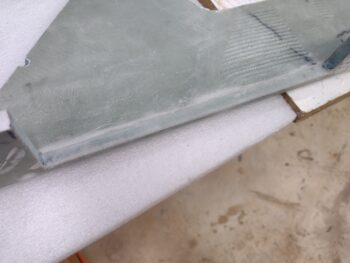
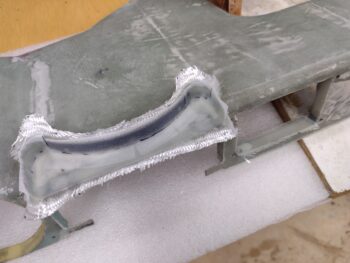
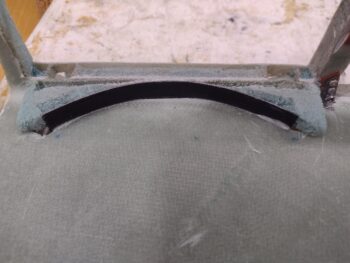
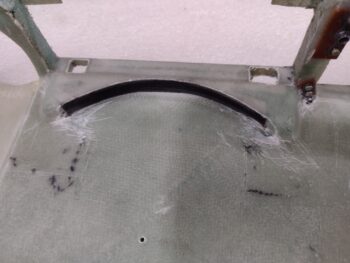
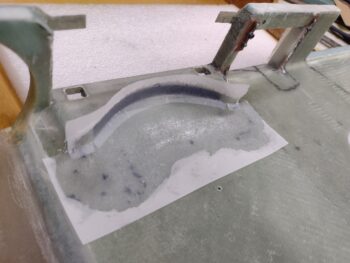
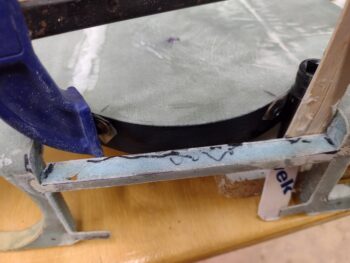
I decided that instead of just filling this gap with micro, with the potential in my mind for it to very likely eventually chip off, that I would glass the armrest long edge storage compartment opening.  This involved 4 plies of glass: 1x full length, 1x 3/4 length starting from front corner aft, then 2.3″ and 1.5″ lengths to fill in the widest gap point.  I used flox corners in the foam and peel plied the layup.

As the armrest storage bin opening edge layup cured, I got to work finalizing my circuits for the oil heat sub-panel.  I also ran out to grab lunch and run some errands with Jess.

A few hours later I pulled the peel ply, razor trimmed and cleaned up the layup.

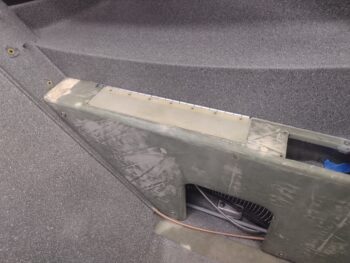
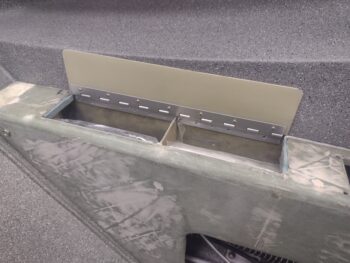
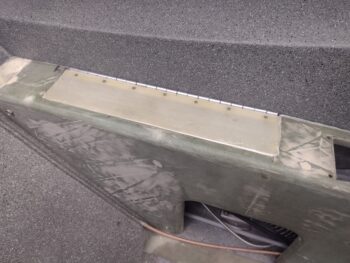
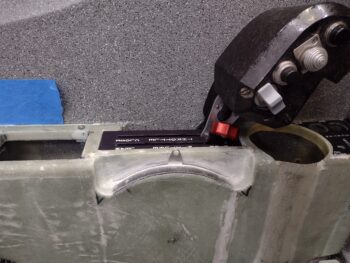
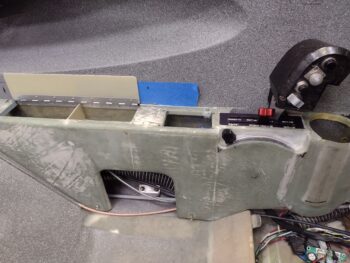
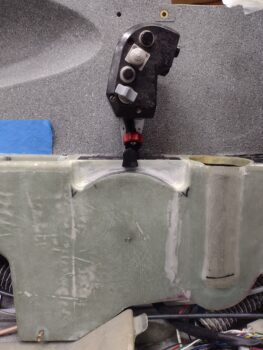
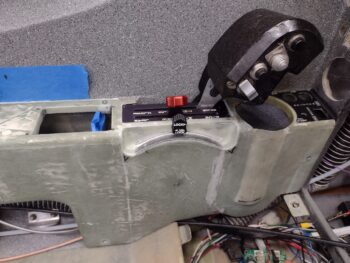
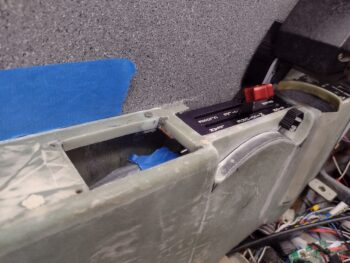
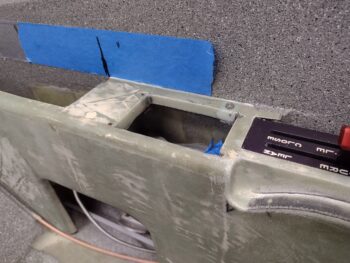
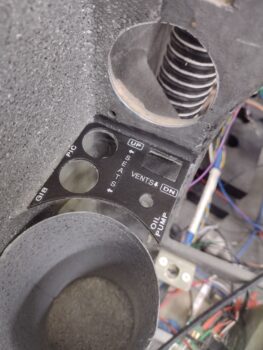
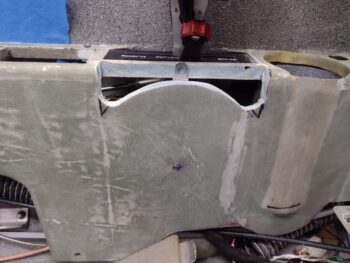
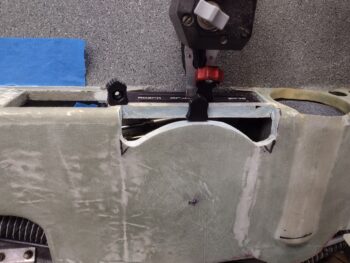
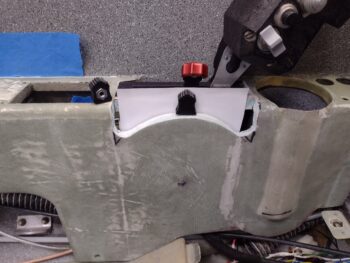
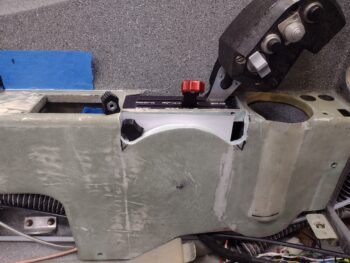
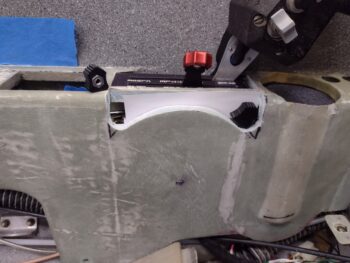
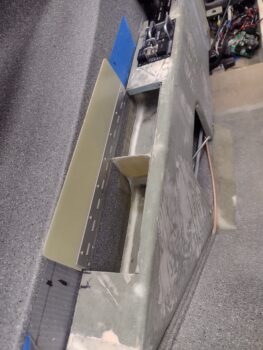
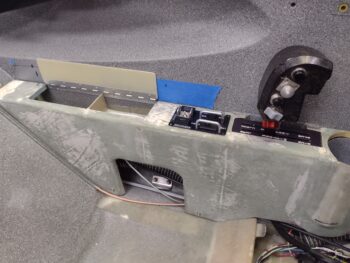
I then spent a little bit finalizing the no-kidding install configuration on the left armrest storage compartment hinged cover.  I marked and cut the front and aft edges of the armrest just a hair (~0.1″) to allow the storage compartment cover to sit even with the top of the armrest.  After confirming it was all level with the armrest (with a few strategically placed razor blades) I then floxed it into place.  I actually had some stir sticks and toothpicks wedging the long inboard edge in place, but this pic is just following when I removed those about 2.5 hours later.

I then worked the hinge back and forth (I applied a layer of wheel bearing grease to the hinge pin before floxing the cover into place to avoid any flox gumming up and/or locking up the hinge movement) and removed some excess flox that had squeezed out in different directions… which I’d say was about 80% cured and still just a very bit gummy.

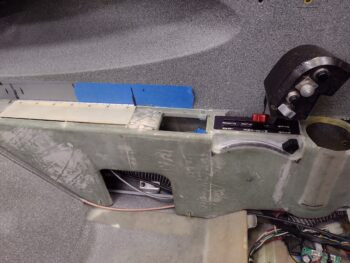
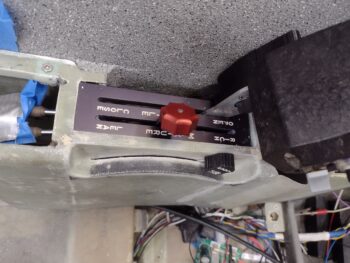
After another couple hours of cure (during which I was soldering wires on the oil heat sub-panel switches… I’ll show the finished product in tomorrow’s post) and ensuring the hinge rotated freely, which it does. I then taped up the cover around the edges, added micro to the edge/lip of the armrest around the storage compartment and then set the cover back down into place to allow for a nice narrow seam between cover and armrest storage opening edges.

I then left the micro to cure overnight, and did just a bit more wire-soldering before calling it a night.

Chapter 16/23 – New friction lock

In looking at attaching the handle/knob to the throttle/mixture friction lock I realized that I just wasn’t going to be able to acceptable thin down the 2-ply BID layup that was inside the armrest pocket to provide the throttle friction lock push-on knob the clearance it required.  I got a lot of the new glass knocked down, but I just wasn’t going to thin it down any more… I simply needed another way to attach the handle.

Well, PETG is pretty strong plastic, and even on my first iteration that included an embedded nut I had the hole threaded going through the plastic.  I decided that over 3/8″ depth of threaded plastic will be plenty to hold this knob to the friction lock lever.  But I needed the hole at the very top, which meant at least another 0.150″ more at the top of the lever to place the hole.  This would give me access to slide the screw in —just clearing the top of the armrest— and thread it into the handle knob.

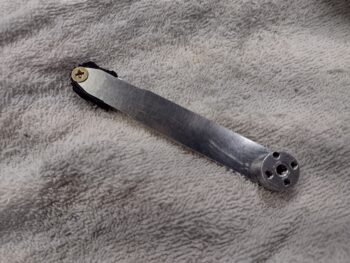
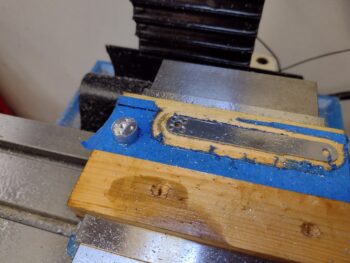
After modifying the design of the throttle/mixture friction lock lever in CAD, I cut another piece of 0.040″ thick aluminum off the sheet and prepped it for machining on the milling machine.

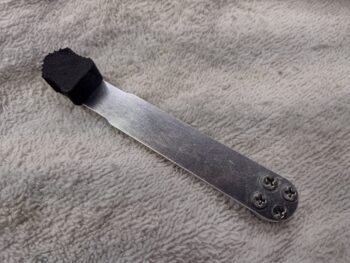
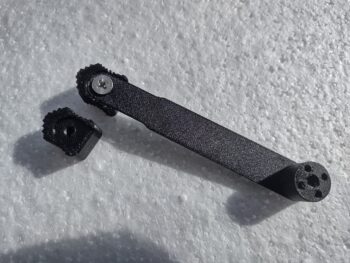
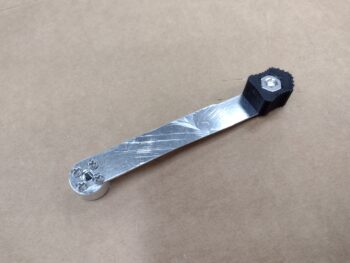
About 45 minutes later, Voila!  A new throttle/mixture friction lock handle.  Note that the handle knob attach hole is about as close to the top end as you can get.  Also, I bumped the screw size down to a #8 vs #10.

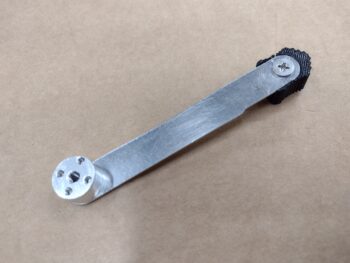
Here’s the new throttle friction lock handle setup.  Again, I went back to screwing the top PETG plastic knob in place, but didn’t use the embedded nut… and relocated the hole as high up as I could get it to clear the top of the armrest.

I then mounted the new throttle friction lock.  So far so good, but then . . .

I realized that although with a good bit of finagling I could get a Philips #8 CS screw into the lever top hole, the problem then became getting a good enough grip on the screw with a 90º screw driver to get it mounted.  After a good 10 minutes I realized it just wasn’t going to happen.

Thankfully, even though I made a wide countersink on the lever top for a #8 screw, I found that a #6 screw would still hold in that top hole.  I have a bunch of SS hex drive #6 screws on hand, so I simply made the screw hole a smaller #6 thread in CAD and re-3D printed the knob.  Bingo!  It worked.

I then put it through its paces by moving it from aft end stop to forward end stop.  I still need a good 0.1″ on each end to call the full pivot good, but much, much better and freer travel with both the external and inside BID plies sanded down thoroughly [note that I was assessing the functioning of the storage compartment hinged cover in prep for getting it mounted into place].

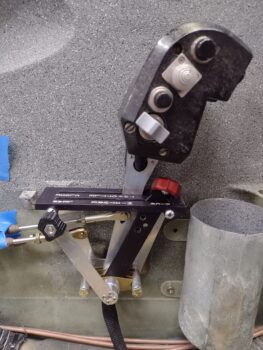
Here’s another shot of the new throttle/mixture friction lock handle in line with the mixture and throttle handle to show the clearance between them all.

I think I’ve finally found a final throttle/mixture friction lock handle mounting solution that will allow me to somewhat easily remove & remount the handle whenever I need to take the front left armrest off.  This was kind of a curveball, and I didn’t plan on spending pretty much all day on it, but it’s done and I’m pressing forward!

Chapter 16/23 – Friction Lock Pocket

I got back from my overnight Wilmington, NC trip late this afternoon and after a quick unloading and unpacking, I got into my work duds and headed for the shop.

There I prepped the visible outside (technically inboard edge) foam and area of the throttle/ mixture friction lock pocket.  I cut 2 plies of BID and after prepping the flox corners and wet micro on the foam I laid up and peel plied the 2 plies of BID.

You can also see that I laid up a ply of BID on the outboard, inside edge of the oil heat sub-panel opening after inlaying some flox along the face there as well.  Again, I don’t want these small cross pieces cracking with the repeated stress of me getting in and out of the plane.

Later in the evening I razor trimmed the layups, pulled the peel ply and cut the slot for the throttle/mixture friction lock.  My fear of crowding the throttle mixture lever pretty much came to fruition as the lever was tight in the slot, as well as really tight getting the knob onto the lever… yep, the 2 plies of BID on each side is crowding the 0.040″ thick lever.

A good bit of aggressive sanding is in my future tomorrow to free up just a hair bit more space for both the lever and the handle knob.

In fact, I actually cracked the 3D printed knob when trying to push the lever full forward and aft as it jammed on the vertical outboard wall of the pocket.  You probably noticed I had painted the lettering on the knob… not sure if I’ll 3D print the next one with the lettering on it or not.  It only took about 20 minutes to paint in the lettering, but clear-coated labels would look much better anyway if I was so inclined to really have the knob labeled.

Here’s another shot of both the nearly complete pocket for the throttle/mixture friction lock handle and the also the newly floxed and glassed outboard edge of the oil heat sub-panel opening (now all 4 sides of this opening are floxed & glassed).

I’m comfortable now in knowing that the left front armrest has been reinforced enough to ensure that it’s robust enough to handle any stress put on it during me climbing in and out of the plane, etc.  I do have some more reinforcement layups to complete, one being the tabs on each side of the throttle electrical cable channel… which is more cosmetic in keeping those secured level with the top of the armrest vs turning upwards at the slightest bit of pressure.

I also have one more armrest mounting bracket to mount and I’ll be done with the technical mounting of the left front armrest.

With that, my evening report is complete and I’m calling it a night.  Within the next couple of days I plan on being done with the armrest proper: have it painted and in the finished column.  As I’ve mentioned previously, I do plan on wiring up the oil heat sub-panel… with its specific Korry lights due to be delivered by mid-week.

Chapter 16/23 – More armrest tasks

With my foam side wedges cured —that make up the outboard wall of the throttle friction lock armrest pocket— I got to work cutting the foam to create a fair number of flox corners. With that, I’ll reiterate that with so much of the top, and now corner, of the armrest removed to house various components (cupholder, throttle quadrant, oil heat sub-panel, storage area, and even bottom corner of fire extinguisher divot) I want to make what is now the lattice work top of the armrest a fair bit stronger to prevent any of it breaking when I apply any pressure on it when ingressing or egressing the bird.

Here we are a bit later.  I’ve laid up 2 plies of BID over the newly micro’d in place foam wedges on the throttle friction lock outboard (inside armrest) pocket wall, and also laid up 2 plies of BID and a ply of UNI in the middle area of the inside armrest —overlapping onto the underside of the armrest— to reinforce the armrest.  I took this pic following the layups, so the peel ply is all in place.

Quite a few hours later I pulled the peel ply and cleaned up the layups.

I didn’t get a pic after I finished all the prep on the inside throttle friction lock added foam, but I’ll add that I rounded the corner edges quite a bit and then put decent flox fillets in place to allow the BID to lay in smoothly.

I debated whether to go one or two plies here since I don’t want to crowd the lever too much.  I definitely want to go 2 plies on the topside (inboard) so if need be I’ll do some aggressive sanding down here.  I also minimized the flox fillet in the corner as well since that is about the point I’ll be cutting the slot for the throttle friction lever to slide back and forth.

Note also that I added some flox and glassed the front and aft edge of the oil heat sub-panel mounting pocket.

With that, I called it a night in order to prep for my quick overnight trip tomorrow.

Chapter 16/23 – Friggin’ Squirrels!!!

Today I started out with a very respectable task list and planned to make every attempt to knock out it out.  But then I finally had to deal with an issue that has been effecting my quality of life big-time in the workshop: squirrels.

I don’t mind critters coming in and out of the shop, as long as they don’t crap all over my stuff, or in the case of the squirrels, tear the place apart.  I can tell you the squirrels have knocked down so much insulation, that it will take me a good half a day to make the shop look presentable before I do my next video.

Well, today, as I was over in the far back corner —which smells disgusting like a squirrel outhouse— I kept trying to get a block of wood to use to apply uniform pressure to the forward heat sub-panel cover when squirrels kept trying to run in and out of the top corner of the shop.  Something snapped and I’d had enough….

So I spent the next half a day plugging up all the squirrel ingress and egress routes of the shop.

As I was on a roll of NOT building, and with tomorrow being trash pickup day.  I spent another couple of hours doing nothing but cleaning up the shop, including a sweep of all the floors and a good cleaning of the milling machine and surrounding area.

I then spent a good couple of hours on the phone catching up with Marco re. machining, our builds, throttle and mixture cables, the Silver Hawk fuel injection system and leaning with the GRT EIS.  A great conversation to be sure and really good to catch up, but even more no work getting done.

I wanted to get at least a couple minor but significant tasks requiring cure times “in the oven” if you will and knocked off my list.

First off, I got back to using silicone RTV to attach the forward heat sub-panel cover in place.  I don’t know if it’s the angle of the shot here, or over time the clear coat looks grayer, but I’ll have to note it tomorrow when I go out to the shop.

I then cut and shaped 2 pieces of PVC foam and micro’d them into place to make up the backstop (outboard wall) of the throttle friction lock pocket.  Tomorrow hopefully I can get some glassing done on this and get it knocked out.

I will be out of town Saturday and half of Sunday, so my build progress will be much lighter this weekend.

With that, I had a much deserved glass of red wine as I write this!


Chapter 16/22/23 – Left foot, right foot

I remember as a young pup, just in the Air Force, someone telling me that on long runs you just keep putting one foot in front of the other… and you’ll get there.  Then I got even more crazy and started running marathons… same thing.  Just keep putting one foot in front of the other and eventually you’ll finish the race.

While there seems like there’s a million unending things to do on this bird, in reality of course there are just so many… not an endless number.  Which is a big reason why I chose to clean out a good swath of them on this left sidewall area: it’s target rich.  Just pull the trigger… you’ll hit something! ha!

Thus it is with something requiring seemingly endless steps and multiple rounds of layups… with no how-to’s to boot.  That’s what I’ve kicked off here with the throttle friction lock corner pocket on the armrest.  I’ll note that aesthetically I prefer my armrest sans corner pocket… it looks much cleaner in my opinion.  But operationally I don’t like the thought of having to reach down between my leg/seat cushion/armrest to rotate a small lever every time I want to set the friction on my throttle and mixture.

Or who knows? … maybe I’m just secretly envious of the guys running carbed engines and having that third carb heat lever!

I spent a good little bit finalizing the depth and profile of the friction lock lever/handle pocket before employing my ‘ol trusty Fein saw to do some cutting on the corner.  Note that just by putting the armrest back into the bird the friction lock lever popped up to say hi.  Fairly EZ there . . .

What wasn’t EZ was the spacing I mentally hoped I’d have to squeeze that CS screw into the outboard side of the friction lock lever for the roll-your-own knob I made.  Nope.  Zero room.  To throw out another military quip, another boss I had used to say, “Hope is not a plan.”

Yep, he was right here!

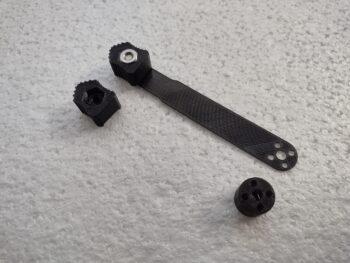
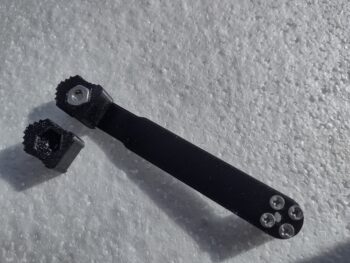
So I quickly converted my throttle/mixture friction lock knob to a push-on type by creating a very thin slot on the bottom.  I then removed the lever and trimmed the sides down to square up the lever 0.5″ down from the top.  The new knob slid right on with a bit of pressure, and voila! Ready to roll.  Note that I placed the old knob off to the side for comparison.

The new knob looks better IMO without the screw poking through into the embedded nut, but I did forget to re-round the bottom corners on this new version debut (I put a piece of white paper behind to enhance the visibility of the knob).  Those bottom rounded corners actually come into play for allowing the lever to swing a bit further forward or aft without digging into the corners of the upside down smile (not sure if we’re allowed to say “frown” anymore? … so negative! haha).

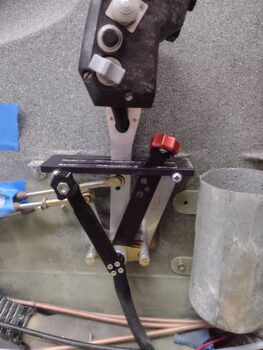
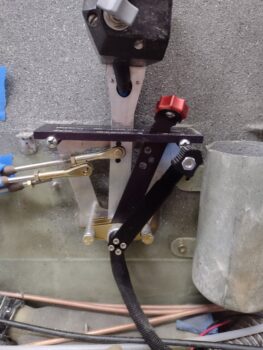
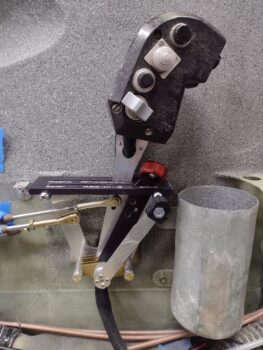
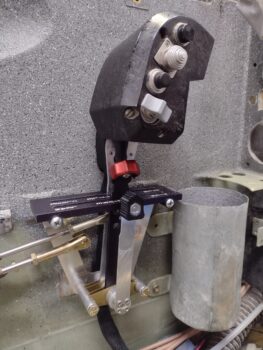
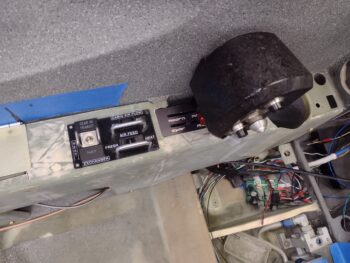
Here we have the throttle friction lock in the unlocked (L pic) and locked (R pic) positions.

In starting my journey to fill back in the corner cubby that I made for the throttle friction lock, I cut a piece of thin 0.026″ thick G10 and micro’d it into place.  Hours later as I pondered the “just how to do it” I realized I should have left a larger gap at the inboard edge for a good flox fillet.  I want radiused edges but without vacuum bagging this sucker, intricate large layups in with these curves and corners are going to be hard to do.  I think I’ll let flox be my transitions at the corners with small radiuses after I layup mainly glass-to-glass corners in this pocket.

As an aside, I’ll note that since I’ve Swiss-cheesed this armrest top about as much as physically possible, I will be replacing foam with flox on the narrow cross pieces [the rectangular throttle quadrant notch sides being prime candidates… see below] with a ply of glass or two on those, and a considerable number of plies of glass on the inside/underside middle area of the armrest.  I don’t want all this work to be ruined by any pressure I might place on the armrest —most likely during ingress or egress of the cockpit.

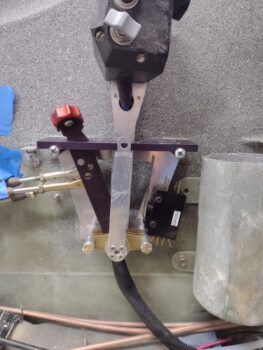
While the above was curing I pulled the throttle quadrant out of the bird to position and mount a rather robust DPDT “micro” (that ain’t so “micro”) switch onto the front side of the quadrant frame using #6 nutplates.  This guy is primarily for the Landing Brake auto retract at full throttle that Jack Wilhelmson thoughtfully engineered into his landing brake system (I bought his landing brake actuator with switch setup when I bought my nose gear actuator).  This switch also handles some panel reporting signals as well.

Clearly I need to install another one on the aft side, which will require a bit more intricate planning and implementation as I suspect I’ll have to rivet an additional piece of aluminum in place as an aft extension to mount the aft switch low enough to avoid the cable rod ends.

Speaking of which, since I had to drill an added hole between my 2 original planned holes on the throttle lever for dialing in the throttle cable movement, I took the opportunity at this point to drill the new bottom 3/16″ hole for the GIB throttle cable attach.

I also spent about 20 minutes labeling up the front corner heat sub-panel cover and then hitting it with a few coats of clear.  Since this is just mainly cosmetic I simply used the 3D printed piece, sanding the back of this cover for attachment to the original sub-panel plate and hitting the front with a couple rounds of primer and then black paint before labeling.

Tomorrow I’ll continue to work filling in the throttle friction lock corner pocket on the armrest, and probably do some electrical wiring on the oil heat sub-panel switches in between the cure cycles on the armrest pocket foam micro additions & glassing.

Inching forward!

Chapter 16/23 – Throttle friction lock

Yes, today was another blitz of CAD work and 3D printing.  I started by spending a good hour creating my own design of a throttle friction lock knob since I couldn’t find any that I had on hand or online that I liked.  Since the throttle friction knob will be below the top of the armrest in its curved (following the pivot path) pocket, I need to be able to get my finger in to “dig it out” when it’s positioned at either end stop of its pivot (i.e. fully unlocked or fully locked).

Once my knob was designed (4 versions until final) I then broke up the singular throttle friction lock lever and standoff nub (that both engages in the locking action and positions the handle & lever at the correct left-right position) into two pieces to be able to make this thing.

Yes, I could machine this thing out of one piece of aluminum, and it would be much sexier, but that’s a fair bit of time and a lot of wasted aluminum stock for something that you’ll only see the top 1″ of when it’s installed.  I have a 2′ x 2′ x 0.04″ thick aluminum sheet that I’ve used just a fraction of on hand that is perfect for this, as well as 5/8″ round stock that will serve perfectly for the standoff nub.  Top that off with some AN-numbered CS 4-40 screws and we’re in business for separate components to be assembled to create this kit.

Before I got to actually making this thing, I of course had to test it out.  I’ll point out that in replacing the short stock lever which can of course rotate virtually 360º as it tightens or loosens (of course normally it would be a much less wider range) I am limiting myself to a certain window of that pivot action, which will require more pivot space as I move farther from the pivot point.

In short, my planned corner pocket on the armrest for this thing was going to be about 1/2″ less than the length of the throttle quadrant plate… after playing around with the throttle and mixture friction lock mockup, I’ll be making the pocket at least as wide (or long) as the throttle quadrant top plate.  That being said, the friction lock is working spot-on for what/how I’ve designed it thus far.

I’ll note quickly that I also did a final 3D print of the front corner heat sub-panel cover.  I hit it with a couple coats of primer and a few coats of black paint.  I was “baking” it under the heat lamp and totally forgot about it until I was writing this blog post… pics will be forthcoming tomorrow.

I then cut out a slice off my 0.040″ thick aluminum sheet and used my new painters tape and super glue method to hold it in place.  As I was putting the clamps on (not the one I usually use btw) the plate slipped of the 90º mark I had made.  With the quickness of how the super glue cures there was no getting back onto the line, without redoing the whole process.

I widened the probe points thinking this would take this slight pivot into account, but I need to be much more specific in my probing method for the system to “know” that the stock to be machined is off kilter.

The nub off to the left was a test to see if it would hold during drilling ops, since I wasn’t doing any machining on this piece… just downward rotational forces, no side loads.

Well, my off kilter stock didn’t get the attention required along the top (far) side since the probing method I chose in my ever-present haste didn’t account for it.  More lessons learned for me.  The end result is that it has a bit less material on that side, but still enough for the small 4-40 screws to hold fine.  It’s ugly, but functional.  I’ll use it for now and remake it later after the bird is flying… unless something configuration, design or operational-wise requires it be remade sooner.

Note the standoff nub made it through the first round of hole drilling prep.  It faired decently until the very end of the 3/16″ hole getting drilled in the middle.  Towards the end the rotational force overcame the holding power of tape and super glue and the nub decided to hitch a ride with the drill bit.  No big deal… I learned something and finished the holes on the drill press.

Still on the standoff nub, after I drilled the holes I then thread-tapped the center 10-32 hole and the four 4-40 holes before assembling it all together.  Of course the 4-40 holes and the 10-32 hole at the top all got hit with countersink bits for their respective CS screws (The marks on the aluminum are from getting a thin scraper under it to pop it off from the tape/super glue).

Here we have the functional throttle/mixture friction lock handle.

I then did an ops check with the new throttle friction lock handle.  It worked a treat just like the 3D printed mockup that I tested.  Again, the throw from one end to the other will be a about 0.5″ to 0.7″ more on each end than I had planned for, but that doesn’t present any issues that I can note.

I took this shot specifically to show the handle heights between throttle/mixture friction lock, mixture handle and the throttle handle above all of them.  Again, once the friction lock handle is about 1/4 way forward or aft from center it starts “submerging” below the top surface line of the armrest.

As I had mentioned in yesterday’s blog post, I had wanted to get to work on the initial armrest configuration for the interface with the throttle friction lock, but as par usual time got away from me and this is it for the day.  Tomorrow I’ll focus on the cutting and reconfiguring the armrest to allow for a corner pocket with slot for the throttle/mixture friction lock handle/lever.

Chapter 16/22/23 – Walking it in…

If ya’ll thought I was going into the weeds over the last week, I’m going even a little deeper over the next day, or two, or three.  I’m going to be wiring up some switches and harnesses while the circuits and configurations are fresh in my head, as well as a bunch of minutia cleanup tasks on the front left armrest to prep it for final install (i.e. paint).

I started off this morning by popping the left pilot armrest off and checking to see how the top aft mounting bracket floxing looked.  It was standing off the surface of the seatback just a bit more than I expected (~0.08″), but other than that it looked great… with no extraneous flox anywhere.

I took and verified some measurements for some CAD work I had on my task list for today for the 3D printed mockups below.  I then headed into the house to finish up a design for some cockpit placards that I’m having a local shop make up.  I had stopped in over a week ago and didn’t want them to forget who I was and/or what we discussed, so I spent about 45 minutes knocking that out to get the order in for some cockpit placards.

I then verified a bit more electrical stuff with diodes and relays to ensure my circuits were correct.  My hypotheses were good to go so I’ll press forward with my shenanigans.

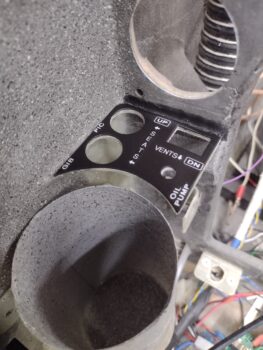
Of course I had 3D printouts going while I was doing the above tasks.  Here we have another heat sub-panel plate for the very front left corner of the left armrest, just in front of the panel.  There are two round switches for the GIB & pilot heated seats, an A OR B push-button switch that selects heated seats OR oil heat (not both at the same time to limit current draw), and a knob that selects the output of the oil heat pump.

The other component is my lever mockup for the throttle/mixture friction lock . . .

which I have in place here.  I annotated my tweaks and reconfigs and pressed forward with another version of course.

As far as heat sub-panel #2, here is the bare switch/dial mounting plate.

And here it is with the panel cover in place.  The elevation of the glassed-in plate is a hair low, so besides providing something that I can finish and label (external to the cockpit) it will raise the surface up just a bit to where it should be.

I also labeled the oil heat sub-panel and then hit it with a few coats of clear.  Yep, the labels aren’t on there perfectly aligned —I know— but good enough for the proverbial government work!

My last official task of the evening was filling the gaps between the outboard edge of the left pilot armrest and the sidewall with micro.  I of course taped off the sidewall with clear packing tape, then slathered up the armrest edges with medium-dry micro before installing the armrest into place with all its hardware.

I then left the armrest to cure overnight.

My goal tomorrow really is to get to work on the throttle and mixture friction lock… which I hope to get knocked out and off the plate.  There will be some armrest glass work for the friction lock, which I want to get started by tomorrow evening to have it finished up by the following evening, given cure times.

Chapter 16/22 – Oil heat sub-panel

With my prototype and proof of concept looking good on the oil heat sub-panel, I started off this morning by pulling the trigger on a pair of Korry lights that will show the status of the oil heat exchanger valve on the oil heat sub-panel.

I then removed the left armrest to do some work on it, but before I started work I did a recon of the throttle quadrant to make some mental notes on just how I was going to install the “micro” switches on each side (one that came in from Mouser is definitely NOT micro, but usable nonetheless).  I got some actionable intel doing that assessment and squirreled it away for future implementation.

I then determined the best location for top aft left pilot armrest mounting bracket.  Remember, the plans have these armrests permanently glassed in place, so making them removable is yet another mod.  When I floxed the mounting tabs in years ago, I left the very aft top vertical and also top aft horizontal brackets out since I planned on putting a storage compartment in over the throttle and servo cables, but of course didn’t know that configuration at the time. Now is that time.

I drilled the hole for the armrest mounting bracket and then dug out the foam on the edge around the foam and filled it with flocro.

I also took this opportunity to micro on a foam strip to the outboard top edge where it creates a seam with the sidewall, since that gap is notable.  There’s also a decent sized ~1/16″ gap on the forward edge of the throttle quadrant that I added a thin strip of foam to, also with micro.  I then clamped & nailed the added 2 foam pieces in place.

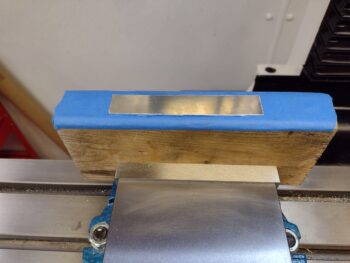
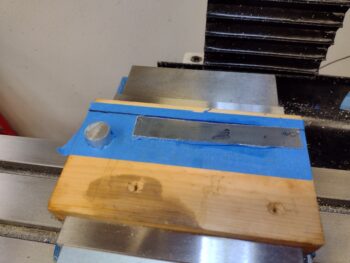
I found my 0.040″ thick aluminum sheet, cut out a 2.3″ x 4″ piece from that and then prepped it with painters tape before super gluing it to a painters-taped piece of wood… my new favorite work holding method for flat stock.  It was now ready to be machined into the oil heat sub-panel.

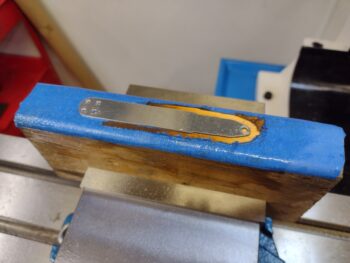
I started the machining process by drilling holes into the 0.040″ thick plate… the second pic shows it in the process of being machined to create the oil heat sub-panel.

Not too much later . . . . Voila! The Oil heat sub-panel created.

Here we have the freshly machined oil heat sub-panel all cleaned up. I’ll note that I spent about 10 minutes with a file on the rectangular openings to square the rounded corners.

I then spent a good little bit of time cutting, riveting, making some #6 screw nutplate phenolic assemblies to attach the oil heat sub-assembly to the top of the left pilot armrest.

I then used longer #6 screws and a number of washers (so I wouldn’t have to thread down so far) to secure these nutplate assemblies that I floxed in place onto the underside of the left armrest top for the oil heat sub-assembly, which I also employed to ensure the spacing was spot on.

Since a couple of the screws are right on the edge, as I tightened the screws they would pivot inward and bow the thin 0.04″ plate, so I had to clamp the plate down to keep the screws vertically aligned . . . again, space is SO tight in these birds to cram all this stuff into place!

I then cut the left pilot armrest aft bracket (and the final top mid-point one too…not pictured) and drilled/riveted a #10 nutplate on it as well.  I then drilled smaller holes on the mounting side for flox grips in prep for install .

Over 4 hours later, after I packed the armrest mounting hole area with flocro, I re-drilled the hole, taped up the armrest with clear packing tape, and then mounted the bracket.

Here’s the left pilot armrest aft bracket installed just prior to getting floxed in place to the pilot seatback bulkhead.

Which I did here.  I slathered up the bracket with flox and set it and the armrest in place —Note: to do this it was mandatory that I sand down the foam pieces that I added previously (with micro) to the armrest.  Although I would have preferred to have access to the floxed bracket to clean up any excess flox, etc. I made the decision to leave the removable storage bin in place so I would get no-kidding spacing between armrest, storage bin and newly floxed in place bracket.

I then set the armrest/bracket position by using a spreader clamp and 10-pound weight on top of the armrest.  To be clear, I taped up the surrounding areas on the storage compartment and the cables coming through the front seat bulkhead below to ensure minimized excess flox contamination that might ensue.

With the second to the last mounting bracket floxed in place and curing, I then set my sights on first shooting a coat of primer on the oil heat sub-panel plate.  I then hit it with 3 coats of black paint.  I let that set up for about 30 minutes before then baking it in the oven for an hour at 185º F.  Tomorrow I’ll label and clear coat it so it will be ready for installing the switches, guards and lights the day after.

And with that, I called it a very late night.

Chapter 16/22 – More storage stuff, etc.

Today was actually a light build day, for a couple of reasons.  First, I had a number of personal errands to knock out.  Second, I needed a bit of break from shop work because I was honestly just wore out from constant building.

As I was paying bills, buying birthday gifts, etc. I took some old data & measurement sheets I had made up on the oil heat lever sub-panel to convert it from mechanical levers to electrical controls.  I ginned up a CAD model and started printing 0.03″ thick prototypes of the sub-panel plate to begin the configuration and fitting process.  As I’ve noted before, it takes a few minutes to kick off a 30+ minute 3D print, so as I went about my non-plane building business, I was at least getting something plane-related done.

In the shop I started out by making up a cardboard template to determine the size and shape of the left armrest storage compartment middle divider.  I then cut the middle divider out of a 1/32″ thick piece of G10 and set it in place with 5-minute glue.

Note the corner seam between the storage compartment and the sidewall, where a decent sized gap exists . . .
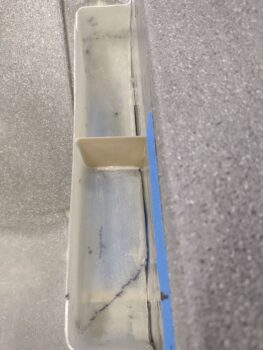
In making the armrest storage compartment removable, I wanted to eliminate this gap so that nothing that I was putting into the storage areas were falling into that gap or getting stuck, jammed, wedged, etc.

I started by adding clear packing tape to the fuselage sidewall before mounting the armrest storage compartment in place.

After adding micro fillets in the corners, I laid up a ply of BID on each side of the divider, overlapping onto the compartment floor and sidewall.  I then filled the corner seams with dry micro fillets as well before laying up a ply of BID in the corners.  I then peel plied all the layups.
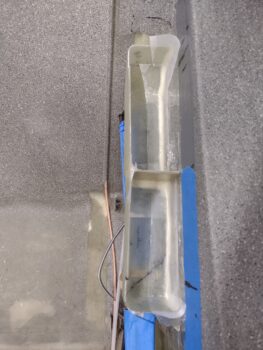
As the BID cured ( I nearly always use fast hardener) over the next few hours, I got to work on the oil heat sub-panel (see pics below) to ascertain all that I would need for constructing that. About 4 hours later I pulled the peel ply and razor trimmed the overhanging glass.
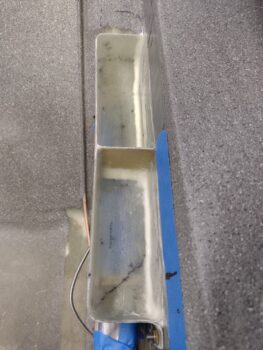
I then pulled the storage compartment off the sidewall and trimmed the excess glass and micro, sanded the edges and cleaned it up before re-mounting it back in place.  Here you can see I achieved my desired results by closing up those lower corner gaps so I don’t lose anything I’ve placed into the storage compartment along those outboard side seams.
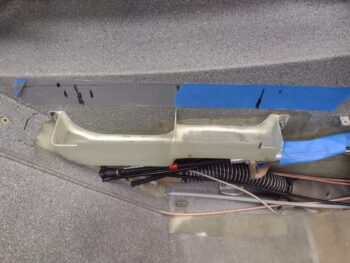
Here’s another shot of the micro’d and glassed corner seams of the storage compartment.
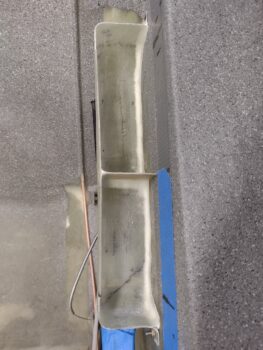
I then mounted the left armrest in place to check out how the storage compartment was looking with its internal area finished.  As I’ve noted before, the front compartment is perfect for smaller items like pens and eyeglasses, while the aft compartment provides just a skooch more storage space.  The hinged cover is simply wedged in place for a general ideal how it will look/function.

Here I’m also specifically assessing the fit of the oil heat sub-panel mockup.  I wanted to verify that the electrical switches and Korry lights didn’t protrude too low as to hit or interfere with the throttle and mixture cables functioning, which thankfully they did not.
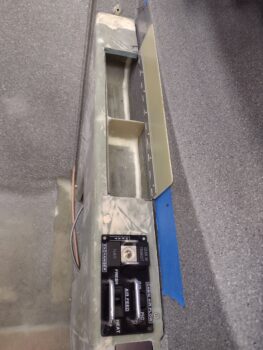
Also I wanted to verify the spacing was good with the throttle quadrant in front of the oil heat sub-panel.

Yes, it’s a busy armrest, as is the vast majority of stuff in this bird.  Note we have the major left pilot armrest components in view here: storage compartment with hinged cover, oil heat sub-panel, throttle quadrant, and cupholder.  The throttle quadrant being a mandatory item while all the others simply add comfort and quality of life whilst flying this bird.
Another shot of the oil heat sub-panel, which will control the 3 micro-actuators that in turn manipulate the 3 oil heat valves: 1) heat exchanger, 2) air feed with either cooling air or heat, and 3) air flow distribution between GIB & pilot.

Unplanned is the shot of the oil heat oil pump PWM controller sitting in the pilot thigh support left compartment (not it’s mounting location) that will control the output/amount of hot oil flowing through the system.
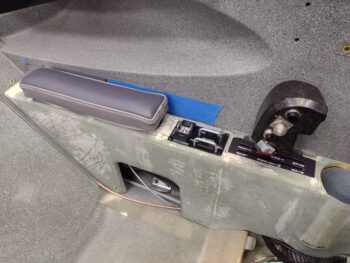
And finally a shot with the oil heat sub-panel mockup in place with the left pilot armrest elbow pad in place to ensure that spacing will work as well.  I have a fair number of switch guards on hand and figured this oil heat sub-panel is in a perfect spot to utilize those since it is a high traffic area hand-wise and I don’t want to mess up my heat/air settings once they are set.
Back in the house I spent about an hour total collecting up all the stuff I needed and then wiring up the 2″ micro-actuator —that I recently bought for opening and closing the RAM air can butterfly valve— as a test subject.  On both the RAM air can valve and the oil heat system valves I want open/closed position reporting from the actuators to let me know what state these systems are in.

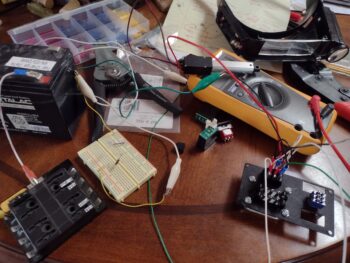
After about 15 minutes of testing various connections I found what I wanted, with good reporting coming from the actuator circuit that will provide me the manipulation of the AG6 warning annunciator, and main panel/oil heat sub-panel indicator lights.  As it was fairly late at this point I’ll update my wiring diagrams with these new circuits tomorrow.
And with that, I called it a night.