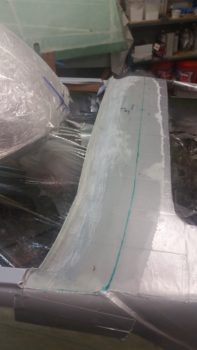
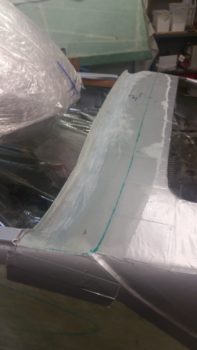
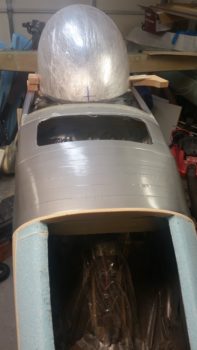
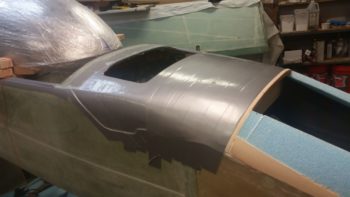
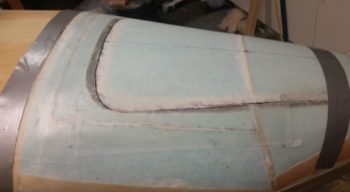
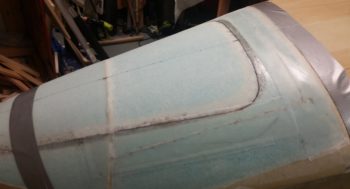
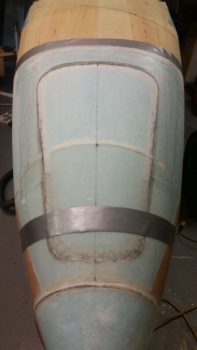
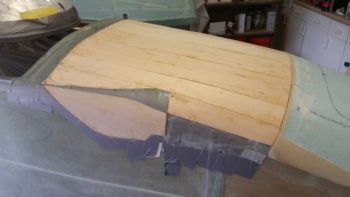
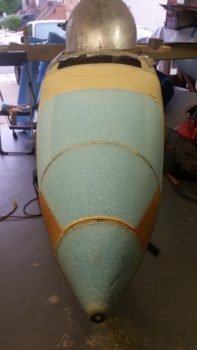
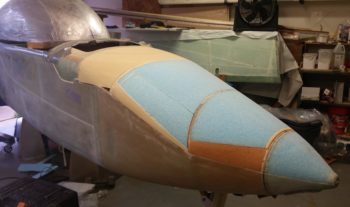
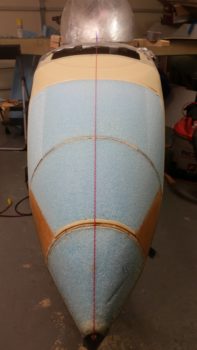
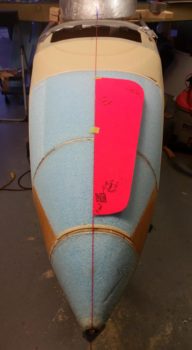
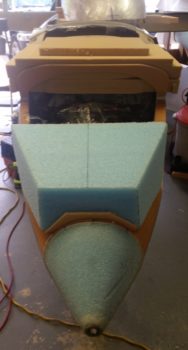
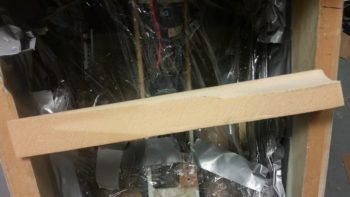
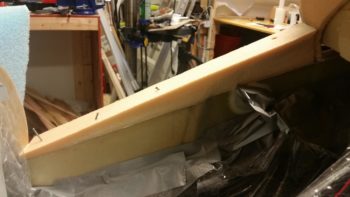
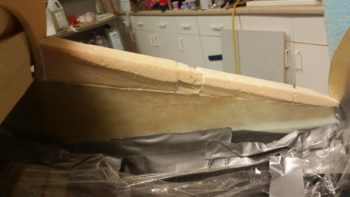
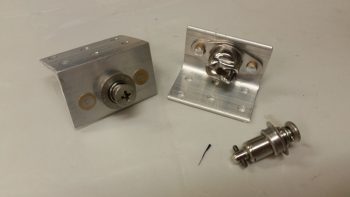
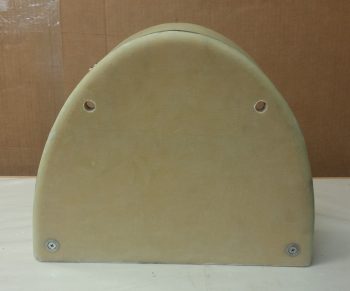
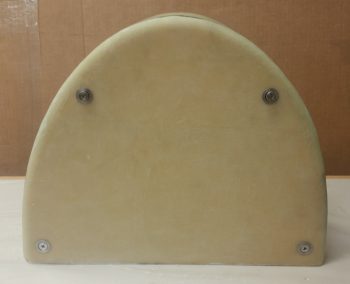
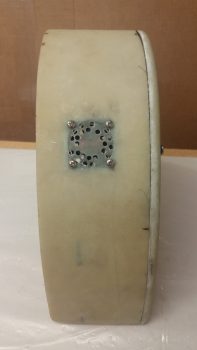
Last 2 days . . .

Just an update on my build and related non-build activities today and yesterday . . .

I started out yesterday by wanting to get a quick round of paint in before the multi-day bout of rain and T-storms rolled into the area, which were scheduled to start mid-afternoon.

I wanted a label for my oil box that, quite conveniently, would identify the box as “OIL.”  I had thought about it a number of times while building the box and just decided to do it in a quick and EZ manner.  I painted the lid top black and then –using PowerPoint– made up a good sized block lettered version of the “OIL” label.  I then taped my “OIL” stencil pattern to a wide piece of painter’s tape and carefully traced the letters with a razor knife.

I then simply affixed the painter’s tape block letters over the black painted lid top.

Again, not absolutely perfect, but I’m not building an oil box, I’m building an airplane so I want to get this thing off the plate of things to do.

I then shot the oil box and lid with a few coats of yellow paint.  I added an extra coat for extra measure so that when I wet sand it, the carcasses of all the tiny little divebombing gnats that apparently love yellow so much they’ll literally die for it . . . would not show up in the final paint.  I guess painting this during the day is like being a big boxed food manufacturer, lots of bugs for added protein!

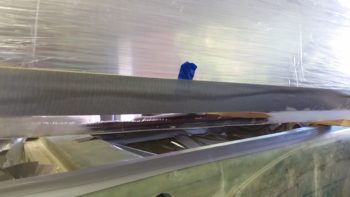
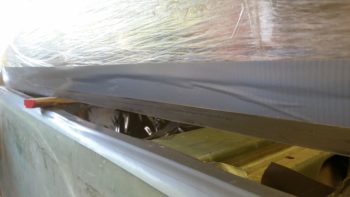
I let the yellow paint cure for about a half hour then brought the parts inside.  By the time I grabbed my keys, wallet and phone to head out to Harbor Freight for some consumables and check out some tools, the rain started.  While out, I also stopped by Lowe’s to pick up a long 3/4″ x 1/8″ piece of aluminum to use as a spacer on the longeron for the canopy build.

Now, the rest of the story….

When I returned from my errands I was ready to get back to work on the build.  I checked my task list and at the top was a note to call U-Haul to reserve an auto hauler trailer for moving the fuselage down to NC.  Time was a bit critical in that U-Haul has different rates for summer than the other 9 months of the year, with the summer rates being about 3 times the price as the rest of the year.  The demarc date for this price increase is Memorial Day, but as long as you reserve the trailer (or truck, etc) prior to Memorial Day you still get the significantly lower rate.

On the phone with the U-Haul bubbas they then asked for the year, make and model of the vehicle I was hauling.  Since I like to be up front about stuff but also realize the bias companies have against catering to anything aircraft related, I told them it was for a wheeled project I was working on.  The bottom line ended up that if it wasn’t a standard vehicle with a normal make and model, they simply would not rent me an auto hauler trailer.  I’ll spare you my commentary on what I think about our current social mores.

Concerned, I then spent a few hours investigating possible courses of action that would facilitate and result in my ability to move my fuselage down to NC.  This of course included researching what constitutes “wide loads”  for both Virginia and North Carolina.

In short, all things considered, my build endeavors were done for the evening.

After the detour I took yesterday, I started off this morning by heading to a local ma & pa diner to have breakfast and list out my tasks for the day.  I had to make a couple quick stops and by the time I returned it was HOT in the house.

I haven’t had my AC on (due to my cheapness…ha!) but it was time to deal anyway with an AC issue I’ve been having, which I finally deduced as most likely a clogged evaporator drain (all evidence points to this being a side effect of the AC drain being filled with rocks and garbage [I was told most likely the building crew] that was discovered by my tenant while I was in Germany… not only did it physically block the draining but facilitated the growth of algae, mold, gunk, etc. that blocks the drain line and forces the water to exit where it can out of the unit).

Again, due to my cheapness, and not wanting to pay the extortionist HVAC guys a ton of money only since they know the simple magic and I don’t, then I went into quick apprentice mode on becoming an HVAC “technician.”   Anyway, I believe I found the issue and thus had to go into HVAC repair/maintenance mode.  This is not only for my immediate comfort, but something I would have had to address anyway to sell the house…. so the work gets done either by me (on the cheap) or by a certified technician (muy expensivo!). So far the progress has been good, but it will take a few hours a day over the next few days to really clean up some of the rust in my drain pan, clean the drain lines, etc.

So that, folks, is where I am on the build…. and the move.


Chapter 12/13 – Final Canard Install

I kicked off the day spending a little over an hour on the yellow Oil “Tower” Box in its continuing evolution.  I started by wet sanding the yellow paint to make the surface even more uniform than it had been before.  Although I’m not naturally a patient dude, that’s exactly what is called for when finishing parts that don’t start out nice and uniform in shape to begin with.

After a good wet sanding I then marked the cut line that will separate the box into the lower quart oil bottle (and shop rag) storage part and the lid top, which will have a hinge mounted on one narrow side with a twist-lockable clasp on the opposite narrow side.

I then used my Fein saw to carefully cut the lid top off.

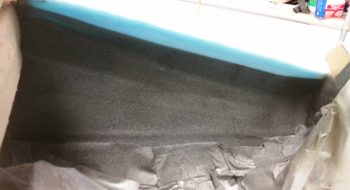
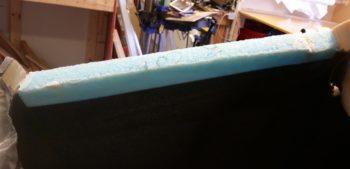
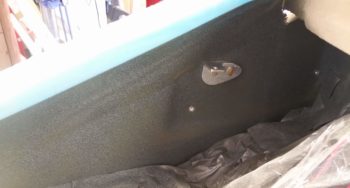
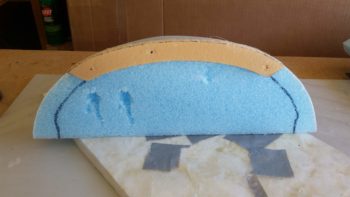
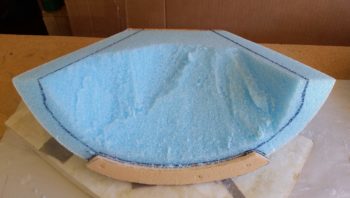
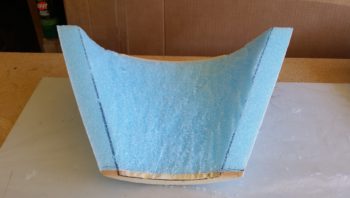
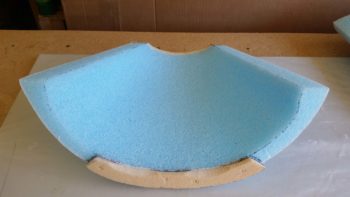
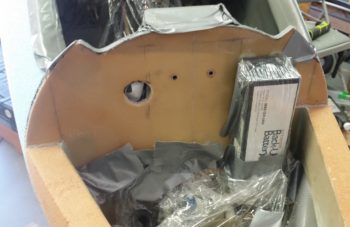
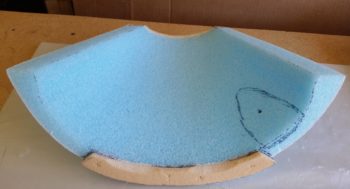
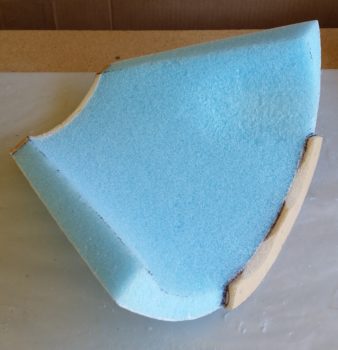
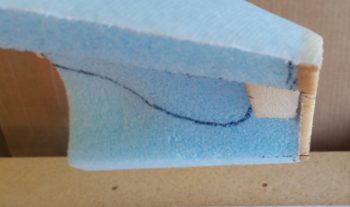
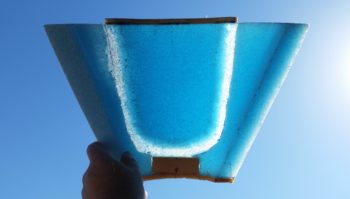
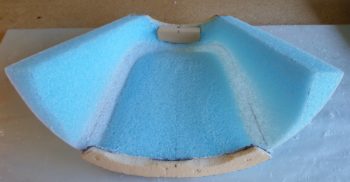
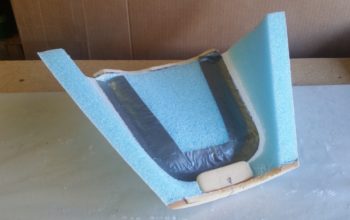
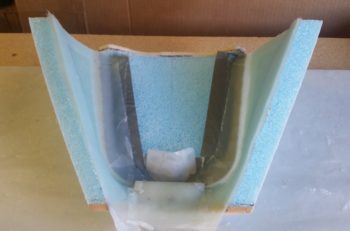
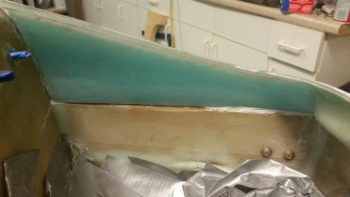
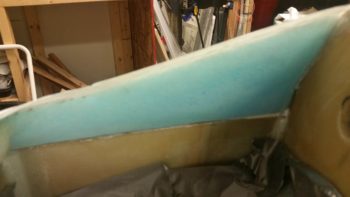
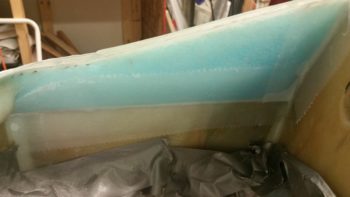
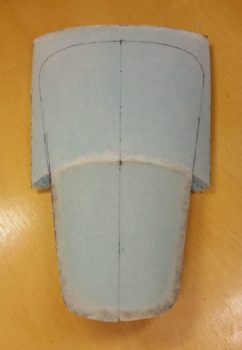
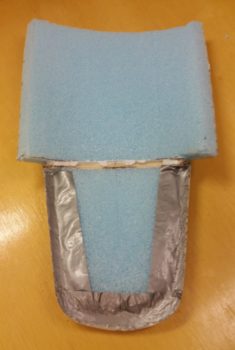
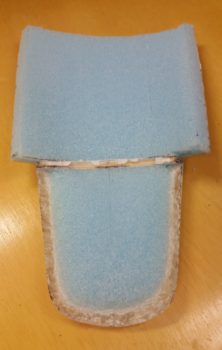
Here’s the lid off the top with just the tip top of the oil bottle peeking out and another shot showing the foam plug that I used to create the rounded edges & corners of the lid top.

I then removed the lid top’s foam plug and tape and quickly rough-sanded the inside to knock down some “gotchas” ready to devour unprotected flesh.

I then spent a good 20+ minutes extracting the empty quart oil bottle and associated cardboard and tape that served to make up the plug for the oil “tower” box.

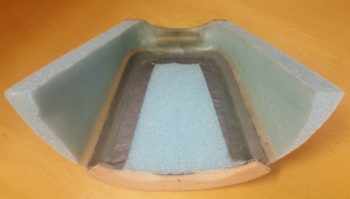
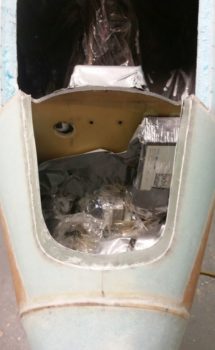
Here’s the inside view of the oil “tower” box.

I had to cut 3 sides of the top part of the oil bottle to get it and the tape removed from the inside of the box, so I taped the bottle back together for a quick test fit… which I was very pleased with since the oil bottle fit is like a hand in a glove.  Ever so slightly snug just to keep the oil bottle from any inadvertent movement.

Then, just a quick double check on upper clearance –and for my own satisfaction– I placed the lid back in place on top.

I then prepped some BID, whipped up some epoxy and laid up some internal corner plies of glass in the long side corners of the Oil “Tower” Box.  I then peel plied the layups.

I also had prepregged 1 ply of BID and 1 ply of UNI to layup on the forward side of the elevator up travel control stop.  I decided that this would be strong enough with just the foam tab piece sticking out 90° from the sidewall and scrapped glassing in the perpendicular triangular piece that I had cut for this setup.  I then of course peel plied the lay up.

To keep the blog on track topic wise I’ll fast forward a few hours and show you the forward layup on the elevator up travel control stop, where I’ve pulled the peel ply and trimmed up the edges.  Nice and simple, and strong, and it works a treat!
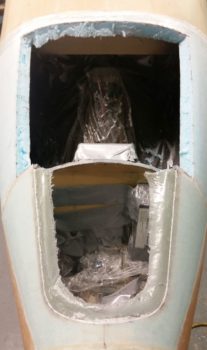
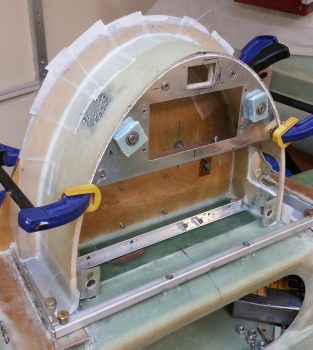
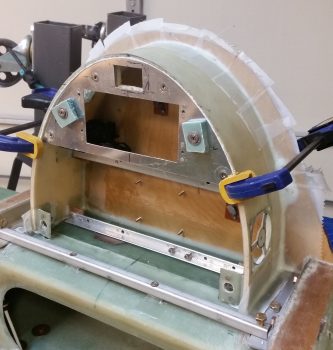
I then gathered up my two long (and quite expensive) AN3-62A canard upper mounting tab bolts along with their associated thin-walled 4130 tube sleeves.

I ran a long 1/4″ drill bit through the holes to ensure they were nice and clean with a good diameter to fit the sleeves, at which I point I used straight epoxy and very wet flox to install the bolt sleeves into the holes through the F28 longeron doubler and the squared-off extensions I added.

Here’s the final install of the right bolt sleeve into the right F28 longeron doubler and the squared-off extension.  The left was the same as this.

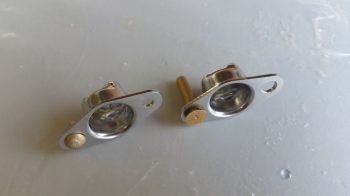
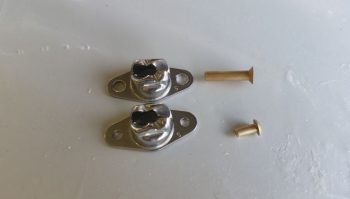
While the canard upper mounting tab bolt sleeves cured in their new longeron doubler locations, I then whipped up some K1000-3 90° nutplate assemblies using spare G10 Garolite pieces I had on hand –which I didn’t even have to cut! (How’s that for being laz… er, efficient?!)
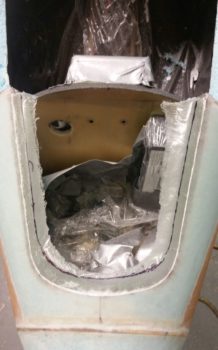
BTW, I didn’t make them match in size because I prefer the larger sized one with bigger surface area to grip the flox, but the smaller one would of course work as well.

When I did a final fit with the canard in place, I must have been off a hair in my initial measurements with the bolts, since after install their would be no thread showing on either side.  Hmmm…. clearly the longeron doubler would need to be trimmed because I wasn’t forking out even more cash for longer bolts.  I just wish that I had figured this out prior to installing the 4130 sleeves!

Once I set myself to the task it really wasn’t that big of a deal.  I started by drilled a small series of holes just a few millimeters apart.  Then used the Fien saw with a straight blade and narrow wood chisel to remove the wood and glass from around the protruding 4130 tube, respectively for each side of course.

I then used a cutoff wheel on my Dremel to make quick work of trimming down the protruding thin-walled 4130 steel tube sleeve on each side.

I then test fit both sides and it looked as if my trim job had done the trick to provide me with enough thread exposure to ensure a good bolt fit.

I then technically mounted the canard for the first time ever! (In regards to its final configuration… <grin>)

It was hard to get both top and bottom canard mounting bolts showing with the lighting, but here’s my attempt.

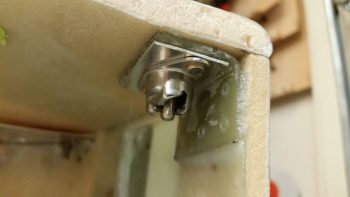
And here are the canard upper mounting tab bolts’ nutplate assemblies floxed into place on the aft end of the (trimmed) F28 longeron doubler extensions.  Admittedly, I got a bit more thread on the left side than I was looking for, but as long as the bolt isn’t bottoming out on the thread shoulder before it’s secure (and at first appearances it is not) than all is good!

I’ll add just a bit more flox around the top and outboard edges of the nutplate assemblies to ensure that they are secure since the process of getting the long thin bolts installed along with the lower bolts requires a slight bit of coercion and I wouldn’t want the nutplate to pop off into the bowels of the closed up avionics area as I’m trying to mount the canard.

Tomorrow I’ll actually start with DIRECT PREP for the nose and canopy build, while these associated prerequisite tasks will be relegated to secondary sideline tasks.


Chapter 12/13 – Who’s messing around?!

Ok, so I admittedly spent a few hours today on the Oil “Tower” Box, so prepare yourself for a number of pics of it.

I started out by giving the primed Oil “Tower” Box a very thorough sanding down.

I then hit it with another few coats of primer before heading out to run some errands.

When I returned I again sanded the primer, only this time I wet sanded it.

With a solid base of primer in place I then set about to rid myself of the numerous divots I had in the surface of the Oil “Tower” box.  I would be using EverCoat’s Metal Glaze for the aforementioned ridding of divots.

I then slathered up the oil “tower” box with Metal Glaze and let it cure.

I then took the box outside and knocked down all the high points of the cured Metal Glaze with a hard sanding block.  I then brought it back inside and wet sanded it to get the final feathered finish between filler and pre-existing box surface.

I then shot it with a couple coats of primer one last time.

I then very lightly wet sanded the Oil “Tower” box before taking it outside and hitting it with 3 coats of yellow paint.  Tomorrow, this paint will get sanded and then I’ll cut the top of the box off, at which point the separate pieces will then get another 1-2 coats of yellow paint.

While the yellow paint cured on the Oil “Tower” box I reorganized the fuselage in the shop to allow me to mount the canard.  I then got the canard down off its perch and mounted it to the fuselage.  The mounted canard will provide some data on the final nose build and also facilitate finishing some prerequisite nose tasks before starting in on the nose and canopy builds proper.

Although still a bit tight with just a tad bit of finagling required, I was quite happy with the fit of the canard and the “ease” of getting the canard mounting bolts installed.

I also tested out my new 5/8″ elevator control rod that appropriately enough only has ONE hole for the pitch trim servo arm attach (Just say NO to extra holes!).

I then rounded up some scrap 3/8″ PVC foam that had a ply of BID glassed to each side and used it as the elevator up-travel control stop.  I whipped up a small amount of flox with fast hardener and also used a small dab of 5-minute glue to secure the control stop to the right fuselage side wall.  As you can see, I used the actual elevator control arm as a sort of jig.

The way I knew the elevator control arm was in the right position was by using the elevator angle template to ensure I was at the max 15° elevator up travel.  I’m actually just a hair lower than I can get the elevator to travel, but any higher up and it starts to contact the canard TE, so this is a good position for the elevator control stop.

Since I had access to the aft side of elevator control up-travel stop, I laid up a ply of BID with the requisite flox fillet.  Tomorrow I’ll layup a ply of BID on the front side and also glass in a small triangular piece perpendicular to the current glassed in tab.

I’m drawing near to being finished with the internal prerequisite tasks for prepping the nose and avionics area for the nose and canopy builds.  I estimate that tomorrow should be the last full day I spend on any prerequisite tasks for the nose and canopy build.


Chapter 13/25 – Showplanes ‘R Us

The title is for my buddy Dave B!

Well, after messing around upstairs a bit when I finally got down to the shop in the early afternoon I was met by an oil crisis . . . as in engine oil was all over the floor and I was in a crisis!  Apparently, with the engine inverted the plug in my crankcase vent gave way and the engine oil exited out onto the large protective drip pan that I have under the engine. But then the oil pooled up on one side, dipping the pan on that side and overflowed the pan edge onto the shop floor in an area about 3′ x 6′.  It just so happens that corner of the shop is where I have a decent amount of wood stored up against the wall.

After nearly an hour of cleaning up the oil, I then started in on the wood by trimming all the oil contaminated parts off.

I then rotated the engine upright and reconfigured the spark plugs and cylinder dehydrator plugs by replacing the top spark plugs with the cylinder dehydrator plugs and firing up the engine dehumidifier.

I had been cleaning and organizing the garage a bit when I discovered where the oil tanker ran aground in my shop, so I went back to that for a bit after I cleaned up all the oil to get the shop a bit more clean and organized.

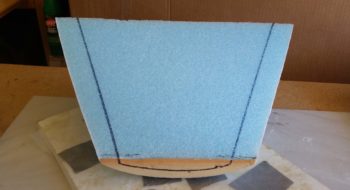
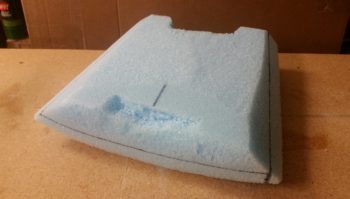
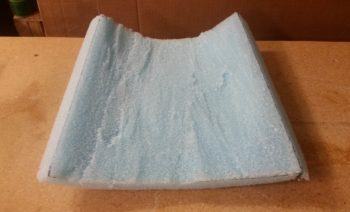
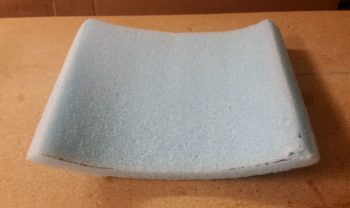
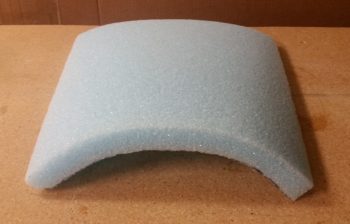
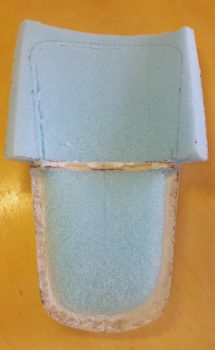
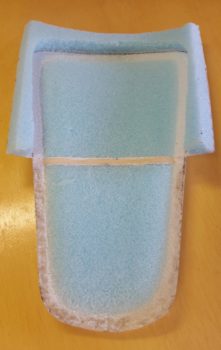
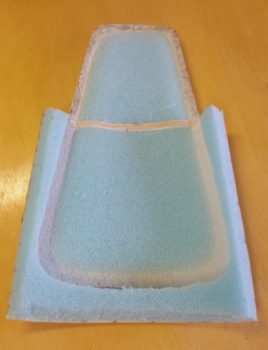
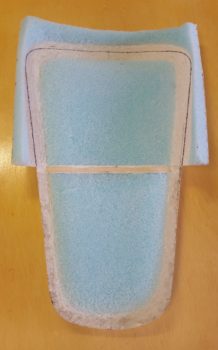
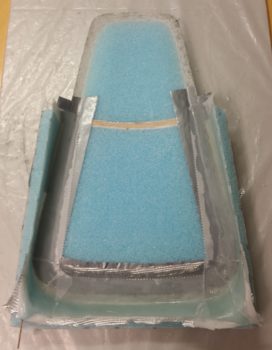
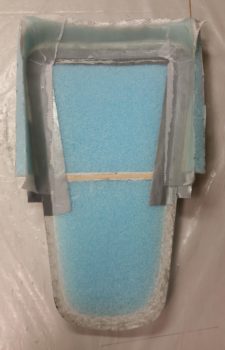
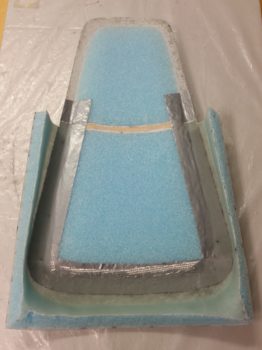
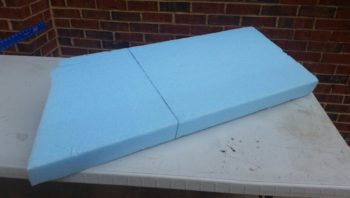
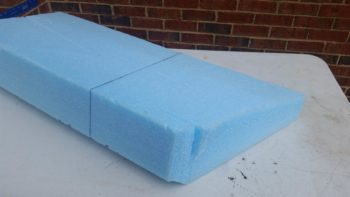
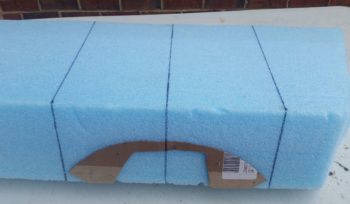
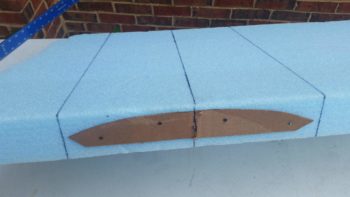
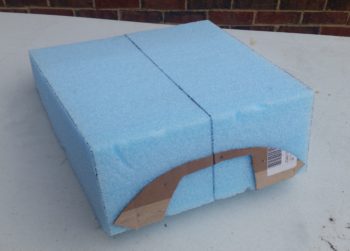
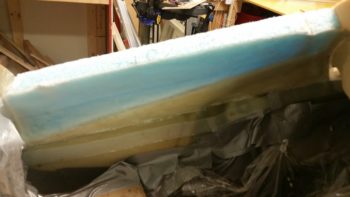
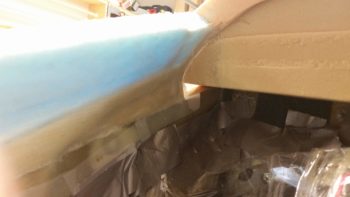
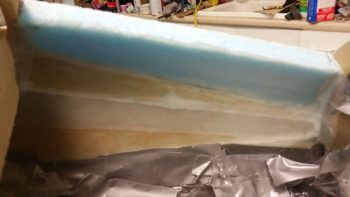
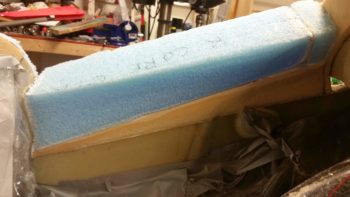
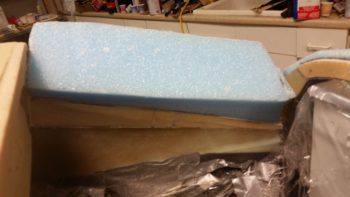
After some much needed shop cleaning and organizing, I finally used the deck chair pad that I purchased along with my pad of blue memory foam to experiment with different sitting heights.  I think I’ve found what I like which would equate to about a 3″ bottom seat cushion that transitions into a 1-1/2″ to 2″ seat back cushion.  This configuration really gives me a decent seat height for visibility and not feeling like I’m crammed into a low sitting 1950’s mini sports coupe.

I then spent a good 30 minutes dialing in my “final” rudder/brake pedal locations, which I wouldn’t be surprised if they end up moving by 1-2 mounting holes either fore or aft after the rudder cables and brakes are connected and operational.

I then removed the rudder/brake pedals and got to work on the laborious task of prepping the front nose area for paint.  It was quite the pain, but I knew if I didn’t do it now that I wouldn’t have an opportunity to do it later so I knocked it out.  Moreover, I wanted to get this nose paint shot and curing overnight.

After about 2 hours I had the nose area taped up and was ready to lay down some paint.

I started with a couple of light coats of gray self-etching primer.

And hit all the exposed spots in the nose area.

After letting the primer cure for about 45 minutes, I then hit it with a couple coats of the speckled top coat, which is the same trunk paint I used on the nose wheel cover (NB) and avionics bay area.

I let the top coat alone to cure for 30+ minutes and then removed the protective tape and paper.

If you were wondering what my white paint job was all about, here it is. As you can see it’s simply a designed accent feature to “cap” the forward end of what is essentially a big white stripe down the middle of the nose compartment.  I figured the white NG30 covers and front mini-bulkhead would lighten up the nose compartment to offset the use of some dark speckled paint.  Plus, I think the dark vs. light contrast just looks snazzy!

I left a good majority of the floor unpainted for a few reasons.  First, I didn’t want to paint an area that I felt was a higher traffic area.  Next, I did’t want too much dark paint in the nose compartment both from an aspect of visibility (being too dark) and minimizing paint weight where possible.  Lastly, I like to keep a bit of what I consider the cool build features exposed, so analogous to the lower longerons that I left exposed, I could see the dished floor pan and embedded phenolic pedal hardpoint as some good/fun discussion points at fly-ins, etc.

I should also note that I will be adding in a small length of Nylaflow as a cable guide between the bottom of the pedal “S” curve on the front of the pedal assembly to a bolted in AN111-3 hardpoint that is located in the lower sidewall forward of the pedal assembly… on each side of course.  The resulting layups to mount these small cable guides requires that the lower side wall remain clear, for now.  I’ll most likely finish the sidewall paint down to the corner once these cable guides are in place.  I should also note that I left the floor clear on the forward side for the foam/glass work that will be required to mount the oil “tower” storage box as well.

I then finally brought my vision for the nose compartment to life by setting the forward and aft NG30 covers in place.  Granted, the forward NG30 cover is not finished to the mirror shine that the aft cover and forward mini NG30 bulkhead are, but once the wiring, parking brake, brake lines and oil “tower” box are all in place the visibility of this piece will be greatly reduced anyways, so I’m leaving it as the duller looking member of this triad.

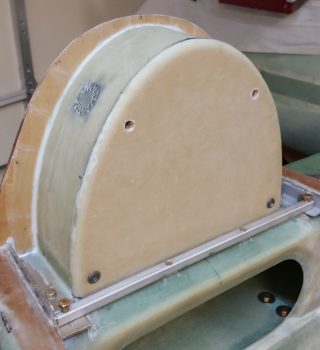
Here’s more of a view from the top that you would most likely see peering down into this compartment with the front nose hatch open.  Note that I will have to obscure (read: destroy) the look of that beautiful top plate of the aft NG30 cover (left in pic below) when I mount the Radenna SkyRadar-DX ADS-B antenna to the NG30 cover.  Alas, I think it will still look clean enough . . .

I’ll end this evening’s post with a couple of angled side shots showing the contrast of the white NG30 cover and the dark painted NG30 sides.  This really was the affect I was going for with the white NG30 covers and forward NG30 mini-bulkhead as accent features.  I had originally planned on using no paint at all so the dark paint would not have been visible obviously, but a relatively small amount of paint really does do such a great job evening out all the splotchy build textures and multiple colors assaulting one’s eyes as they peer into these compartments.  I think for a minimal weight penalty it really does the trick nicely (as a point of note, I have not yet pulled up the rather large taped off floor segments in the avionics bay yet, which will expose even more non-painted floor area).

Tomorrow I will press forward with finalizing the nose internals to get ready for the nose and canopy build.  I will most likely finally get around to mounting the canard to facilitate glassing in an elevator control hard stop and finalize the canard top tab mounting hardware configuration & install.


Chapter 3/13 – Tooling up…again?!

Knowing that my lathe was getting delivered today and that I needed to sign for it, I started by opening up the shop and got busy wet sanding the very front NG30 mini-bulkhead that I clear coated last night.

After wet sanding it I buffed it out with rubbing compound and then hit it with a couple coats of polish.  It’s not perfect by any means but I think it will look great as a part of the white center NG30 “console”.

Then the UPS guy showed up with my lathe.  Which came in 2 separate boxes. [I’ll warn you now that the rest of this blog post pertains to the lathe, so if you’re not interested you can shut this down now…. cheers!]

Yep!  It’s a lathe!

Two big benefits of getting this specific lathe was that A) it was actually in stock, and B) the reports on it NOT being delivered in a mangled, unrecognizable container were non-existent.  In fact, the feedback was that it was packed VERY well for shipping (Two boxes vs just one greatly verified that fact).

Box #1 contained the main body: the headstock and the bed (aka rails).  It also contained the chip pan.

I then pulled the rather heavy headstock and bed assembly out of box #1, still mounted to its wood shipping mount plate.

I then opened up Box #2.  Words can’t express how pleased I was with the packing quality of these components.  The foam here was not cheap styrofoam, and the overpacking was just off the charts.

Box #1 of Box #2 was the gear cover that mounts to the left end of the lathe to cover all the gearing on that end.  Now, the motor is a direct belt drive configuration, but the ancillary lead screw drive and threading is gear driven.

Here’s the outside of the left end gear cover.

Box #2 of Box #2 was the electronics box.

The outside of the electronics box is the front of the lathe and the top is the control panel.

Then there was the odd components: the rubber mounting feet brackets and bag of accessories.

A closeup of all the threading gears in the bag of accessories.  This bag also included all the hardware and handles.

The rear back splash was honestly the only “free’ floating component packed in Box #2.

With all that stuff that came out, and there was still 2 boxes left to go in Box #2.

And again, the overpacking and protection was spot on!

One of the boxes contained the Compound slide with the old style tool holder attached (this will get swapped out for a quick change tool holder).

The top view of the Compound assembly.

Here’s the cross-slide assembly underside.

And the top side of the cross-slide assembly.

And let’s not forget the 3″ chuck (that I’ll most likely never use).

Here we have the headstock, the bed, the tailstock, the compound and cross slide.  I should note that as all these metal parts were unboxed I cleaned them with solvent.

I then flipped the headstock and bed upside down to remove the wood shipping mount plate.

And then mounted the chip bed and feet assemblies.

I then set the lathe assembly in place on the work bench.

And started wiring up the electronics box.

A closer shot of the electrical wiring getting connected out of the electronics box.

As I was checking the operations manual I ran across a template with the dimensions spelled out to hard mount the lathe to the bench.  I liked this idea much better so I removed the rubber feet and spent well over an hour (my issues, not the machine’s) getting it mounted to the bench.  In the end, I like this configuration MUCH better… a lot more stable.

To see the lathe in action and overview of my latest tooling up, I created a fairly short video:

This will be the last post I make for almost a week as I pack up another load to head down to North Carolina.  For any curious types out there, I should be down in NC by the end of the summer.  After settling in I plan to stop offering up these silly excuses as to why my plane is not finished yet!


Chapter 3/13 – Trimming up Dolly

I actually started this project a couple of days ago and finished it today.  Instead of stringing you along like I normally do, I just decided to show you what I was up to all in one whack!
I noted yesterday that my TIG welder was the “Elephant” in the middle of the shop, when in fact a truer statement would be that the fuselage dolly, having served its purpose well, is now the true elephant in the shop.  Not only do I need to trim it down for space, but I need to repurpose it as a portable tool work bench for my upcoming focus on making some bric-a-brac for the plane.

I started by clearing off the top of the fuselage dolly and then giving it a good cleaning.

I then removed all the hardware and wood brackets off the top.

Here’s the last official pic of the fuselage dolly before it got a massive makeover (key some dramatic music from some crazy reality TV show!).

I determined yesterday that I need the top to be 38″ long, while the width will remain a hair over 30″.  After determining the top area that would remain, I started on each end, cut and then removed the top shelf pieces and the underlying support frames.

I then removed the 4 corner slide posts that would get reattached, and then trimmed the remaining overhanging wood support rails from the table top.

About 2 hours later I ended up with a much shorter version of the fuselage dolly that again, will now be used as a portable work bench that power tools will get mounted to.

I mounted 2 recent acquisitions –the red 9″ Skil band saw and the Harbor Freight bench top combo sanding belt and disc machine– along with my ever faithful bench top grinder that has never really had a home.  Yes, I know that these tools don’t get high marks for being the best in their respective classes, and I’m sure they got beat up a lot in tool high school, but by all accounts they work well enough to do what I’ll need them to and moreover, they were cheap (like me!).

You may have noted there is a spot on the opposite side of the table, which is for a mystery tool that for now we’ll call: Tool X.  It is vitally important that the information as to the type and purpose of this tool not be made public at this time…. especially to Marco! haha!

My initial plan for the day was to wet sand and then clear coat the front NG30 mini-bulkhead so that I could have then wet sanded and buffed that out either later this evening or tomorrow, but alas I broke through the topcoat when I was wet sanding and had to repaint those areas with another couple coats of white paint.

Finally, much later in the evening I was able to successfully wet sand the white top coat and then clear coat it with a tack coat and then 2 full coats of clear.  Yes, I understand that these pics probably look exactly the same as the gloss white top coats…. but trust me, THAT’S clear coat on there!

I was remiss in getting a pic of the Oil “tower” box with its surface sanded down, before primer… after nearly an hour’s worth of sanding on the stubborn surface.

I toyed with the idea of using a bit of metal glaze body filler first but then decided I would not only use the primer as a bit of a guide coat per se, but also let it sit for a week to really cure while I’m down on my next trip to North Carolina.  For certain it will need some help in the hole-filling department, especially that crater on the north face, but I determined that it would probably be easier to do after the primer was on, cured and wet sanded.

My build tasks will be minimal tomorrow since I have to get into packing mode (which I was supposed to do today!) to prep my next load out of household goods to haul down to NC.


Chapter 13/22/23 – Painting Goalpost

I started off today making a run down to Harbor Freight for some equipment and tools.  I then headed over to my neighbor’s house for a while since he wanted some male company during their Mother’s Day cookout.

After some great food and beer, and a nice break with my buddy next door, I then spent some time assessing, evaluating and designing the conversion of my fuselage dolly into a bench top tool table on wheels.  I’ll report more on that tomorrow with pics.

I then had to contend with what had become an elephant in my shop, sitting there in the middle of everything and just getting in the way: my TIG welder. With new TIG torch consumables in hand, I needed to finish up my patch job on the oil heat engine sump fitting’s weld to the standpipe.

However, when I started clearing off my welding table I ran across my stainless steel upper left firewall pass-thru. I needed to trim it up and instead of setting it aside to do later and forgetting about it –like I did last time– I just spent the 20 minutes [and 3 Dremel disk changes…. that stainless steel is TOUGH!] to get it done.

Here’s a shot of what it looked like before, in case you didn’t remember.

I then mocked it up on the firewall for a quick test fit…. looks good and I think it will work fine.

I then welded up the remaining tiny gaps in the oil heat standpipe patch that I had to weld in place when I blew out a centimeter sized hole in the tube sidewall.  After an initial test to ensure there was no leaks –and there was NONE– I then ground down the weld repair to minimize it’s robustness a bit.  [One thing I didn’t show here was that there was a decent blob of solid metal inside the tube as well that I drilled with a large diameter drill bit to remove].

I then did one last test on the oil heat engine sump standpipe to ensure there was no leaking out or from around my welded repair patch.   And there was none…. SUCCESS!

So a few days ago my buddy and fellow Long-EZ builder Dave Berenholtz asked me if I was building a show plane, to which I answered something along the line with, “of course not!”  Well, after my escapades this evening I can understand why he might ask me that. ha! I do definitely have some design ideas for the interior of my aircraft…. not really the cabin area mind you, but more the nose area.  Nothing major, but I am essentially making a white accent stripe down the middle of the NG30 to lighten things up in the somewhat confined and dark spaces of the nose.

Given that, my last piece of the white center stripe –which I’ll paint first before the tad bit of color (same as nose wheel cover) that I’ll be putting on the sidewalls and NG30 sides– is what I call the goal posts… actually the goal posts existed before I put the plate in on top of it. FYI – the “Goalpost mini bulkhead” is what the original plans called out as F6.

Anyway, this mini-NG30 bulkhead will get painted white, overlapping a bit on the sides. The fancy part is that I taped in a curve at the bottom side to somewhat match the curve on the front edge of the forward NG30 cover (For those of you in the US or know the Progressive “Box” Dude…. it kind of looks like that too me).

I will add that I prepped it with a thin skim coat of micro last night, and then after I sanded that down I hit with a thin skim coat of epoxy before heading to Harbor Frieght.  To reduce the cure time so it would be ready to work on when I returned, I set a heat lamp on it.

Upon returning I lightly sanded the surface and prepped it for primer and paint.

Here’s the “goalpost” bulkhead after a couple of light coats of primer and then 2 standard coats of paint.

Tomorrow, after the top coat cures, I’ll sand it just enough to dull it and then hit it with a couple of coats of clear.

I plan on getting a bunch of internal nose prep work done tomorrow, as well as my fuselage dolly metamorphosis, but I will also be transitioning into move mode since Thursday I’ll be heading back down to North Carolina to deliver a load of household goods.


Chapter 13 – NG30 Cover Complete

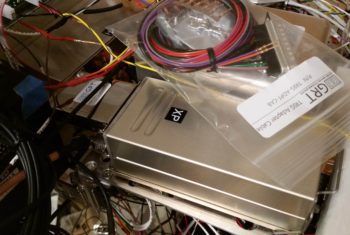
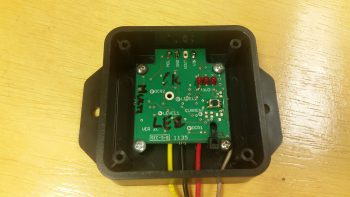
Today I had a fairly lengthy discussion on Long-EZ building and flying in general with my buddy Marco.  We discussed an issue with his transponder and we spoke about my new Trig TT22 Mode-S Transponder.  He was curious about the size of the Trig transponder so I snapped this pic… to be certain, it is a fairly petite device.

A bit later I got to work on the NG30 aft cover.  I wanted to get this thing knocked off my to-do list and it’s been long overdue.  I really screwed up the paint pretty good with all those runs on the surface, although I thought I took care of them.  But as I was buffing it out with some rubbing compound I could see some blemishes that needed more TLC with some very fine wet sanding.

My point in listing my self-inflicted woes on this thing is to highlight that I spent well over 3 hours finishing it up.  But it’s done! (Note the reflection in the front face of the NG30 cover).

And a view of the left side of the finished NG30 cover.

I noted a strong reflection on the left side, so I grabbed a _________________ (can you tell?!) and held it in place.

Here’s another reflection shot on the NG30 cover’s top that shows a distinct reflection of one of the shop lights.

Today really was a day of phone calls, errands, research and a bit of shop time, but tomorrow I do plan on getting a good amount of stuff done.


Chapter 13/22 – Window Dressing

I started off today doing the final sanding on the Oil “Tower” Storage Box.  My micro job was a little rougher than what was required for this box that had its fair share of imperfections (don’t we all!), so there’s a shallow crater on one side.  Good practice and generated some neural connections for when I finish the actual aircraft skin for paint.

Since this blog is comprehensive (read: big) I’m jumping ahead here over 10 hours for topic flow and showing the completed epoxy wipes ala the Cory Bird method.  I went as per Cory Bird’s instructions with the full complement of 5 coats of West Epoxy, all squeegeed as to get as much excess epoxy off the surface at the initial and subsequent 2-hour intervals.

Again, as per instructions, this will then cure for 48 hours before I sand it down for any additional filling required (i.e. the Grand Canyon sized divot on the one side) and then primer, paint and clear coating.

On the heating foot vent duct for the left side, I trimmed the glass on the edges then sanded it smooth.

I then pulled the right side heating foot vent duct off the right fuselage sidewall, with tape and foam plug in tow.  I pulled the tape off and did a little digging to get the foam plug out. Here it is with the wild and crazy glass edges in raw form.

I then cleaned up the edges and sanded them.  As you can see, although I tried rooting around on the underside edge with a very wet brush while laying up the glass, I still missed a spot or 2 in my epoxy application.

I then checked my fit by mocking it back up in place on the right side wall.

What I don’t have pics of is my repairing the dry spots on the foot vent ducts and also adding in some micro and glass on the outboard (sidewall) sides of the foot vent duct and SCAT attaching tube intersections.  This was for both the left and right foot vent ducts. (Also note the white micro repair job that I failed to report on… it replaces a foam ramp that I originally glassed/micro’d in for the big yellow cables… which I have obviously since routed higher).

As the repairs/additions to the foot vent ducts cured, I then finished prepping the NG30 for its final finish. I will state up front that with standard rattle can (Rustoleum) primer, paint and clear coat, it’s a bit tricky to maintain a sharp edge like the ones I have here.  I do have some minor break throughs in the paint along the top right edge (looking at the pics below, actually on the left side) and one spot a hair under a centimeter on the lower edge also on the right side.

So, I’m invoking 2 sayings.  The first is: “Perfect is the enemy of good enough” (I think Gen Petraeus said that) and the opposing viewpoint: “One ‘ah-shit!’ can ruin a thousand attaboys!” ….. so, my NG30 covers all ends of the spectrum!  In short, since this is round 2 on paint and clear coating, it will have to do.  I can’t spend another countless number of days dialing this into perfection or using a different paint system that lends itself to maintaining structural integrity on a hard 90° edge (like epoxy primer on a 2-part system).

The end result for the evening was that I got the right side (again, per pics…although pic below is pre-buffout) and the top buffed out, but still needing polish.

With so many surface scratches I put on these things getting rid of my just silly number of runs, I would actually buff for a bit, then heretically wet sand with very fine paper on whatever scratches were still visible. Then back to buffing out.  So far the results have been fairly good.  I’ll state for the record that if this were a part in constant view I might rethink doing it to a bit higher standard (also for the record, it still looks pretty darn good!), but not when it spends over 90% under cover in the nose.

After working on the NG30 cover for almost 2 hours, my shoulder needed a break.  I checked the repairs/additions on the pair of foot vent ducts and all looked good.  And moreover, cured.

I pressed forward on determining the length of the 1-1/4″ SCAT tubing that will connect the right foot heating vent duct to the pilot thigh support integrated duct, that has the port on the right side.  Once I got the required length in hand, I cut the SCAT tubing and attached it to the piece of 6061 thin-walled transition tube on the aft side of the right foot vent duct.  To attach it I used my new toy: the ClampTite tool, which with 0.032″ stainless steel wire it worked a treat!  In addition, in the pics below you can’t see the actual SCAT tubing on the forward side because I taped it up for painting the avionics bay.

Then using Silicone RTV and a couple well placed dabs of 5-min glue, I attached the right foot heating vent duct to the lower right fuselage sidewall between the instrument panel and F22.

In case you’re curious, here’s the other end of the 1-1/4″ SCAT tubing for the right foot heating vent duct.  The SCAT tube attach port is visible on the thigh support integral duct (see the cardboard in place over the right leg hole? …. ah, a clue as to what is coming up!)

For the left side foot heat vent duct, I then measured & determined lengths on the 1-1/4″ horizontal SCAT tubing that heads straight aft to the heat duct plenum —looks like a kidney bean on the left side of the fuselage under the left pilot armrest— and the 1-1/2″ vertical SCAT tubing that feeds the panel-mounted eyeball vent.  After cutting the SCAT tubing to length I attached both of them to the “T” junction ports with 0.032″ stainless steel wire using my ClampTite tool.  I do have to say with the wire used to mount the SCAT tubing it doesn’t look like anything is holding the SCAT tubing in place!

I then taped up the exposed parts of the SCAT tubing and “T” junction to protect against paint (note the cardboard and taped up items …. hmmm, looks like some painting is about to go down!).

I then spent a good 45 minutes prepping the avionics bay between the panel and F22 bulkhead for paint.

As you can see, I eventually just created a large box by sealing off the leg and other smaller holes on each side.

After everything was taped up, I shot the nose wheel cover and surrounding avionics bay area with some self etching primer.

After the primer cured, I then shot the nose wheel cover and surrounding avionics bay with Duple-Color trunk paint (yes, folks, TRUNK paint . . . ha!).

I tried to lay the paint down in 2 lighter coats, but there were a number of odd angles where I had to get the can in closer then I wanted…. and it laid a much heavier, sloppier, wet coat in those areas.  Luckily this paint proved itself as the forgiving sort and self leveled as it dried.

It may be odd, but having grown up the son of a cabinet maker and carpenter, and doing a fair amount of wood working myself, I just couldn’t bring myself to cover up what I think is a really cool build aspect of these planes: the triangular Spruce stringers in the lower fuselage corners.  With the clear MGS that I use it looks like a bare wood strip down there and the hash cuts we make at intervals to install them is just a fun design feature in my book.  So… I covered each side’s stringer with tape to protect it from paint…. call me crazy! (I prefer “eccentric” . . . ha!).

I carefully pulled out all the cardboard blocks and removed the protective tape from all the wires, cables and components.  Yes, I’ll admit the majority of this painting endeavor is for simple cosmetic reasons.  There was some junky looking spots I had going on here, and for the most part I try to avoid adding weight with paint.  Also, as you can see by my stopping point on the sidewalls, it really is for the view that we see when peering into either leg hole.

Here I covered up some unsightly areas on the aft side of F22.

And here we have the left side foot heating vent duct with attached SCAT tubing.  I have to say, I’m really digging this paint color!

My decision in painting the sidewalls and some of the floor was a bit of scope creep in my initial task of painting the nose wheel cover (BTW, I couldn’t bring myself to remove the duct tape for the eventual anti-skid inserts off the floor just yet… it looked too good and I didn’t want to spoil it!).  Clearly (IMO anyway) I couldn’t NOT paint the insulated NB cover. Although an unpainted NB cover would have been an interesting discussion generator, it badly needed a good color of paint on it (again … IMO).

You can also see that my personal preference is to leave components their natural color if I can.  I see a lot of canards where once all the wiring and hardware is in, then it all gets blanketed with a coat of paint.  I think that style looks good as well, and serves to clean up & declutter the fuselage visually… I just prefer to preserve components sans paint if I can.

With the USB charger bracket and surrounding area finished to paint, I decided to go ahead and quickly install the USB charger port in its bracket and connect the wires.

I know my 3-DAY BLITZ Round 2 has busted it’s mandated timeframe and is going on nearly a week, but I think these preparations of finishing off prerequisite internal nose area items is well worth it.  Tomorrow a main goal will be to finish buffing out and polishing the NG30 cover.  In addition, I’ll most likely mount the canard and start focusing more on the F22 and F28 areas in prep for the nose build.


Chapter 13/22 – Forward Foot Vents

Today I started out by pulling the peel ply off the Oil “tower” box and then cleaning up the surface of the box.

I then took the box out back and gave it a work over first with the hard sanding block to knock down the high spots, then with a piece of 32 grit sandpaper over the entire surface. I then washed off the dust and set it out in the sun to dry.

After a visit from my neighbor and my ensuing build update, I then “frosted” the oil ‘tower’ box with micro icing.

A couple of hours later, after I had assessed and prepped for the foot vent ducts, the micro had cured to just past the green state so I hit it with a hand grate and then the 32 grit hard block to “cheese grate” the surface…. essentially knocking down all the ridges while the micro is still slightly pliable vs rock hard.  I then left it to cure and will do the final sanding tomorrow.

I then finished determining the configuration & spacing of the front left duct that makes up the left foot vent.  At the aft end is an inverted “T” junction that allows heating air to pass upwards to the instrument panel eyeball vent.  I’ll test the system out when I get the plane flying and if required I’ll add a butterfly valve to the “T” junction to control the airflow.  Also, I may end up tweaking the very forward tip of the duct, which currently just opens up to make up the foot vent.

After narrowing the strip of urethane foam –that I’m using as the duct plug– from 2″ wide down to 1.5″ (still 3/4″ thick), I then taped up the lower sidewall in the avionics bay area.  I then radiused the corner edges of the foam plug and taped it up to the wall over the existing protective tape.  I of course had to do some foam machinations for the “T” junction to duct transition, and got it after a bit of finagling.

I then used a lot of small pieces out of my scrap glass pile to glass the first layer on left foot vent duct, with final bigger pieces of UNI to tie the smaller pieces together.  I used fast hardener on this side and after laying up the glass I then peel plied the layup.

I then prepped the right foot vent duct in much the same manner as the left side.  I originally had the aft duct connect tube pointed more inboard at a 45° angle, but then wanted a lower sidewall profile. The angle of the aft duct connect tube actually allows me to run scat tubing through either of the lower panel openings, providing more routing options if I should need them later on.

Then, just as the left side, I dug into my scrap pile and used a lot of the smaller pieces for the first ply, then covered those pieces with larger UNI pieces to make up the second and final ply on top.  I used slow hardener on this layup since I knew it was going to cure overnight anyway.  I then peel plied the layup,

After laying up the right side foot vent duct I then pulled the left side foot vent duct off the sidewall, tape, plug and all. Then, after removing the foam plug and tape from the actual duct, I then set it back in place for the pic below.  I will need to add a small amount of glass around the aluminum tubes that are embedded into the ducts on each side to finalize sealing up the ducts, but after that a trim of the glass down the sides then these foot ducts will be ready for install.

Tomorrow I’ll finish sanding the oil “tower” box and then epoxy skim coat it in prep for paint. I’ll also finish the foot ducts as well. Then I’ll mount the canard to allow me to glass in an elevator up (nose down) hard stop on the fuselage sidewall.  This will fulfill the safety requirement outlined by Trio Avionics for the installation of their autopilot servos (i.e. don’t use the autopilot as a hardtop of the control surfaces . . . could damage the pitch servo).

In addition, I will finish buffing out the NG30 cover and install it, then finalize the installation of the Radenna SkyRadar ADS-B on top of the NG30 cover.  Also, I’ll re-install the pitch trim servo to assess interior nose clearances.  Finally, I plan on mounting the 4130 tubes and nutplates in/on my modified longeron doublers near F28 in order to use long AN3 bolts to attach/secure the canard lift tabs to the fuselage.