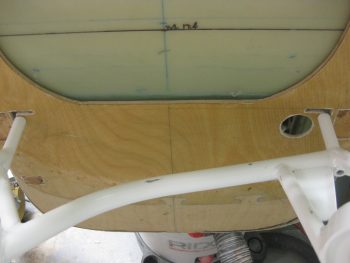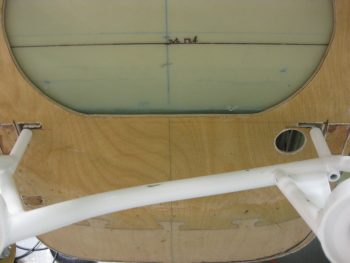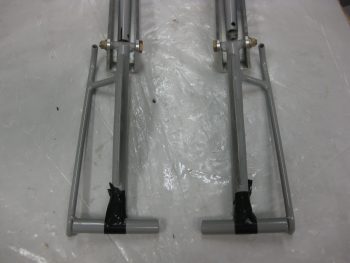
Chapter 12 – Canard Mounting

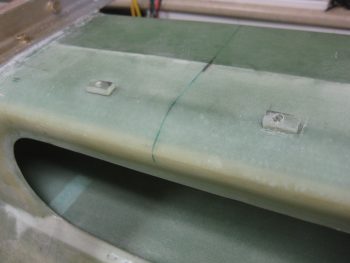
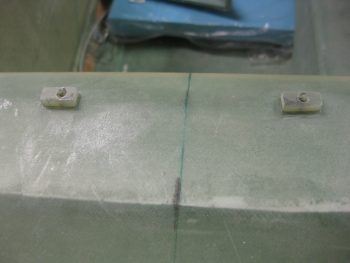
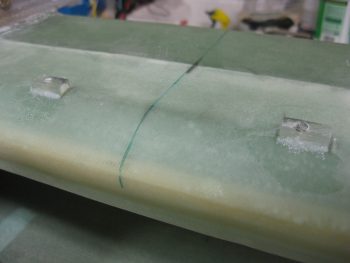
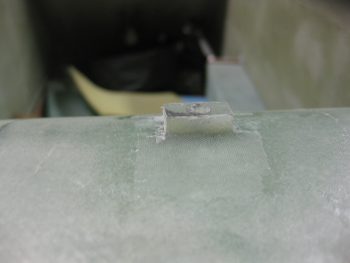
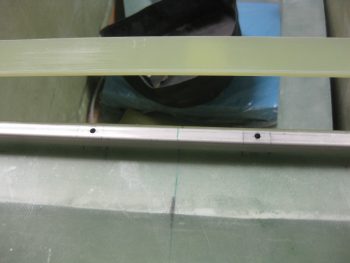
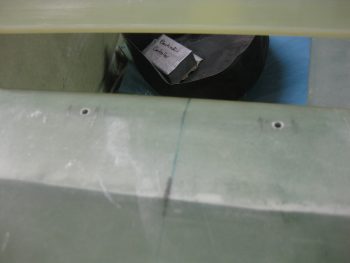
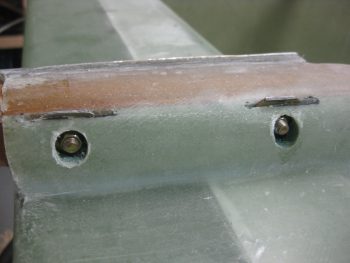
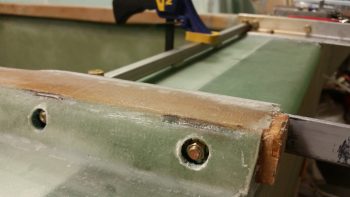
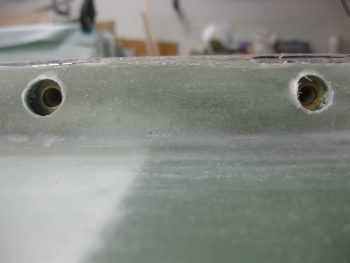
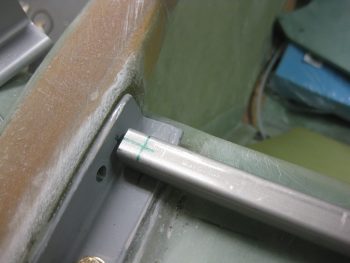
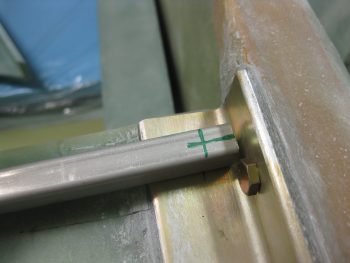
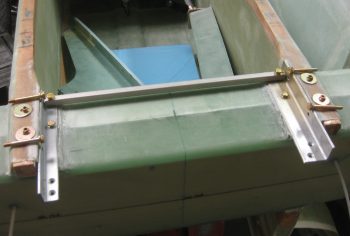
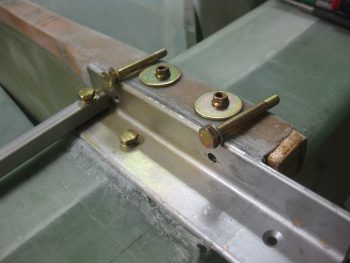
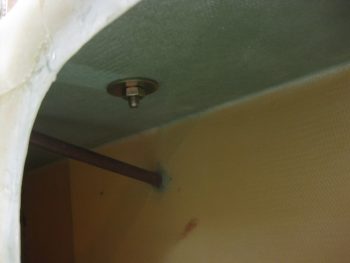
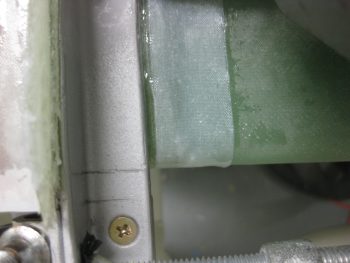
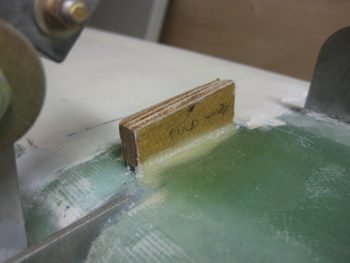
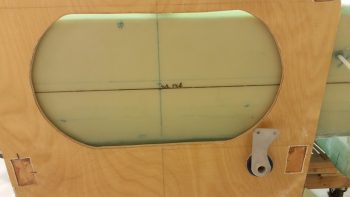
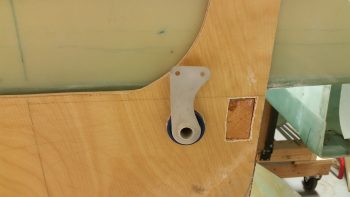
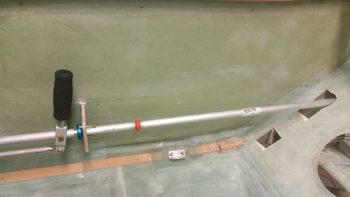
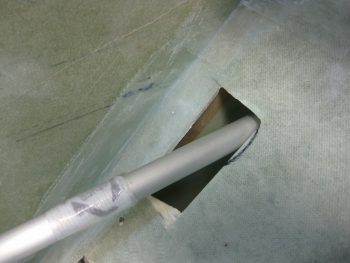
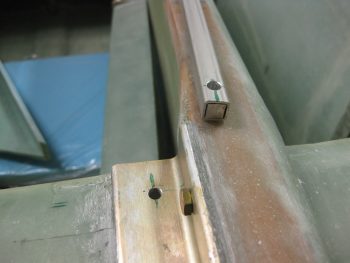
I started today by filing down & sanding the right CNL bushing that holds in the AN4 bolt for the right canard lift tab.  It was sticking out about 0.030″ past the surface of the F22 glass so I wanted to level it with that glass.  It took about 20 minutes, but I finally got it.

Right side CNL bushing

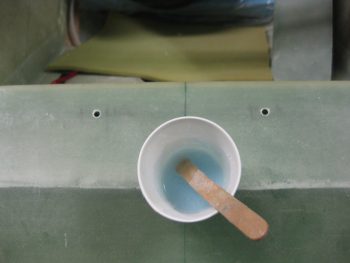
I measured the lift tabs on the canard to get the measurement for the BID pad that needed to go under the left side canard lift tab.  I cut 6 squares approximately 2″ x 2″ and then stacked them in sets of 2 for prepregging.

Left side lift tab BID pad

I then made up a template to use for cutting out the BID pads for the general shape of the lift tab, and to also mark where a hole needed to be made for the bolt to pass through.  I was originally thinking I might clamp the lift tab in place then drill the 1/4″ hole after it cured, but that was most likely problematic with a nutplate sitting in the way … Uh, hmmmm.  Maybe just a tad easier to start out with the bolt hole in place and then use the AN4 bolt as the clamp, since then it would be set at exactly the right place anyway!  (Sorry for the blurry pic…)

Template for lrft side lift tab BID

After wetting out the BID, I then used my template and marked up the 3 sets of 2-ply BID squares.

2-ply BID prepreg for lift tab

I then cut  them out.

Prepreg sets cut

And combined them to make one big prepreg set with 6 plies of BID.

Prepregs combined for 6 plies BID

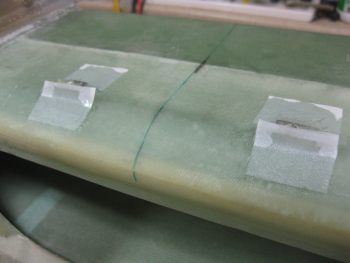
I then laid up that BID on the left side canard mount CNL embedded in F22.

BID laid up on left side CNL/F22 mount

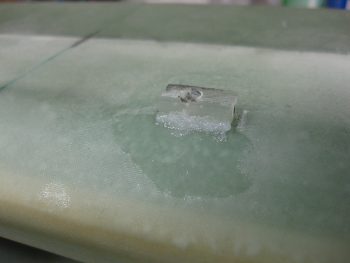
I added a bit of flox just to smooth it all out while the tab was under compression.

Flox added to prepregged BID

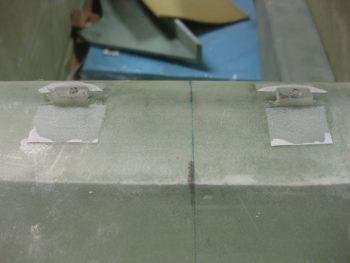
For the right side I merely added a bit of flox to take up any gap there might be.

Straight flox added to right side CNL/F22 mount

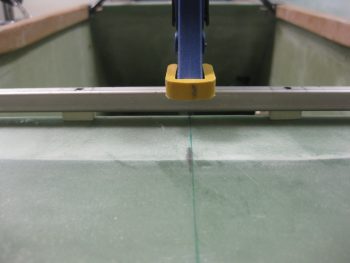
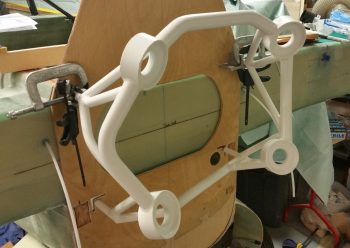
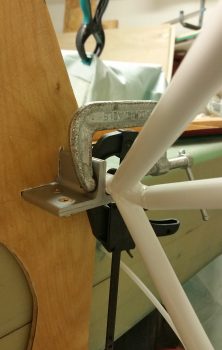
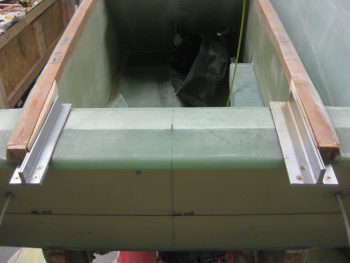
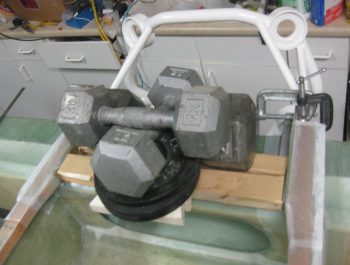
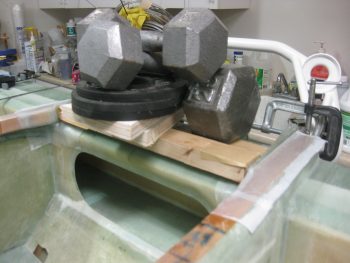
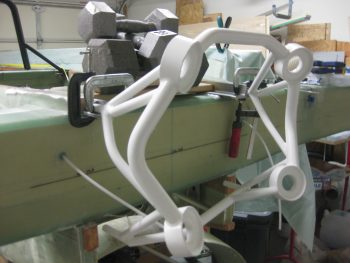
I then mounted the canard & bolted it in place.  I measured the canard from the CS spar CL to each canard tip and then from each end of the CS spar to the each canard tip as well.  I was incredibly relieved that all the numbers were close to perfect.  Moreover, when I lined up on the extended CL of the fuselage, you can see in the pic below that the canard is about as perfectly aligned in relation to the CS spar as you can get.  And if the canard is lined up nicely on the spar, it should line up very well with the wings as well!

[Note: This is one reason I had planned to mount the canard when I did, to allow for getting out front and ensuring it was aligned…. I just didn’t account for having only 2 feet in front of the nose as I did on the side of my house.  So this is the first time I’ve got to step back and look at my mounted canard from the front & at a good distance.]

Eyeballing canard alignment

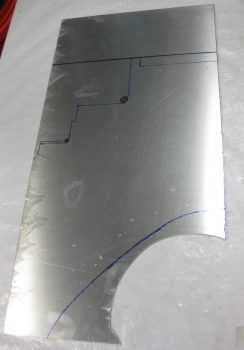
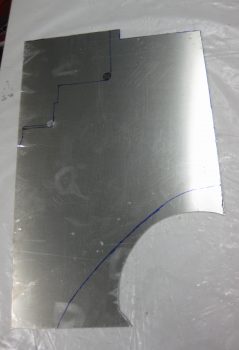
While the BID & flox pads under the canard lift tabs were curing, I marked the left GIB armrest to cut it at 2.1″ wide on each end (stock is 1.9″).

Initial cut line on left GIB armrest

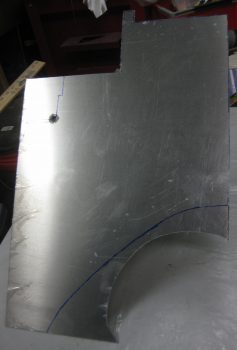
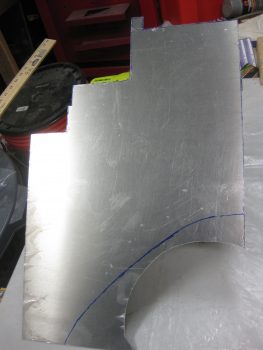
I then did the cut-fit-sand cycle for about 8-10 times before dialing in the fit of the left GIB armrest.

Trimmed & shaped left GIB armrest

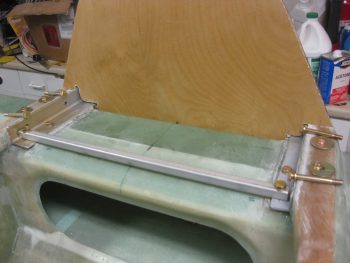
With the left GIB armrest good to go, and the BID on the canard mount still curing, I went ahead & mounted the hinge for the nose tool box in place, with 5 rivets each side.

Hinge riveted & lid cut line

Here’s a shot of the hinge mounted to the lower “box” side of the tool box.

Box side hinge riveted in place

I of course needed to trim down the tool box lid, which I did.

Lid trimmed

Once the lid was trimmed, I then riveted it to the hinge that was mounted to the tool box.  Below pics are shots of the aft and front sides of the tool box lid hinge.

Tool box hing mounted

Tool box hinge riveted in place

And here’s two “Action Poses” . . . ha!

Tool box lid trimmedNose tool box

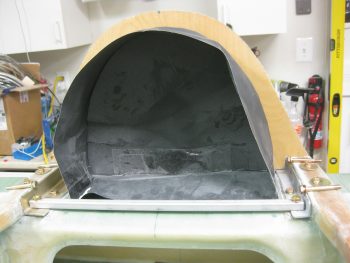
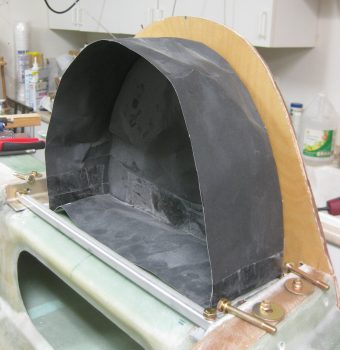
Finally, here’s a shot that shows a good portrayal of how it will look in the nose when opened for access.

Tool box "action shot"!

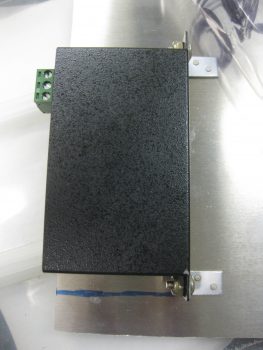
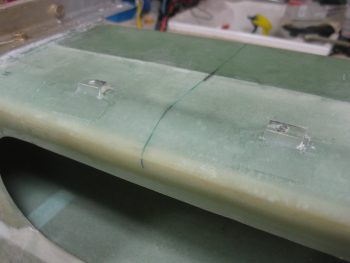
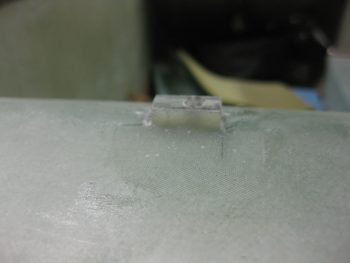
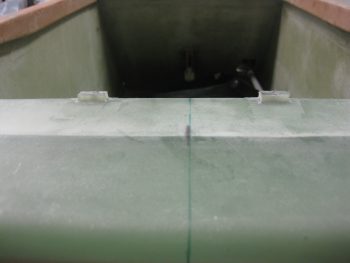
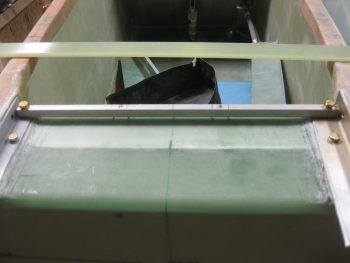
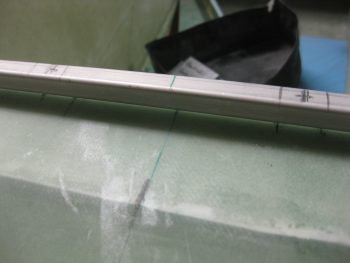
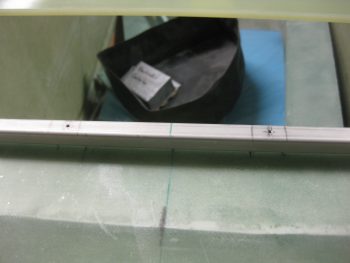
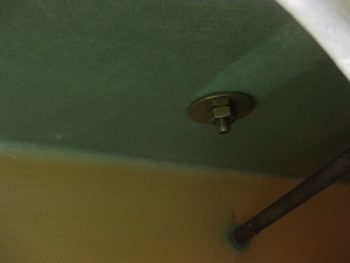
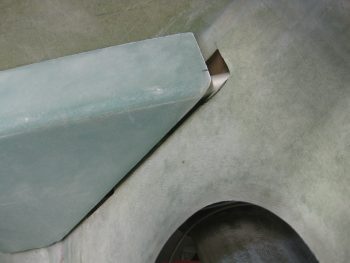
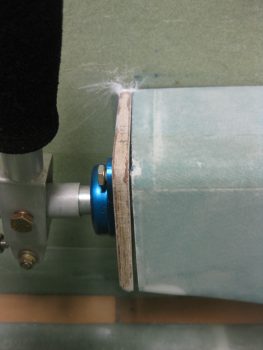
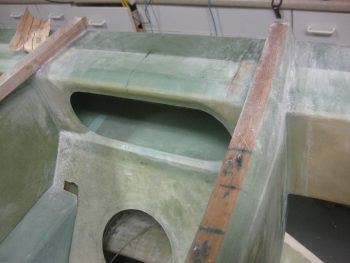
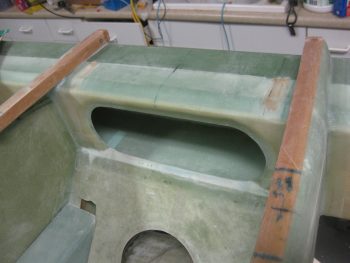
Finally . . . I was having a text discussion with Marco and sent him the pic below.  Now, since I had to remove a bunch of F22 material on the top to level out the front edge, it never dawned on me that I might make it impossible to mount the voltage regulator . . . if the bottom of the canard was too close to the top F22 edge and prevented me from mounting the Voltage Regulator.

Checking for bolt peeking thru

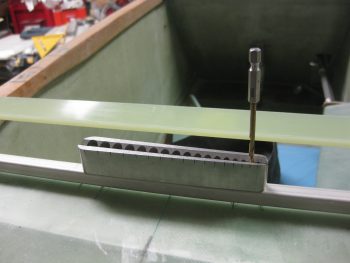
I went upstairs and grabbed the Voltage Regulator and then put it in place. It slid right in with no haggling.  Yay!

Checking Voltage Reg fit

Tomorrow will be a light build day, but I will continue to work on the canard & elevators to finalize both those installs.


Chapter 24 – GIB Armrest

Today I started by checking last night’s layups on the GIB left inside armrest layup & the layup for the nose tool box lid.

Armrest & tool box lid layups cured

I pulled the peel ply on the nose tool box lid layup and was glad to see that the layup looked good.

Tool box lid layup cured

Here are few more shots of the tool box lid at different angles.

Tool box lid layupTool box lid layupTool box lid layup

I then got to work on the final piece that needs to be glassed on the GIB left armrest extension.  I drew up what I wanted as the profile outline.

Shaping GIB armrest front edgeThen cut the foam & shaped it a bit.

Shaping GIB armrest front edge

Shaping GIB armrest front edge

I then sanded a nice round over on the lower edge and the adjoining glass to transition it nicely in prep for glass.

Shaping GIB armrest front edge

It took a bit of effort, and a few choice words to finally get the lid pried off the protective tape I had covered the top of the tool box with.  I needed to get the lid off so that I could consolidate my glassing efforts.

Tool box lid ready for trim

Here’s a shot of the big layups in action!  To the left you can see I have a ply of BID laid up on the front edge of the GIB left console.  In the middle I have a few prepreg setups ready to get laid up on the inside of the tool box.  In fact, after these layups, all the interior tool box layups are complete.

Glassing inside tool box & GIB armrest

The shot below was taken a few hours later after I knife trimmed the internal tool box layups and pulled the peel ply.  I did a quick trim job on the tool box lid and wanted to see how it looked installed.

Tool box lid test fit

Below is the shot of the final glassed extension on the GIB left side armrest.  Yes, it looks a tad rough, but once it’s cleaned up and finished it will look stunningly normal! 

Gnarly GIB extension layup(s)

I do have some details on the nose tool box that I still need to work, but for the most part tomorrow I really do plan on starting back on the full-on canard & elevator install.


Chapter 24 – Left side armrests

Technically I started off today working on the engine mount extrusions, but for a better flow of this post I consolidated them towards the end.  So to make it EZ, I’ll say I started out by pulling out the Big Dog . . .  literally, my Big Dog router table from the outside shed.  I went through the trouble of pulling this sucker out since there’s simply no way to get the radius I want on the top armrest pieces (and to match the pre-existing radiused edge) without using a router table.

Adding radius to L GIB arm rest top

I set up the router table to route a small scrap piece of 3/8″ foam that was probably from the same originally piece as my side consoles since it has a ply of glass on one side.  I would have actually preferred to put the glassed side of this scrap piece on the inside of the left armrest and had fresh foam on the outside, but the way the scrap piece wass shaped I had to radius the side with the 1 ply of BID on it.

Radius'ing L GIB arm rest top piece

Here’s the end result.  Sooooo EZ with a router table!

New piece with radiused edge

Now, me being not one to waste a good power tool while I have it out, I pulled the front left armrest pieces out and raidused the top piece of that.

Radiusing front left console top piece

Here’s the long, narrow top piece of the front left armrest console.

Radiusing front left console top piece

And here’s after I rounded over the edge.

Front left console top piece radiused

And a quick mock-up… looks good!

Front left console top piece radiused

With nothing left to router, I put all my tools back in the shed and got busy glassing my newly rounded extension in place on the GIB left console.  I micro’d the piece in place & then used 1 ply of BID.  Remember, I’ll add a complete other ply of BID to all of this when I glass in place during its final install.

If you’re curious why I needed to add this piece back in place, it’s because I had originally thought I would put my GIB throttle quadrant right there.  Well, first off the position is way too far aft… so my estimated positioning was way off.  Secondly, after flying in Marco’s bird and having a few rounds of discussions at RR, I decided to forego installing an aft throttle quadrant to simplify my build and save weight & complexity.

Finally, if you’re wondering why I seem to be making the front of the left arm rest longer… I am.  Another benefit of having experienced flying in the back of Marco’s plane is that things that may seem like they’ll work in planning (like my original positioning of the throttle in the back) simply don’t.  In Marco’s Long-EZ he has a PTT button on the front face of the left side armrest.  I can’t use it because I just can’t reach it.  With the tight quarters in the back seat, I can’t bend my hand around to hit the button.  So, in my plane I’m going to extend the left side GIB armrest a few inches forward and see if that does the trick since I do think that’s a great place to locate the GIB’s PTT button.

Glassing Left GIB armrest extension

Ok, earlier in the day I cleaned all my engine mount extrusions with Acetone, and then gave them a final wash in Simple Green.   Once dry, I painted just the ~1.6″ tips of the 2024 aluminum extrusions with a high end silver paint that my buddy –who is an auto body guy– let me borrow a while back.  I did this to protect the part of the extrusions that are firewall aft (engine compartment) and to simply make them look a little snazzier than the Alodine look.

Priming & painting engine extrusions

Wth the 4130 engine mount extrusion, I primed all the individual parts and then hit the last ~1.6″ with that silver paint.  Clearly I’m not concerned about the firewall forward areas on any of these, because the top ones will get painted with the cockpit interior, and the bottom ones will be buried away in the hell hole.

I have to say I had a total brain fart and used packing tape on all the aluminum extrusions when I painted them.  What do you get for trying to be too snazzy?  An hour of using Goo-B-Gone to get baked on tape off your extrusions!!  What a waste of time, and a hard learned lesson in finding out what material in the known universe that packing tape actually sticks to!

Engine mount extrusions prepped for install

I then took a few minutes to sand the Spruce WA16 wedges to their final shape and round over the top edges just a hair in prep for glassing these into place.  [I then spent a good 45 minutes cleaning all the bondo off the top of the CS spar.  I chiseled the bigger chunks away be hand, then sanded the remaining bondo remnants off].

Engine extrusions & upper WA16 wedges

It was too late to start working on the canard (since I would have to move the wings out of the shop) so I started back working on the tool box a bit.  First, I sanded the micro corners and then glass adjacent to the interior aft corners on both sides.  These corners will each get a 1-ply BID tape.  I also glassed a couple of spots in the middle areas of the inside on the back wall, since these will get reinforce layups to beef up some areas on the back side in order to mount it.

Nose tool box

After taping up the tool box, I tried to use some urethane foam to make a rounded over top cover, or lid, but the foam wasn’t strong enough to handle what I needed it to do.

Working cover ideas (not this one!)

So I punted and simply taped up the top . . .

Tape prepped for glassing lid

. . . and threw 4 plies of glass on it.  This should work fine, but if not i can always redo it. I set it up to cure upside down so gravity would pull the wet lid glass straight down against the tape on my melamine working board, thus giving me a straight lid (if it works!).

Curing tool box lid layup

I then pulled the peel ply and knife trimmed the layup on the top extension for the GIB left side armrest.  I did note that there was one delam right at the junction of where the new foam was micro’d in, so I’ll have to inject it with some epoxy.

Left GIB arm rest extension layup cured

I’m getting the hint that when foam is set in place with micro, it appears that if I put it under the heat lamp it off-gasses and then causes a small dlelam right at the micro’d foam junctions.  That’s exactly what happened when I glassed in yet another piece of foam to the side of left side GIB armrest.  There’s another delam bubble that I’ll have to contend with…. I guess I’ll get my money’s worth out of the syringe tomorrow.

This is the last extension that I’m planning for the left side GIB armrest.  I will shape it and glass the exterior side, and then I should be pretty much done with it until later when I assess whether I’ll mount a front plate or not for a possible PTT button.

L GIB armrest interior & side extension glassed

This is pretty much the end of my clean-up tasks to knock out the “low hanging fruit” items.  I will be doing some layups, etc. on the tool box, but I will be quickly transitioning my focus to finalizing the canard & elevator mounting from here on out.


Chapter 14/23 – Engine Mount Extrusions

Today I started off by cutting the upper left 4130 steel engine mount extrusion into 8″ & 1.6″ lengths.

Cutting upper left engine mount extrusion

Cutting upper left engine mount extrusion

I then trimmed the lower 0.1″ reinforcement plate for a final fit to the upper left engine mount extrusion pieces.

Left reinforcement plate trimmed

I then drilled the countersunk screw holes in the upper left extrusion mount pieces.

Drilling holes in upper left extrusion

Here’s a shot of the 3/16″ countersunk screws mounted in the upper left extrusion mount pieces.

Mounting lower reinforcement plate

And all three 3/16″ countersunk screws mounted in the upper left extrusion mount pieces.

Lower reinforcement plate mounted

I then drilled the countersunk screw holes in the upper right extrusion mount pieces.

Mounting lower reinforcement plate

Here’s a shot of all three 3/16″ countersunk screws mounted in the upper right extrusion mount pieces.

Lower reinforcement plate mounted

Below are the 3/16″ countersunk screws & lower reinforcement plates in place on the upper extrusion mount pieces.

Lower reinforcement plates mounted

I then mocked up the CS105 control tube & test fitted it in place in the CS109 mount. With the CS105 tube moved inboard, the hole through the front seat will have to be widened just a hair in the area I’m pointing out with scribe in the pic below.

CS105 control tube mounted

CS105 control tube mounted

And did the same on the aft side with the CS105 control tube test fitted in place in CS118.

CS105 control tube mounted

CS105 control tube mounted

Here’s a shot of the CS105 control tube test fitted in place in both the CS109 & CS118 control mounts.

CS105 control tube mounted

I then set the right side pilot arm rest in place, with the CS105 control tube test fitted in place.

CS109, CS105 & armrest

CS109, CS105 & armrest

I then did the same with the GIB armrest, with the CS105 control tube test fitted in place. Thankfully, the fit on both forward and aft right armrests are fine.

GIB right armrest

Tomorrow I plan to work on the aft left arm rest and then start back on the final canard & elevator install.


Chapter 16 – CS109 & CS118 final install

Today I started out by laying up the 1-ply of BID on the forward side of CS109 that I had intended to yesterday, but needed to go with smaller corner layups in order to have CS109 taped in place to the right arm rest so that it would be positioned correctly.

Normally I would glass the aft side of CS109, but after reviewing the plans, and since I do have a small corner piece of BID on the aft side, I’m going to leave it until I glass the arm rest in place (yes, I am in the current minority of builders that still plans on glassing my armrests into place & not make them removable).

[Note: I cleaned up this layup a bit more after this pic . . . in case you’re wondering (smile)]

Glassing forward side CS109

I then sanded the cured BID on the aft control mounting bulkhead, CS118, and then redrilled the #12 holes.  CS118 is complete.

CS118 sanded & holes re-drilled

I then spent almost 2 hours cutting all the BID required to install the top & bottom engine mount extrusions (4 total) to the CS spar & longerons.  Probably not a very exciting pic… but cutting glass for nearly 2 hours isn’t exciting either!  ha!

BID for engine mount extrusions

Although towards the bottom of my task list today, I finally got sick of looking at all the peel ply boogers on the CS spar-to-fuselage layups, so I gave it a higher priority!  You may have noticed in my blog post yesterday the significant amount of dust & debri in the nose from mounting the canard (which is now gone…the debri, not the canard!)… with all that was going on I simply didn’t have enough time before heading out to Rough River for a good after action cleanup, and am just now getting around to it.  I spent well over an hour cleaning up all the layups from mounting the CS spar to the fuselage, and also the inboard holes in the CS spar forward face I filled with foam & glassed. If you remember, I made those holes for drilling the wing bolt holes.  I still need another good hour in ridding the spar (and then later the wings) of all the offending bondo.

CS spar to fuselage layups cleaned up

After cleaning up the aft side of the fuselage, I then pulled the peel ply and knife trimmed the CS109 front side layup.

CS109 peel ply pulled & knife trimmed

Again, I’m going to wait to glass the aft side CS109 until I install the right arm rest. Tomorrow I’ll sand this mount down and redrill the #12 holes.

Will glass aft CS109 when arm rest installed

Well, tonight was finally the night!  I spent about 3 hours reorganizing, cleaning and straightening up the shop.  This is just phase I and I plan on knocking out phase II tomorrow.
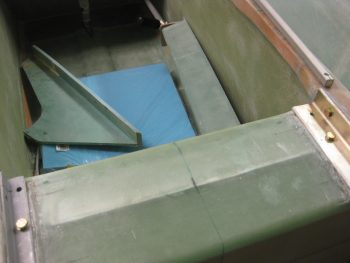
Shop cleanup & reorg

The main thing I’m happy about is that I can walk to the front of the shop to back of the shop without having to low crawl under my CS spar.  Just 2′ to one side of the spar to pass, and I am one happy camper!
Shop cleanup & reorg

I don’t have a shot of it, but the final act of the evening was that I spent a good 30-45 minutes filing down & cleaning up the edges of the upper left 4130 engine mount extrusion. After another 15-20 minutes tomorrow, it will be ready to be cut to its final 8″ & 1.6″ lengths.


Chapter 16 – CS109 & CS118 control mounts

I started off today acting upon some information that I got from my buddy Dave Berenholtz down in OZ.  He said that his Long-EZ was built in 1987 and that over the years the requisite plan’s holes in the bottom of the Instrument Panel –with the foam exposed to air, etc.– have  deteriorated significantly from the edge of the foam not being treated.  This jived with what my Instructor from the EAA Composites Workshop stated when he said that builders should always cover exposed foam with either micro or flox.

So today, before I got started on re-installing the CS109 & CS118 control mounts, I decided I would get the lion’s share of this task knocked out.  I figured that if I channeled the foam in the lower Instrument Panel holes before I started any glassing, then I would use whatever leftover epoxy I had at each step to use for micro to edge these holes.

Foam edges on lower panel holes

After I used the Dremel tool to remove a small channel of foam around each of the Instrument Panel’s lower holes, I then cleaned up the dead glass from the previous install of CS109.

CS109 site & lower panel holes prepped

I then did the same thing in the back seat, and cleaned up the existing glass from the previous CS118 install.

CS118 site prepped for glass

I cut 4 plies of BID on the table (not shown), one for each side of the respective control mounts, and then set about to drill the #12 holes through CS109.

Drilling #12 holes in CS109Drilling #12 holes in CS109

Here’s a shot of the AN3 bolts test fit.

#12 bolt holes drilled in CS109#12 bolt holes drilled in CS109

I then did the same thing for the aft-side CS118 and test fitted those AN3 bolts as well.

#12 bolt holes drilled in CS118#12 bolt holes drilled in CS118

To ensure I could remove the arm rests after the 5 min glue stuck CS109 & CS118 to the fuselage sidewall, I covered the top inside armrests with clear packing tape.

Right armrest underside taped

I then 5 min glued CS109 in place to the fuselage sidewall, while taping it in place with duct tape to ensure it aligned properly.

CS109 5-min glued in place

Of course I did the same thing in the back for CS118.

CS118 5-min glued in place

The forward CS109 control mount wasn’t as solidly stuck in place with the 5 min glue, so I went ahead and worked the back CS118 mount first.   Below you can see that the 5 min glue did its job and kept CS118 right in place.

CS118 5-min glue cured

I whipped up some MGS285 epoxy with fast hardener, and then some flox, and added flox fillets in the corners.

Flox fillets on CS118

I then laid up 1 ply of BID on each side of CS118 and peel plied the layups.

CS118 glassed 1-ply BID each side

CS118 glassed 1-ply BID each side

Since I still needed the tape on the front side to secure CS109 in place, I simply laid up 1 ply of BID on each side, but kept each ply small at 2″ x 2″… just enough to lock in the position of the CS109 control mount & keep it aligned properly with the arm rest.  I then peel plied the layups [Note the micro in the foam edges of the lower instrument panel holes].

CS109 in place while BID cures

While the CS109 & CS118 layups were curing, I then drilled a #12 hole down into the upper left engine mount extrusion’s bottom reinforcement plate.  I then countersunk the hole in the outboard 2024 aluminum angle “L” bracket.  I didn’t want to drill the other 2 holes on the other side since I wasn’t sure how much compression there would be when the engine mount was actually bolted in place (the plans say 4 AN3 screws according to a CP… but I seriously don’t know where 4 holes would fit for AN3 screws.  There technically is 4 screws/bolts going through the extrusion plates into the lower reinforcement plate, IF you count the 1/4″ bolt that holds on the engine mount tube).

I did realize after I Alodined these parts (below) that I had a major brain SNAFU and should have at least drilled & countersunk the screws on the top (long) extrusion.  I could then have simply drilled the holes into the lower reinforcement plate later, since it connects both sides… oh, well.  No huge deal, just definitely not optimized as for as Alodine coverage.

Drilling outboard engine mount tab

Now, my main Alodine goal for today was to at least get the Engine Mount Extrusions Alodined.  I cleaned all the parts with a quick wipe down of Acetone.  Then I cleaned them with a 3M pad and Simple Green, and rinsed them thoroughly.  I then took them outside and Alodined them.  In addition, I was also actually able to prep & Alodine the Aluminum parts for the wing bolt brackets that will allow me to mount the wing bolts in the spar quasi-permanently facing aft to greatly simplify wing mounting/removal.

Extrusions ready for Alodine

After I was done Alodining all the aluminum parts & letting them dry, I pulled the peel ply off the CS118 layups & razor cut the BID glass.

CS118 peel ply pulled & razor trimmed

Here’s a shot of the new & improved CS118 glassed into place.  Tomorrow I’ll finish sanding the edges & redrilling the bolt holes.

CS118 glassed & looking good!

The CS109 mount initial attachment layup came out fine as well.  I didn’t realize that I had floxed in such robust fillets, so that sucker will definitely be strong!  Tomorrow I’ll add another full ply of BID to the front and aft side.

CS109 ready for BID ply each side"Robust" flox fillets on CS109! ;)

I quickly double-checked the fit & alignment with the front right arm rest, and it fit great!
CS109 position is good!
Here’s the last shot of the evening (not, however, the last action of the evening since my hose sprung multiple leaks as I was Alodining this stuff, and my shop still needs some TLC to get some water out from underneath some stuff!!!)

You can see below that the 3 aluminum engine mounts and the outboard spar wing bolt brackets are Alodined.  Clearly I still need to finalize cleaning up the edges of the 4130 steel engine mount.

Alodined engine extrusions & wing bolt brackets

Now that I have a good bit of these of smaller tasks out of the way, I really do plan on attempting to reorg the shop tomorrow in order to get it prepped for finalizing the canard & elevators install!


Chapter 14 – Engine Mount Extrusions

Actually, engine mount extrusions were just one small part of today’s activities . . .

My goal today really was to get the new CS109 & CS118 plywood bulkheads cut and glassed back in place in the fuselage.  Uh, this didn’t happen.  Although I did get a lot done.  My secondary goal was as I got something curing (CS109 & CS118), I would then get the shop reorganized so I could build something, let alone just move around.

Let’s just say that there was a lot of “drag” today in that instead of things taking 1 or 2 steps, the prerequisite tasks of just getting materials out of the shop closet, or finding tools, took much more time than it should have.

After I marked out the dimensions of CS109 & CS118, I then pulled out a scrap piece of the 1/4″ Finnish Birch plywood that is used for the firewall.  Since I had no other scrap plywood pieces big enough for either plywood bulkhead, I had to get into the closet, which was a feat unto itself!  ha!

Scrap Birch plywood for new CS109/118

I found some good spots to cut out the new plywood bulkheads, marked them up & then cut them.

[I should state that this was not my first foray into cutting wood today.  I actually started by cutting the four (4) WA16 Spruce wedges for mounting the engine mount extrusions to the spar & longerons.  One of them needs to be a bit taller, so I will be re-cutting one more.  They are in a rough stage now & still need to be sanded. Sorry, the only pic I have of them currently is at the end of this post.]

Re-cutting CS109

Here’s a shot of the new CS109 plywood blank.

CS109 Birch ply blank re-cut

And the same for CS118.

CS118 Birch ply blank re-cut

As a reminder, the reason why I’m redoing the CS109 & CS118 control stick mount bulkheads is due to the fact that the Cozy Girrrls sell the Cozy style stick mounts (I’m guessing….) for the Long-EZ.  In the pic below, which I shamelessly stole from my buddy Dave Berenholtz’s site, you can see that the CG stick mounts straddle the CS105 control tube, whereas in the original Long-EZ the control stick merely bolted to the inside the CS105.  If this lost 3/4″ offset to the inboard side of CS105 isn’t accounted for, then clearing the side wall either top or bottom of the stick will be problematic.  Interestingly, and as I told Dave in an email, since I widened my fuselage and my armrests just a hair bigger, I had already kicked the holes in CS109 & CS118 inboard by 0.4″.  I might have actually been able to get away with doing nothing, but it was good that I took these off. The good part is that I only had to move the holes another 0.35″ inboard.

Cozy Girrrl Control Sticks

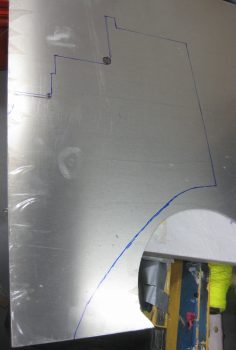
I then cut the 1/8″ thick 2024 aluminum bottom engine mount extrusion support plate.  My upper Right side extrusion originally had 1.5″ x 1.5″ legs, but since I didn’t want the top vertical leg extending so far up above the longeron, I trimmed it down to 1.25″.  The horizontal leg I left at 1.5″ on the INBOARD side.  I planned to trim down the OUTBOARD 1.6″ long extrusion to 1″ wide (see below).  Thus, I needed the bottom support bracket to measure 1.6″ long  x 2.5″ wide.

1/8" bottom 2024 extrusion plate cut

To trim the OUTBOARD 2024 upper right engine mount extrusion to 1″ wide, I needed to secure it so that the miter saw wouldn’t chew it up.  I knew it needed at least one bolt hole in the bottom leg of the plate, so I marked a spot for a #10 hole.  As you can see, I marked the 1″ cut line as well.

Trim 1.6" extrusion to 1" wide

I then drilled the #10 hole and mounted the extrusion piece to a scrap piece of wood.

Trim 1.6" extrusion to 1" wide

I then cut the extrusion down to 1″ wide on my miter saw.

1.6" extrusion cut to 1" wide

I then made up a quick jig that made it so that a 2×4 was the same height as the 1.25″ high 2024 engine mount extrusion.

2024 extrusion jigged for router

I then took my router with a 1/8″ roundover bit and radiused the edge of both short & long engine mount extrusions.  Again, these are still in the rough stage and I have to finish cleaning them up.

Radiused 2024 extrusion top edge

I then cut the 0.1″ thick 4130 steel bottom engine mount extrusion support plate for the upper left engine mount.  I didn’t have any 1/8″ thick 4130, and honestly didn’t order any because 4130 is some amazingly strong stuff, so 0.1″ will do the trick…. and with slightly less weight.

I cut the first cut using another chop saw I have with a metal cutting blade on it.

0.1" thick 4130 bottom extrusion plate

For the 90° cut I simply pulled out the Dremel tool and used it.

Dremel tool for final cut

It only took a few minutes to cut through this steel.

Dremel tool for final cut

And voila!  The bottom 4130 support plate for the engine mount extrusion on the upper left side.

0.1" thick 4130 bottom extrusion plate

Since I had the saw out, I grabbed a small aluminum hinge that I had set aside a few weeks ago for the battery compartment mounted tool box.  I then cut a hinge for the tool box.

Tool box hinge cut

Below is a shot of todays machinations.  In addition to the tool box hinge above, I also trimmed the GIB handle tube to length (6″, at least for now) & cleaned it up.  BTW, it weighed in at a whopping 0.086 lbs, and that’s with the grip in place.

Yet another bunch of material I cut but didn’t get any pics of are the pieces that will make up the U-channel wing bolt securing bracket (in the middle of the pic below).  This will allow me to put the wing bolts in the spar facing out (aft) and be secured against moving.  This will greatly facilitate the speed & ease of putting the wings on & off.

A day's worth of work!

You may also note that in the pic above I included printouts of my engine mount extrusion diagrams/notes that I updated yesterday.

I may get an hour or two in tomorrow evening, but basically I won’t be full on in the shop again until Monday.  Pretty much all the parts I cut today need to be sanded, shaped, deburred, etc.  I then really need to get the shop reorganized after I get all these smaller bits ‘n pieces squared away.


Chapter 22 – Updated/new Wiring Diagrams

Today I spent the first half of the day getting a safety inspection done on my motorcycle. Just as they were finishing up the inspection it started to drizzle, which then turned into a fairly steady light rain for most of the day.  Which of course meant not getting the garage organized since most of the stuff has to come out so that I move & reorg the stuff inside.  Oh, well.

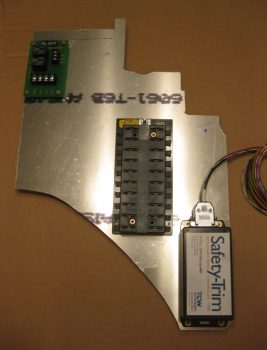
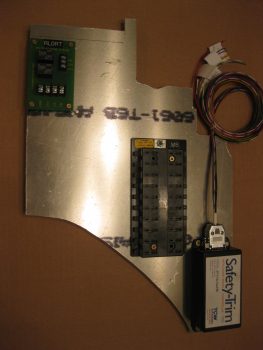
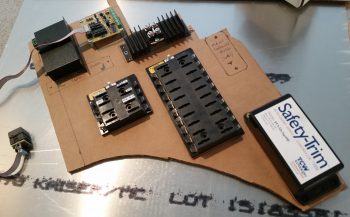
So, after the inspection was complete I did a fair amount of research on the heating system.  That rolled into updating a few wiring diagrams to reflect the updated electrical requirements, which included: the removal of the GIB Infinity control stick, resulting in the need to update the switch diagram, and of course updating the newly created Heating System diagram (these 3 are shown below).

Updated/new wiring diagrams

I then went down to the shop and finally cut the 1″ x 1″ Chromoly steel engine mount square tube extrusion into 2 “L”-shaped angled pieces. I know some may question exactly why I’m throwing in only one mount of 4130 steel.  Well, I was actually going to install 2 4130 steel mounts catty-corner from each other, but when the bottom mounts required the use of 3/16″ angled extrusions, I simply decided that between the weight and cost of buying more/thicker 4130 steel, I would punt and simply put only the one top side in.  Yes, I considered both top engine mount extrusions being 4130, but now with my engine weighing in heavier, I’m going to employ a little Operational Risk Management here and just go with the one side to keep the weight down, and to keep from having to buy more metal!  A little odd?  Perhaps.  But I’m going to be a little eccentric and go with this!

By the way, after I got it all cut, I matched it up to the engine mount and it was a good match!

1" x 1" 4130 Chromoly engine mount

Ok, perhaps tomorrow I’ll actually get around to reorganizing the shop in order to be able to move around and build in it!


Chapter 12 – Canard mounting bits

This morning I finished tweaking last night’s blog post & updated my to-do task sheet for mounting the canard.  Not a lot left to do on the actual canard mounting itself, but I will be working on mounting the elevators & fitting them to both the canard & the fuselage sidewalls.  I’ll then of course have to fill in some fuselage sidewall in the corner of the F22/F28 shelf once I account for where exactly the elevator tubes will traverse the fuselage side walls.

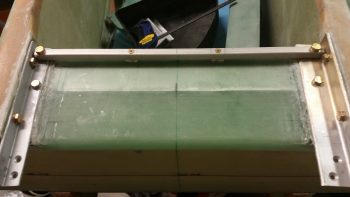
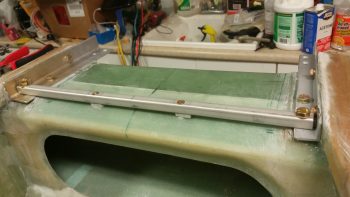
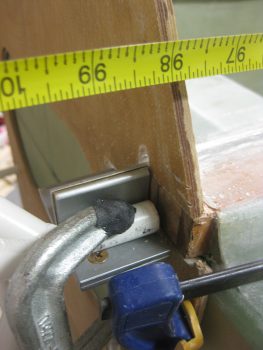
After getting the requisite administrivia out of the way, I took the canard out to the fuselage and mounted it with the AN4 bolts into the freshly floxed-in CNL bushings.  Wow, is that fit TIGHT!  I didn’t realize why it was SO tight until I tried sliding an AN4 bolt into one of the CNL bushings even without the canard on… Whew, that is tight tolerance!

As you can see my canard stayed level. I checked the sweep and am still showing about 1/8″ off on one side, but I’m certain I can clean that up.  I guess this morning’s canard mounting is truly the first real test, eh?!

Canard fit with AN4 bolts in CNLs

Happy with this morning’s results, I was running around cleaning up & prepping to put the fuselage & wings back in the shop –which of course I still don’t have full on access to via the big garage door.  I then got a call from the garage door company saying that they were going to be a couple of hours late.  Well, enough time I sez to myself to flox in & glass the canard lift tab nut plates!

I grabbed some scrap BID and cut it into two 3″ circles, one BID ply for each nutplate assembly as per plans.

BID for canard mount nutplates

I prepped two slightly shorter AN4 bolts with a light coat of grease on the threads to keep those guys from becoming a permanent part of the nutplate assemblies, and then I pre-deployed my stuff to the fuselage.

After I was all prepped, I then whipped up some epoxy and flox with fast hardener and glassed these suckers in!  (Of course Marco called just as I started . . . persistent bugger in trying to slow my build down! Haha!)

Canard mount tab nutplates

Here’s another shot of the floxed & glassed canard lift tab K1000-4 nutplate assemblies. (Guess my aft side F22 needs some TLC… and cleanup, huh?)

Canard nutplates floxed/glassed

Ok, THIS will be my last post for a few days.  The garage door guys just called and will be here in the next 30 minutes.  I have to finish packing and get read to drive to Chesapeake, VA to meet Marco and prep for our Long-EZ flight to RR tomorrow!

I’m going to post the following pics without commentary until later on, I think their self explanatory of me breaking down the airplane and putting into my garage that now has a working door!

Final mockup with upper cowling.

Test fitting upper cowlingMocking up upper cowlingBreaking it all down!One last shotBreaking down wings & fuselage

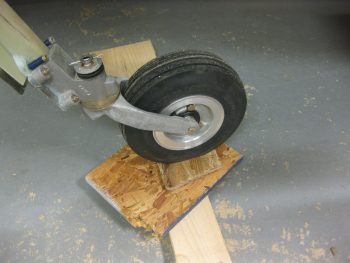
Shimming in wheel supports

Main gear supports

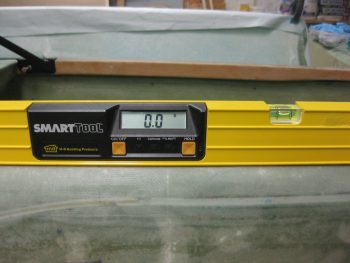
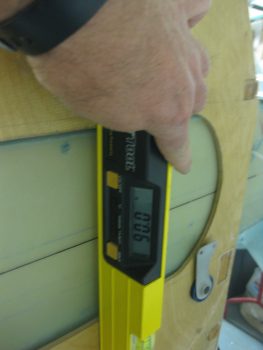
Longerons still at zero degrees!

Fuselage STILL at 0 degrees! :)

Removing wing bolts:

Left wing bolts out!Right wing bolts out

Wings detached

Wings unmountedDelinking from the mothership!

Moving fuselage back into shop:

Movie' on!We have separation!Tight fit! How'd that happen?!Cruz' in style!Puttin' 'er away!The Eagle is in the Roost!

Just wings . . .  again.

Breaking down wings & fuselageBreaking down wings & fuselage

Left wing on wing dolly.

Left wing on wing dolly

Getting there!

And there was one....

Both wings on wing dolly.  Note that I cut up some old carpet to make cradles in order to lift up the outboard wings to level.  Should come in handing while working on the ailerons.

Wings on dolly with new cradles

Tight squeeze, but it all fits!

It all fits! (barely! ;)

Side yard is back to normal!

Empty space... again.

Hope to see you at Rough River!  Cheers!

Chapter 12 – Canard Installed!

I started out today by double checking my BID spacer pad layups on the front side of the F28 bulkhead.  The left-side 12-ply spacer came out fine, but the single ply on the right side seemed to have some issues (i.e. delam around the #10 hole) … no worries since this is mainly for spacing and I can clean it up later.

I redrilled the #10 hole into the canard the doubler on the face of F28 (I also redrilled the #10 hole into the top alignment tabs).

F28 BID pads

Here’s a closeup of the 12-ply BID spacer laid up on the front side of F28.  Just as a point of note, since this a spacer and not structural I used my old batch of MGS 335 on this so as to not waste the good stuff!

Left F28 12-ply BID pad

With the new spacers built into the airframe on the face of F28, I gave them a test run when I re-installed the canard.

The left side alignment tab was leaning forward just a hair more than I liked, creating a gap towards the top where it should have been much closer to the F28 12-ply BID spacer.

Slight gap between left tab & F28

I clamped the left alignment tab tight against the new 12-ply BID spacer on F28 & then very carefully hit it with a heat gun.

Clamp & heat to remove tab gap

I left the clamp on the alignment tab for probably 45 minutes and when I finally popped off the clamp, the alignment tab looked much better . . . well . . . aligned!  ha!

I’ll make a point here that after installing the canard this go around I then measured my left and right sweep from my center measuring block clamped to the top CL of the CS spar, as I had a myriad of times.  However, I did it while I still had the left side alignment tab clamped tight… and it showed.  I’ve been normally getting 0.06″ delta max between each side on sweep, and this time it was about 1/8″.  This of course went back to normal as soon as that clamp came off, although it may have been exaggerated just a hair by the shenanigans of that 1-ply of BID on F28 over on the right!

Left alignment tab closer to F28

With sweep looking good, and it being the first official trial run of the day on the canard, I fired up my water level and immediately got this!  It may be a good day Maynard!  I also confirmed this with my digital level at the canard CL.

Right side water level:

Right water level line

Left side water level:

Left water level line

I then honed in on setting the incidence.  I’ve come to the conclusion that somewhat like my fuselage, my canard too has a very slight twist.  This may be (in part) due to the fact that I got the cores from Feather Light and they are still using the hotwire method off the original templates.  Don’t get me wrong, they make a quality product, but there were some minor idiosyncrasies with the canard cores.  Plus, obviously my being a Neanderthal builder clearly doesn’t help! Ha!

I have to tell you that I would probably freak out a bunch more if I didn’t consistently see Burt making allowances for us lesser beings in the plans.  Chapter 12 says if one has a twist in one’s canard, then one should mount it with that in mind and average out the twist in one’s canard: “If your canard has a slight twist, set the average incidence equal to the longerons.

Yes, there are those among us who would willingly cast the first “there is no such thing as a slight twist!” and/or “rebuild! rebuild!” stones, but I am more of the mind & in line with many of our pragmatic generals who say things like: “perfection is the enemy of good enough.”  Not that I don’t strive for perfection, I just clearly fall short quite often in this nebulous world that we call a Long-EZ build.  Thus, as John Roncz himself (relayed via Marc Zeitlin) once told a pummeled-by-peers Cozy builder: “see how it flies before you change anything” (paraphrased)… I think I too will do the same.

End Rationalization Transmission!

Therefore, without further ado, here are my incidence readings, starting from the canard right outboard side and moving to the left side.  You’ll note the right is LE high and then eventually makes it way to LE comparatively lower on the outboard left side.  One point of note, after messing with this for hours, my tolerance standard became anything within the inner most hash marks on the level.

One final point of note.  I find it amazing that I can sight down the canard and barely see any twist, with all look nice & laser straight, but this template definitely does do its job by finding that twist in regards to incidence.

Right canard: Outboard to inboard.

Outboard right incidence60% outboard right incidence

Inboard right incidence


Left canard: Inboard to outboard.

Inboard left incidence

~mid-point left incidence

75% outboard left incidence

Outboard left incidence


I spent another half hour tweaking the SWEEP, DIHEDRAL and INCIDENCE.  To tweak the dihedral & incidence just a hair more, I clamped the right side canard down just a smidge… which totally did the trick.

Canard level when #10 pilot hole drilled

With everything looking good and all my variables locked in place, I pulled the trigger and drilled out the canard main mounting tabs with the long #10 bit. [Note: Although it looks like I’m ‘free-handing’ it here with the drill, I’m not.  I have small level with “V” grooves on the bottom that I actually hold on the drill bit shaft and I also set a 2×4 90° from the canard face close to the drill.  It may not be a perfect 90°, but it’s pretty darn close.]

Drilling main canard tab #10 pilot hole

I started with the right side bolt and made sure everything stayed aligned by quickly checking my alignment variables again.

Main canard tab AN3 bolt installed

Main canard tab AN3 bolt installed

With the right bolt in place, everything still looked fine so I drilled the left side mounting tab with the #10 bit.  Below is a shot with both AN3 bolts in place on the main canard mounting tabs.

Canard mounted with AN3 bolts

Looking a lot more official on the canard mount with AN3 bolts actually keeping the mounting tabs in place to F22!

Canard mounted with AN3 bolts

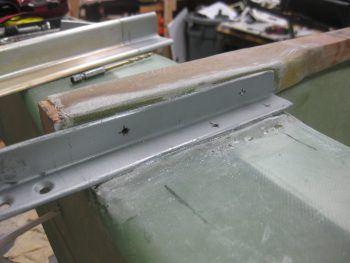
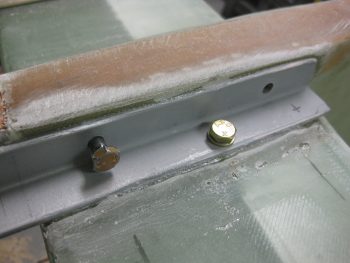
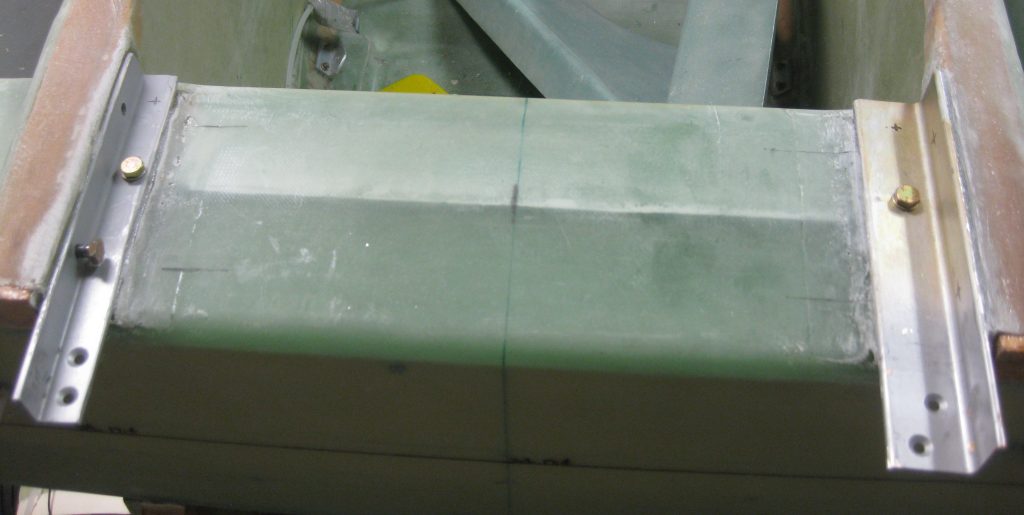
With the lower tab pilot holes drilled and the correct position of the upper alignment tabs confirmed, it was then time to glass the aft & lower side of the alignment tabs with 4 plies of BID.

I started by sanding a radius at the Birch plywood tabs and the canard TE junction as per plans.

Glassing upper alignment tabs 4-ply BID

I then laid up 4 plies of BID on each lower side of the canard onto the tabs, and peel plied the layups.

Glassing upper alignment tabs 4-ply BIDGlassing upper alignment tabs 4-ply BID

Here are the tabs after I pulled the peel ply, razor cut the overhanging glass & then sanded the edges .

Alignment tabs cured & #10 holes redrilled

I then re-drilled the #10 hole into the alignment tabs.

Alignment tab cured & #10 hole redrilled

I gathered up my CN2s (that I bought from the Cozy Girrrls).

CN2 alignment tab bushing

I then drilled the out #10 holes in the alignment tabs to 1/4″, since the outside diameter of each CN2 bushing is 0.243″.

Alignment tab holes widened to 0.250"

I used wet flox to install the CN2s into the upper alignment tabs.

CN2 bushings floxed into alignment tabs

Here’s a close up shot of a CN2 installed into the upper alignment tab.

CN2 bushing floxed into alignment tab

My garage door spring snapped so I worked that issue (thanks Murphy!) for about 45 minutes before bringing the new & improved canard out to test on the fuselage.  The CN2s kicked the tops of the alignment tabs forward just a bit, but everything still lined up just fine.

Ah, CN2 creates gap...go figure!

Alignment tabs with CN2 bushings

I don’t have any action shots of drilling out the #10 holes on the canard main mount tabs to 1/4″, but here’s the end result below: AN4 1/4″ bolts in their respective holes!

Final AN4 bolt holes drilled

And at this point, I would definitely say the canard is OFFICIALLY MOUNTED!

Canard mounted with AN4 bolts!

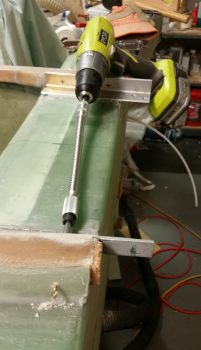
Of course there is still much work left to be done!  I left the canard in place for a while to give the CN2s a chance to really cure in place, and then after about an hour I moved the canard off its shelf and out of the way in order to drill the 1/4″ holes out to 5/8″ using the spot face tool.

Widening canard mount holes to 5/8"

And here are the new & improved 5/8″ canard mounting holes.

Canard mount holes widened to 5/8"

And a bit closer shot of each side.

Right mounting hole widened to 5/8"Left mounting hole widened to 5/8"

I then inserted the CNL bushings into the freshly drilled 5/8″ mounting holes to mark them for trimming.

Marking CNL for cutting

I then trimmed both CNLs down on the table saw just as I did with the LWA9s for the wing to CS spar mounting, and then whipped up some wet flox & mounted them into F22.

Right CNL trimmed to size & floxed in

Left CNL trimmed to size & floxed in

Here’s a shot of the glow coming from the heat lamp in the nose used for keeping the CNLs warm during curing.

Heatlamp on CNLs after floxed in

Here’s the same pic, only this time I used a flash.

Heatlamp on CNLs after floxed in

Unrelated to mounting the canard, tonight I finally go that lower cowling mounted so that I could mark up the firewall for trim.

Mocking up lower cowling with wings & FW

I had to lean way over into the cowling in order to mark the lower line without disturbing the taped-in-place cowling.

Marking firewall for trimming

I took this shot just to get an idea of what the bottom profile of the plane will look like.

Rear profile with cowling in place

Another thing that I did that is not shown in these pics is I ran a line from one wing TE corner to the other.  This let me measure from the back face of the spar to the string to determine the sweep.  I determined that I’m only 0.1″ short at the BL23 mark at the very inboard wing, and 0.4″ short on my wings’ sweep over the entire wing span: BL175.6 vs the plans BL 176.  Again, not bad and I’ll take it!

Tomorrow will be my last transmission for a few days.  I’ll be heading down south to meet up with Marco and then we’ll both fly to Rough River in his new Long-EZ.  I’ll most likely not build or post again (except maybe a quick wrap-up tomorrow) until Monday evening!

If you’re going to Rough River, SEE YOU THERE!