Chapter 23 – More armpit ramps

Shortly after I got into the shop this morning Marco called to discuss some tweaks he was making to his Garmin GNS-480 GPS antenna install.  As we were talking I walked around to the back of my plane to find a very curious lizard inspecting my build progress.  I wasn’t sure if he was happy with the build or not since all did was keep tilting his head from one side to the other… ha!

I’m having to change up my schedule to allow for the minimum 24-hour cure cycles with my new Pro-Set epoxy.  As I’m sure most of you are aware, I’m a big fan and normally use MGS with fast hardener.  I know the final Tg isn’t as stellar as slow hardener, but it’s still well within the really good range and my productivity is exponentially higher using fast hardener.

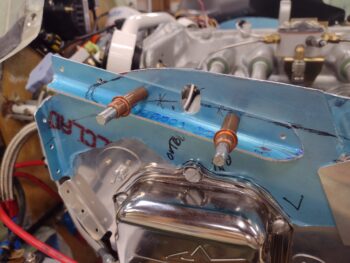
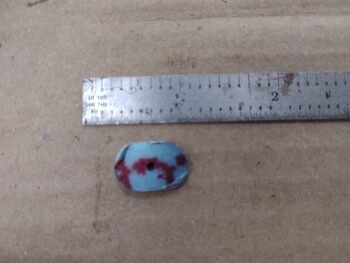
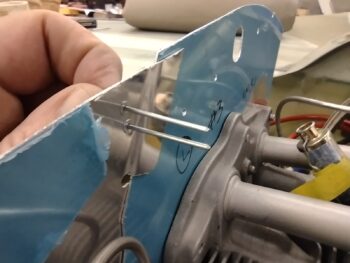
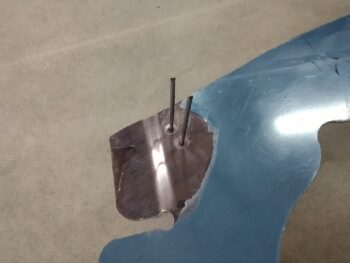
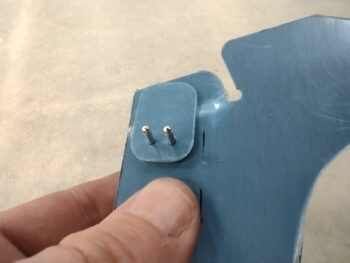
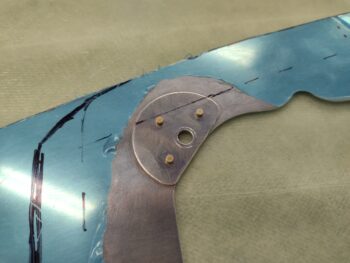
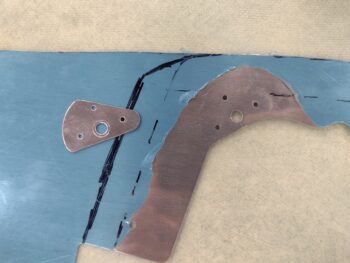
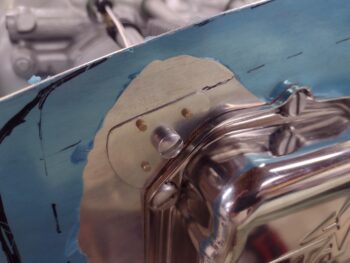
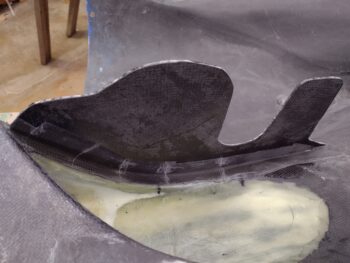
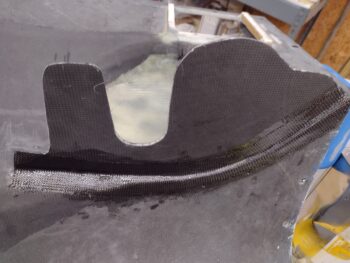
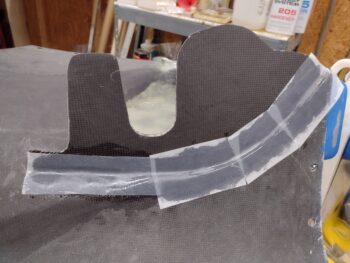
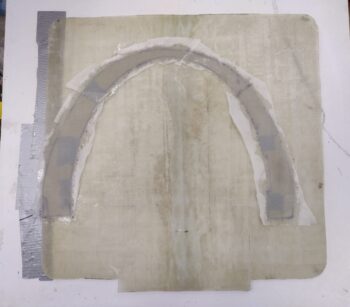
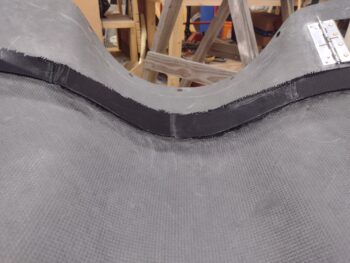
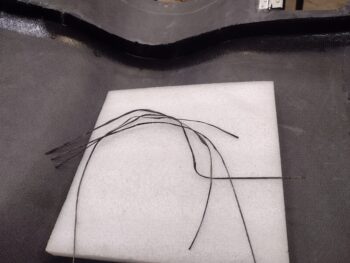
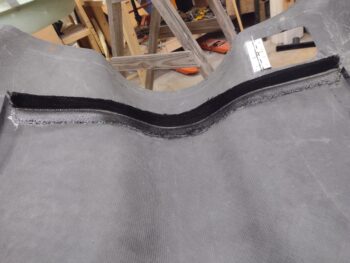
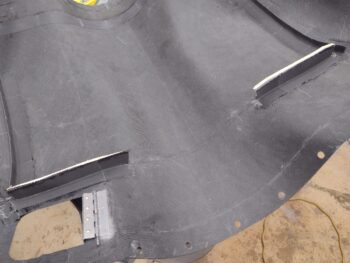
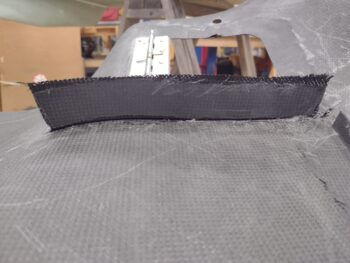
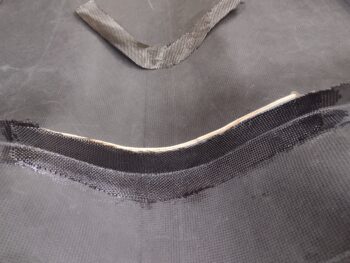
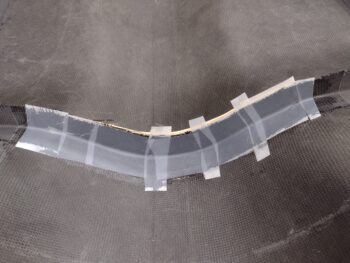
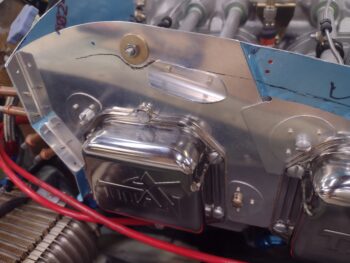
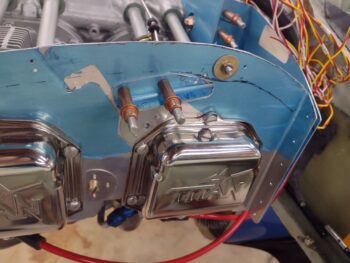
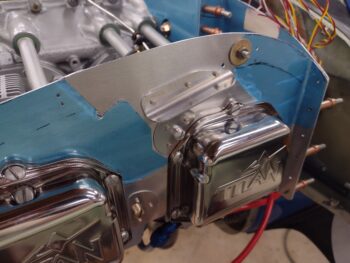
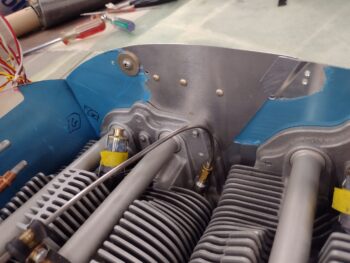
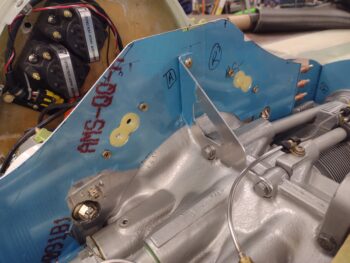
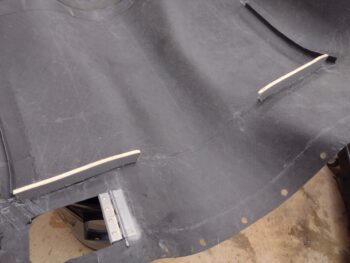
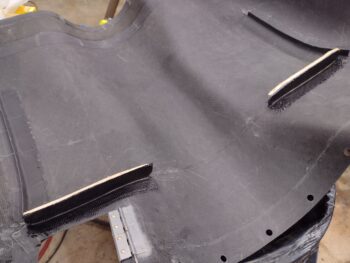
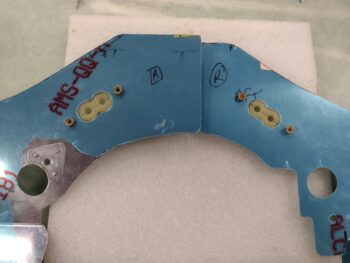
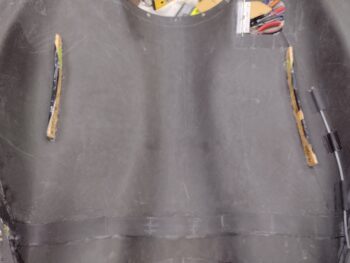
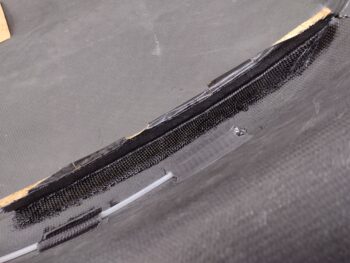
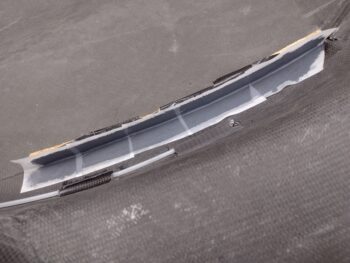
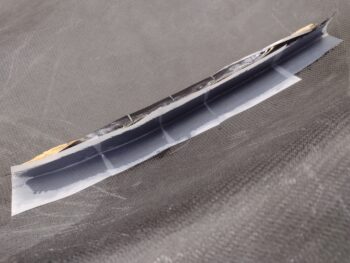
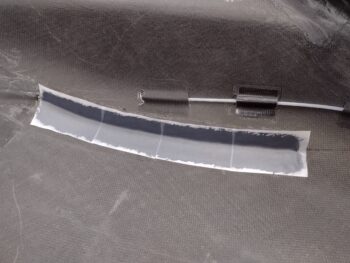
So as the aft right 3-ply CF cowling flange layup continued to cure, I decided to knock out adding some G10 “hardpoint” strips to the top aft of each of the armpit intake air- directing cooling ramps.  Since I only used 3 plies of CF for each ramp, they’re fairly thin.  So to reinforce them and add some thickness I’m adding a strip of 1/32″ (0.030″) G10 to each ramp to allow me to attach —with rivets— the top aluminum side of each ramp.
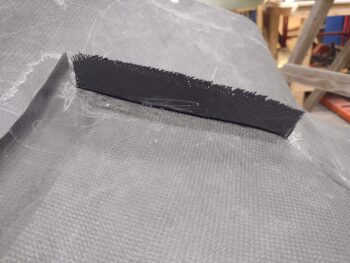
I cut each strip just over 0.4″ wide and also a little short from each end to allow a good grip onto the CF with the overlaying single ply of BID I’m using to secure this G10 strips in place.  BTW, this ply of BID will also prevent any possible funky reactions between the CF and the riveted-on aluminum top segments of the ramps.
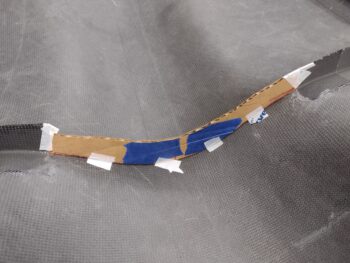
After cutting the G10 strips, I then sanded them and cleaned them up with Acetone.

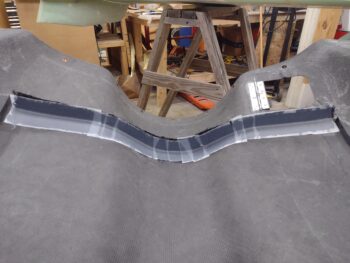
I used just a dab of flox for very wet flox when I attached the G10 strips onto the face of the CF ramps.  I then used fairly dry micro around the edge for a transition and then laid up a ply of BID over the top of each G10 strip to secure them to their respective CF ramps.
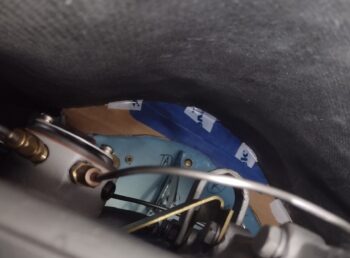
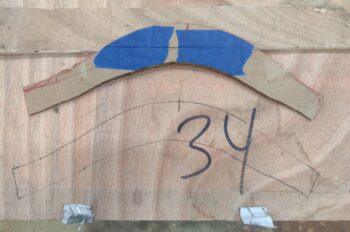
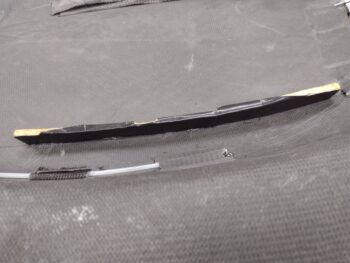
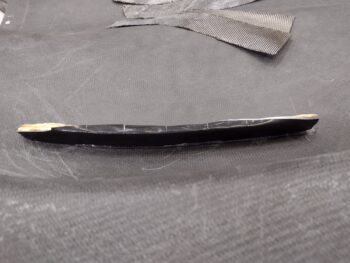
After well over an hour of cure time, I then transferred all the ramps onto a work board and weighed down the added G10 strips and their securing peel plied layups with metal sheets to ensure that they cure as flat and straight as possible.

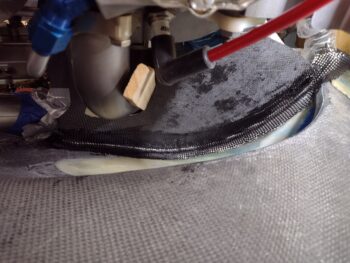
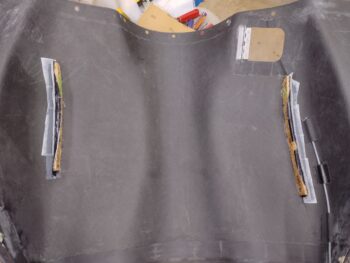
By this point my 3-ply CF flange layup on the right side of the top/bottom cowl interface had cured enough where I could remove the peel ply on the inside.

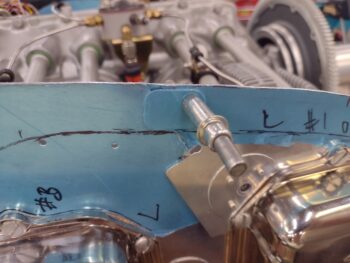
It took a good half hour of measuring and working out numbers to finalize my spacing for the 4 CAMLOCs that I’ll be installing along the aft cowling interface to secure the top and bottom cowlings together.

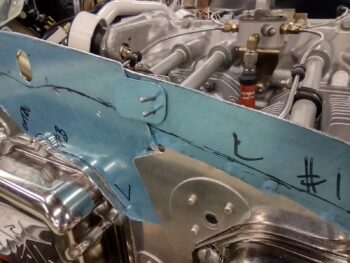
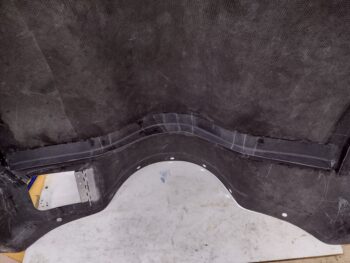
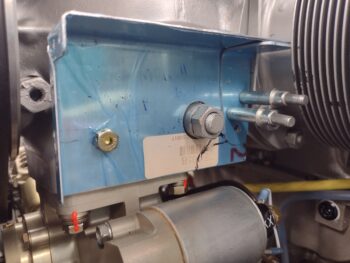
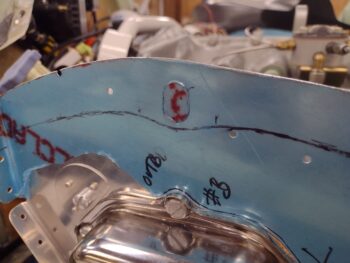
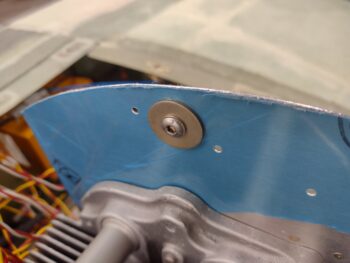
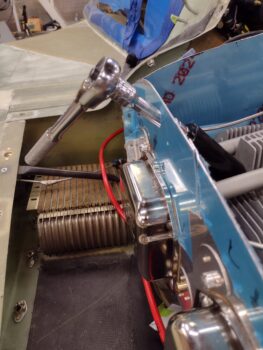
Here we have the aft 2 CAMLOC positions drilled with Clecos installed.

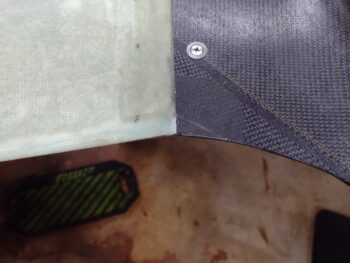
Also note that I pulled the peel ply on the narrow outboard strip of the 3-ply CF layup as well.  Again, this narrow strip will get filled in with more CF to build/extend the “skin” of the top cowling to meet the bottom cowling’s outboard edge.

It may not seem like a lot of work got accomplished today, but let me tell ya: adding those G10 strips to the aft top of each air inlet ramp took well over 3 hours total.  Tomorrow I plan on jumping full bore back onto the top/bottom cowling interface layups.
Chapter 23 – Cowl interfaces

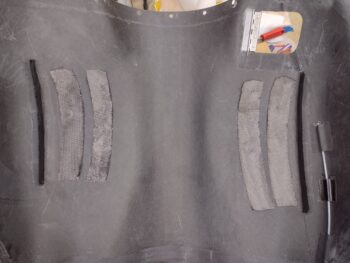
I started off today wanting to get the halves of the spinner prop install template trimmed to width and height.  I began by leveling the spinner and then using the laser level to mark a vertical line on each side of the gray duct tape… these lines being 180° out from each other (pic #1).

I then taped each half of the template in place and transferred the cut line to each UNI spinner prop install position template.

Here’s one side of the spinner prop position template marked for trimming.

And here are both halves trimmed both on each side and also on the top.  They’re ready to either be glassed or taped together to allow me to use it to create a working template for the actual spinner.

I finally got busy on the aft trailing edges of the cowling where the top and bottom cowlings intersect and interface one another.  I marked the bottom cowling for trimming at this aft edge on each side… here is the right side.

And then trimmed the bottom cowling aft outside edges (obviously not the very aft at the opening) . . . both left and right sides.
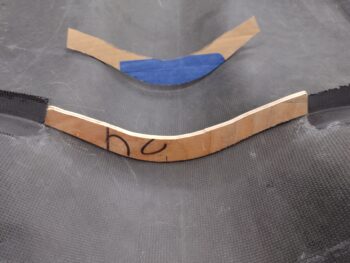
The aft outboard side of top left cowling has a slight curve where it wants to come back inboard on the bottom.  The right side doesn’t have this inboard curve and is straight.
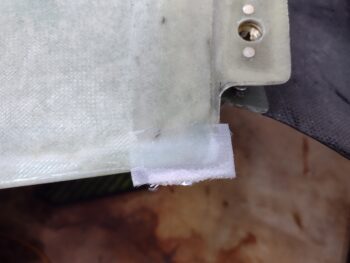
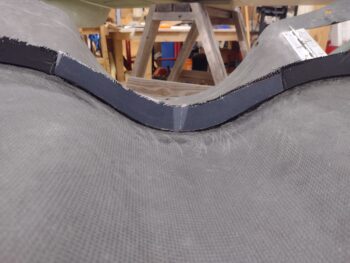
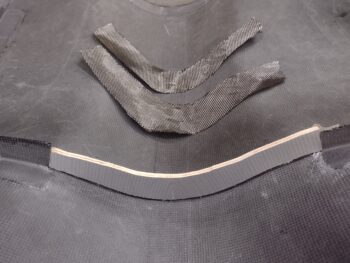
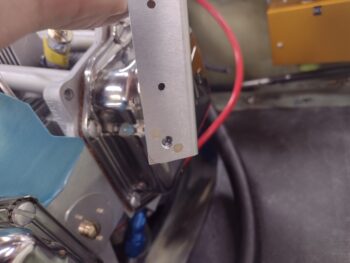
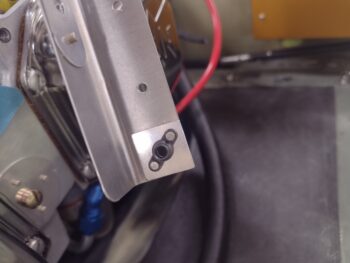
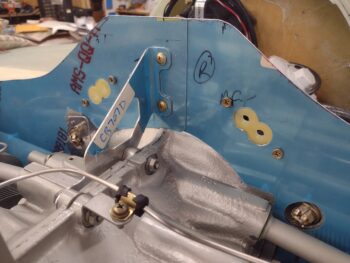
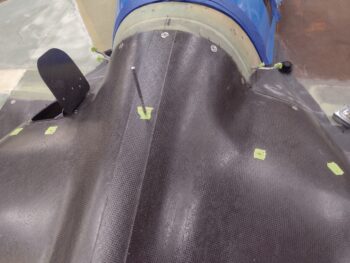
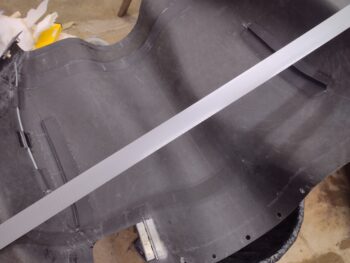
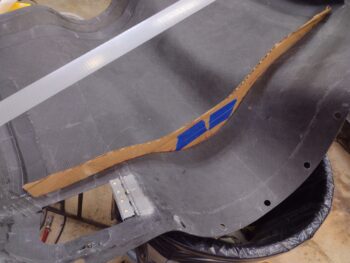
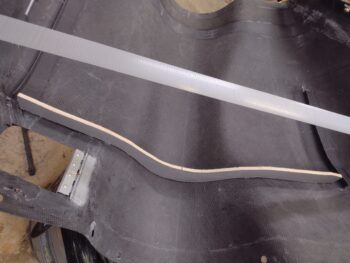
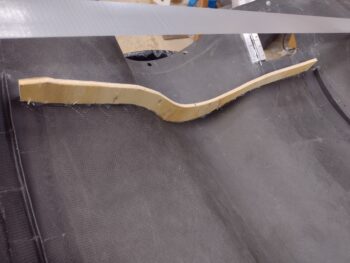
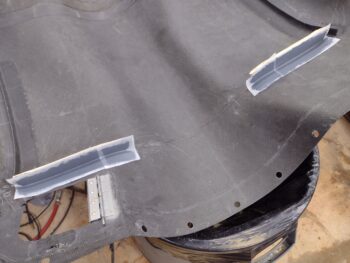
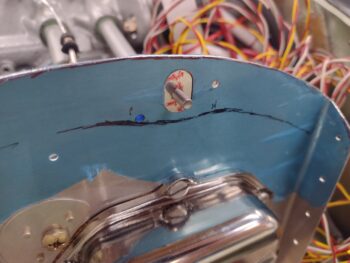
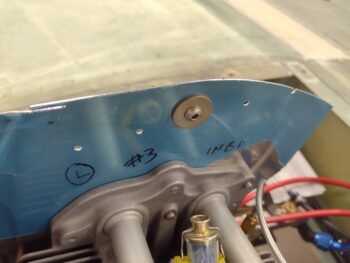
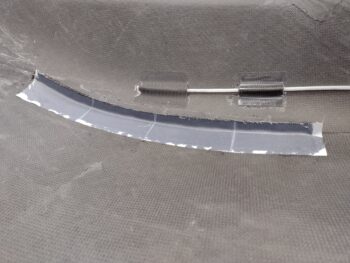
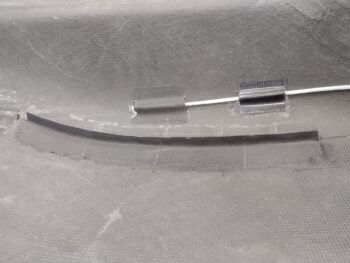
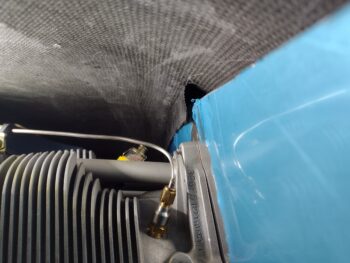
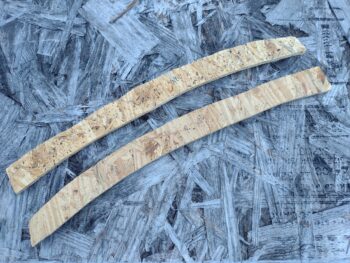
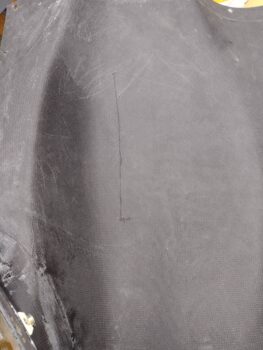
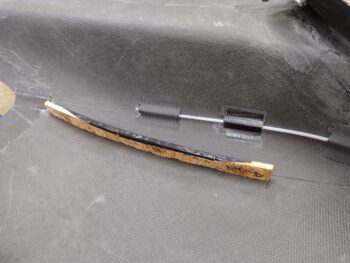
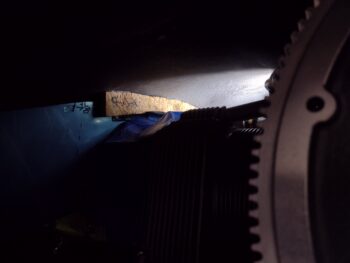
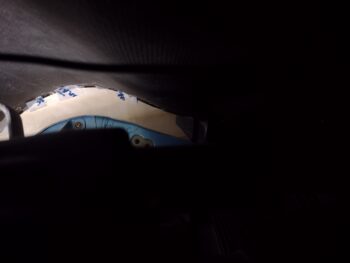
To mitigate this curve on the left side, bring the side downward and straighten it out a bit, I added a little strip of scrap carbon fiber that was close to razor thin on the top side of the strip and normal cowl thickness on the bottom edge of the strip (pic #2)… after I sanded and prepped the attachment area (pic #1).

Note that adjoining edges on both cowl and CF strip are very narrow.  I drilled a small hole for a rivet as an alignment guide and to help secure the floxed-on (wet) strip.  The spot where I placed the rivet was about the only place I had enough meat to secure the rivet, and even then the hole was right on the edge of the cowling CF.  On the aft side I may have had 1/4″ overlap, where most of it was around 1/8″.

I then added the second clamp and left the attached (via wet flox) CF strip to cure [I used MGS with fast hardener].

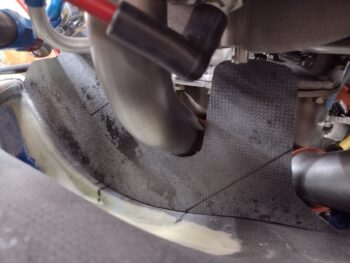
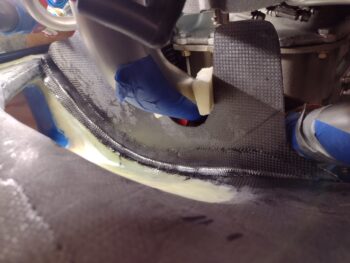
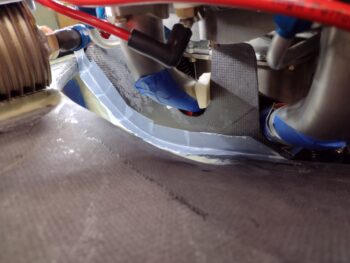
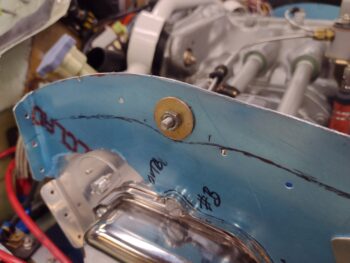
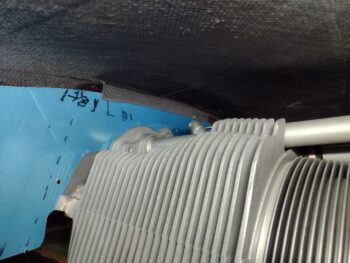
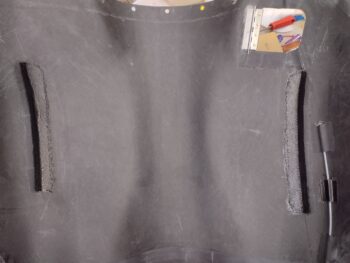
After my cowl addition task on the left side, over on the right I did my first official layup to begin closing out the gap between the top and bottom cowls, and build the interface. I used a 3-ply prepregged CF layup on the aft 1/3+ of the cowlings right about where the  vertical component of the cowlings turns horizontal (moving forward, transition at yellow tape).

The CF is laid up onto the inside of the top cowl almost 2″, transitions the current gap (I eyeballed the pleasing shape), and then rests on tape and peel ply on the inside of the bottom cowl to create about a 1.5″ (starting off at least) flange.

I then peel plied the inside of the 3-ply CF layup.

And the narrow exposed strip in the gap between top and bottom cowlings.

I’ll note that I have pondering these closeout/interface layups for a good little bit.  I decided to do each side in 3 sections: vertical (aft/inboard), transition (middle), and horizontal (forward/outboard).  I started with the aft vertical since it allows me the most control over the aft cowl opening in dialing in the shape and height of the outboard cowl walls.

To be certain, this entire task will be a very iterative process, with 3 distinct flange-creating layups on each side, then exterior-top cowl fill layups along the bottom edge to create/extend the actual top cowl wall down to meet the bottom cowling edge, and then an interior 2-ply CF tape that will get laid up along the entire inside surface of the 3-ply flange to create a 5-ply flange while also connecting the 3 individual flange layups together.

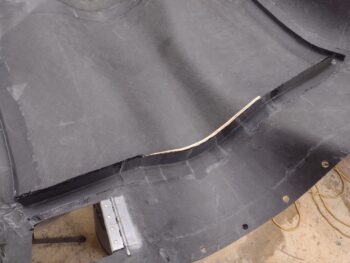
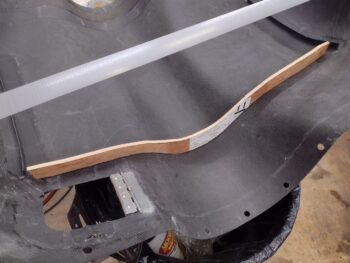
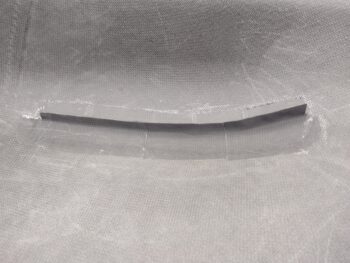
After my layup on the right side was complete, I then pulled the clamps off the small added CF strip on the left side.  I also removed the alignment rivet.  But alas, somewhere my well-crafted plan went awry and instead of straightening out the curve, for the most part this addition just continued it (the curve looks exaggerated in this pic because the back of the strip is angled).  Oh well, I’m not going to worry about a slight curve and I’m pressing forward.  This diminutive strip did serve its purpose in adding a bit more cowl wall outboard and extending the wall down as well.

After a good overnight cure, I’ll remove the top cowling and grind/sand/remove a good bit of the original bottom, inside cowl edge behind the added CF strip in prep for the left side’s aft 3-ply CF flange layup.

Chapter 23 – Ramps & prop

I started today by pulling the first half of the spinner prop cutout template off of the spinner.

I then whipped up some more West epoxy and wetted out a bunch more scrap UNI pieces to create the second half of the spinner prop cutout template.

Here’s another shot of the second layup, with the cured first half in the foreground.

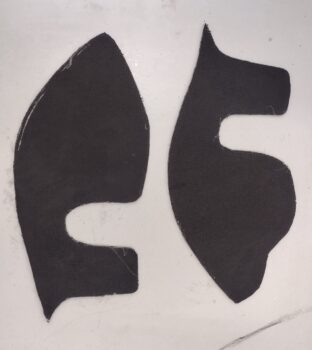
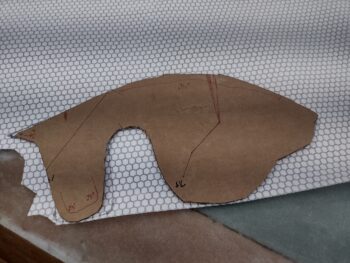
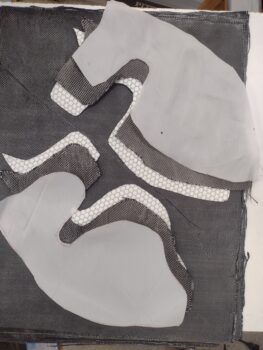
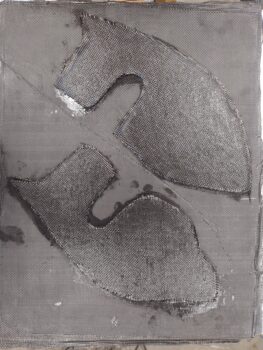
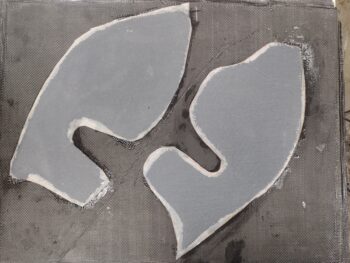
I the pulled the peel ply off the 3-ply carbon fiber sheet that will be the stock material for cutting out the bottom cowling’s armpit intake ramps… again, 2 each side.

I then taped the armpit intake ramp templates to the 3-ply CF sheet.

To ensure I kept my cut lines correct, I outlined the paper templates with a white paint pen.

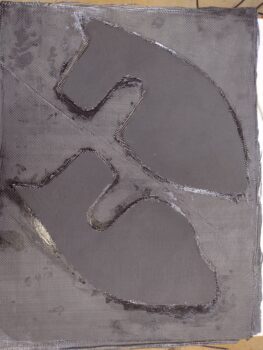
I then took the whole setup outside and cut the armpit intake ramps out of the 3-ply CF sheet with my trusty Fein saw.

I left the templates taped to the CF for now since they need some fine tuning (sanding) around the edges.

I’ve been working my plan to construct the aft interface between the top and bottom cowlings, and hopefully can kick that off tomorrow.

Chapter 23 – Armpit intake ramps

After getting back from Nick’s I was a bit tired from an active weekend and a good bit of traveling.  Sadly I have to report that Nick’s plane was being a bit finicky engine-wise and he was having it checked over to make sure all was ship-shape before he sells it.  Thus, no flying.

I of course still got my back-up Silver Bullet prop, in the original crate which is exactly what I want in case I ever need it shipped out to me post haste somewhere.  I also bought the 1/2″ prop bolts from Nick at RR for less than half the price of new ones.  Yes, the one downside since my primary prop has 3/8″ bolts… but remember, my prop extension has two sets of holes on the prop-mounting end: 1/2″ & 3/8″.  Still, for a backup prop that’s in excellent shape (freshly painted and balanced), the same size and pitch as mine (66×75), for less than half the price new, I’m still calling it a good deal.

Nick also gave me his prop balancer shown in the pic above, as well as he’s sending me his wing leading edge light jigs and forms which I will use to create my wing leading edge landing/WigWag lights just prior to final painting of the wings.

Moreover, Jess and I had a great time visiting Nick and enjoying Charleston, so clearly the trip wasn’t a total bust.

Back in the shop I wanted to get some glass/CF curing, but didn’t want to take on any major layups.
At RR I talked with James Redmon and a Defiant guy who both used glass/CF for the base (bottom) of the armpit scoop baffles, or what I call “ramps,” and then both attached aluminum to the tops of these bases to allow for bending the top angled part of the ramp to modify the airflow.  This will allow me to dial in the airflow to the cylinders without having to cut out the glass/CF only ramp, remake the ramp, and then install it again.  The only different approach between these guys was James said use thicker aluminum, the Defiant guy used thinner.

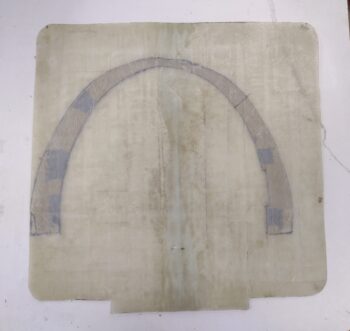
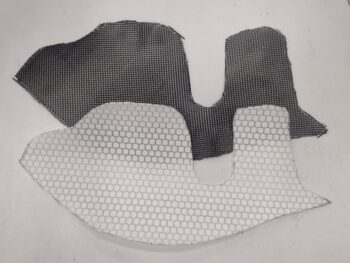
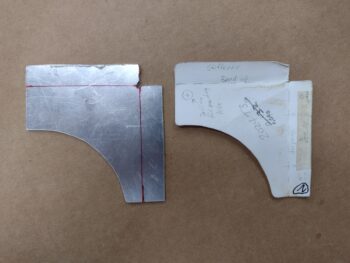
On my spare set of paper armpit inlet ramp templates in the shop, I cut out bottom portion of each of the 4 respective airflow ramps (2 per side) and then set them on top of a 8.5 x 11″ piece of printer paper.  I then spaced them as tightly as possible to get the required dimension down to 8.5 x 9.75″ for all of them to fit.

I then used my trimmed printer paper as a template to cut out 3 plies of CF and 2 pieces of peel ply, one for each side.

I wet out the first ply of peel ply and then wet out/laid up the 3 plies of CF on top of the peel ply (all on top of a piece of plastic to keep the layup surface clean).

I then finished the layup with the top/second piece of peel ply.

I covered the peel plied layup with a piece of plastic Saran wrap and squeegeed out all the bubbles and wrinkles.
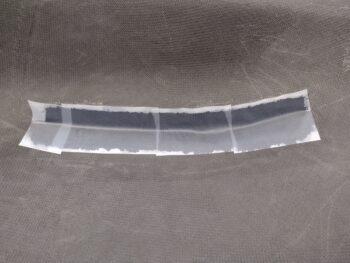
I then placed a piece of flat aluminum sheet, and then two heavier steel sheets over top of the 3-ply CF layup to ensure it cured very flat.  I then left it to cure overnight as I used Pro-Set epoxy.
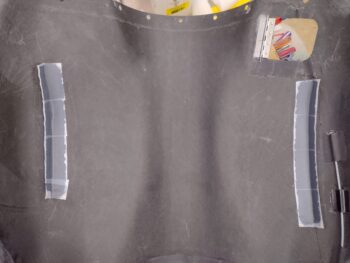
I then blatantly copied my buddy Dave Berenholtz in how he created a template for cutting the propeller notches into the prop spinner.  Except while he used mold release and laid up the template in one shot around his prop spinner, I didn’t want to deal with the hassle of prying off a singular fiberglass template, so I’m doing mine in 2 halves and then securing them together.

I started by taping up just over half of my spinner with gray duct tape.

I then gathered up all my smaller scraps of UNI and laid up 2-3 plies over the gray duct tape.

I then left it to cure overnight.

And with those bit of layups “in the oven” I called it a night.  Tomorrow I plan to glass the other side and get busy on the aft intersecting edges of the top & bottom cowlings.

Chapter 23 – Top cowl reinforcement

Before heading down to Nick Ugolini’s in Charleston, SC for the weekend to pick up my spare Silver Bullet prop, some other LEZ gear, and do some flight transition training in his Cozy, I wanted to get a good little bit done in the shop before being gone for yet another few days.

I started by pulling the peel ply and trimming the overhanging CF with my Fein saw on the bottom cowling top center gap fill layup.  As I suspected, which was a bit harder to tell than you’d think when I laid it up, the gap fill is going to need some tweaking.

I may even round the out the aft edge of the bottom cowl here somewhat as it was before.  I’ll ponder this while I’m gone and let it germinate.

Here’s a side shot, which admittedly doesn’t really show the slight asymmetrical issue.

The main task I wanted to knock out, and let it cure for a good few days while I was gone for multiple days, was a reinforcement band layup on the aft side of the top cowl.  This reinforcement layup is primarily to help keep the top cowl off the spinner, which without the foam block spacer on the top of the flywheel… uh, it’s a bit too close.  Especially after I re-added some length to aft edge of the top cowling.

My layup schedule was 2 plies of 1″ wide UNI, and then 2 plies of slightly wider CF.

After wetting out the UNI glass and CF I then peel plied the layup.

I let the layup cure for a good hour to set up a bit (I used Pro-Set with medium hardener) and in the meantime I placed five 0.3″ spacers around the perimeter of the spinner (technically the flow guide) and then mounted the top cowl in place.

I then left it to cure for a good few days while I headed down to Nick’s for the weekend to pick up my backup Silver Bullet prop, etc.

Chapter 23 – Bottom Cowl TDC

I started out today by marking and then trimming the top cowl aft left side where it curves into the vertical side of the top cowling.

Here’s the trim mark on blue tape (the aft mark).

And then how it looked after I finished.  This is fairly close to what I have on the right side as well.

I then Clecoed the aft-most hole on each side of the bottom cowling, where it interfaces with each wing.

I then drilled out the CAMLOC mounting hole for the second to the last hole on the bottom cowling interface with the respective wings.  I then mounted the second to the last CAMLOC receptacle on each side.

I then took the cowl off and drilled out the second to the last CAMLOC hole on each side.  However, before putting the cowling back on I filled the aft top center gap between the left and right new bottom cowl skins with CF.

After laying up 2 plies of CF on the inside I peel plied the layup.

I then added a ply of CF on the exterior side of the bottom cowl aft top center gap.

I then peel plied that layup as well.

I then remounted the bottom cowling… here you can see the new second to the last CAMLOC positions open . . .

I then determined that the left side gets a -5 stud while the right gets a -6 stud.

Here’s the gap fill layup at the top center of the bottom cowling.  It looks pretty good, although admittedly it may need a bit of clean up and tweaking.  We’ll see how it turns out.

And another side view of the top center gap filled on the bottom cowling. This provides a visual somewhat of how it will look in relation to the spinner flow guide.

I’ve spent a good bit of time over the last couple of days (when I could) searching through the old CSA articles dealing with cowl designs and configurations.

Based on one article in particular I decided to determine my cooling air inlet volume (opening) vs. outlet volume (opening) per side.  The CSA article on the subject mentioned that optimum airflow is attained when the outlet is no less than 1.6 times the size/volume of the inlet.

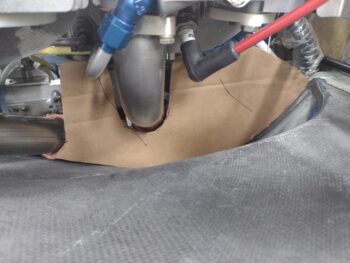
I made a template of the inside of the armpit scoop and then tested it out against the side opening part of the aft cowl opening template.  Even though comparatively narrow to the vast majority of Long-EZs I’ve seen, my outlet is around 27 sq. inches each side while my armpit inlet on each side is around 10 sq. inches.  If you subtract ~5 sq. inches for the exhaust pipes I’m still around 22 sq. inches for the opening each side.  Clearly that’s an outlet volume 2.2 times the inlet volume.

Based on that CSA cowling article, my cowl aft opening shouldn’t present a bottleneck in allowing cooling air to exit the cowling.

With my ‘fun with math’ part of the evening over, I called it a night!


Chapter 23 – Top cowl aft corner

Between loading up all the pics from RR and constructing that web page and coordinating with Nick and preparing for yet another 3-day trip down to Charleston, I haven’t been able to get a lot done in the shop.

I did finally make up a template for the aft left corner of the top cowling where it meets the left wing trailing edge.

Using the template I cut out a small piece from one of the trimmed scrap CF pieces from the cowlings.

After sanding and cleaning both the small wedge piece and the top cowling, I then taped the wedge CF piece in place from underneath.  I floxed the seam and then laid up 1 ply of UNI to secure it in place.  Later on I’ll add more glass/CF on the inside when I create the top & bottom cowl interface.

I used fast hardener, so later this evening I pulled the peel ply.

Although minor, that’s another task off my list.  I’ll try to get some more knocked out on the cowlings tomorrow.

Chapter 23 – Oil check door “latch”

Since I was in a massive rush to get out the door to the airport for my ride to Rough River in the back of Marco’s Long-EZ… via Mike Beasley’s house down in Georgia… I just decided to do a quasi-quick video to show the current operation of the oil check door wire pull latch.

Before I made the video I pulled the peel ply on the CF layups and did a bit of cleanup and razor trimming.  My diminutive 1/16″ G10 tab, that I had yet to secure in place with CF, snapped off during the install of the wire since there was a good curve to that.

After quickly getting the video(s) uploaded, then adding an opener, closer and titles to it, I edited it in just a few quick spots before uploading it to YouTube… so here’s my nearly raw video:

After I return and get settled back in, at some point during the week following RR I’ll be heading down to Nick Ugolini’s to pick up the back-up Silver Bullet prop I bought from him.

In addition I’ll be doing some transition training in his Cozy IV and picking up a few build items from him as well.


Chapter 23 – Oil cooler lines in!

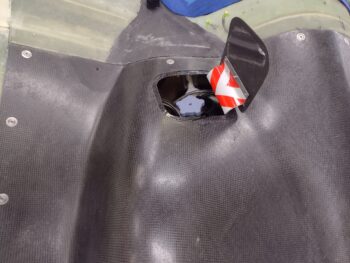
My main push for the day, besides prepping for going to Rough River, was to install (via layups) the “hidden” wire pull assembly on the top cowl for the oil check door.

After finalizing my design I spent a bit of time deciding where & how exactly the wire pull would run, and marking it up with tape on the side of the top cowling.

After some more head scratching and pondering, I got to work doing the initial layups: on the aft side I secured the 3/16″ Nyla-flow tubing with a couple small plies of CF and some flox fillets around the tubing edges & gaps with the top cowl inside surface.

On the forward end I have a small length of brass tubing on both the front and aft side of the oil check door opening.  My design for the wire securing the oil check door is to have it secure the door at 2 points: the aft outboard (away from hinge) corner and then also a bit towards the mid-point on the front edge of the door (against the oncoming air).

On the door itself I’m using 1/8″ Nyla-flow and securing it with flox fillets and CF as well.

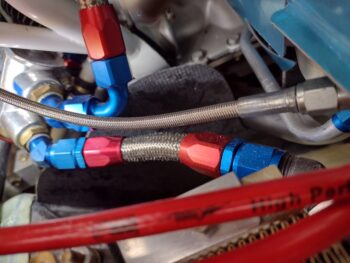
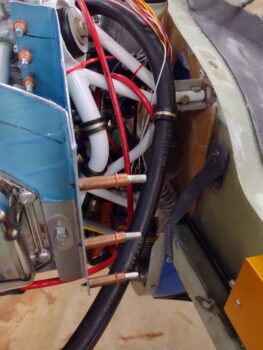
While the above layups were curing (I used MGS with fast hardener), I installed the 45° steel fitting into the front port (as it is installed) of the oil cooler.  I then constructed the oil return hose and installed it… yes, it is quite the loop!  But this configuration really was the only way I could both provide strain relief (via flexibility) and avoid other pieces parts (second oil hose, MAP hose, and left “shark tube” rudder cable guide).  Moreover, by using this loop/arch I was able to avoid using a 90° steel fitting, resulting in much better oil flow.

Here’s another shot of the just built and installed oil cooler oil return hose.

My last task while the initial oil check door wire conduit layups cured was to pull the peel ply off the right interior layup of the bottom cowling.  I also trimmed the aft and side edges.

After the first round of layups were cured enough to press forward, I prepped the oil check door cable conduit for the final layups: the middle and forward CF securing patches on the aft 3/16″ Nyla-flow conduit.

It’s hard to see, but a point of note that I floxed in a very small 1/16″ thick G10 phenolic tab at the front edge of the 3/16″ Nyla-flow… this will serve as a hard stop as I will have either an E-clip (circlip), wire loop, zip tie, or even welded pin/blob to keep the wire from exiting aft.  Thus the 6″ gap between the front face of this small G10 tab to the forward cluster of brass/Nyla-flow tubes around & on the oil check door.

On the front side I prepped the approximately 4″ length of 1/8″ Nyla-flow to be attached to the oil check door with CF.

I then completed these layups and peel plied them.  I then left them to cure overnight.

Again, tomorrow I’ll be heading out to Rough River so there will obviously be a break in the build for a few days.  I’m sure after hanging out in RR for a few days I’ll get a huge boost in motivation to get this bird finished and in the air!

Chapter 18 – Cowl Phase II complete

I started out today by removing the bottom cowling and then pulling the peel ply on the left interior CF layup.  I then cleaned up the peel ply boogers.

I then took the bottom cowling outside and marked up the interior skin on the right side for removing and cleaning out the old right inside surface of the bottom cowl.

I then cut out the perimeter of the old skin and removed it, foam and tape.

I then did a few more rounds of trimming the perimeter to remove the foam and tape and expose the edges of the peel ply (pic #1).  I then pulled the peel ply (pic #2).

I then took the bottom cowl back into the shop.

I started by adding some small flox fillets in some areas for the transition from old to new skin.  I then laid up some perimeter reinforcement plies (pic #1) before laying up the single and final large ply of CF on the right interior of the bottom cowling (pic #2).

I then peel plied the CF layup.

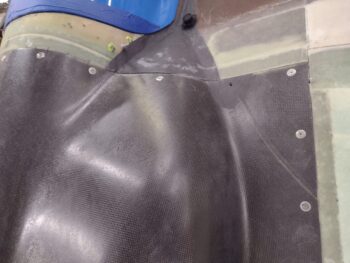
This layup finalizes Phase II of the bottom cowl reconfiguration.  Here’s a shot of the just laid up right interior CF layup and the cured left interior CF layup.

I then mounted the bottom cowling back on the plane to allow the bottom cowl right interior CF layup to cure in place.

Tomorrow will be a light build day as I’ll be getting ready to head out to Rough River.