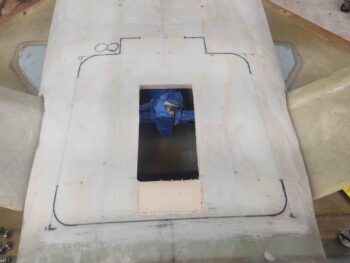
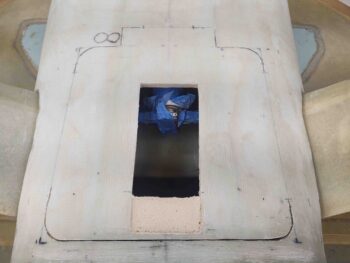
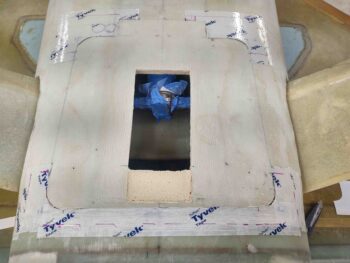
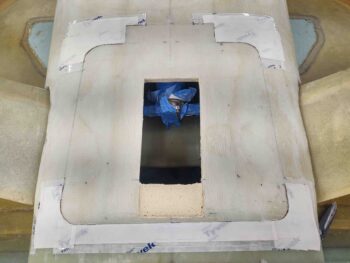
Chapter 13/23/24 – Firewall re-trim

I started out today by setting the bottom cowling back onto the plane and then figured out its install configuration.  Since the bottom cowling skews to the left slightly, I pushed it from the left inboard about 1/8″ to find the “sweet spot” that provided the best shape for it to be mounted.

This 1/8″ really does make a difference in shape and definitely impacts the interface and shape of both the lower firewall and aft bottom fuselage, and especially influences the shape at the bottom corners of the cowling.  Moreover, it’s just enough movement to get a positive effect on the shape of the cowling while still being within the natural free movement of the cowling… so no excessive force to get the cowling into that configuration.

I then slowly captured this inset position of the bottom cowling around the edge of the firewall by using a magenta Sharpie to mark the latest cowling interface line on the firewall aft face.

I then went through a myriad of iterative cycles of trimming and shaping the firewall while removing and resetting the bottom cowling back into place.

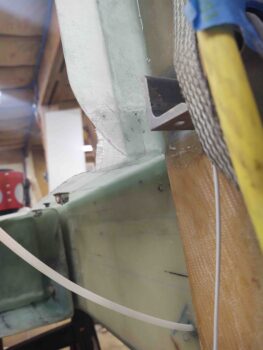
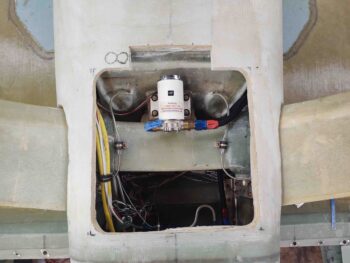
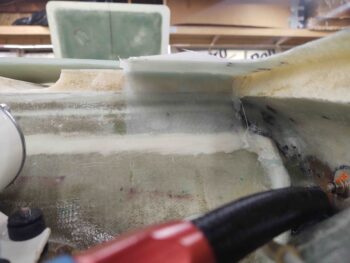
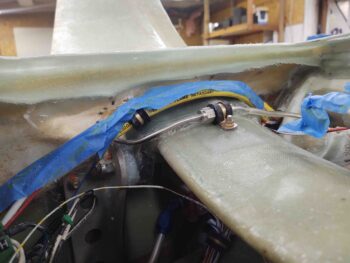
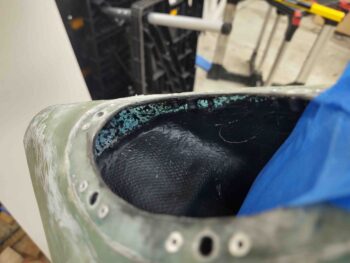
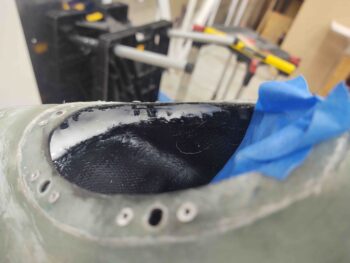
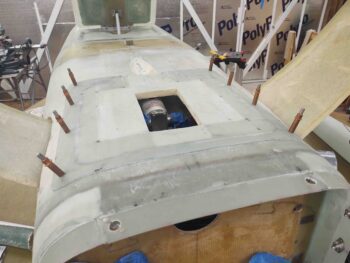
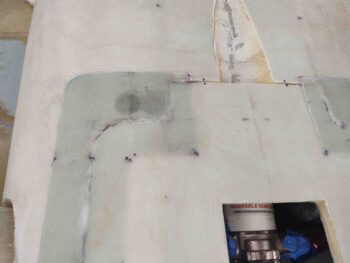
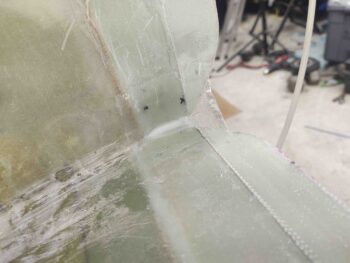
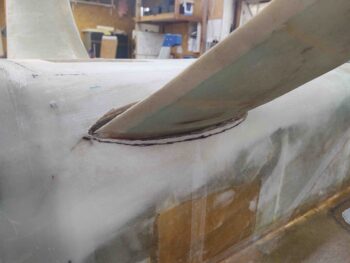
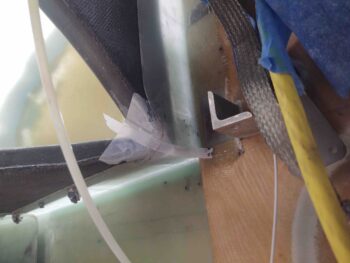
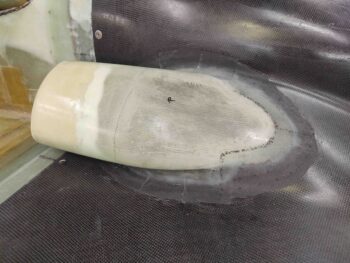
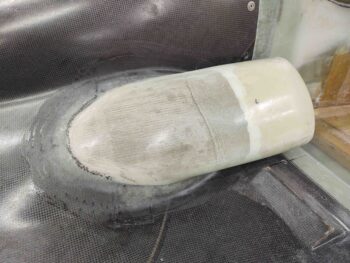
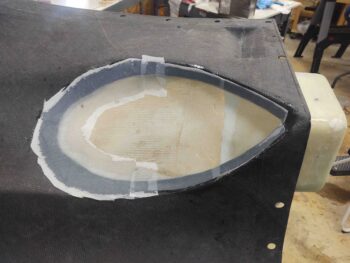
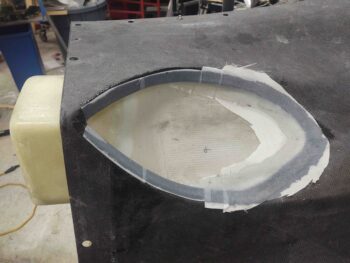
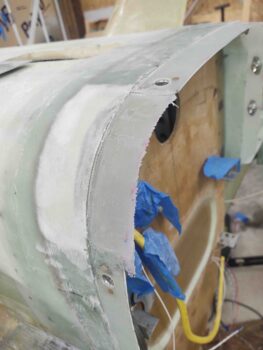
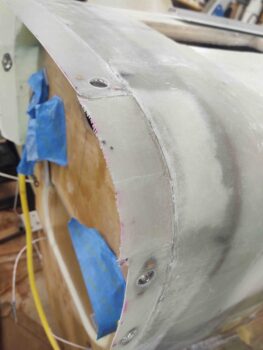
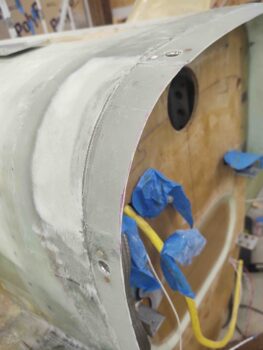
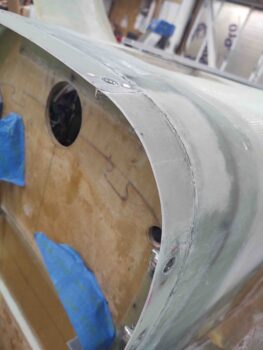
Here are the lower bottom cowling-to-bottom fuselage corners after the firewall was shaped.

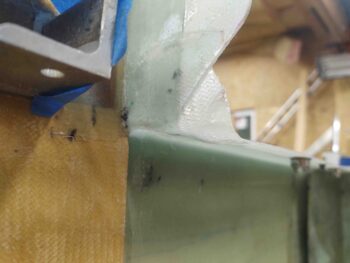
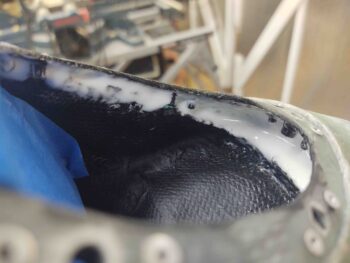
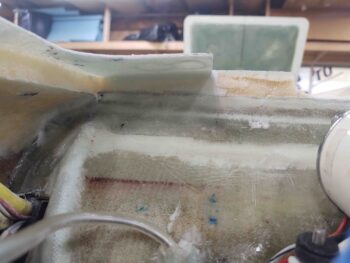
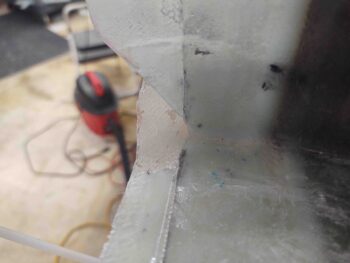
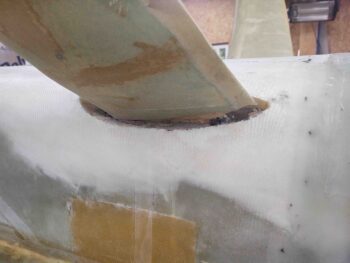
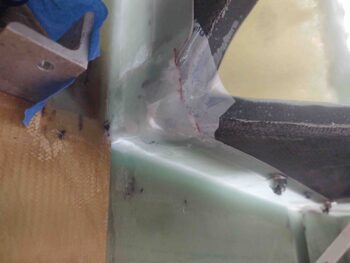
And the specific area that needs to be reworked.

The goal here is to get the firewall trimmed to set just a hair inside the cowling’s inside edge… so that when the 2 plies of aft bottom fuselage covering glass is laid up, followed by the 5-ply 1.6″ original plans lip then laid up over the 2 plies around the perimeter of the firewall, that it is very close to matching the exact front edge of the bottom cowling. I’ll then later create the added mounting flange as Mike Melvill did to mod his existing stock cowl mounting lip to accept this new cowling.

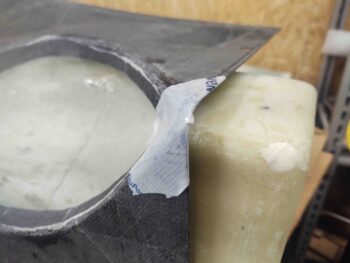
After a half-dozen more sanding sessions on the edge of the firewall, and happy with the interfacing elevation of the firewall, I then taped up the front edge of the bottom cowling and made my tick marks about an inch apart… the marks of course being 1.6″ from the aft firewall face.

I then played ‘connect the dots’ and created a solid line 1.6″ from the firewall, the cut line for trimming the front edge of the cowling.  Admittedly, to intersect the existing trim cuts of the horizontal cowling front edges I had to bring this line forward on the sides so that the gap where it converges at the strake/fuselage corner is only about 1.4″ wide.

I then carefully cut along the line to give the bottom cowling front edge a trim.

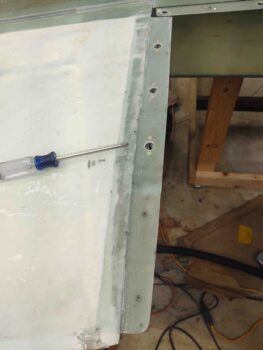
Here we finally have the entire front edge of the bottom cowling trimmed up and ready for install.

I then set the cowling back into place on the bird to check its fit.  All looked acceptably good at this point.

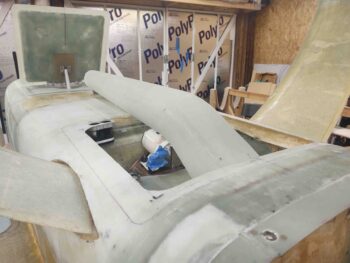
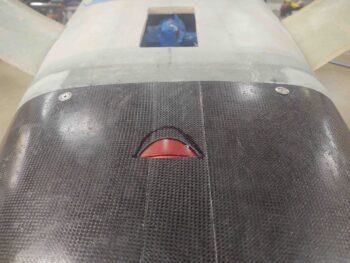
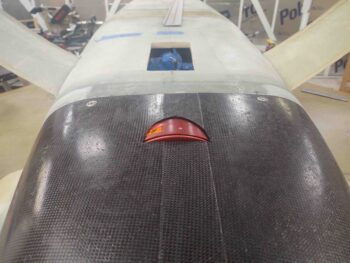
A shot from the back with the bottom cowling set in its future install position.

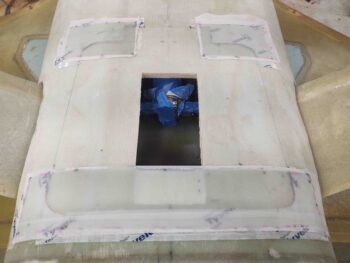
With the front edge of the bottom cowling trimmed, and the firewall also trimmed in an acceptable interface alignment with the bottom cowling, it was time to add some more pour foam to the aft lower left fuselage/hell hole area to allow for a straight line between the mid-fuselage area to firewall edge, considering I had just added to the firewall in that bottom corner.

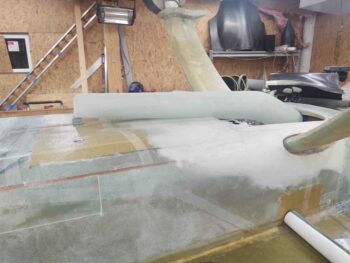
I determined my low points in this area and built a trough around it.

If you look at the far end in this pic you can see the new added edge of the firewall peaking up just at the back wall of the pour foam form trough.

I then mixed up 2 batches of pour foam and poured them into the trough, attempting to be as judicious as possible to get an even spread of foam… I’m looking for a slight added depth of foam here across a wide area, not a deep bit right in one spot.

After a good hour or so of cure, I then pulled the trough form walls off this new round of added pour foam.

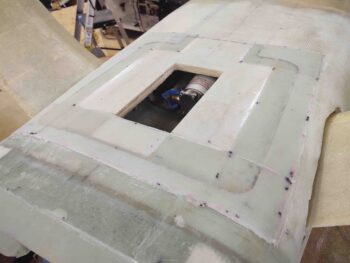
Here’s another shot from the side.

It was getting late so I called it for the night.  Tomorrow I’ll shape and level this added pour foam, probably do a few more spot fills (one being below the gear leg above [as situated] along the fuselage sidewall).  I then plan on getting the entire aft lower fuselage and hell hole area shaped and leveled to allow me to hard shell it for glassing within the next 2-3 days.


Chapter 23 – Armpit scoops

Although I intended to do more today than just work on the armpit air scoops, alas, that is all I did.  The good news is that the prep on both of them is complete and they are ready to be mounted onto the lower cowling.

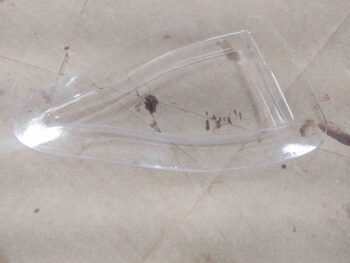
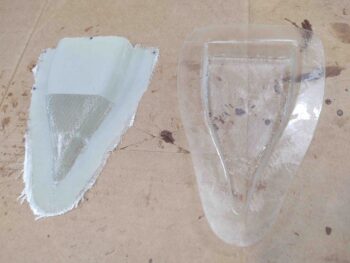
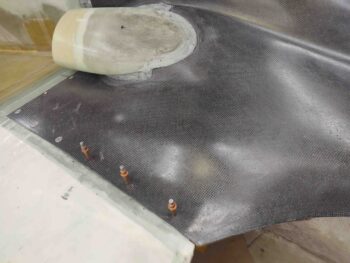
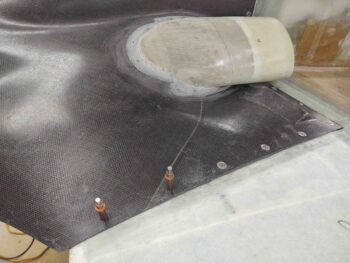
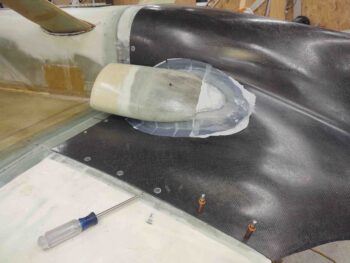
I started by cutting, sanding and shaping the foam on the first one to prep it for glass. Here it is in comparison to the untouched pour foam on the other scoop.

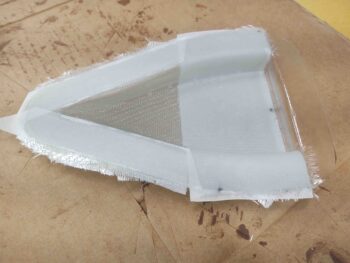
I then measured and cut a single ply of BID to cover the pour foam ramp and the overlap onto glass at each end.  This BID is for the first scoop and I did the same thing for the other scoop.

I then glassed both scoops, one at a time, after feathering in the foam edge to the existing scoop internal surface with dry micro.  I also micro’d the foam before laying up the glass.

The overlap on this single piece of BID is on the short side at the top as these scoops are situated below.

I had originally planned on peel plying the entire layup, but the rounded front entry lips proved challenging so I only peel plied those and the seam along the top/short edge.

Quite a few hours later I pulled the peel ply, razor cut the overhanging glass, and cleaned up the layups.

All told these armpit air scoops took over 6 hours of work today…. doesn’t seem like it should have taken that long, yet they did.  But again, they look good and they are ready to be mounted!
Tomorrow I plan on jumping back onto the bottom cowling install and its interface with the firewall and aft lower fuselage.

Chapter 23 – An iterative process…

I started out today with setting the bottom cowling in place to get it aligned in what will be its mounting position.  My primary focal points for alignment are the inside right angle cowling corners where they intersect at the junction of the strake and fuselage side.

The goal here after I got the cowling aligned along the centerline of the fuselage is to cut the front horizontal cowling edge to interface with the 1.6″ flanges I just glassed onto the aft side of the strake/CS spar.  To get a good cut line I had to weigh down the outer corners and along the sides where they meet the inboard bottom edge of the wing.

I initially attempted to use my laser to mark the fuselage, and in turn the cowling, centerline.  But with the fuselage and wings NOT at 0° level (I didn’t foresee a need for them all to be level, so I didn’t make the effort to do so… oops) anything below the top surface (as situated… so technically “bottom”) centerline the line started to skew to one side.  This drove me into having to go old school and manually determine the centerline.

Once the cowling was centered and aligned, checked, rechecked, and double-checked, I then climbed underneath the cowling and marked the cut lines along the aft edge of the 1.6″ flanges coming off the strake/CS spar.

With the cut lines marked, I then removed all the weights off the edges of the cowling and took it outside to cut the front edge horizontal sections.  As you can see, I clamped a straight edge just forward of the line . . .

And carefully cut it with my Fein saw.

Here’s the trimmed horizontal section on left side.

And the same on the right side.

After resetting and realigning the cowling back onto the plane, I then started assessing the interface between cowling and firewall/hell hole/aft bottom fuselage.  It was clear right off the bat that the bottom middle of the cowling is somewhat flat and I did not capture that flat edge on the bottom of the firewall.  Thus, that required re-cut/trim was added to my task list.

The major alignment issue between the bottom cowling front edge and the aft fuselage/ firewall is on the left side.  The first issue is the shape of the cowling itself.  The lower “U” section of the cowling, that actually interfaces with the sides and bottom of the firewall is not exactly symmetrically: so instead of a true shape, it skews towards the left a bit…. so more like a slightly slanted U vs the desired straight U.

I’m not sure if this skewing is a result of the cowling having been in shipping mode and storage for the past 10 years, or if it came off the mold that way.  Regardless, it’s not by a huge amount… we’re talking maybe 3/16″.  My thought is that by securing the left side with a CAMLOC it will pull the left cowling edge in tight and thus correct the rest of the alignment woes around the perimeter of the firewall.

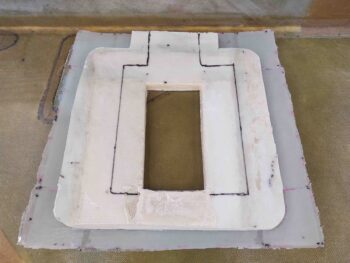
Related to issue #1 is my mismarking of the firewall before I did the “final” trimming of it as I started work on filling in the aft bottom fuselage and hell hole area with pour foam. I somehow managed to remove a fair bit more than I should have in the lower left “corner” of the firewall.  The result is a gap, that I’ve highlighted here with the red arrows.

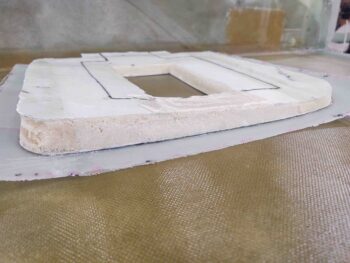
Luckily I saved the cut edge material I removed when I trimmed the firewall. Here I’ve simply set it back in place on the now trimmed firewall.

I figured out the lower left firewall “corner” section I needed to add back in order to align the bottom cowling front edge to the firewall/aft bottom fuselage.  Again, part of the iterative process…. at least my iterative process.

After double-checking and verifying the section of firewall that needed to be added back to the firewall, I cut it off the original trimmed piece and floxed back onto the firewall. I then left it to cure overnight.

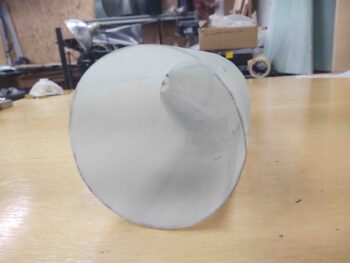
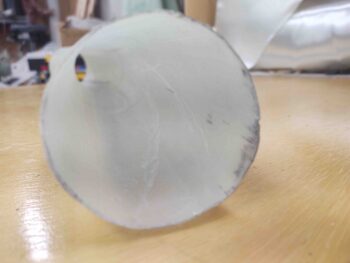
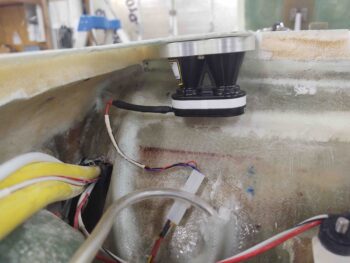
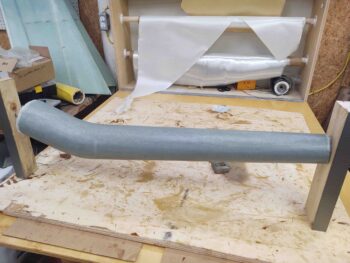
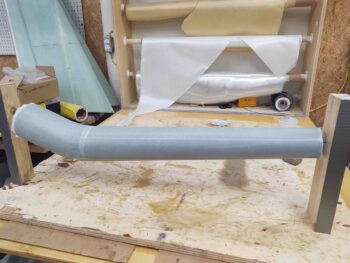
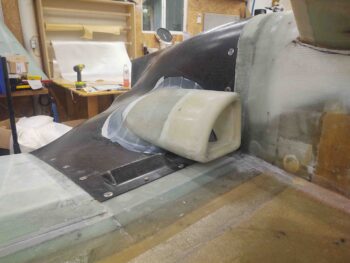
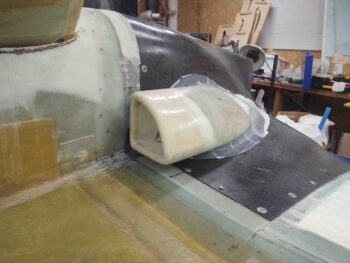
I then got to work on the final task to prep the armpit air intake scoops for mounting to the bottom cowling: filling in the hollow entrance lips with pour foam and creating a ramp to mitigate any turbulence of the incoming air.

I started by creating a form out of thin cardboard covered in duct tape. I then secured that in place.

And whipped up some pour foam and poured it inside the form, which was subsequently inside the entrance lips.

A bit later I removed the form, which gave me this to work with.

I then did the same thing on the other armpit air scoop, reusing the form from the first scoop.

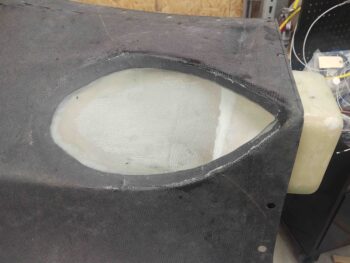
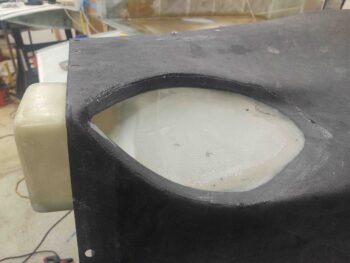
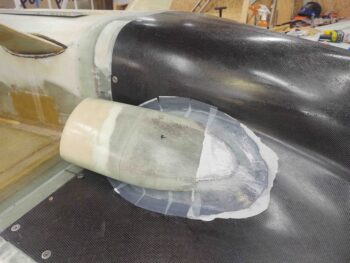
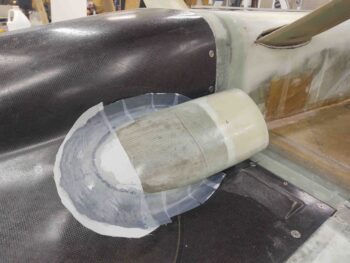
Here’s a shot from the front side of the pour foam form, as well as a pic after I removed it.

As I go about the business of dialing in the intersection between bottom cowling and aft bottom fuselage/firewall/hell hole, I’ll also shape the pour foam to create ramps that converge with the inner walls of the respective air scoops.  After which I’ll glass the bare foam to finish off the initial prep of these armpit air intake scoops.


Chapter 23 – Armpit scoops joined

This morning, before I left out for a quick overnight break, I pulled the peel ply on the last external seam 2-ply BID layups on the second armpit air intake scoop.

I then spent about 20 minutes cleaning up the edges and sanding down any spots missed by the peel ply.

I’m very pleased with how these armpit intake scoops came out, and the joints are pretty darn clean.

I still need to add pour foam to fill in the inside lips and create ramps for the air to enter into the scoops as clean and undisturbed as possible.  I’ll do that when I get back.

Another task in the books… of course many more to do!

Chapter 23 – Assembly required!

I wanted to get some glass curing ASAP this morning, so I started off by trimming and mating the two halves of the #2 armpit air intake scoop.

Here’s a shot of the inside of the second scoop, ready to be joined together initially by internal 1-ply BID tapes.

Here we have the inside of #2 armpit intake scoop glassed with 1-ply BID tapes, and the first armpit intake scoop glassed on the outside mating edges with 2 plies of BID. Both are peel plied and I set them aside to cure.

I then got to work on the original plans lower cowling 5-ply BID mounting flanges that I laid up yesterday.

I started by pulling the wood forms out from underneath the layups.

And then pulling the peel ply off the inside of the layups.

I then marked a cut line on each flange at 1.6″ from the face of the CS spar.

And trimmed the flanges with my Fein saw.  I then quickly hit the edges with a sanding block to clean them up.

A few hours later I pulled the peel ply and cleaned up armpit intake #1, which looks great.

I also pulled the peel ply from the internal layups on armpit intake #2, and then laid up 2-ply BID tapes on the external seams and left it cure overnight.  I of course peel plied these layups.

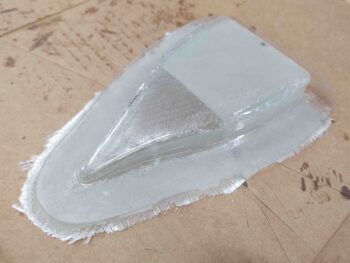
Another shot of the glassed armpit intake scoops.

Tomorrow I’ll be heading out of town for a quick overnight trip, so I won’t have hardly any plane building going on this weekend.

Chapter 23 – Bottom cowl install

In my quest to install the Mike Melvill designed lower carbon fiber cowling, I need to emulate his process as to how he installed his cowlings.  Just as I had to extend the bottom of my firewall down 4 inches to mimic Mike Melvill’s original engine-cooling NACA scoop (which he filled in and glassed over) depth, I have to first create the original plans version cowling lips to then modify to add on the “new” cowlings…. again, in the same manner Mike Melvill did.

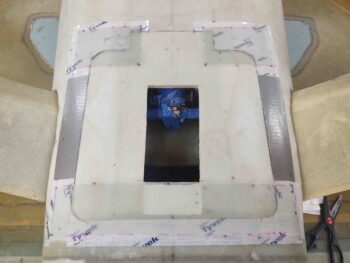
Step 1 of my roughly 10-step lower cowling install is to create the 1.6″ original cowling lips on the aft edge of the inboard strake/CS spar.  As a point of note, in support of my decision to move forward with the lower cowling install, this 5-ply BID layup is of course way easier to do with the bird inverted than it is upright.

I cut two 2x pieces of wood to length and wedged them between the inboard wing edge and the edge of the firewall. I then taped the sides and bottom edges to ensure they were nice and secure.  I then taped the top edge to use as a mold release for the glass.

This flange will be what was the original lip that the front edge of the cowling would slide up under and then be secured by screws.  CAMLOCs were not allowed along the front edge of the upper and lower cowling per the original design since you couldn’t secure the CAMLOCs to the cowling.  Sides and aft were fine to use CAMLOCs since the cowling surface was the external surface, and not slid up under another flange.

Since I will be adding a second flange from underneath (as situated) which will make up Mike Melvill’s mod to this original lip, I added a strip of 1.5″ peel ply to the top surface of the 2x glass support/mold.

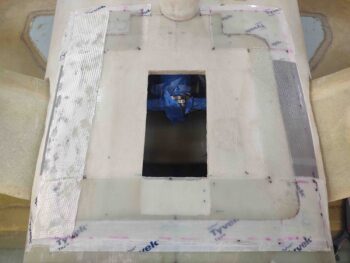
I then cut and prepregged 5 plies of BID. Unlike the plans which has a simple 2″ overlap onto the CS spar, I stepped my plies so that each ply decreased in front-to-back depth by 0.3″.  Nothing huge, but I just figured this stepped glass would provide a smoother transition when I finish the bottom strake.

I then wetted out the 5-ply prepreg and laid it up.  I then peel plied the layup.

I then cut and prepregged the BID for the other side.


Jumping ahead a few hours, after a good initial cure (I used fast hardener) I pulled the top peel ply off the layups.  I also pulled the lip up just enough to separate the glass/bottom peel ply from the taped 2x piece on each side.  I still left the wood shelf forms in place overnight however just to ensure these overhanging glass lips were supported during an overnight cure.

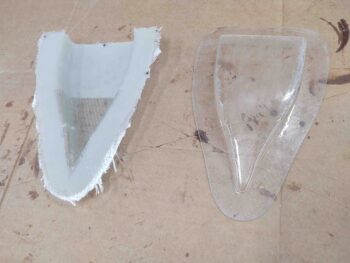
After I finished the original layups above I got to work on the Berkut-style armpit air intakes.  These came from Feather Light (now Aero Composites) in separate pieces, that although not entirely egregious, did need some work to mate up decently enough before glassing together.

I first started by sanding down all the surfaces on these air intake scoops.

And then a quick shot of how they’ll look once combined together into one piece.

I was able to get the first armpit intake scoop joined together in the correct configuration, secured by duct tape, to allow me to glass a strip of BID in each corner along the inside joint.  I used about a 1.5″ wide BID tape to provide a 3/4″ overlap onto each surface.

Here’s another shot of the internal glass mating of the first of two armpit air intake scoop.

It was getting late and there’s quite a bit of fine trimming and fiddling around to get these armpit intake scoop halves aligned, so I’ll press forward with the other side tomorrow.

Tomorrow I also plan on pressing forward with my other lower engine cowling install tasks.


Chapter 23 – Course Deviation

Ok, folks . . . time for a chat. No pics.

After a lot of thought, research and assessing what we would call in military planning as COAs, or courses of actions, today I came to the hard realization that I need to install the lower engine cowling.

The reason why I had decided not to go with my original plan to install the lower engine cowling when the bird was flipped upside down was in part what the plans stated, what other builders had done, and what conventional wisdom pointed to . . . and that was that the cowling should be installed with the engine mounted in place.  Makes total sense.

But at this juncture I find myself in the “what comes first?” or proverbial chicken-vs-egg argument.

I don’t feel right in proceeding with the glassing of the lower aft fuselage/Hell Hole with an unquantified variable out there: the bottom cowling interface.  To go back and have to do rework of the lower aft fuselage once the plane is back upright, defeats the true purpose of doing it now while the fuselage is inverted.

If I am to define my problem, the two antagonists are 1) the lower aft fuselage needing to be reworked once the plane is upright and the bottom cowl gets installed, or 2) the bottom cowling isn’t aligned perfectly with the engine, specifically the flywheel and prop spinner flow guide.

Antagonist #1 could end up being a royal PITA to have to deal with later, once the fuselage is back upright, and could very well actually be a big frustration in getting the bottom cowling mounted.

Antagonist #2 seems the least sinister of the two.  If I align the bottom cowling centered on the fuselage centerline, then how far off do I really expect my engine to be one way or the other?  Not much at all.  And I do have the ability, although not desirable, to trim away or rework the bottom cowl once the plane is flipped back upright.  Even at that point the bottom cowl install would be virtually completed, as well as the bottom aft fuselage/Hell Hole, bottom fuselage-to-bottom cowling interface, and the RAM air scoop install… all dialed in to each other with good tolerances.

Thus, at this point I see no other option than to focus my immediate efforts on getting the lower engine cowling installed as I also press forward with the final configuration of the aft bottom fuselage/Hell Hole completion.

Chapter 24 – Baking bread?!

That’s what it quite often seems like to me when using pour foam: fresh baked bread.

Today I started off by creating a form and then pouring pour foam to add strip #4 to the left side (right as situated) of the current Hell Hole opening.

I measured out the required size for the ply of BID I would need, then cut it and put it in plastic to pre-preg it.

After shaping and leveling the outer surface with the surrounding foam, I then laid up the 1-ply pre-pregged BID on the inside of this new foam strip #4.  Of course the BID overlapped onto the surrounding BID from previous layups.

I then peel plied the layup and left it to cure.

A bit later I did pretty much the same thing for Hell Hole foam strip #5, which is the last of these pour foam and glass strips.


After shaping and leveling the outer surface, I then laid up the ply of BID on the inside of this last strip. Of course I peel plied it as well.

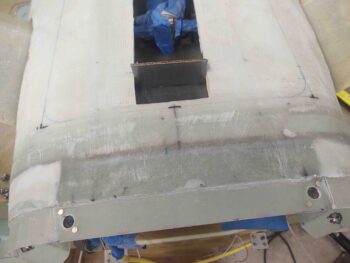
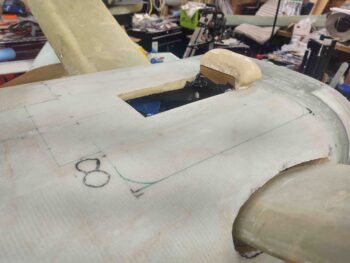
From here on out the emphasis for the aft bottom fuselage and Hell Hole cover will be the shaping and blending of the outer foam surface to meld in with the existing fuselage sides and bottom surface.  In addition, I’ll be focusing on fitting and mounting the RAM air intake scoop.

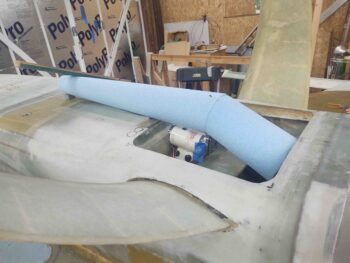
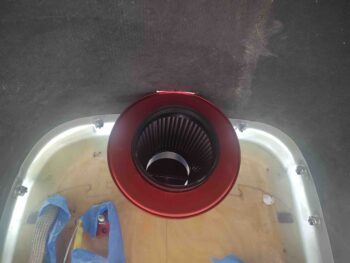
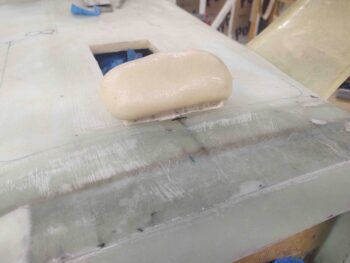
Which I spent a good hour and a half carving and shaping out of a big block of wing foam.  A huge thanks goes to Dave Berenholtz here, who was kind enough to share the math on his RAM air scoop, allowing me to create this with much less brain power required on my part!

I’ll be doing some heavy duty design and process flow planning over the next day or so to ensure I get this RAM air scoop integrated into the Hell Hole cover in as optimized of a way as possible.

Chapter 24 – More Hell Hole fill

Today was a short work day since I had some personal stuff I needed to take care of.  However, I was still able to get another strip of foam added to the Hell Hole cover/floor.

This strip of foam, about 2.5″ wide, filled in right behind the previous one at the front side of the Hell Hole. I set up my dam/form just as I did before, even with the requisite clamps.

I then whipped up some pour foam and poured it into this next section of Hell Hole cover/floor.

A bit later I pulled the form off.

I shaped the outer surface of the freshly inlaid pour foam section to match the surrounding level of the existing foam, and then prepped the interior surface for glass.

I laid up a ply of BID overlapping about an inch on all sides, again on the inside surface.  I then peel plied the layup.

I’m thinking that tomorrow I should be able to finish the repetitive task of pour foam and glass and move on to constructing the RAM air scoop.

Chapter 24 – Filling Hell Hole

Today was all about refining the aft bottom fuselage and Hell Hole cover plan, and then filling in the parts of the remaining opening between the two Hell Hole side fills that covered the bottom surfaces of the main gear.

The goal here is to fill in a good majority of the Hell Hole cover, or floor, in small sections that can be somewhat easily and manageably glassed.  The first strip was along the aft edge of the lower fuselage where the Hole Hell arguably officially starts.

I made up a duct-taped-covered cardboard dam/form/mold and secured it in place.  The clamps on each side are pressing against wood strips that keep each end of the flat mold piece pressed tightly against the existing Hell Hole floor.

I then whipped up a batch of pour foam and poured it into the form.

Here’s another shot of the quick-curing pour foam.

I had assistance today from my beautiful helper, Jessica —in her shop debut— as she very adeptly cut, cheese-grated and leveled the freshly inlaid pour foam to match the existing sides.

Here’s the final result from Jess’s handiwork… very nice.

I then walked Jess through her first fiberglass layup as we got the front edge of the inside Hell Hole to aft fuselage edge glassed.

Jess then helped me make up the form on the aft side of the Hell Hole opening, on the front side of the firewall, with a strip about 2.5″ wide.  She whipped up her first batch of pour foam and did an excellent job filling in yet another section of the Hell Hole cover/ floor.

Although I didn’t get any pics, a bit later I then removed the excess foam off this last pour and shaped/leveled it to match the foam on each side.  I then glassed the inside surface with a ply of BID overlapping onto each side and of course also onto the firewall.  All the layups were peel plied on the Hell Hole floor surface (foam) as much as possible.

Tomorrow I’ll press forward with filling strips of the remaining Hell Hole opening in and then glassing them on the inside.