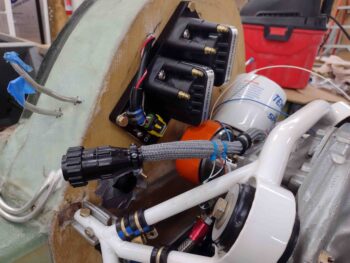
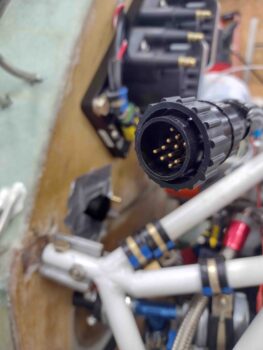
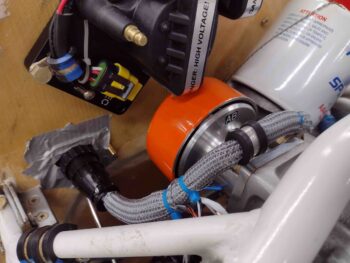
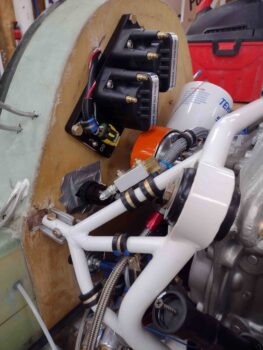
Chapter 23 – Throttle Cable Bracket

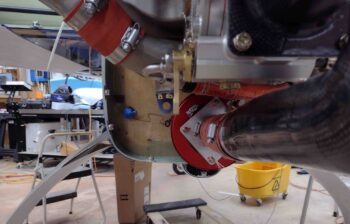
As I mentioned yesterday, today was a short work day since I helped out my friends for a few hours with some home mechanical stuff.  Between that, a Friday evening out, and problematic 3D prints of the throttle cable bracket mockup, I got even less done than I had planned on.

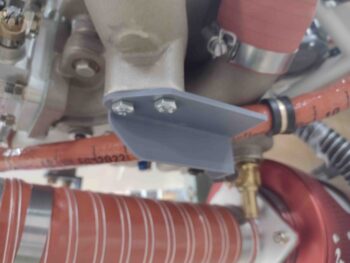
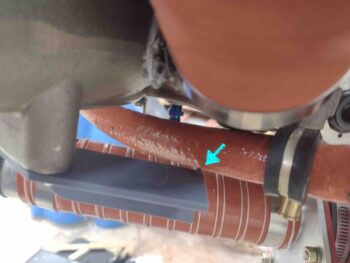
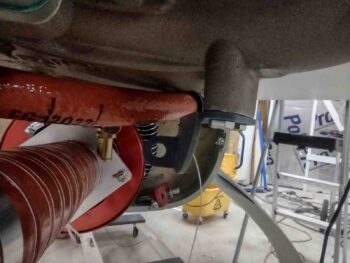
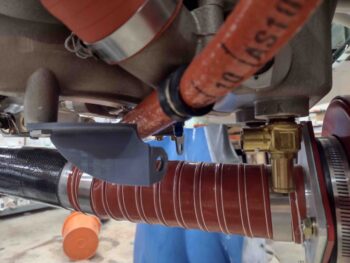
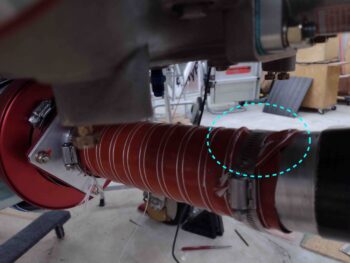
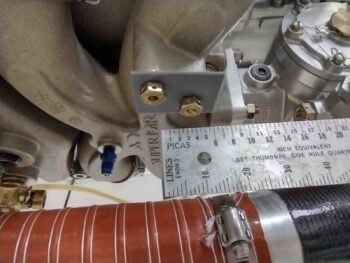
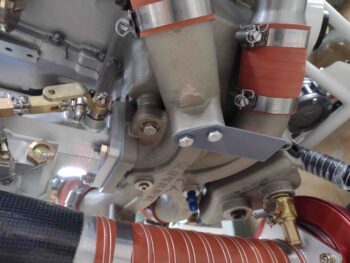
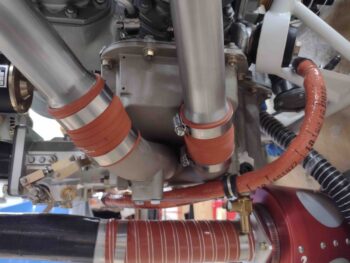
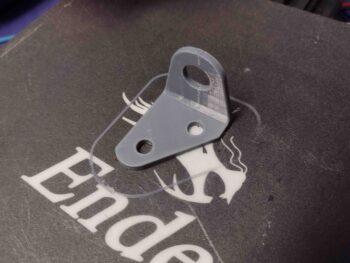
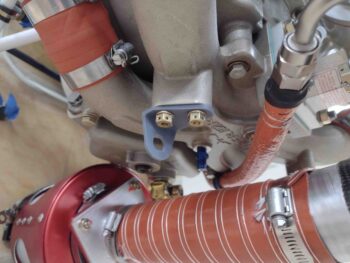
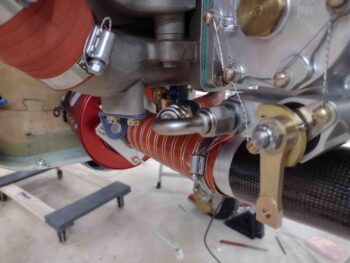
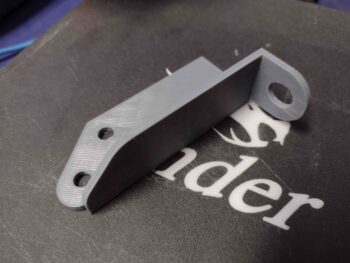
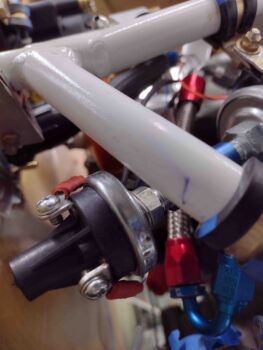
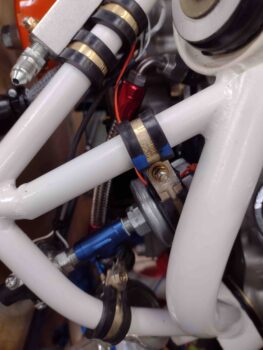
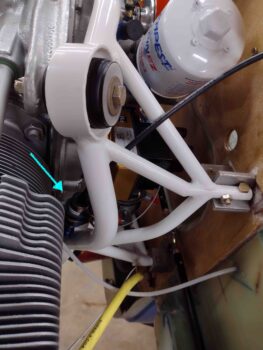
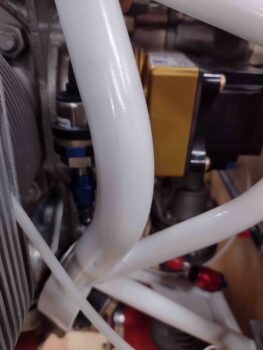
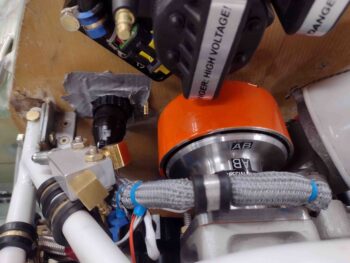
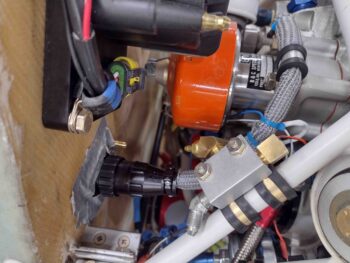
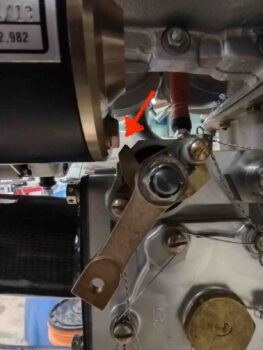
The tale of my throttle cable bracket variants reminds of Goldilocks and the 3 bears: #1 being “too small” with the first version too close to the -6 fuel hose.  Plus the actual cable bracket mounting tab was vertical whereas it needs to be slightly angled up towards the aft side.

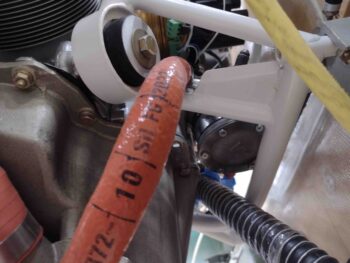
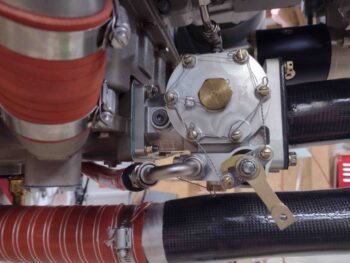
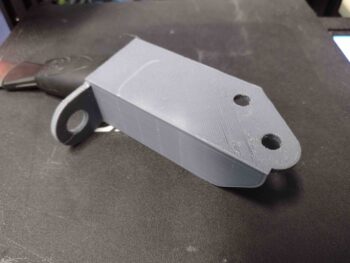
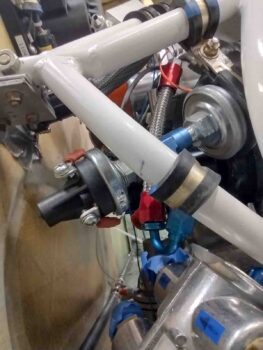
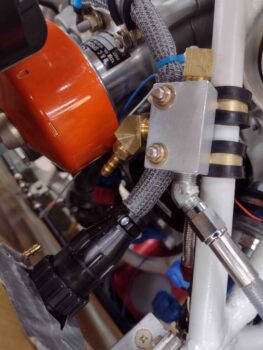
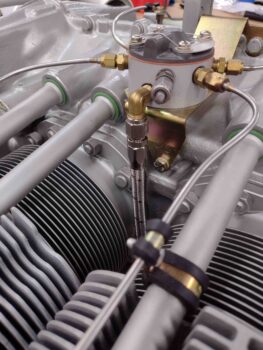
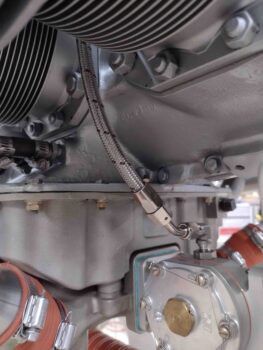
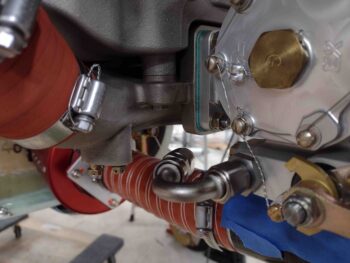
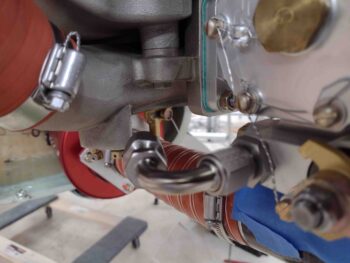
Here’s a couple more shots of the Version 1 throttle cable bracket that finished 3D printing  late last night.  Again, note the very slim clearance with the -6 fuel hose.

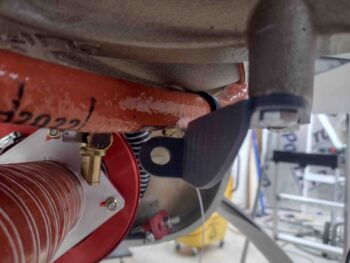
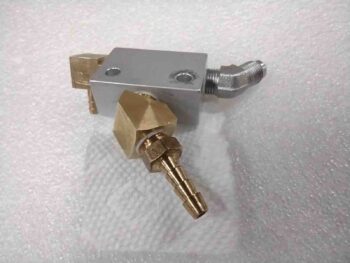
Well, continuing on with the Goldilocks theme: #2 was too big.  That is the notched gap between the forward end of throttle cable bracket was a bit more than needed.

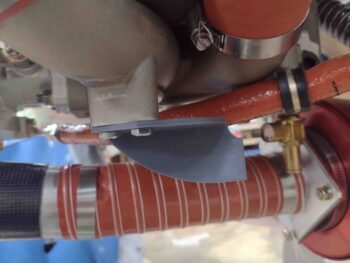
With the actual cable mounting tab just a hair lower than it needs to be, although on this version I angled it up facing aft just a bit.  Still, the tab needed just a hair more angle upwards.

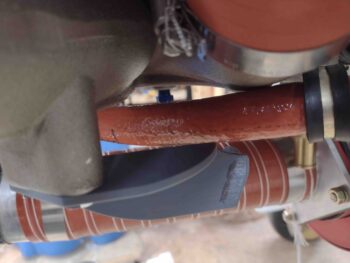
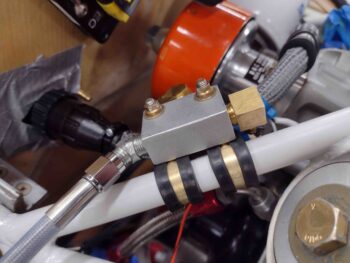
Version 3 is the closest to Goldilocks’ “just right”: the clearance with the hose isn’t too crazy big, although I will make it just a hair wider.

For the angle of the cable mount tab itself I kicked the bottom of it aft 1/8″.  This actually resulted in too sharp of an angle so I’ll have to dial that back in.

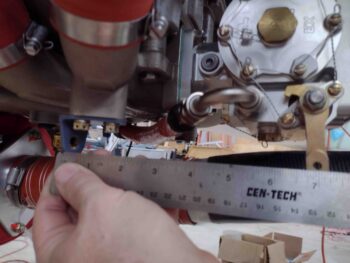
Also, in increasing the angle of the mounting tab on the bracket, I lost track of my dimensions and ended up about 1/8″ forward of where the tab should be to provide a 7.38″ distance to the servo throttle lever at mid-pivot.

Regardless, this exercise is all academic at this point until I get more actionable data.

For example, I can’t determine actual dimensions until I pivot the servo throttle lever down/forward at least one notch.  Having already moved the servo mixture lever, I was trying to keep from having to move the throttle lever as well.  But this cable bracket mockup showed me that that the servo throttle lever must be repositioned.  That in turn will drive changes in the dimensions for the bracket —a chicken vs egg endeavor— albeit I’m close enough in the ballpark with this bracket mockup to determine that the throttle lever must move forward.

That all being said, I still need to determine my actual cable rod end travel as well.  Which again will drive dimensions on the throttle cable bracket. That will happen after at least one more discussion with Frank at Push-Pull cables on Monday.

For now though, I have enough information to know how to construct this thing and what material to order: I’ve determined that I’ll be using 1/8″ 2024 aluminum angle for both throttle and mixture cable brackets.

The actual cable mounting through-hole tab on the throttle cable bracket will be simply a piece of cut & drilled aluminum angle bolted (actually CS screws) to the main bracket structure.  Simple and EZ-PZ.  Plus it will provide an easier determination of getting the cable and end rod angles correct since I can thread the cable into the bracket’s cable tab BEFORE mounting it to the bracket structure, then just mark the cable/tab alignment on the bracket structure, disassemble, drill and CS screw the cable mounting tab to the bracket structure to finish it off.

My main goal tomorrow will be to ascertain the major lengths of the throttle and mixture cables, which I’ll then fine tune once I talk to Push-Pull.  To find these lengths I’ll of course have to determine where the cables will transit the firewall, drill those holes, and also assess cable routes from engine to throttle quadrant.

Chapter 23 – Dodged a bullet!

I quite often finalize these blog posts and proofread them the next morning from the day before’s activities, and then make up a task list for the day on what I would like to get accomplished… quite often a 2 cup of coffee process.

It was at the tail end of my morning routine when I got a call from Frank at California Push-Pull Cables, in Chico, California.  I conveyed to him the situ with how my fuel injection servo is configured as compared to the industry’s specific comms regarding pull vs push directions for installing these cables.  As I half expected, with the amount of force we’re talking about here on the Silver Hawk FI servo, there’s very little issue with reversing how it would optimally be installed.

In short, I got a green light to proceed with my current configuration from someone who is very knowledgeable in the industry, and I’ll add the go-to contact on cables for our RV-building cousins.  We further discussed cables types, styles and the process to work out my ordering a set of cables.

I’m not surprised with what Frank said, and again, I half expected it.  I debated on even mentioning it in yesterday’s blog write-up, but had I known of the requirement for emphasizing pull over push up front I could have at least prioritized that into my own configuration however best possible.  Anybody else reading this blog now hopefully has a better understanding of this little important detail as well.

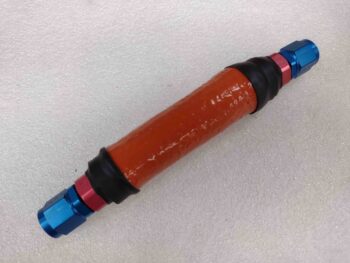
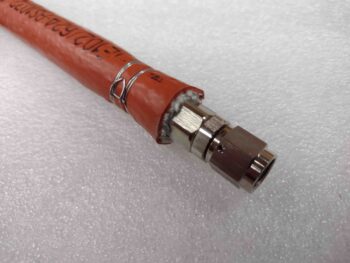
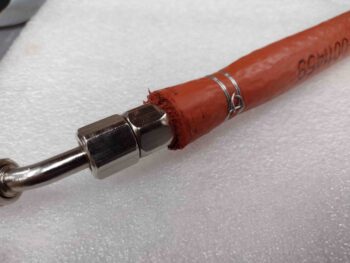
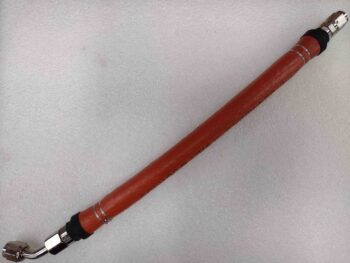
With that bit of good news in my back pocket, I proceeded to fire sleeve my -6 fuel hose by using my Clamptite tool to secure each end with safety wire.  I then slathered up each opening edge with red RTV and covered it with a narrow piece of black heat shrink.

If you’re wondering why I didn’t pressure test it first, that is what is described with a highly technical term in the aircraft homebuilding world: brain fart.  I realized as I was gooping up the first end with red RTV that I totally spaced out and forgot to pressure test the hose first before the fire sleeve.  Much easier to do without the sleeve in place.

In my lack of experience with fire sleeve I hadn’t noticed before that it actually stretches.  I had to go a size larger than I would normally when ordering this -6 sleeve since they were out of the “correct” size.  I now realize I probably could have comfortably gone a size lower and still been totally fine… the things you learn on these builds.

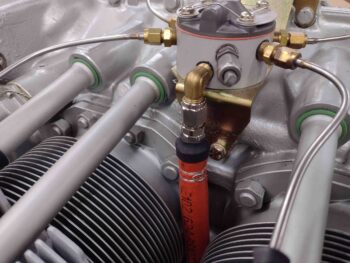
A very practical example of this was that instead of going through the hassle of pulling the blue fire sleeve off my firewall to fuel pump -6 fuel line, I simply added the orange fire sleeve right over top of the blue and it stretched a bit to cover it just fine.  It was nice and tight so I just added a couple more rings of heat shrink, one on each end, and called it good.  Upgrade complete.

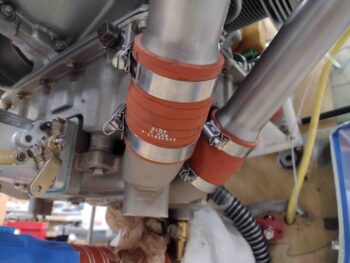
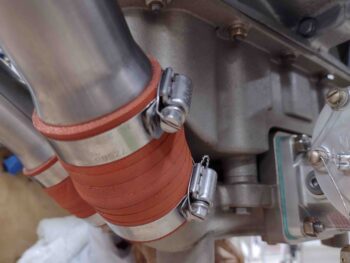
As I was flipping the fuel injection servo back to its original configuration, I trimmed the SCEET tubing shorter by about a ring (1/4″ to 3/8″) to get it positioned forward on the air induction mounting tube flange.  This resulted in what I hoped in that it let me pull the tubing a little tighter and allowed the tubing to flex on the mounting tube itself rather than just forward of the aluminum tube where it was forcing a slight crease in the SCEET tubing… the few degrees difference in my angle choice seems to be negated by mounting the SCEET tubing comparatively right at the edge of the aluminum tubing vs having the SCEET cover the entire aluminum tube and nearly touch the carbon fiber.

Just a point of note really, but anything that cleans up the air flow is good.

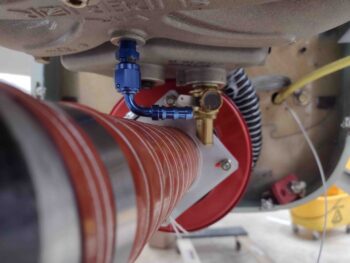
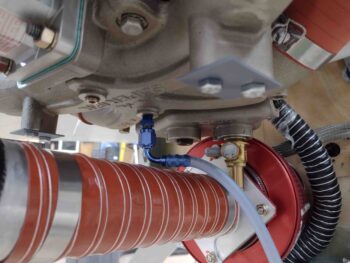
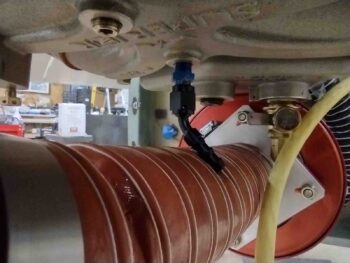
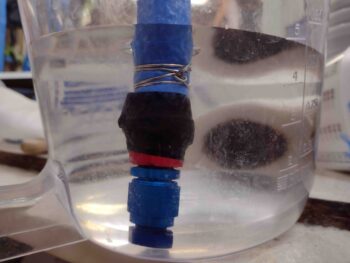
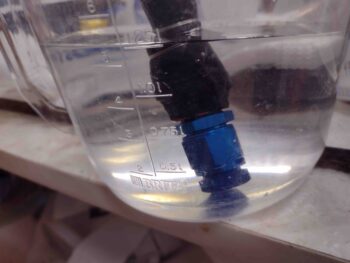
I had another component delivered today: my 90º -4 AN barbed fitting for the Sniffle Valve.  I tried it out to check the clearance with the underlying SCEET tubing and it looks great.  I changed the Sniffle Valve install because I wanted my configuration so that the Sniffle Valve was both vertical and the first component installed to be closest to the point of vacuum.

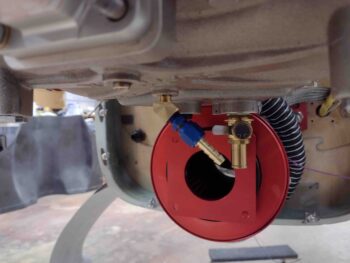
I’m confident gravity will still play its part even with this 90º fitting installed.  I installed the fuel and oil resistant drain line to check out its fit on the barb… which required a bit of Simple Green to allow me to get the tubing on the barb.

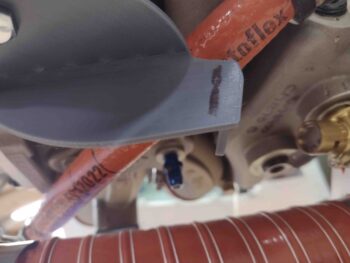
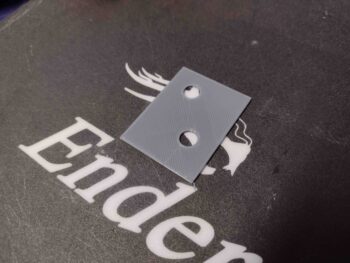
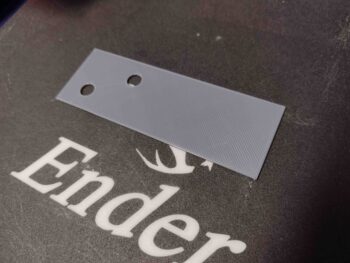
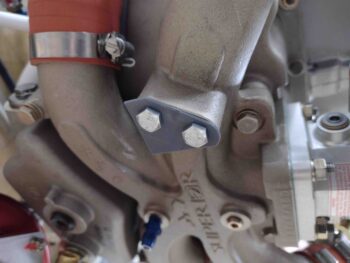
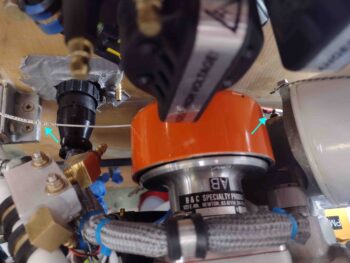
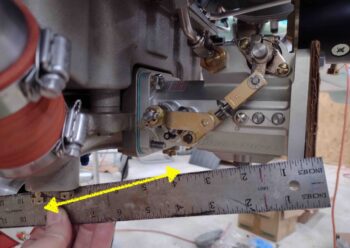
Notice the gray rectangular flat tabs bolted to the throttle and mixture cable mounting bosses on the underside of the cold air plenum in the pic above?  These are tabs I 3D printed to check/verify the angle of the bolts on these bosses to allow for mounting the throttle and mixture cable brackets parallel to the aircraft centerline, or more specifically parallel to the servo throttle and mixture levers.

The scant literature I have on the Superior Cold Air Induction Plenum doesn’t note the bolt angles, and I guessed them to be at 30º.  I was just a few degrees off in comparison to the throttle and mixture levers… note the clamped ruler to the mixture lever (not shown) in the pic below.  It took a couple rounds for me to dial in the correct bolt angle for the test coupons to sit parallel when mounted to the plenum bosses.

Once I got the initial rectangular bolt angle and spacing checking coupon aligned parallel, I focused on the travel distance of the cable end rod.  I’ll need to verify my figures with Frank at Push-Pull, but for the mixture lever I calculated the rod end travel distance of 2.75″, and 3″ for the throttle lever.

In turn, these travel numbers translate into 7″ from cable attach point to the center of the lever travel on the mixture cable/lever and 7.38″ on the throttle cable/lever.  With these dimensions in hand, I then made up a throttle-side test coupon measuring 3.75″ long.  This length places the forward edge (opposite bolt holes) at 7.38″ from the hole center of the servo throttle lever at mid travel.

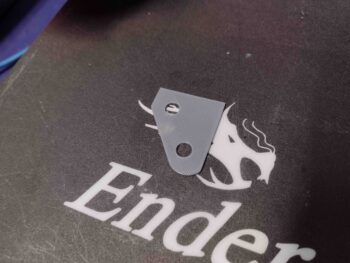
Back in Fusion 360 CAD I also trimmed down what will become the mounting bracket to match the bottom of the plenum boss to minimize excess mounting bracket material, and thus minimize weight.  I’ll note that at this point these test coupons were 0.05″ thick and took about 10 minutes each to 3D print.

Here I’m checking the shape of the 3D printed test coupon that will become the 3D model for each respective throttle and mixture cable bracket.  You can see there is a very slight overhang of the boss which I added back about 0.01″ to the edge on the next coupon.

I also transferred the shape of the plenum boss to the right side throttle cable bracket test coupon and test fitted it in place.

I then modeled up the actual left side mixture cable bracket in Fusion 360 CAD and 3D printed it.  As it was printing I went ahead and installed the freshly fire-sleeved -6 fuel hose that feeds the fuel injection servo from the mechanical fuel pump.  Currently I have one Adel clamp securing the hose in place, and may squeeze in another one later.

My biggest concern that I resolved —again, after all these years— is the clearance between this hose and the engine mount to allow good hose attachment to the fuel pump.

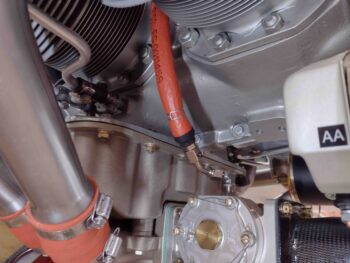
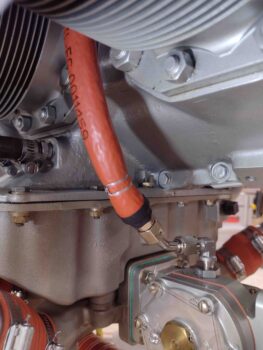
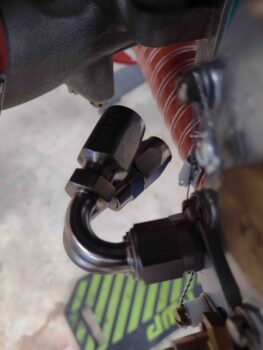
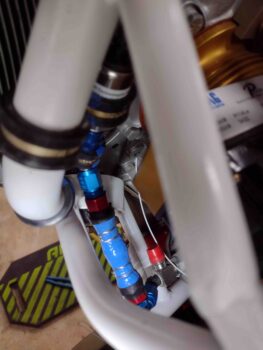
Again, pic #1 is a closer look at the clearance between this -6 fuel hose and the engine mount… very acceptable!  Pic #2 shows the “120º” hose end fitting attach at the fuel injection servo.  Actually, I’m very thankful for this odd duck 120º fitting since it allowed the best clearance of the four 120º hose ends that I tried out.

With the test install of the -6 fuel hose a success, I then went back into the house to retrieve my mixture cable mounting bracket 3D printed mockup.

It fits like a rock star so far . . .

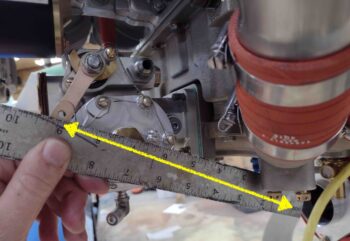
And 7″ from mounting bracket mid-point to the center of the servo mixture lever arm at mid travel (my hand slipped a hair while I was grabbing yet another fuzzy pic… this camera sucks).

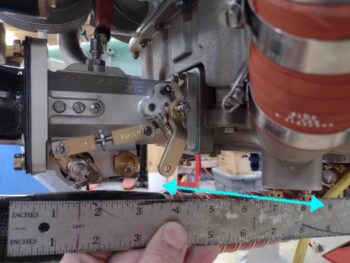
Here we have the lateral left-right alignment to get the mixture cable mounted as straight on as possible with the fuel servo mixture lever attach point.

And a more downward shot of the mixture cable mounting bracket, -6 fuel line and servo mixture lever.  Since the mixture bracket is fairly small, I’ll most likely make it out of 1/8″ 2024 aluminum angle.

As I was loading up the pics and prepping this post, “Bob” was whirring away making up the initial version of what will be the right side throttle cable bracket.  Since this guy is cantilevered out a bit and requires a 90º right angled flange for the actual cable mount tab, I suspect it will be either steel or multiple bolted/riveted pieces of aluminum.  Clearly the construction of this bracket will be more entailed than the mixture bracket.

Ok, yet another long day and late night, so time to pack it in.  Tomorrow I’m helping out some friends with some handyman tasks so it will be a shortened airplane building day.

Chapter 22/23 – Here we go again…

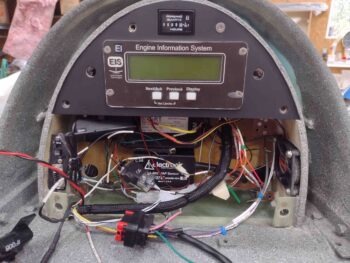
The good news is that I got the D-Deck/GIB headrest engine components wiring pretty much completely finished, including wrangling all the wires so that they are organized and look fairly decent.
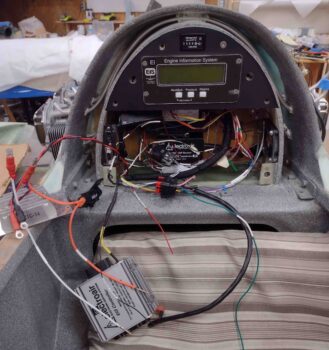
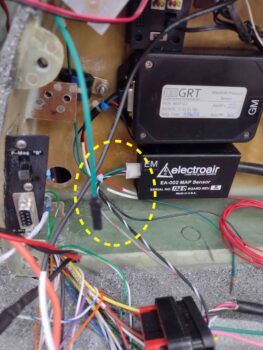
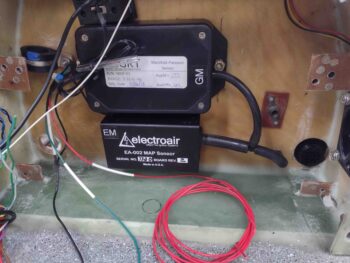
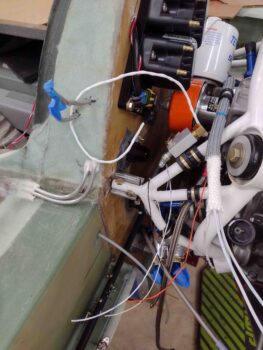
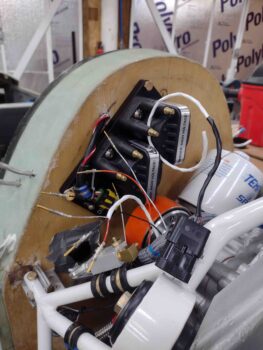
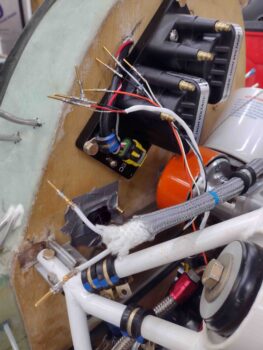
Here’s a closer shot… the only wires remaining that need to be hooked up are the 5 wires from the Electroair coil pack that sits on the upper firewall.  These wires can’t be finalized until after the firewall covering is put into place.
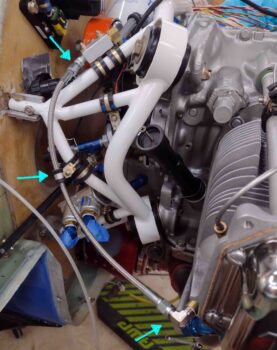
I received a couple of order shipments from Summit Racing, one had the 14″ -3 AN stainless steel hose to connect the MAP Manifold block to the #3 cylinder.  After testing the fit and confirming the hose length was good, I installed back-to-back Adel clamps to secure the hose to the engine mount.

I then gooped up the threads on the 90º -3 AN tube x 1/8″ NPT fitting and torqued it into place on the #3 cylinder.  Finally, I secured the hose ends to each fitting, torquing them to spec as well.
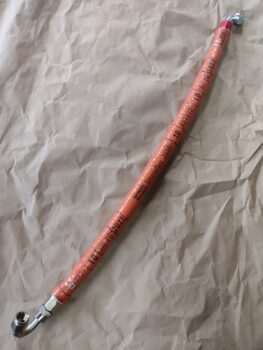
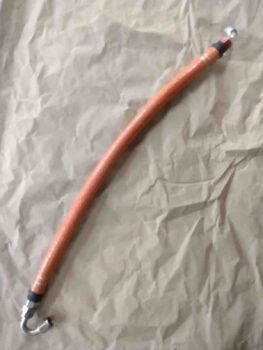
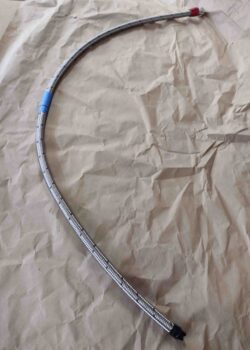
As I’m sure you’ve obviously seen, I roll my own fuel and oil hoses… so I figured I would show how I make one of them.

After previously attaching a 90º hose end to a length of -6 stainless steel hose, I then attached it to the fuel pump.  I then ran it through an Adel clamp and to the fuel servo to determine a good length and then marked the hose for cutting.  Pic #2 shows the hose cut to length using a Dremel tool with a cutoff disk.
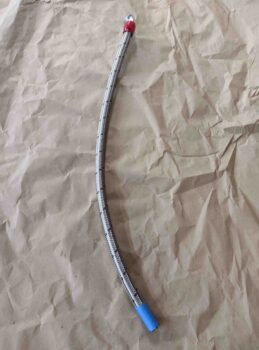
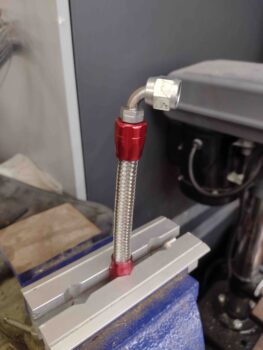
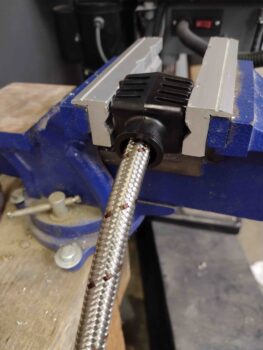
I have a nifty Kool Tools device that allows me to simply install the hose end cap into the tool block and then secure the block in the vise.  I then simply insert and twist the cut hose end with a good little bit of pressure into the captured hose end cap and within 10 seconds it’s seated and ready for the next step.
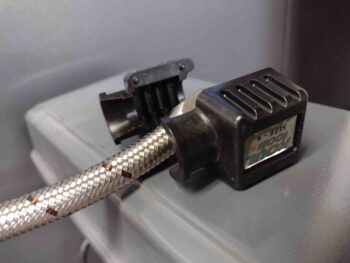
Here’s the Kool Tools block apart with the seated hose into the hose end cap.  This tool is obviously very handy and I’ll say the only glaring issue with it is that I DON’T have one for the -4 size hoses, so I have to hand-jam all those hoses into the hose end caps (read: punctured fingers nearly every time!).
On a straight hose end fitting normally I’ll mount the threaded barb in the vise facing out and press the hose end cap & hose firmly onto the threaded hose end to start the final install step. But when the hose end has a distinct curve it often won’t fit in the soft jaws made for hose end installations, so the process is completed in reverse from above.  Sometimes this is a real pain, other times —like here— it’s not too bad.
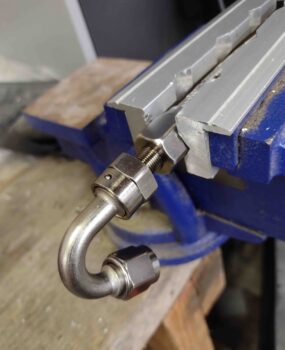
And Voila!  A new -6 fuel hose.
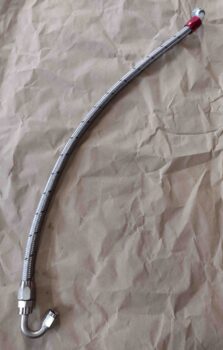
Now, the very possible irony of me showing how I made my “final” fuel hose is that it may very well not be the final fuel hose that I make.  I ran downtown to run some errands, get a haircut, and get some more short brass 4-40 screws for the GRT EIS-4000 D-Sub connectors (and to find a hex head screw to replace one of the slotted screws on the P-MAG wire plug to allow much easier install/removal with the fuel pump in the way).  Upon returning home as I awaited Jess’s arrival for dinner, I continued my research regarding the throttle and mixture cable installs.

I guess as with much in this build, there are some things that I assume (yes, I know…), simply take for face value and honestly never think about until I’m staring them in the face.  I obviously try to minimize those assumptions with as much prep and research as I can, but there are a good number of things (clearly) that fall through the cracks.  My upcoming throttle and mixture cables, and how they interface with the fuel injection servo, are unfortunately and very possibly now in this category.

What am I on about?  During my info gathering on the throttle and mixture cables, I ran across a page about 10 pages into the California Push-Pull catalog… behind all the technical info on cable nomenclature, sizes, determining install lengths, etc. which is where my focus has been both now and the cursory info I reviewed in the past.

The title of this page is “Control Cable Cautions and Warnings” and caution #5 caught my eye, specifically because my install is simply opposite of what they say to “Always” do . . .
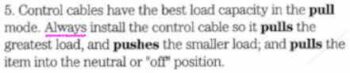
I’m not trying to be melodramatic here, but on the eve of prepping to start working my exhaust pipe issues in earnest, and having thought my fuel injection servo air induction and fuel hose routing was in the bag —and I just needed to slap in some cables to have it off the plate— I may very well be going back to square one for the proverbial third times a charm thing.

As a crosscheck, I went to Cablecraft’s website and here’s what they had to say:
Working loads should be highest in the pull direction. In the compression mode the loads need to be specified at 50% of the pull load unless using Armored Core which will yield a higher compression to tension ratio.

Yep, I totally missed this requirement.

I’ll call both California Push-Pull and Cablecraft tomorrow to see what options I have and what my play needs to be in regards to this.  Again, I’m a little in the dark here because everyone I know has the standard forward-facing servo that allows cables to come into the engine compartment, loop around from the back side so that the cables are actually facing forward and organically meeting this requirement that I’m just discovering.  With my aft-facing servo I clearly and simply don’t have the option (or the physical space) to do that type of install.

To get ahead of this I brushed off my COA 2 Powerpoint slide deck and created a new COA X to capture possible requirements and to get an idea of the workload involved in meeting this “new” requirement.  What I determined after going through this process was 2 primary tasks would have to be accomplished:

  1. The throttle quadrant would have to be converted to a reverse configuration (move pivot point to mid-lever vs current pivot point at bottom of lever).
  2. Invert the fuel injection servo 180º from it’s current installed position.

After determining WHAT would most likely need to be done, I then needed to do a recon to determine HOW (or even IF) it could be done.  I started by grabbing pics of the general axes the cable ends would need to move to actuate the servo levers.

Here we have the mixture lever on the current left side.  Note that it is situated towards the aft end of the servo and would pivot below the servo.
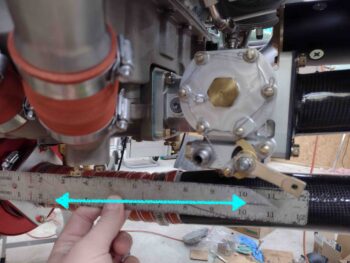
With the servo inverted, we now have the throttle lever on the left side.  Note that it is situated towards the forward end of the servo at about mid-elevation, and would also pivot below the servo.
On the right side in the current servo configuration, the throttle mixture is pretty much a mirror image as it would be on the left side… situated towards the front of the servo, mid-elevation and would pivot below the servo.
The most pronounced configuration change would be with the mixture lever on the right side: its aft position would remain the same obviously, but its pivot distance is a bit further away (not saying this is a negative, just noteworthy).

I’ll note 2 more characteristics of having the fuel injection servo installed in this position: First, I had to remove the starter in order to mount the servo, there’s that little clearance initially, and not a whole lot after mounting either (see below)… but enough (from what I can tell so far).  Second, the routing of the fuel hose to the servo will either be much more circuitous if from below, or would have to go above the cold air induction pipes… more data required for a final call on this.
Here’s a shot of the tight clearance between the fuel injection servo, specifically the mixture lever arm assembly, and the aft edge of the starter.  About 1/8″ I’d guesstimate.
While I’d of course prefer to find a solution that doesn’t send me back to square one on the servo installation, I have to admit the final look of the servo in this position is much cleaner given that the bulk of the servo sits high on the top in this configuration vs my current configuration.
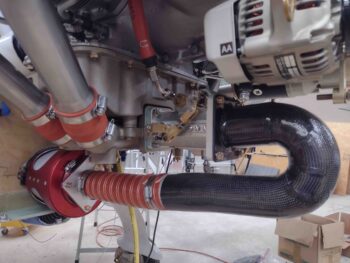
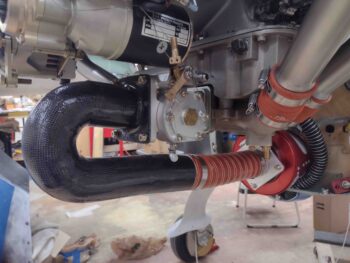
Clearly what I was checking here was if and how the inverting of the fuel injection servo would impact the fit and clearance of the air induction tube.  The fit is obviously fine, and at first swag it appears to be in the same position but I’ll need to mount the lower cowling just to ensure it has the same or better clearance.
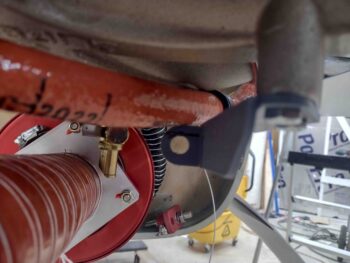
Again, another very likely curve ball I’ll need to contend with… either in more work to remedy with reconfigurations, or more money to buy either a more robust or higher end cable capable of working effectively in both the push and pull directions.  Obviously I’m not thrilled with this latest development, but will keep pressing forward and accept the inevitable time taxation that these esoteric builds seem to incur.
 

Chapter 22/23 – D-Deck wiring finished

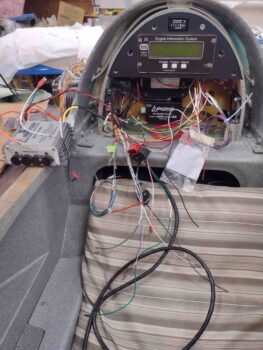
Today I finalized all the wiring for the GRT EIS-4000 and D-Deck components.  The one bit of wiring I have remaining is the Electroair coil pack which can’t be completed until it’s permanently installed to the firewall after the firewall covering is in place.

The majority tasks today consisted of verifying my wire runs from the panel to the D-Deck, then tying in the GRT EIS-4000 harness wires to these panel-originating wires.  As I did this I verified the wire labels.  I added a number of labels and relabeled wires where needed.

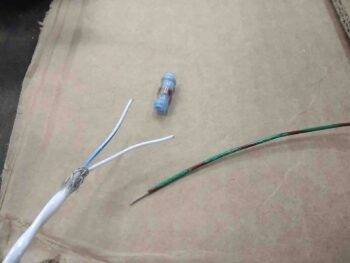
Here we have half of the RS-232 wire pair from the GRT EIS-4000 to the GRT HXr and Mini-X EFISs to display the engine info onto those displays.  Since it is a RS-232 serial wire pair, before solder splicing wire #2 I twisted the second wire with this green one.

The majority of wires I finished connecting today were for the GRT EIS-4000, either to the panel or to the P9/P10 connectors, or the GRT MAP sensor (for power), but one circuit was simply an Ancillary Power feed from the panel to the one item currently on it: the D-Deck Fan Thermal Controller.  This controller turns the D-Deck cooling and exhaust fans on at 85º F and off at 80º F.  It’s actually more of computer type component, so it has a computer style power connector.
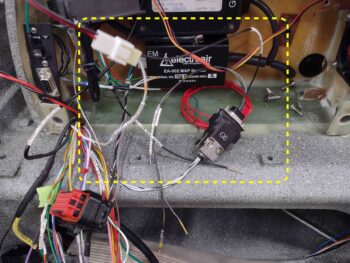
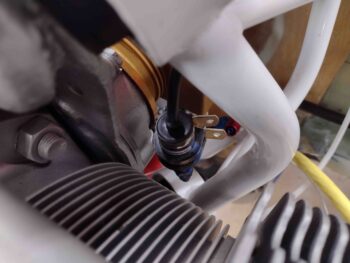
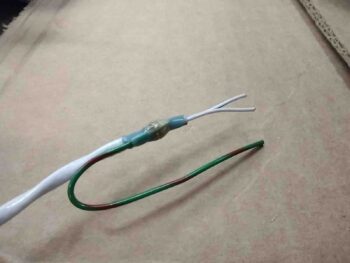
Here I’ve solder spliced on a segment of the same color 22 AWG wire (I try to maintain the same colors if possible) with a connector socket already crimped in place.
I then added a piece of heat shrink over the solder splice and covered that with my wire label.

A side note on my D-Deck wire labels: since I can pretty much see component A to component B I don’t strictly follow my wire labeling code as I do on the rest of this bird where I have a myriad of wires all running helter-skelter.

Here the Ancillary Power Wire is terminated into the Fan Thermal Controller power connector.

Of course our DC power circuits need positive (+) power and ground (-), so I made up the ground wire for the Fan Thermal Controller to plug into the connector, which I have the connector socket crimped onto one end of this wire.  The other end is also terminated with a crimped pin for the D-Deck G6 Grounding Buss, which is a 9-pin D-Sub connector.

Here we have the Fan Thermal Controller ground wire terminated into the controller’s power connector on one end, and the D-Deck G6 Ground Buss in the center of the pic.  Notice the unconnected ground wires coming from the G6 ground buss (center bottom of pic) that are terminated with a D-Sub socket for the P10 connector and a CPC socket for the P9 connector.  Also, just below the G6 ground buss is the ground wire for the MAP sensors that will be terminated into the G6 ground buss once all the D-Deck components are installed.

I accounted for literally every wire coming into the D-Deck from the panel, hell hole or elsewhere and verified that the labeling was correct.  If it wasn’t, I pulled the old label off and relabeled.  Of course any changes, updates or discrepancies I annotated on my wiring diagrams and/or connector pinout sheets. Tomorrow I’ll spend a little bit of time wrangling the wires to get them organized and looking nice, and then won’t really deal with the D-Deck components & wiring again until final engine install.

My last task of the evening was using my Clamptite tool to secure the orange fire sleeve to the FI Servo to Fuel Flow Divider (aka spider) -4 hose (left pic).  I then added red hi-temp RTV to seal the end of the fire sleeve to the hose (right pic).

I think some folks roll their hose up under itself on the end, which looks nice, although after a quick search on the web I couldn’t find any how-to’s on doing that… No worries, I just went to my ol’ standby of cleaning up the red RTV gooped up ends by covering the seam with a band of heat shrink, which is nothing really more than cosmetic.

I then reinstalled the hose to check out how it fits and looks.  Here’s the top side connection with the fuel spider.

And the bottom side connection to the FI Servo outlet fitting.

I’ll note this isn’t the final install for this hose, just a quick visual and clearance check.  Here we have a bit closer shot.

And with that, I called it a night.  Tomorrow I should receive my other 120º -6 hose end fittings and plan on making up the mechanical fuel pump to FI servo fuel feed hose.  I’ve also started the process to figure out and order my throttle and mixture cables prior to removing the engine —to finalize the forward/accessory case configuration and component installs.

Chapter 22/23 – D-Deck Engine Wiring

I’ll start off by noting that this post covers both today and yesterday.

I’ll start off my next informational tidbit with a reminder: my first angled Sniffle Valve setup —to clear the SCEET tube— used a 45º street elbow (which I stole to use on the MAP manifold), with the Sniffle Valve itself cocked at a 45º angle, then a modified brass barbed fitting secured to the Sniffle by a -4 AN nut.

I had the notion, and still do, to clean up my Sniffle Valve setup by using a -4 AN tube nut mounted directly onto the Sniffle Valve with (I hoped) a 45º angled barb to allow attaching the drain tube. But alas, the entire unit is too long and ends up just kissing the SCEET tubing that it is meant to avoid.

Not to be deterred however, in working with Summit Racing for them to send me the correct -3 AN hose for the MAP system, I added a 90º barbed fitting to the order in lieu of this 45º fitting… that I’ll then attach to/underneath the Sniffle Valve to clean things up.  I think the 90º fitting should both fit and provide a cleaner install look for the Sniffle.

I also mocked up and then cut the pre-populated (IIRC) GRT EIS-4000 wiring harness “B”, which has all the EGT and CHT wire pairs.  Each freshly cut side of these wires will terminate into the P10 connector, so I crimped sockets onto the EIS side wire ends and pins onto the motor side wire ends.  I also printed off and heat shrink labeled all the wire pairs.

I then took the CHT/EGT wire bundle out to the shop and terminated them into the aft/engine side of the P10 connector.

And zip tied all the wires in the P10 connector and threaded on the strain relief backshell. In the right pic you can see the pins inside the P10 connector.

And one final shot of the fully populated engine-firewall P10 connector.

Inside the D-Deck/GIB headrest, I am very, very close to finishing all the wiring connections for the engine electrical components.  I did a rather significant update to a number of my wiring and connector diagrams, and have only a few wires to solder and terminate to call the engine wiring complete (again, there are 3 wire/cables that need final install on the bottom of the engine as well).  Of course final wiring won’t occur until after the firewall covering is in place and after all the aircraft surfaces micro-finish and painting is complete.

Speaking of the engine electrical components, I spoke with Brad at E-MAG Air regarding my P-MAG to confirm my unit is up to date.  Well, the firmware needs to be Version 40 or higher and mine is Version 37.  So when I pull the engine off the firewall here in the next few days, I’ll be pulling the P-MAG to send back to E-MAG Air for them to flash the firmware to the latest they have.  Actually a good deal to have it done within —hopefully— just a few months prior to first flight.

I also pressure tested a few more engine hoses, with the firewall to fuel pump -6 fuel line (left) passing muster, as well as the oil heat oil return line (right) doing fine as well.  I also pressured tested the longer oil heat oil feed line (from oil sump to oil heat oil pump) but don’t have a pic of that one… it passed as well.

You may have noticed that I wrap the seam of the fire sleeve of each hose with electrical tape.  This is simply to keep the lining of the fire sleeve from getting wet.

Tomorrow I plan on finalizing all the component wiring inside the D-Deck to be as prepped as able for engine install.  I have not prioritized finalizing the EGT and/or CHT installs until after I get the exhaust pipe clearance issues resolved (coming soon).  Also tomorrow I plan on finishing up as much as possible on the engine fuel hoses.

Chapter 22/23 – P-MAG & Pressure Tests

Today I started off my first round of adventures by knocking out the wiring of the P-MAG, starting off with the shielded 2-wire cable that goes to both an ON-ON slide switch (to choose either the “A” or “B” power curve) and a 9-pin D-Sub connector that allows hooking up a serial cable and port to adjust different parameters through the E-MAG Interactive Control and Display, or “EICAD”.

Again, since I originally didn’t have a connector designed on the firewall (well, I did at the VERY beginning but then went away from the idea… now obviously full circle back to it) I just made one long cable.  Today I cut that cable and added a solder pigtail to each new cut end… the P-MAG side shown here where I used a Raychem solder sleeve.

The serial data/power curve ground pigtail is connected to the P-MAG unit’s ground wire, which in turn is grounded to the engine side ground bolt.  So I made up this ground wire with a ring terminal for a 5/16″ bolt as well and soldered the two ground wires together.

I also soldered/tinned the ends of all the wires for attaching to the P-MAG terminal block.

On the freshly cut serial data/power curve cable inside the headrest I soldered in a ground pigtail by hand and simply covered it with heat shrink.  Since the firewall (forward) side of the P10 connector has sockets, I stripped the ends of these wires and crimped those on.

I then spent a good bit of time removing the P-MAG wiring terminal block and populating all the wires into place.  When my engine was built I had them install the P-MAG with the wire plugs facing down, which made sense at the time, but the access down there is not great with the mechanical fuel pump in the way of the inboard terminal block/plug anchor screw.  I plan on swapping that inboard anchor screw out for a hex head vs slotted since a hex wrench would be infinitely easier to use to get that screw in and out for future maintenance, etc.

I’ll note that I could rotate the P-MAG 90º or even 180º but I still like the wiring down on the bottom.  Clearly I don’t plan on wiring up this unit more than once and/or messing with the wiring much once the bird is flying.

I added the yellow wire that sends out the tach signal to the GRT EIS-4000 and also connected up the 18AWG black ground wire.  Finally, I routed and connected up the blue (PMAG 12V+ power) and white (P-MAG “P-Lead” Kill Switch) wires that come over from the P9 connector.  Add the serial data power curve/EICAD wire pair and that’s 6 connections total for the P-MAG wiring.

Note that I also went ahead and disconnected the other 3 lead coil plug (right side of pic partially obscured) at this time since it needs to be disconnected during the initial P-MAG setup process for safety reasons.

I terminated all the ends of the required P-MAG wires with D-Sub pins and installed them into the P10 connector (except clearly the blue and white wires in P9).

I also crimped pins and terminated the 3 fuel pressure sensor and 1 oil temp sensor wires into the P10 connector as well.  This leaves only 4 pairs (8 wires) for CHT and 4 pairs (8 wires) for EGT to install and I’m finished with all the engine/connector wiring except for 3 wires down below: the big yellow starter cable and the alternator’s B & F leads.

Clearly I need to wait until after the firewall covering is in place to connect these wires and the GIB headrest side of all these wires/connectors as well, including the Electroair coil pack wiring.

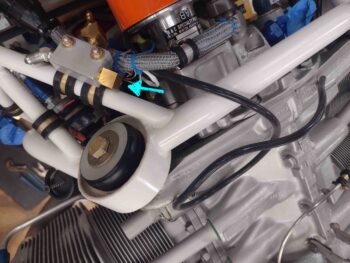
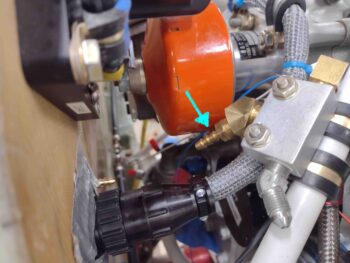
Still on the P-MAG: I connected the included 1/8″ ID MAP sensor hose to the nipple on the face of the P-MAG and routed the hose over to near the MAP manifold block mounted to the top left of the engine mount frame.  The setup process of the P-MAG unit requires the infamous 2 puffs of air during the initialization of the unit so I left it disconnected from the MAP manifold until after the setup is completed (note the blue arrow on the MAP manifold where this hose will get connected).

Speaking of the MAP manifold… I’m sorry to report that I received another order from Summit Racing that included a 16″ long -3 AN (3/16″) stainless steel hose with a 90º fitting on one end.  The only problem is that I currently have a 16″ hose on hand, thus why I ordered a new one that was supposed to be 12″ long with straight fittings on each end.  I have to say this was actually not Summit’s fault since the packaging from Aeroquip had the wrong part number on it.

And as I always say, “better to be lucky than good” since as I was researching the issue on their website I found a 14″ hose which I think will actually work a hair better than the 12″ hose, after some double-checking… to be clear, either a 12″ or 14″ would work, but the 16″ hose is just too long.  I’ll call Summit Monday and work out the exchange.  Also, since they have to pay return shipping I’ll throw in one of those 120º -6 fuel fittings that is just not angled well.

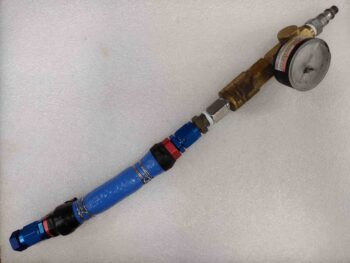
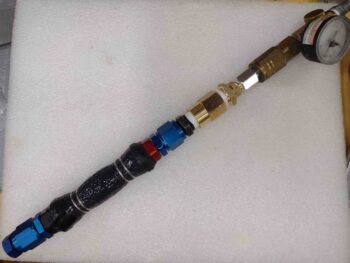
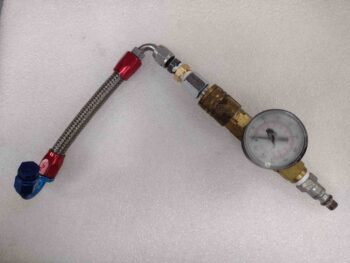
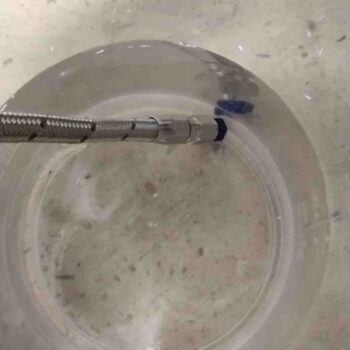
I then switched gears and assembled all my collected bits and pieces from yesterday to test out my 3 each -4 hoses.  From my old painting days (chopper motorcycle project pre-Long-EZ) I grabbed a pressure gage setup and added that to the mix.  I then attached a -4 nipple to an air hose quick disconnect fitting and Voila!   Pressure test kit ready to go.

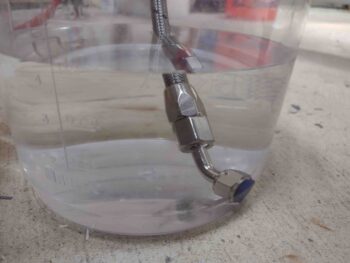
I then tested the oil pressure sensor hose.  I noted on the 150º hose end that the -4 sealing cap needs a little extra oomph to keep any bubbles from forming in the little side hole.  But beyond that it passed the test perfectly.

With the oil pressure and fuel pressure (sorry, no pic on that one) sensor hoses good on the pressure tests, I then pressure tested the fuel injection servo to fuel distro spider -4 hose.

Again, all was good with this -4 fuel outlet hose pressure check.

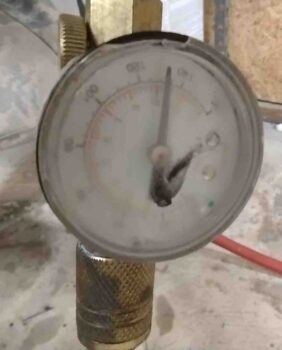
I grabbed a shot here to show you that I pressure checked all these hoses to a hair over 130 psi.  The Silver Hawk manual says to have the fuel lines good to something like 1000 psi, but, um, sorry Precision Airmotive guys but my shop compressor ain’t got that in it!  This will have to do.

Tomorrow I’ll test all the other hoses I’ve made so far.  I’ll probably start my -6 fuel hose from the mechanical fuel pump to the FI servo inlet but won’t be able to finish that hose until next Wednesday when I receive my next round of 120º hose end fittings… yes, I’m going to be OCD on this one guys.

Finally, I should be wrapping up all the nit-noy prerequisite (self-determined) tasks on the engine to the point where it will come off the bird soon so I can work the oil lines and reinstall/re-clock the engine oil inlet fitting (it’s pointing up vs down).  I’ll add some Adel clamps to the front of the accessory case as well.  I’ll finish by noting that I need to do some AD stuff on the P-MAG and will talk to Brad at E-MAG Air.  I might even send the unit back for any final and latest updates if need be before I go live with it operationally.  More to follow on that.


Chapter 22/23 – Tough Decisions

I started off today by finally getting in touch with Clinton at Custom Aircraft Parts to have that much needed, serious discussion about the exhaust pipes.  Clearly there are some inherent limitations in what Clinton and his team can do being in California and my being in North Carolina.  As Clinton noted, they could make me a set of custom exhaust pipes if they had access to the bird to determine the requirements first hand.  Thus, unless I go with a local vendor, which I might just do, cutting and re-welding is out in regards to Clinton & Co. doing it.

Another option is simply to return the pipes for a refund.  Of course this gets me nothing since these are a must have item.  The lower cowling will get reworked before these things go back since, again, you can’t run an engine without exhaust pipes.  Moreover, from what I’ve observed with these pipes and other aircraft components, most cost 1.5-2 times of what I paid for them… no thank you to that!

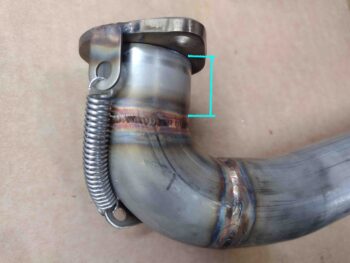
The last option, which is dichotomy of scary as hell and probably/likely the most potential to effect real results is to do some surgery on these pipes myself, as detailed to me by Clinton over the phone.  Since these exhaust pipes are actually 2 pieces held together by a couple of springs, the best area to minimize height for these pipes is where the outer pipe slips over the inner mounting bracket sleeve, with the latter being welded to the mounting flange.

The total height of this possible area of reduction is 1.2″.  Talking with Clinton, he recommended leaving at least 3/4″, with a max removal of 1/2″.  Now, as with any surgery there are requirements, parameters and risks.

  • Whatever amount comes off the outer, female pipe collar must come off from the inside sleeve as well.
  • The removed material must be parallel to the original edge on both pieces, with the edges straight and clean to maintain an optimized seal to prevent exhaust leaks.
  • With significant shortening of this collar, new, shorter springs will be required.

But, as I’ve noted countless times over the last couple of months: compromises are unavoidable and I’ll take what I can get.  I’ll prognosticate that this will be another PITA process to be sure, but on the other end any significant cowling clearance will be worth it.  I’ll assess this process further and also next steps [local cutting/re-welding and/or re-working bottom cowl] if/when this initial task is complete.

After my phone call with Clinton, and my note-taking and mental processing of what all is entailed with the exhaust pipe surgery, I then called Summit Racing.  I told them my tale of woe involving the 2 different 120º hose end fittings and asked if I could do a partial order and still get free shipping.  They agreed, so it was worth another $40 at a shot of getting a CORRECT angled hose end fitting for my Fuel Injection Servo inlet hose… or at least a better-angled fitting than either of the two I have now. I will note that the amount I’d spend in shipping to return either one or both of the two offending hose ends I have on hand now would be spending a third to half of what they originally cost (with free shipping no less). So they’ll go into bench stock for now and maybe on Ebay someday.

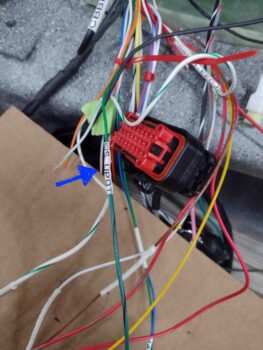
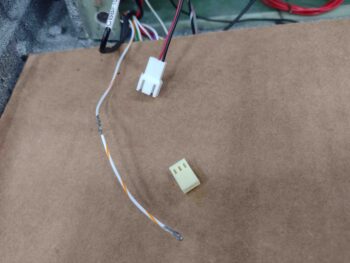
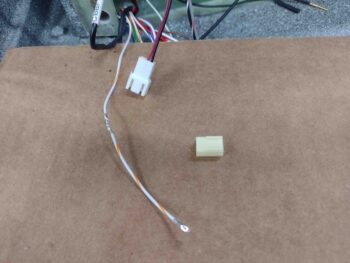
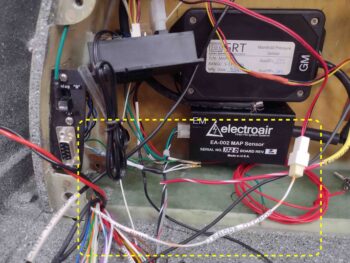
On to more benign build tasks: I received the Electroair MAP sensor Molex connector with the requisite sockets.  After a bit of digging into the manual to confirm I wasn’t screwing anything up, I then terminated the sockets onto the appropriate wires, got them into the appropriate positions and finished off the wiring to the electronic ignition MAP sensor.

Before I decided on using CPC connectors to transition the wires through the firewall, I had labeled and terminated a white 22 AWG wire into the GRT EIS D-Sub connector for the Oil Temperature sensor.  With the new connectors in play I simply cut this wire in half, which gave me a nice labeled segment. I then terminated a FastOn connector onto the end of this freshly cut wire and plugged it onto the Oil Temp nub on the front of the engine accessory case.

Voila! Oil Temp wire installed and ready to be terminated into the right side engine-firewall connector: P10 (see below).

As I did on the left side, I then duct taped the firewall side of the P10 connector plug to the firewall in its respective hole.  In this pic below, from left to right you can see the engine-side P10 plug strain relief zip tied onto the freshly cut fuel pressure sensor cable (note the internal wires).  The OT sensor wire is also through the strain relief while behind it are the blue and white P-Mag wires from the P9 connector.

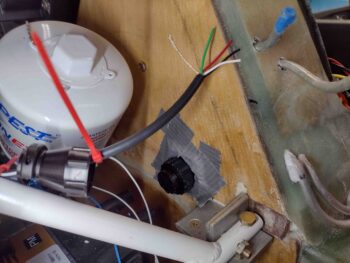
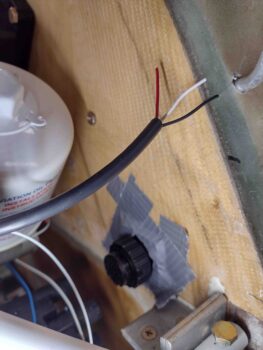
The fuel pressure sensor inputs only require the red, white and black wires, so I cut off the green and bare wires from the cable.  This pic also provides another shot of the firewall P10 connector plug.

Today was one of those days of a lot of corroborating, research, coordinating and prep without a lot of work actually getting done.  I did get all the components assembled and prepped to pressure test my oil and fuel hoses, so tomorrow I hope to get a lot more actual work knocked out.

Chapter 23 – Adel clamps & -4 hoses

I started off today by gooping up the threads and torquing the AN fittings onto the GRT fuel pressure sensor.

If someone would have told me that this next task was going to take 3 hours, I would have told them they were cuckoo for cocoa puffs… and I’d have been wrong.  Adel clamps are a big enough PITA to install without chewing them to pieces, but due to about zero working space and being blocked from getting tools in place either from the engine mount itself or a big cylinder on one side to the P-Mag on the other… it was simply a rough time installing these 4 Adel clamps at angles to secure this sensor in place.  But perseverance, a lot of expletives and countless dropped tools and/or hardware (perhaps even a couple propelled tools . . .) won out.

Here we have the diminutive but huge PITA to install GRT fuel pressure sensor.

Jumping ahead a bit, I repurposed my previous top hose end fitting and blue fire sleeve from my fuel injection servo to fuel spider -4 hose and added a new 90º hose end on the fuel pump side.  With the straight hose end side fire sleeve already secured in place, I used my Clamptite tool to wire clamp the fresh cut side in place as well.  To be clear, I just cut off about the last 4″ of the previous hose and fire sleeve and simply added a new hose end on the other end to make up this new hose.

By swapping out the straight nipple on the bottom end of the FP sensor with a 45º fitting, it again allowed me to re-use the straight hose end fitting from the fuel spider.  Although the space is tight in this area, the hose went on without an issue.

Speaking of 45º AN fittings… after assessing the hose attach configuration for the oil pressure sensor block, I removed it from its temp Adel clamp attachments to goop up and torque the 45º fitting into place in the center position of the aluminum NPT Tee fitting.  I’ll note that this fitting required clocking at a forward facing (pointing down) inboard angle to get the most optimized fit for the interfacing 150º hose end.

With the hose length and required hose end fitting clocking requirements in hand after my recon, I cut and installed a 150º hose end on the opposite end of the one shown at the top here.

The 150º hose end at the other (bottom) end of the fuel pressure sensor hose worked out nicely with the Tee block’s middle 45º fitting facing downward and clocked inboard just a bit.

A little extra length to a hose provides a tad more flexibility (read: less stress & tension) and ease during install, so that’s what this combo offers.  It actually worked quite the treat even in such a tight spot.

I’ll further note that I swapped out the temporary standard nuts on the Adel clamps and did a final install on those with MS21042-3 nuts.

With no kidding final installs on both the fuel pressure sensor and the oil pressure sensor block, it was now time to go final on the MAP manifold block.  I gooped up the 1/8″ NPT threads on the newly acquired 3/16″ barb fitting and torqued it into place.

I then did a final install on the MAP manifold onto the engine mount, again swapping out the temp nuts for MS21042-3 aircraft grade nuts.  Although I just ordered the correct 12″ length -3 AN hose for connecting the MAP manifold to cylinder #3, I attached one end of the current hose to show how the connection will work.

This completes all the external sensors and sensor components that I’ll be installing onto the engine mount.  The only sensor-related items left to install are the CHT and EGT probes that mount to the cylinders and exhaust pipes, respectively.

It was late and I was about ready to call it a night, but I had everything sitting in front of me to knock out the new -4 fuel line from the fuel spider to the Fuel Injection Servo outlet port… so I did.

Here we have the new, more demurely colored hose end fitting attached to the fuel distro spider.

Down below I used a 45º fitting to attach this -4 hose to the FI Servo.  I’ll note that I will in fact fire sleeve this hose (upgrading to orange vs blue) and that the hose itself is cut from the longer hose that originally came down from the spider.

My last task of the evening resulted in a bit of head scratching.  I quite often buy extra fittings so that I have them on hand when need be and I don’t end up paying extra for shipping, as I did today on a small order I submitted to Summit Racing for the shorter stainless steel “vacuum” hose that will connect the MAP manifold to cylinder #3.

That all being said, I ordered 2 each 120º -6 hose ends to use one of them to connect the main fuel line to the inlet fitting on the LEFT side of the Fuel Injection Servo.  Well, here they are… both right out of their packaging… different well known brands mind you, but clearly one thing is not like the other angle-wise.

Does it matter?  How different are they?  Let’s take a look.  The first one curves around decidedly inboard to the right, about 3-5º seriously more than I’d prefer.  The other one very noticeably points outboard to the left, and with a fire-sleeved stainless steel hose installed will be just barely —if at all— able to clear the cold air plenum’s cable-mounting extrusion.

And all I wanted was one that splits the difference and shoots “straight” towards the forward right engine mount.  Yes, I know: first world problems.

Tomorrow I plan on doing some engine-related wiring and pressure testing all the -4 hoses I made up today.  The jury is out on whether I’ll press forward with either of these -6 120º hose ends or if I’ll call Summit and maybe order 1-2 more, if they’ll ship for free.  Regardless, I’ll press forward with more engine stuff… I suspect within the next 2-3 days I’ll pull the engine to work the oil hoses, etc. on the front face (accessory case) of the engine.  Many tasks to complete with the engine off the bird.


Chapter 23 – MAP barb fitting

Between waking up a bit later this morning from my late shop work hours last night, some domestic duties and a wine tasting event starting early this evening, I didn’t get a lot done on the build today.

I was able to buy a 3/16″ x 1/8″ NPT brass barb for the engine mounted MAP manifold.  I put it in place just for this pic… later I’ll goop up the threads and install it with the proper torque.

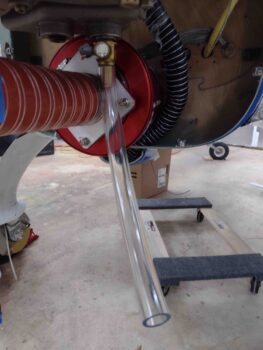
I did spend a little bit sorting through and inventorying an ACS order I received today.  One item I received was a length of clear plastic tubing that I’ll slip onto the oil quick drain, as I tested out here, to drain the oil during oil changes.

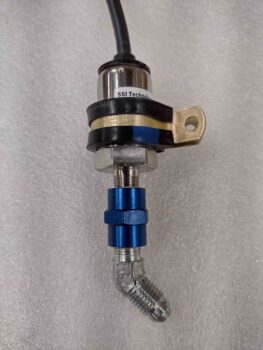
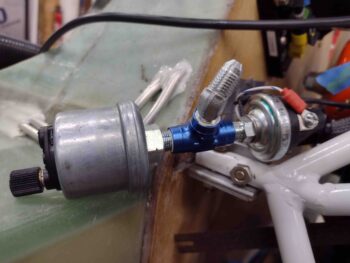
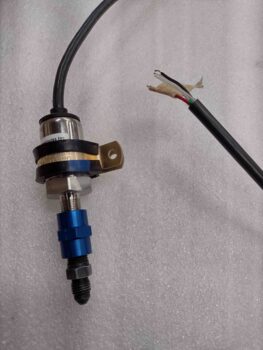
I also got a good 45 minutes in on working the GRT fuel pressure sensor, both in rounding up and configuring the -4 AN fittings as well as sizing the appropriate securing Adel clamp.  I’ll note specifically that this fuel pressure sensor must be mounted with the cable end up and fitting end down, per the manual, as shown here.

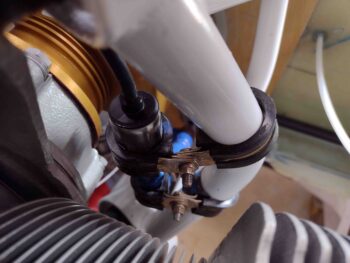
After looking at a number of possible spots to install the fuel pressure sensor on the right side of the engine mount, I think I found the sweet spot for mounting this sensor… here’s a wider angle view of that spot.

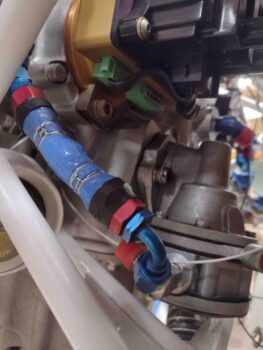
And a closer up, albeit slightly blurry, shot of my proposed mounting position and configuration of the fuel pressure sensor.

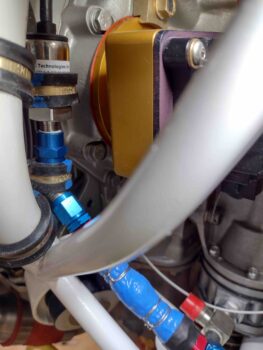
And one final shot of the fuel pressure sensor proposed mounting position.

Back in the house, before getting ready for an evening of fun and frivolity, I updated my GRT Engine Management System wiring diagram to denote the Oil Pressure Sensor wires now transiting the firewall via the P9 connector vs P10 previously.  I then printed off a new diagram and Voila, all changes to denote the wire swap complete.

And that’s it for today folks.  I do plan on installing the fuel pressure sensor on the engine mount tomorrow.  In addition, I’ll start working the configuration and wire runs for the right side engine/firewall connector, P10.

Finally, within the next 2-3 days I plan on blitzing the construction of all the remaining fuel and oil lines —including pressure testing— for the engine (except the 2 in/out oil cooler hoses… those will come later).

Chapter 22/23 – MAP & Wires

I started out today actually spending a little bit of time assessing and then making a decision on transferring my oil pressure sensor wires from the right-side firewall P10 connector —which is nearly all GRT EIS (Engine Info System) related wiring— to the left side P9 connector, which had about half the positions open.  The 14-pin P9 connector is the more robust “power” connector while the 28-pin P10 connector is all smaller wire D-Sub “signal” type connections.

But it does make sense physically since the P9 connector is just inches away from the oil pressure sensor block.  I just wanted to assess how “pure” my circuit logic should be with what wires are going to what components… no chaotic “Thunderdome” wanted in my GIB headrest/engine electronics bay!

My decision of course triggered updates of my firewall component diagram and connector detail sheets.  On my wiring diagram I just made a pen & ink change for now.

Out in the shop I first spent a little bit of time knocking out a good-to-do task that I picked up from some RV guys that they did on their Superior cold air plenum pipes: safety wiring the hose clamps to ensure they stay tightly secured.

I don’t know if these things have a history of loosening up, since I don’t see this much on standard air induction pipes on Lycomings… but it doesn’t hurt anything and may prove beneficial.  Monkey see, monkey do!

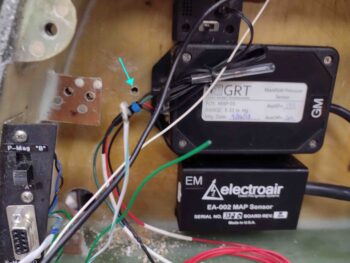
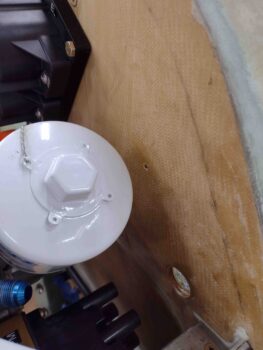
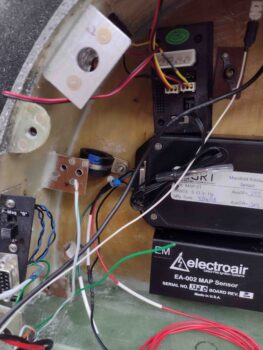
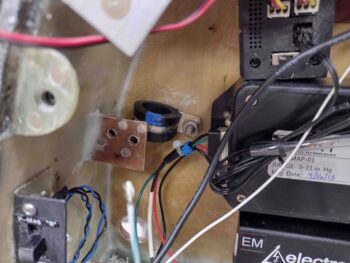
I then drilled a hole through the firewall just to the side of my GRT MAP sensor for a future CS screw that will serve as a “poor man’s” Clickbond to secure an Adel clamp that will in turn wrangle all the P10 connector wires.

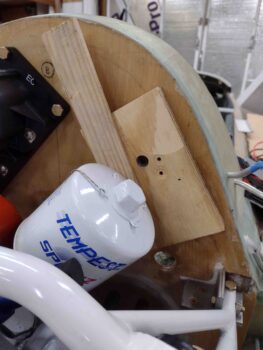
To ensure I didn’t puncture or damage anything on the engine (e.g. the oil filter) I wedged some wood on the aft face of the firewall for my drilling op.

I have a number of Clickbonds on hand, but I was told by the Cozy Girrrls that they won’t be selling any more of them.  I could roll my own like Marco does, but I’m currently lazy and don’t want to spend the time doing that, so I will conserve them when and where I can.

I then installed the Adel clamp on the back wall of the GIB headrest/engine electronics compartment.

A bit closer shot of the Adel clamp here.  I’ll note that I positioned it to allow me to easily swap it out to a larger clamp if need be.

I then took a few minutes to clean up the layups on the lower corner nutplate tabs that I glassed last night.  I had already pulled the peel ply and here I’ve razor trimmed the excess glass plus gave the edges a quick sanding.  They’re much more secure now.

The next 6-7 hours were all focused on 2 things: First, the placement and securement of the engine side MAP manifold distribution block, which ties into cylinder #3, the P-Mag and the firewall forward 2x MAP sensors.

Starting out I wasn’t even sure if I was going to use the manifold block or simply use another Tee fitting as I did with the oil pressure sensors.  I spent a good 45 minutes trying different mounting locations on the engine mount, but this one gave me the most direct route from cylinder #3 to the firewall barbed pass-thru fitting, and thus the MAP sensors themselves (most direct & shortest route as per the Electroair manual).  I have to say that although this spot requires that I purchase a shorter 12″ -3 AN hose, it more than exceeds my requirements for placement and configuration.  I’m very happy with it.

The second target was knocking out prepping and terminating all the wires for the P9 firewall connector, including the 4 new oil pressure sensor wire additions.  I cut and terminated the wires for the oil pressure sensor first, added a small dab of Loctite to the screw threads and applied dielectric grease to the ring terminals before determining length, cutting and terminating CPC pins on the other ends of the wires.  Of course all the terminated ends were pull and continuity tested.

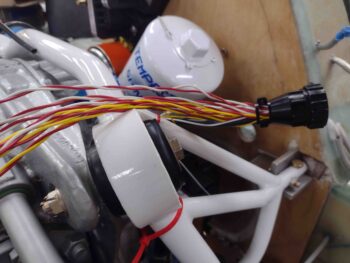
Three (3) of the wires utilizing my P9 firewall-transiting connector are from what was a fully enclosed single 3-wire cable (plug & cable shown) that goes to the Electroair Mag Timing Housing, which resides in the left magneto position on the engine accessory case.  These wires connect to the Electroair electronic ignition controller inside the GIB headrest.  Below you can see that I cut the 3-wire cable and terminated the individual wires with CPC pins.

For the B&C SD-8 backup alternator specifically I added added a length of white composite hi-temp sleeving before the wire-wrangling gray sleeving (secured in place by high-temp blue zip ties).  I also added an Adel clamp to one of the top studs on the SD-8 to secure these 2 big wires, and subsequently this entire new P9 connector cable.  I then cut the SD-8 wires to length and terminated them with CPC pins… which I’ll point out that were so large that I couldn’t employ my normal CPC connector terminal crimper.  I had to go old school and use the older style terminal crimper to get the job done.

I haven’t done any wiring on the P-Mag yet, but in order to complete the assembly of the P9 connector I crimped a CPC pin onto the end of a white 20 AWG wire (P-Mag “kill switch”) and blue 18 AWG wire (P-Mag power) and plugged them into their respective slots.  You can see these wires draped over the oil filter below… as well as the clearly completed engine-firewall “power” P9 connector.  It’s no perfect beauty queen as far as cables go, but it should definitely be functional and get the job done!

Here we have a shot of the pins inside the engine side of the P9 “power” connector. Again, P9 is a 14-pin connector and with the addition of the 4 oil pressure sensor wires I now have 3 positions open.

Here is the engine-side “power” cable & P9 connector terminated into the firewall side of the P9 connector.  Although the pressure from this somewhat stiff cable pulled the bottom of the taped firewall-side P9 connector up just a bit, this is very close to how the cable will run when connected.

To ensure that the clearance and configuration were both good, I then reinstalled the MAP distribution manifold onto the engine mount.  Before reinstalling the MAP manifold I gooped up the fittings and torqued them to specs.

However, once the MAP manifold was back in place I needed to tweak the P-Mag fitting (up/aft side) and the inboard 45º street elbow (that I stole from the sniffle valve… it’s getting a cleaner, upgraded fitting soon) that will connect the MAP distribution manifold to the MAP firewall pass-thru barb fitting.

I do need to add one more piece to this puzzle, and that’s a 3/16″ barb fitting with 1/8″ NPT threads into the 45º street elbow.  I should be able to pick up one of those tomorrow.  Here I installed a 1/8″ barb fitting just to show the configuration and how the tube will connect in a curved fashion between the firewall MAP barb port and the barb fitting on the engine MAP manifold.

So after a VERY long day/night, and with 2 very good target kills under my belt, I’m calling it a night.  Tomorrow I plan on working the fuel pressure sensor install before I then start making up some fuel and oil hoses.