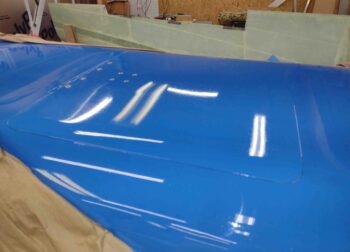
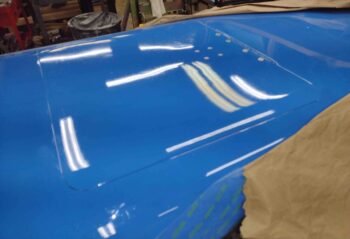
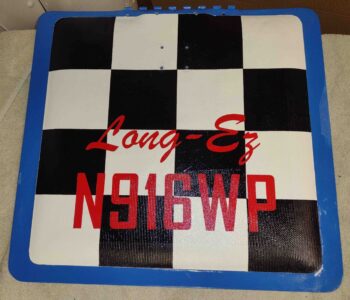
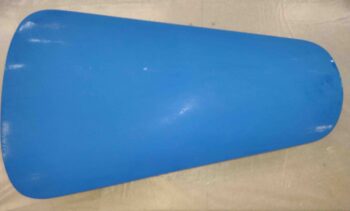
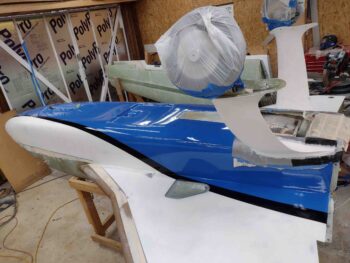
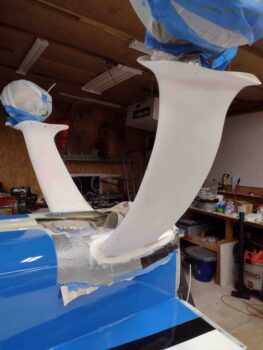
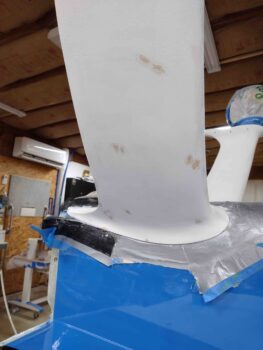
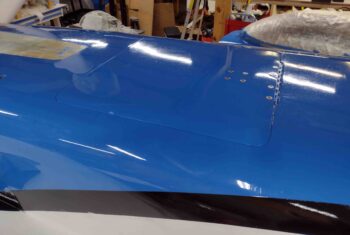
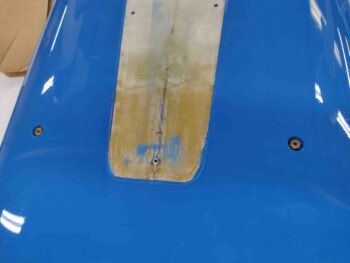
Chapter 24/25 – Canopy micro finish

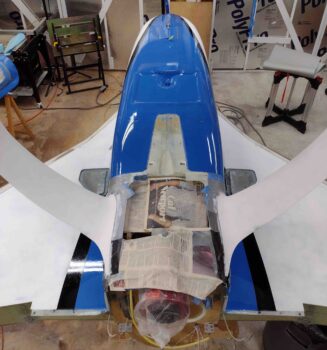
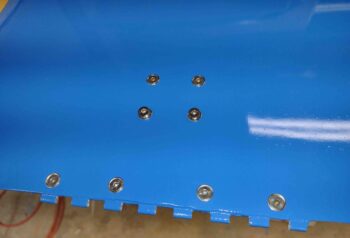
While the paint cures on the bottom of the fuselage and its associated components, I started off today by removing the weights from the floxed in threaded baggage pod hardpoints that I installed into the wing bottom surfaces.  It took about 45 minutes total to remove the bolts, gently and carefully pry off the wide diameter washers and then clean up around each installed hardpoint.

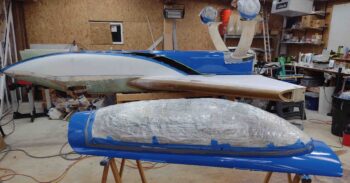
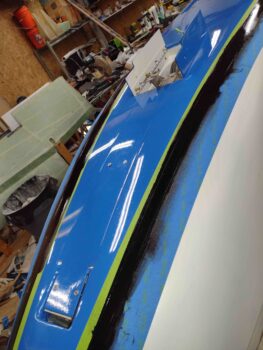
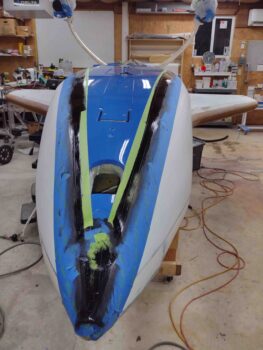
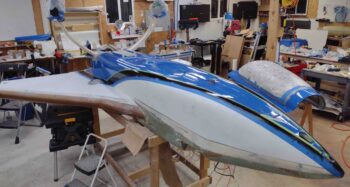
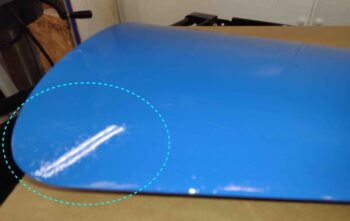
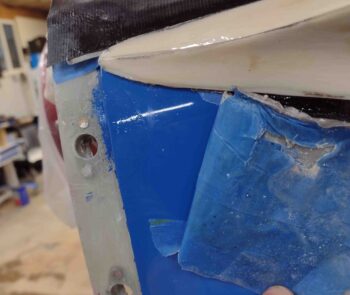
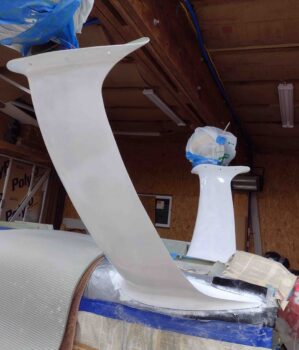
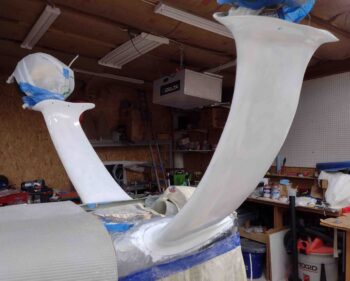
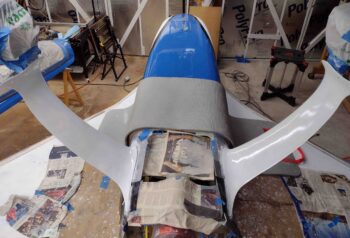
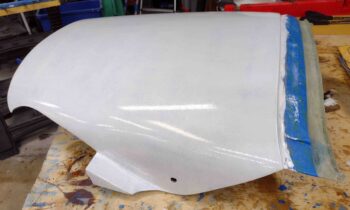
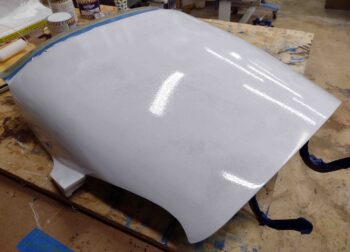
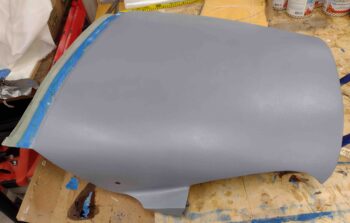
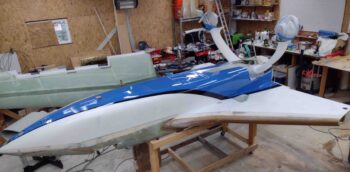
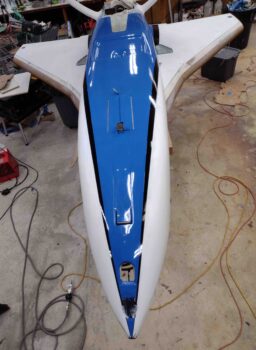
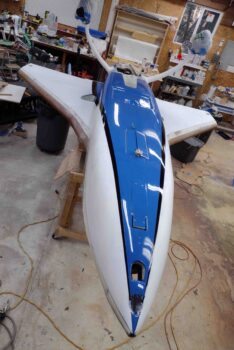
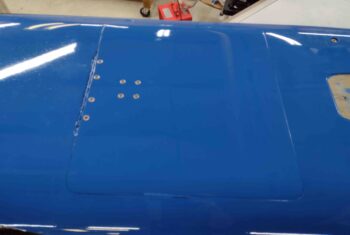
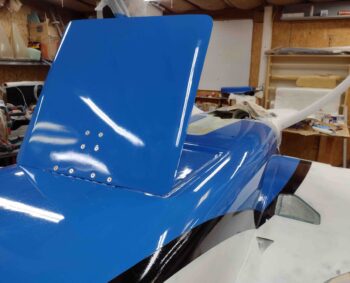
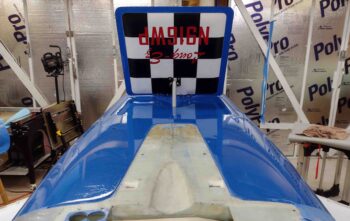
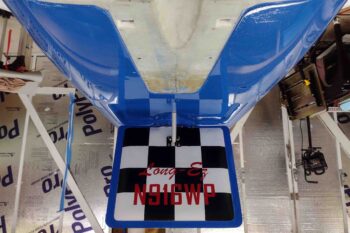
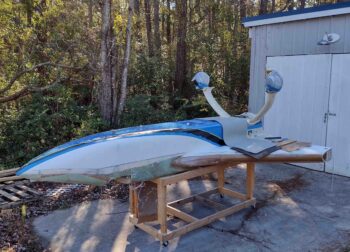
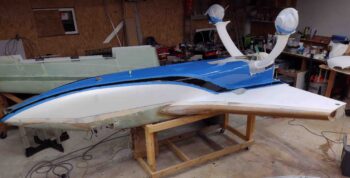
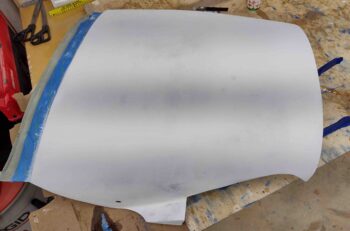
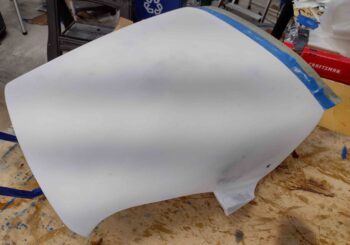
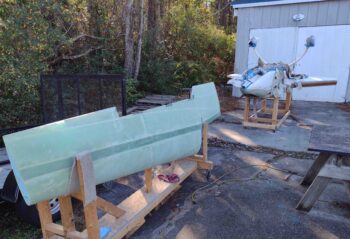
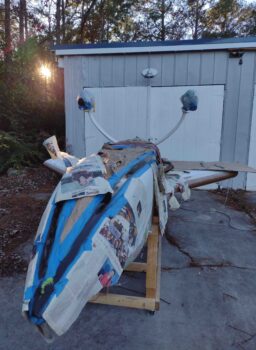
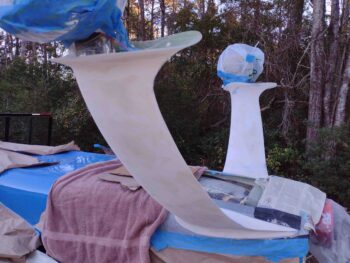
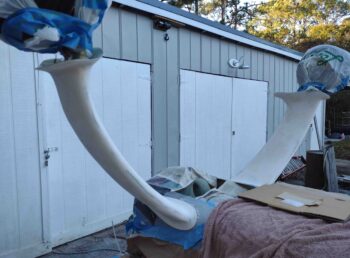
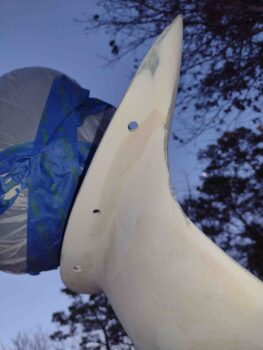
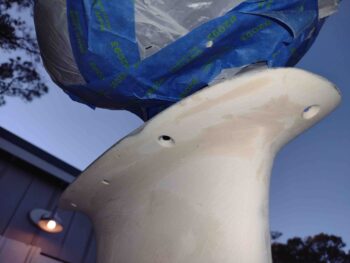
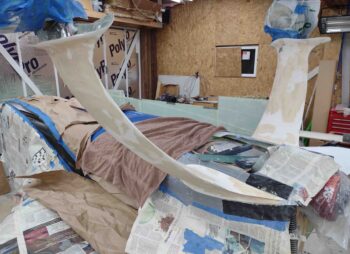
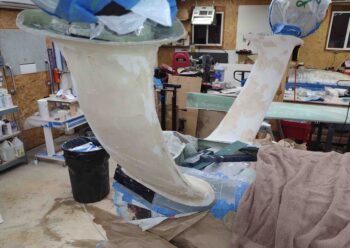
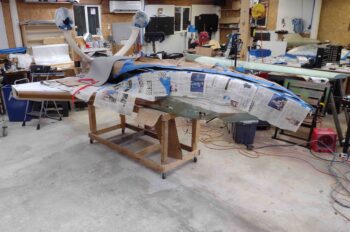
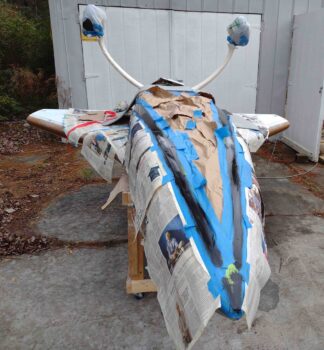
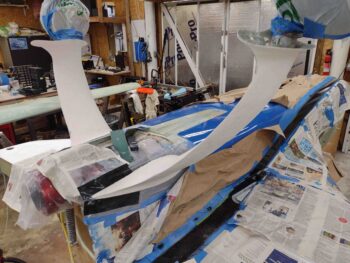
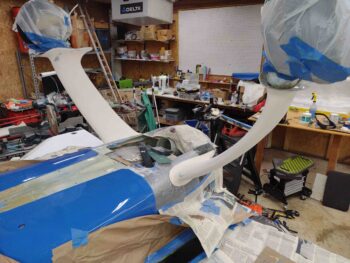
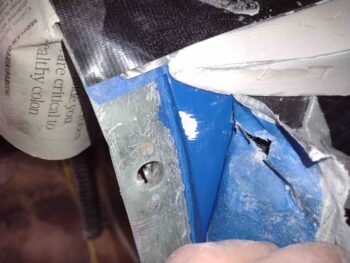
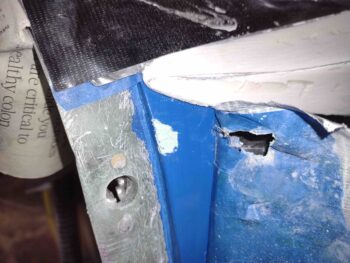
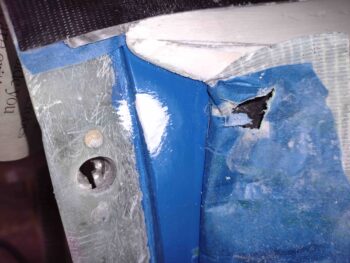
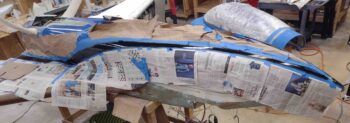
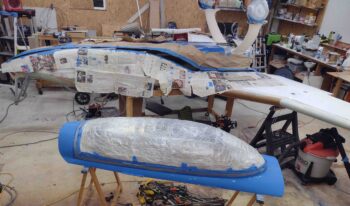
With “time on my hands” due to the curing paint, along with fairly nice weather, I decided to knock out some more finishing tasks.  I pulled the canopy out of its storage in the rec room of my house and then taped up the edge to secure the plastic protective covering in place, but moreover to protect the edge of the canopy as I sanded the frame in prep for micro finish.

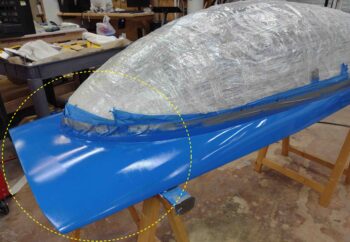
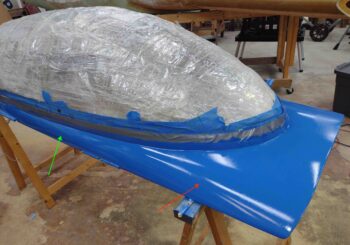
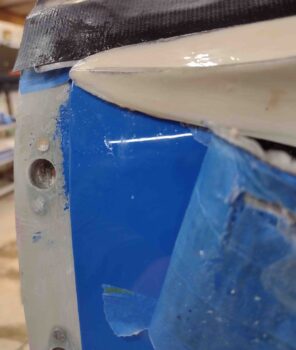
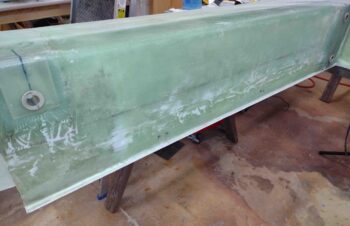
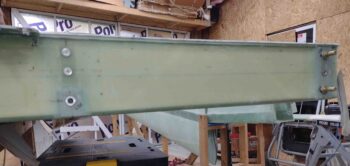
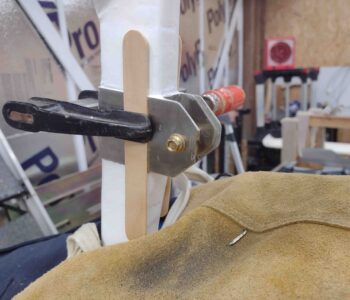
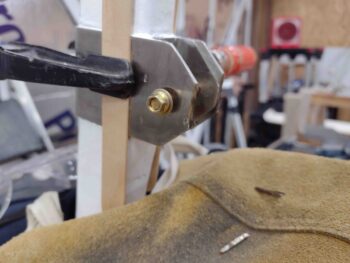
After a thorough sanding of the frame, I cleaned the surface in prep for micro.  I also added a ply of electrical tape right at the edge of the initial tape… a hack I learned from Dave Berenholtz when he finished his canopy.

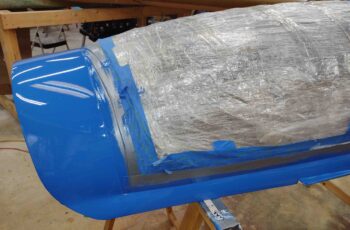
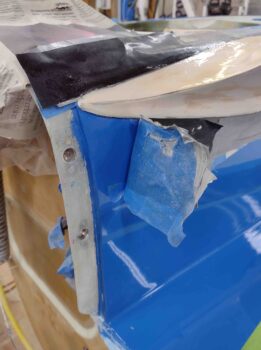
I then whipped up a bunch of micro and slathered it onto the canopy frame. Then, after I cleaned up all the tools and put everything away in the shop in prep for closing it up, I carefully pulled the black electrical tape off at a sharp angle to produce a very nice, clean edge on the border between the canopy and frame.

I’ll note that I’m only using a straight traditional micro fill on the canopy frame since I plan on painting it the same blue as I’ve been using on the bottom of the plane.  A restriction that West 410 filler has is to not be subjected to higher heat.  Although I clearly don’t see the medium blue I’m using getting excessively hot, it is clearly not white and thus will naturally have a higher surface temp.  So to be on the safe side I’ll simply avoid using West 410 filler on any of the top center components of the bird.

After the micro cured for a few hours, I then moved the canopy into the shop to let it cure overnight.

Tomorrow will be a lighter build day since I’ll be out for most of the afternoon and evening, but I will still try to knock out as much as I can on the build earlier in the day.

Chapter 24/25 – Baggage pod mounts

Adding ancillary components like wheel pants and baggage pods to our birds tend to be interesting endeavors and a bit of ironic humor in that the vendors selling these items tend to highlight install times way lower than the time it actually takes in reality to complete these installs.

And so it is I would say with the baggage pods.

My goal today was not to finish the baggage pod installs, but to optimize my efforts with the plane being inverted.  One such task that I assessed would be much easier with the bird upside down —again, due to simple gravity— is the installation of the underwing baggage pod threaded hardpoints.  These make up 4 of the 6 threaded hardpoints that secure the baggage pod to its respective wing.  Yep, in my crazy way of doing things I already embedded the top of wing threaded hardpoints in the wings before I glassed the top skins back in 2012.

Little would I have guessed that this one task would end up taking almost 8 hours total!

I started off by measuring out from the AC centerline (BL 0) to BL 61, which per Gary Hunter’s install instructions is the mark for Long-EZ baggage installs.  Again, BL 61 is what I used when I embedded my topside wing hardpoints prior to skinning the wings.

The above measurements, marked on a piece of painters tape on the wing surface, served as a crosscheck to ensure that my laser line shot was in the realm of reality.  I’ll also note that when I measured out to BL 61 with the tape measure, I ensured that it was as close to exact parallel with the aft edge of the engine mount to keep it perpendicular (90º) to AC centerline.

Clearly my crosscheck hash marks on the wing were all well and good, but I would need a projection target aft of each wing to ensure I was shooting my frontside laser from BL61 to a known BL61 point on the other end, aft.

To do this, I ran a line down the center of the aircraft to the center point of my long straight board (sitting on the ladder… and clamped in place).  I then measured out 61″ each side from this center line to get my BL61 mark.  I then simply hung a carpenter’s speed square down at the BL61 line to use as the edge to line up my laser.  To be clear, I ensured my long board was perpendicular to AC centerline as well.

I then set up my laser unit at 61″ (BL 61) from the center of the nose and shot my line back across the wing to just kiss the vertical edge of the carpenter’s square hanging down on the long board.

Here’s the laser shot on the left wing.  I placed the green roll of tape on the wing for this pic to make the laser line more visible.  I will note that I was within 0.5″ of centerline on the topside wing baggage pod hardpoints as well… perfectly fine for what I’m doing here.

After shooting the baggage pod centerlines at BL 61, I then got busy determining the install locations of the threaded aluminum mounting hardpoints, which I picked up from the Cozy Girrrls.

My main goal here is to get these underwing baggage pod mounting points floxed into the wings while the wings are inverted.  To be clear, although this is a step in the mounting of the baggage pods, that is not what I’m doing here.  I say this because if these inserts are off here, say even by a 1/4″, I can work with that when I actually get to installing the baggage pods.  My guess is that my tolerance here is +/- around 1/8″.  I can alway fudge a bit on the width of the baggage pod mounting strap if I really needed to by adding say a 1/4″ to the width on one side… and no one but you guys would ever know that I did that! (smile).

You can say that’s sloppy work… or that it’s being efficient in build priorities.  To each their own personal thoughts, but clearly I’m shooting for and calling it efficiency.

I then drilled the holes with the final bit size being 3/8″.  I had to do about 3 iterations on each hole to get the foam cleared out to the proper depth.

On the forward holes I was shooting to get the holes to just kiss the front face of the shear web inside the wing.  I achieved this on the right wing below, but was about 1/4″ forward on the left wing.  So I cleared out some foam in the holes on the aft side and will just use a bit more flox to secure the left wing forward hardpoints to the face of the shear web.

I then spend a good bit of time taping off the open end of the threaded aluminum mounting inserts, cleaning them with Acetone, and then taping up the large washers that then got bolted to the mounting inserts.

These pics aren’t great, but here are the inserts ready to be floxed into place.  I added clear packing tape around the holes, again as recommended by Gary Hunter in the installation instructions.

And then floxed the 4 inserts into each respective wing… here is the left wing baggage pod mounting hardpoints.

And a closer shot, before I placed weights on them to keep the insert faces as flush as possible with the wing surface.

This shot was a couple of hours later, and shows not only the weights on top of the floxed in place baggage pod underwing mounting hardpoints, but also the second coat of blue paint on the fuselage accent and landing brake.

Here’s another shot of the second coat of blue paint on the bottom fuselage.

I also recoated the bottom cowling….

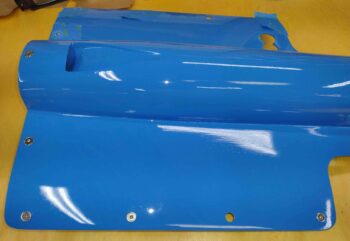
The RAM air scoop/hell hole hatch cover . . .

The landing brake with another coat of blue.

The finished interior blue trim of the landing brake.

The nose hatch door and nose gear fairing and gear doors, all with another coat of blue.

And finally, let’s not forget the belly video camera housing mount and the swing down taxi light assembly with their next coats of blue paint.

And with all that… I left the flox and paint to cure and called it a night.


Chapter 22/25 – Watching paint dry…

The Epifanes paint system allows me to apply another coat within a 24-48 hour period without having to sand the current paint coat.  Since I finished the last round of painting around midnight I didn’t want to do the next round of painting right at the 24 hour mark, since obviously that’s pretty darn late.  Thus, I chose to use the time allotted me per the Epifanes manual to push the next paint coat application during more reasonable hours.

As I “watched” my paint dry I got a couple key tasks knocked out.

First up was filling in some dings that I inflicted on the edges of the gap —primarily on the left strake/wing as seen here— between the strake and wing when I recut that junction.

But also on the right wing edge as well.

Next, I checked the charge on my Integrated Backup Battery System to find that it was 13.09 volts.  The window it should be in is between 13.5-14.5 volts.  So I connected it up to the battery charger to get it back into specs.

I also did a good bit of research and install info refresh on the baggage pod install to allow me to install the hard points —in the proper locations <wink>— while the bird is currently flipped inverted.

Tomorrow I plan on installing the baggage pod hardpoints and then complete the next round of blue painting on the fuselage and the collective parts.


Chapter 25 – Fuselage painted blue

Today, after a bunch of prep, I was finally able to apply 1/4″ fine line tape to the fuselage and strakes to get fairly close to my designed paint scheme.

The long pole in the tent decision-wise and design-wise for the bottom of the bird paint scheme was the transition off the fuselage and to/around the armpit scoops, then continuing on to the bottom cowling.

I wanted to carry the “flow” of the armpit scoops forward (partly in tribute to the original fuel sump blisters) so that drove the intersection of the fuselage-to-strake line about a foot forward than I had planned with the somewhat flatter-curved swoosh on the fuselage side in my paint scheme depiction above.

Since the blue will be bordered by a black accent stripe, I also want to keep the black color down low and out of the sun as much as possible.  To do this, I made the curve a bit more pronounced as you see here, rather than flatter as in the top pic.

Here’s the transition at the fuselage and the strake.

And a side view of the “swoosh” . . .

To ensure it would look ok in the real world, I grabbed a shot and flipped the pic to show it with the fuselage “upright.”

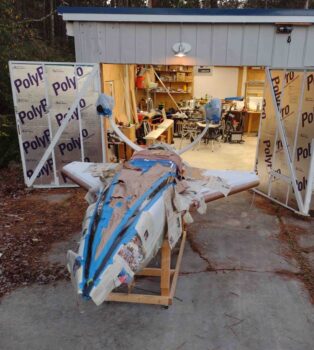
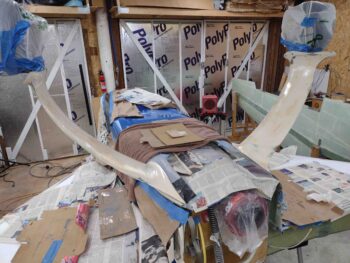
With everything looking good to me, I proceeded to tape off the fuselage and covered it with newspaper and cardboard to ensure the paint stayed where it was supposed to.

I then got busy painting.

I have to say I’m very happy with this bottom nose/fuselage/strake blue accent.

There was a fair amount of trim paint work to ensure that when the nose gear is up and the RAM air scoop/hell hole hatch cover is installed that no white or light colored surfaces show through the seams.

There is definitely a good bit of blue on the fuselage, but I really think it won’t look nearly as prominent when the bird is upright.

Here is shot from the aft side.

I also recoated the parts I painted a few days ago (and spent a good bit of time sanding since then!).  Here is the bottom cowling with its second coat of blue paint.

I’ll note that although my painting technique was a lot better than before, it took most of this round of painting to really start to understand and get comfortable with this paint system.

The bottom line is that with the foam rollers used to apply this paint, which holds a good bit of paint, I’m dialing in the pressure required to lay down the proper amount of paint (read: LESS).

Here we have the RAM air scoop/hell hole hatch cover with its second coat of blue paint. I had to employ the brush a lot more on the vertical sides down low (as situated here) of the scoop’s tube close to and along the corner junction with the mounting flange/cover to keep the build up of paint from causing runs.

And here we have the external side of the landing brake.  I did notice 2 small runs when I finished here.

Again, I was trying to “lightly apply” the paint with a decent amount of paint on the roller but using a very light touch.  The better method I discovered is to use a less loaded roller and add just a hair more pressure so the paint “lightly” goes on… at least that is the best way so far for avoiding runs and drips.

Here is the inside of the landing brake border, which I applied one more coat using a brush.  I plan on this being the last coat here.

The nose gear fairing and doors came out much better this time around, although I still think there may be some buffing and polishing in my future.  The nose hatch door came out pretty good as well, but it will be getting another final coat as well.

Finally, the fairly small accessories… the belly video camera mount and the latest addition to the paint lineup: the swing down taxi light assembly.

I’ll let these cure for 24 hours and then, as per Epifanes instructions, I’ll paint on another coat without having to do any sanding.  As a point of note, final cure time for this paint is 7 days.

Chapter 25 – Sanding blue paint

The last couple of days I’ve been sanding down all the aircraft components that I painted with blue paint.  I got a good coat of paint on all these parts, albeit considerably too thick. I’m new at this boat paint stuff —which is not like rolling on house paint!— with the paint itself having significantly different application characteristics than the primer.

I’ll note that my primer work was not up to snuff on the nose gear fairing and nose gear doors, so I very aggressively sanded those starting with 220 grit, then moved to 320 and finished with 400.  Clearly a lot of blue was taken off and these bits have a lot of white primer showing up again.

I had good discussions with both Jason at Epifanes and Paul at Jamestown Distributors and feel that this next round of painting should go much better, as I dial in my skills on this paint application.

And I’ll say it again: this is exactly why I wanted to start painting on the bottom of the plane first!  To knock out this finishing/painting learning curve on less visible items as I dial it all in.

I’m also going to state that I’m fairly certain that when all is said and done, and the entire airplane is finished and painted, that this beast below —the bottom cowling— will prove to have been the most difficult part to finish and paint.  Not surprising since the channels on two sides of each armpit scoop really add to the challenge of finishing/priming/painting this component… and keep in mind, that equates to 6 surfaces on these channel sides of each armpit scoop that must be finished and painted.

Yes, I’ll be glad when this guy is done!  Regardless, here’s the shot of the bottom cowling’s blue paint sanded and ready for another coat.

I figured that it was also time to clean out the gap at the junction of strake and wing, on each side.  I started with a hack saw blade but this proved insufficient to cut through this hardened primer.  In fact, I stopped this futile attempt once I chipped the edge of the right wing.

I then proceeded to use my ever-trusty Fein saw.  To ensure I got a nice straight cut I taped a long straight edge at the edge of the cut line.

Here’s the result.  Of course I did this on each side.  I will note that I measured the thickness of the Fein saw blade at 0.035″, so I’ll guesstimate that thickness of my strake to wing gap is no more than 0.045″ . . . not bad.

Tomorrow my intent is to finish all the prep and lay out my blue paint scheme on the bottom of the fuselage, and get that sucker painted!


Chapter 25 – Primer touchups

With so many parts currently painted and curing, today was a rather light build day.

With the upcoming painting of the bottom of the fuselage, nose and strakes, I did get some important reapplications and touchups of white primer completed.  On the strake, fuselage and nose I used straight white primer, where on the aft bottom left “corner” of the fuselage (where I added some West 410) I used thickened white primer.

I also did some touchups on the right side fuselage, nose, and strake, including the corner junction between the fuselage and strake.

Not wanting to waste the little bit of thickened white primer left in my cup, I quickly disassembled my swing down taxi light, taped up the lens and then applied the primer to face of it.  I of course cleaned and sanded the face of the taxi light assembly before applying the primer.

Tomorrow I plan on sanding down all the parts I painted blue and then prep the nose, fuselage strakes in prep for paint.


Chapter 9/25 – Wheels & paint

I started out today by sanding down and blending the West 410 mixture fill on the bottom right side of the bottom cowling’s front edge.

To ensure the level was correct —which is the whole purpose of this effort— I remounted the cowling onto the taped aft fuselage to then sand down the filler level with its mated fuselage.

Although not the greatest pic, this shot gives you an idea of how blended this patch job is.

I then grabbed the nose gear fairing and gear doors and took them outside to sand them down. I first hit the exterior surfaces to clean those up and prep them for paint.

Since I still have some dust specs throughout my white paint, I wet sanded the inside white surfaces down in prep for buffing and polishing.

Back inside the shop, I then took a bit of time to clean up the wheel and tire assemblies. First cleaning the inboard side of the wheels, then the outboard.

I also finally removed the labels from the outboard wheel pant mounting adapters and cleaned them up (see 2 pics below).

Then, per the Matco manual, I rechecked all the torque specs on the brake bolts.  Out of 12 bolts I had only one that needed just a minor tweak.

I then remounted the wheels/tires onto the axels, for good this time.  Cotter pins went in into the axle nut and were bent back to ensure they stay secure.

I then spent well over the next hour mixing 2 cans of light blue paint with 2 cans of darker blue paint, and then all together, to give me the medium blue paint I was looking for.

I then went to work painting the various components of the bottom of the airplane.  First up was the landing brake, which I suspended in mid-air to allow painting both the exterior side and the interior edges around my checkerboard artwork.

I then painted the nose gear accessories, the belly video camera mount, and the RAM air scoop/hell hole hatch cover.

Here’s another shot of all those from a different angle.

Included with the bottom-of-plane components was the top nose hatch door.  It came out fairly nice.  Note that all these items will get sanded in between coats, and will most likely have to be color sanded, buffed and polished to achieve the final shine.  Not what I wanted to have to do, but that does give me a highly durable/maintainable and great looking paint job for well under a grand.
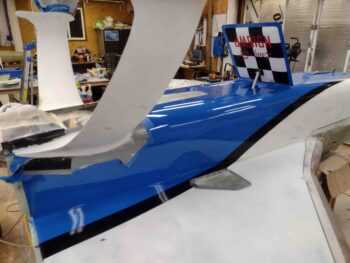
I’ll also note that I discovered that the 220 grit scratches are showing through on at least the first coat of the paint.  We’ll see how it looks once sanded and recoated, but this is once again why I wanted to do all the bottom components (this hatch door being the exception) before tackling the much more visible top side of the plane.

And to be clear: from here on out my final pre-paint sanding will be with 320 grit.

Another issue that I ran into… specifically during this paint session, was that the first batch I made was woefully not enough and I only got the landing brake completed.  However, I way overestimated how much I needed for the second batch of blue paint that I whipped up and was left with a real good bit after painting everything I had prepped (all previous pics)…. now, this paint job is a whole lot cheaper than paying someone to do it, but it is NOT cheap paint.  Thus, I don’t want to waste a drop if I can finagle it.

Well, the only other viable candidate to be painted was the bottom cowling… which was NOT on the list to be painted tonight.  So I quickly taped off roughly what I estimated the borders to be, then cleaned it quickly before slathering on a good bit of blue paint [Note the re-installed tires/wheels].

Normally I use the word “slather” half in jest, but unfortunately I did lay it on a bit thick here to create a nice thick base coat.  Clearly the vast majority of the bottom cowl is like a steep ski slope and I had a fair number of runs.

Still, I’ll reiterate that this type of experience is what I’m trying to dial in to get a good feel for this paint system.  Yes, the bottom cowling is a fairly visible component, but this being the first coat gives me a good idea of how thick I should be laying down the paint.

I’ll also note the West 410 mixture fill, that I sanded down earlier, was epoxy wiped with 3 coats of West epoxy and is ready to be sanded and primed.

And with that, I called it a night on this very long build day!


Chapter 25 – Still paint prepping!

Today I started off by finalizing an Aircraft Spruce order mainly for some odd and end hardware stuff, including CAMLOCs, NORD lock washers, and restock of miscellaneous screws and bolts.  I also ordered the correct <ahem!> rivets (BSC-44) for mounting the rudder hinges to the rudders.

I then got to work on sanding and contouring the cured West 410 filler I applied to the lower aft left fuselage “corner” to level out the surfaces betwixt the fuselage and bottom cowling.

I was pleased with the shape and transition, but I had to then check one more thing: the interface between this fresh West 410 fill and the left gear fairing.  The impact was very minimal so I pressed onward.

I then whipped up a bit of West epoxy and applied it to the surface of the West 410 fill and the immediate adjacent fuselage surface.  This was epoxy wipe #1 of 3.
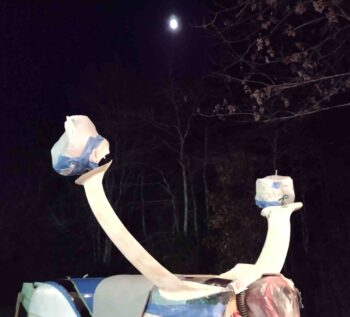
This is much later after I applied epoxy wipe #3, with it nearly cured to the touch.

I then finalized my sanding on the RAM air scoop/hell hole hatch cover before then applying yet another round of thickened white primer… primarily to the 2 areas on the aft side where I had slight depressions.  I also touched up a couple spots along the right flange (bottom of pic) near the corner where it intersects the scoop structure.
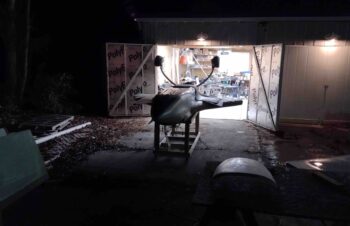
Finally, I used some of the thickened white primer to add just a dollop at the the aft center where I had a remaining low/rough spot.  I’m fairly positive that this latest round of white primer should clean up the blemishes on the surfaces of these parts to get them ready for paint.
And with that, I called it a night.

Chapter 9/25 – Edging towards paint!

This post actually covers the last few days.  Later in the evening Monday night after I finished up sanding down the gray primer and applying the white primer my back was really out of whack.  I believe it was from the sanding on a table outside that was just a bit low for me, and so the constant slightly bent over position got me.

I took it easy Tuesday and worked on important admin stuff by adding the new J12 Molex connector to the list of connectors document I have for the plane.  I also updated the associated info on the P1 connector and header page that identifies every connector in the plane.  In addition, I updated the Nose Gear wiring diagram to include the new J12 Molex connector.  Finally, I did do some organizing on a bunch of my loose documents that I still haven’t completely recompiled after the tornado hit my hangar and drenched my binders full of notes and pertinent build docs.

Yesterday I finely sanded the aft inboard area of the bottom left strake.  This has been a problem area for me for some reason in how the finish came out.  After another application of thickened white primer, and this latest sanding, I finally got the surface fairly contoured (aka flat) with only a few rough areas and divots.  I decided to go with West 410 to refill these problem areas and then hit it again with white primer to hopefully, finally knock out these surface blemishes.

In addition, I knocked out some required ancillary tasks like flipping the engine back upright and reloading all the larger orifices (exhaust ports, cold air induction plenum) with fresh desiccant packets before installing fresh desiccant cylinder plugs and firing back up the engine dehydrator system.  I also added another quart of oil as well.

Finally, besides a good bit of research on Matco wheels and brakes, as well as my Epifanes paint system, I pulled all the blue tape strips off the plastic protecting my canopy and moved them to different spots to ensure I don’t get any egregious “old tape” spots on my canopy.

Today I finally got back to work!  I did make a couple calls to confirm some info with both Matco on my brakes and with Epifanes to dial in my paint application process.  I will also note that I dialed in and determined my FINAL paint scheme for the bottom of the plane.

In the shop I started by sanding down the white primer on the bottom cowling, removing a good bit of it in the process. I then installed the bottom cowling onto the plane.

In addition to thickened white primer touchups I did on all these parts I just sanded (see below), that pesky front edge of the cowling at the lower left “corner” of the fuselage reared its ugly head again. The bottom line is that the front edge of the cowling sits around 0.080″ above the mating surface of the left aft bottom corner of the fuselage.  I simply couldn’t ignore this any longer and had to fill in that corner with West 410 (just aft of the gear leg).  And yes, I have worked this exact area before… so I’m trying to keep my frustration at bay and simply work the issue.

I also sanded down the white primer on the RAM air scoop/hell hole hatch cover. I then applied more thickened white primer to areas towards the aft end of the hell hole hatch cover.

I then did the same thing on the nose hatch cover, sanding down the white primer and then reapplying thickened white primer in the slightly depressed areas.

I then finished the main gear axle bolt swap outs by pulling all the AN4-21A bolts and replacing them with slightly longer AN4-22As. Again, years ago when I installed the wheel pants’ inboard brackets it resulted in the axle bolts being too short since the flanges on the wheel pant mounting brackets are about 1/8″ thick.  At the time the fuselage was upright and on the main gears/wheels so I didn’t mess with pulling the wheels/tires to gain access to the axle bolts.

In this pic you can see the difference between the length of an AN4-22A bolt (at top, circled) and the shorter AN4-21A bolts.

Clearly with the bird inverted it is an opportune time to knock out this axle bolt swap out.

Unfortunately, as I was tapping in one of the new bolts it knocked off the inboard axle bolt securing plate. Not a huge issue of course, it just added another 15 minutes of work.  I first cleaned up the interface between the plate and the gear leg.

And then mixed up some flox and reattached the plate when I re-installed the cleaned up inboard wheel pant mount.  Note that on both gear legs the axles are now permanently installed with no-kidding aircraft grade washers and nuts.  Also note that I cleaned up all the wheel and brake parts during this bolt swap/install.

By the time I finished the bolt swap out it was getting late, so I called it a night. I do plan on double-checking all the torque specs for the Matco brake hardware before remounting the wheels for the final time.  And of course continuing on in my quest to get the bottom of this bird painted!

Chapter 25 – More white primer

I started off today by spending a couple of hours wet sanding the bottom cowling’s gray primer surface with 220 grit sandpaper.

It takes a bit of extra time sanding this bottom cowling since you have to get in and around the armpit air intake scoops.

As I’ve mentioned before, I use the gray primer first because it pretty much acts as a de facto guide coat for sanding.  I do sand it fairly vigorously since I consider the white primer as the “real” primer surface.  The gray primer is an intermediate step to help dial in and finalize surface contour smoothness to eliminate any irregularities before the paint goes on.
I then did the same thing on the RAM air scoop/hell hole hatch cover.  Clearly this took way less time.  Not surprisingly, you can tell when lightly running your hands across the surface how much more smooth and dialed in the surface contour feels than prior to the primer being applied.
Finally, I wet sanded the gray primer on the nose hatch cover as well.  I know I’ve stated it many times, but I’m not looking for a perfect finish… just a really nice one!

After a good half hour prep, and then mixing up a batch of white thickened (with micro) primer, I then spent well over the next hour applying it to the bottom cowling, RAM air scoop/hell hole hatch cover and nose hatch door.

I left the freshly white primered components alone for a good hour, at which point they were dry to the touch.  I then placed them gently back onto the airplane.

Here we have the RAM air scoop and armpit air intake showing now in white primer.

The white primer doesn’t mask dark surfaces completely in only one coat, and I didn’t mix up enough to cover everything with 2 coats.  This is not a problem though since the lower area of the cowling (upper in these pics) from the armpit scoops “up” are what will be getting painted this go around.

I can always apply another coat of straight white primer if need be before the white paint goes on the outboard horizontal surfaces of the cowling. Moreover, I clearly will be doing a bunch more finish work in these areas when I integrate the mounting of the top cowling with the bottom cowling.

Here we have the nose hatch door in white primer.  I’m very satisfied with how the white primer laid down and cured on these parts.

Now to start prepping for some paint!